(NSI News Source Info) August 5, 2008: A new armed naval variant of China's Z-9 helicopter has been rolled out, fitted with a new anti-ship missile.
Developed from Harbin's Z-9C shipboard helicopter, already in service with the People's Liberation Army (PLA) Navy, the latest aircraft is designated Z-9D. An image taken recently at the Harbin Aircraft Industry Group facility in the northeastern city of Harbin, Heilongjiang Province, shows what appears to be the prototype Z-9D armed with a Hongdu radar-guided TL-10B (KJ-10B) missile.
This is the first time that an anti-ship missile has been seen on a Chinese naval helicopter. The image also confirms that the air-launched TL-10 programme is moving forward to deployment.
The TL-10 missile family first appeared in public as a ship-launched weapon (JJ-10) in 2004. In 2006, its manufacturer, the Hongdu Aviation Industry Group, showed the air-launched version (KJ-10). The TL-10 series is a modern, lightweight anti-ship missile system with a 30 kg armour-piercing warhead. It is a rocket-powered, relatively high speed (M0.85) weapon with a maximum range of about 18 km when air launched.
Perhaps the most significant aspect of the TL-10 programme is that it has been developed in co-operation with Iran.
Image: The newly rolled out Z-9D shipboard helicopter seen at the Harbin plant with a TL-10B (KJ-10B) anti-ship missile. (Via Chinese internet)
Tuesday, August 05, 2008
China rolls out naval variant of Z-9 helo armed with new anti-ship missile
Iran again fails to give final nuclear reply: EU source
WH Accused of Faking Iraq-al Qaida Letter
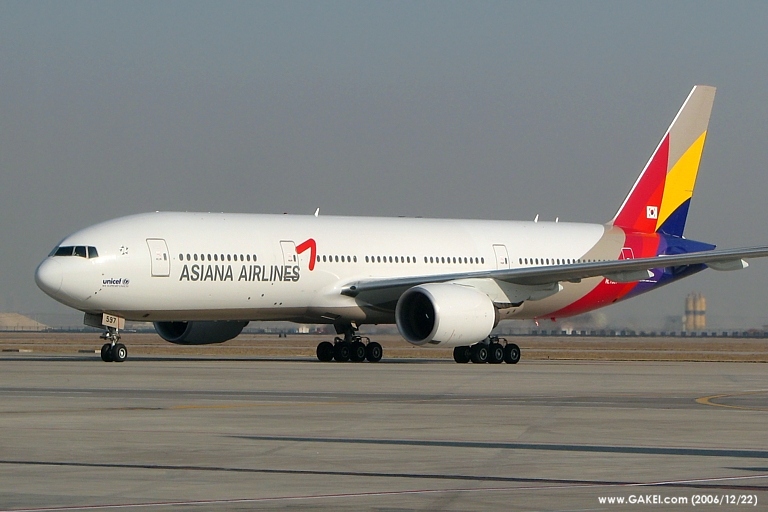
Asiana Airlines orders 30 Airbus A350 aircraft
(NSI News Source Info) 05 August 2008: Asiana Airlines of South Korea has signed a contract with Airbus for the purchase of 30 A350 XWB aircraft, plus 10 options. Delivery of the aircraft will begin in 2016 and the airline will take a combination of all three variants of the A350. The carrier will operate the aircraft on its regional and long haul routes.
“The A350 will play a key role in the Asiana fleet of the future,” said Park Chan-Bup, Vice Chairman and Chief Executive Officer of Asiana Airlines. “In placing this order today, we are ensuring that we will remain at the forefront of the airline industry, offering our passengers the very highest levels of comfort while operating only the most modern, fuel-efficient aircraft.”
“We are pleased that Asiana has become the latest airline to select the A350 XWB, further strengthening the global customer base for this all-new aircraft family,” said John Leahy, Airbus Chief Operating Officer, Customers. “With a fast-growing order book, the A350 is set to shape efficiency in the mid-size widebody category, with a step reduction of 20 per cent in fuel-burn and the lowest operating costs of any aircraft in its class. This will translate into very real economic advantages for operators such as Asiana, while at the same time reducing further the impact of aviation on the environment.”
The A350 XWB (Xtra Wide-Body) Family is Airbus’ response to widespread market demand for a series of highly efficient medium-capacity long-range wide-body aircraft. With a range of up to 8,300 nm / 15,400 km, it is available in three basic passenger versions: the A350-800 accommodating 270 passengers, the A350-900 seating 314, and the A350-1000 for 350 passengers in a typical three-class layout.
The A350 has the widest fuselage in its category, offering unprecedented levels of comfort, the lowest operating costs and lowest seat mile cost of any aircraft in this market segment. Powered by two new generation Rolls Royce Trent XWB engines delivering each up to 92,000 lbs of thrust, the A350 XWB Family is designed to confront the challenges of high fuel prices, rising passenger expectations, and environmental concerns. Orders for the aircraft stand at more than 350 from over 20 customers.
Boeing Opens New Mission Control Center to Support Satellite Customers
Boeing Awarded Shipboard Network Communications System Contract
Boeing Awarded Contract for GPS Enhancement Demonstration
U.S. training Iraqi police officers in Baghdad, Iraq.
Germany – Five MQ-9 Unmanned Aerial Vehicle Aircraft
Russia to conduct military exercises in Indian Ocean this fall
Indian army orders additional BrahMos cruise missiles
Fincantieri Wins Order to Build Two New Submarines for the Italian Navy
Australia Buying 24 Super Hornets As Interim Gap-Filler to JSF
August 5, 2008: News Source Info (NSI) has covered the recent controversies over Australia’s involvement in the F-35 Lightning II program, amid criticisms that the F-35A will be unable to compete with proliferating SU-30 family aircraft in the region, lacks the required range or response time, and will either be extremely expensive at $100+ million per aircraft in early (2013-2016) production, or will not be available until 2018 or later. The accelerated retirement of Australia’s 22 long-range F-111s in 2010 has sharpened the timing debate in particular, with a recently retired Air Vice-Marshal and the opposition (now governing) Labor Party both weighing in with criticisms and alternative force proposals.
In December 2006, The Australian reported that Defence Minister Brendan Nelson was discussing an A$ 3 billion (about $2.36 billion) purchase of 24 F/A-18F Block II Super Hornet aircraft around 2009-2010. A move that came as “a surprise to senior defence officials on Russell Hill”; but is now an official purchase as requests and contracts work their way through.
Australia’s new Labor government’s decided to keep the Super Hornet purchase, and has now issued a request for follow-on support worth over $1 billion.
Opinion: Gripen hard to beat in Indian MMRCA contest
News Source Info NSI-August 5, 2008: While there is no shortage of fighter aircraft procurement programmes currently under way, the most eagerly anticipated contest is undoubtedly India's medium multirole combat aircraft (MMRCA) requirement for at least 126 aircraft.
The six contenders have now submitted their proposals: Boeing's F/A-18E/F Super Hornet, Dassault's Rafale, Eurofighter's Typhoon, Lockheed Martin's F-16, Russian Aircraft Corporation's (RAC's) MiG with the MiG-35 and the Saab JAS 39 Gripen. Arguably each aircraft stands a fighting chance of securing the lucrative USD10 billion contract.
India continues to have a close relationship with Dassault, which supplied the Indian Air Force (IAF) with Mirage 2000 fighters in the 1980s. However, given the IAF's emphasis on future upgrades for its MMRCA aircraft, the lack of operators of the Rafale is likely to be seen as a significant issue.
The Rafale and the Typhoon could also struggle with the issue of cost. Both are relatively large twin-engined platforms, which will significantly increase operating costs compared with the single-engined MiG-21 fleet it will replace.
The MiG-35 is seen by many as a strong contender. India has a very close relationship with Russia, which has provided the majority of its equipment over the past 30 years. However, over the past year India's relationship with Russia with regards to arms contracts has soured.
The two US contenders seem well placed in terms of price and capability as India seeks to establish closer military bonds with Washington. However the F-16 is hindered by the fact that Pakistan already operates the type. Furthermore the aircraft is already being phased out by the US Air Force.
The Boeing Super Hornet does not suffer from these issues. However, one unresolved issue with regards to both US platforms is the authorisation of technology transfer.
Saab holds a strong hand with the Gripen. The aircraft is single engined, which will keep operating costs low, upgrades are already being defined under the Gripen Demonstrator programme and acquisition costs are highly competitive.
Image: The aircraft selected as India's MMRCA will replace its MiG-21s (pictured) (Patrick Allen/Jane's)
Italy's Fincantieri to Buy U.S. Warship Builder
Manitowoc's Marine segment includes the company's Marinette, Wisc., shipyard, along with shipyards and repair facilities in Sturgeon Bay, Wisc., and Cleveland. The Marinette shipyard now is conducting sea trials of the first LCS, the USS Freedom.
Lockheed Martin, prime contractor for the Marinette LCS, is in competition with a General Dynamics team.
Mobile, Ala.-based Austal USA, the U.S. unit of Australian company Austal, is building another LCS for General Dynamics, the Independence. If the sale of Manitowoc's Marine segment goes through, both builders of the LCS will be subsidiaries of foreign-owned companies.
"This transaction will allow Manitowoc to focus its financial assets and managerial resources on the growth of its increasingly global crane and foodservice businesses," Manitowoc President and CEO Glen Tellock said in a press release announcing the deal.
The company plans to use expected after-tax proceeds from the sale of 60 cents a share for general corporate purposes, including paying down debt expected from Manitowoc's planned acquisition of Enodis, a British food and beverage equipment maker.
The LCS is intended to fight in waters near shore and carry out a variety of missions, including fighting off surface ships, hunting submarines and clearing out mines.
Russia's Severstal closes $775mln deal to buy U.S.-based Esmark
Kyrgyz police seize arms from house rented by U.S. nationals
Israel sends Fatah members who fled Gaza to West Bank
India To Provide $450 Million Fresh Assistance For Afghanistan
Subscribe to:
Comments (Atom)