Wednesday, July 16, 2008

Second Tejas aircraft breaks sound barrier on maiden flight

Second Tejas aircraft breaks sound barrier on maiden flight Tuesday, June 17, 2008 (Bangalore) The second indigenously developed light combat aircraft (LCA) Tejas flew at supersonic speed on its maiden test flight over Bangalore skies on Monday evening. ''This is the second time a Tejas aircraft has flown at a speed of 1.1 Mach (1,320 km per hour) up to an altitude of 9.5 km in a maiden flight lasting 43 minutes,'' the state-run Aeronautical Development Agency (ADA) said in a statement late Monday.The limited series production aircraft (LSP2) was flown by ADA's national flight test centre (NFTC) pilot Wing Commander N. Tiwari. As is the practice, the multi-role fighter aircraft was chased by another Tejas prototype version three (PV-3) piloted by Wing Commander R.R. Tyagi.The flight test was monitored from NFTC's telemetry station at the state-run Hindustan Aeronautics Ltd (HAL) airport in the eastern suburb of the city.''The maiden flight of LSP2 is significant on several accounts. This is the second limited series production aircraft that rolled out of the LSP hangar of HAL. It is also the first aircraft powered by the new GE404-IN20 engine and has a new ejection seat version - the Martin Baker Mk 16LG,'' the aerospace agency said.The first eight Tejas aircraft is to be delivered to the Indian Air Force (IAF) and Indian Navy between 2010 and 2012 and will be fitted with the IN20 engines from the US-based General Electric.

Boeing, Malaysia Airlines Announce Order for 35 Next-Generation 737s

Boeing, Malaysia Airlines Announce Order for 35 Next-Generation 737s FARNBOROUGH, United Kingdom, July 16, 2008 -- Boeing [NYSE: BA] and Kuala Lumpur-based Malaysia Airlines today announced at the Farnborough International Airshow the airline has ordered 35 Next-Generation 737-800 airplanes. The order is valued at more than $2.6 billion at current list prices. The airline also has acquired purchase rights for an additional 20 Next-Generation 737-800s.

China, Thai Spec Ops Forces Train

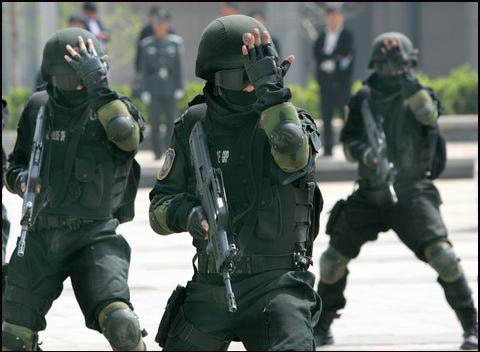
China, Thai Spec Ops Forces Train 16 July, 2008: TAIPEI - Several dozen Chinese and Thai special operations forces began an anti-terrorism training exercise in Thailand's northern province of Chiang Mai on July 11 at the 5th Special Forces Regiment base. The 20-day exercise, called Strike-2008 and involving 24 troops from each country, follows Strike-2007, conducted in China's Guangdong Province last July. "This combat training exercise is an elevated part of an ongoing trend in Thai-Chinese relations," said Thitinan Pongsudhirak, director of the Institute of Security and International Studies, Chulalongkorn University, Bangkok. "It is part and parcel of China's charm offensive and soft power in ASEAN, particularly in mainland Southeast Asia. Previously, the mil-mil component did not receive as much attention and resources, but Beijing has recently stepped up its military and defense cooperation with Thailand," he said. "Senior Thai military sources have indicated that there are now more mid-level Thai military officers being trained in China than ever, and the PLA [People's Liberation Army] offers to take in more." China has been making itself increasingly "accommodating to the point where they have pledged to their Thai colleagues that they will provide all necessary facilities and support for greater intakes of Thai military officers for training in China." Growing Sino-Thai mil-to-mil relations has made many in the U.S. military nervous. Since the Vietnam War era, the U.S. has maintained close military relations with Thailand. Things changed after the military coup in September 2006 when the United States suspended $24 million in military aid and canceled military education programs. Even though the annual joint U.S.-Thai Cobra Gold exercises continued, Washington pressure on the junta leaders continued until the December 2007 elections. However, China showed little interest in who was in charge in Bangkok. Thai coup leader Gen. Sonthi Boonyaratglin received a red carpet welcome in Beijing just four months after the coup and the junta received $40 million in Chinese military aid. "In absolute terms, the U.S. is still the most important, but China is gaining ground relatively speaking in being a training ground for up-and-coming Thai military officers. The combined combat exercise is just a small reflection of this broader trend," Pongsudhirak said. China has also been very accommodating in working with Thailand to procure arms. In 2005, Thailand procured 96 Chinese NORINCO WMZ-55B1 six-wheel-drive armored personnel carriers at $300,000 apiece in a deal involving 100,000 tons of dried logan fruit. Russia made a similar deal with in 2005 for $25 million in rice for four Mi-17 transport helicopters.

Oboronprom Corporation and AgustaWestland Sign Heads of Agreement for AW139 Helicopter Final Assembly in Russia at Farnborough-2008

Oboronprom Corporation and AgustaWestland Sign Heads of Agreement for AW139 Helicopter Final Assembly in Russia at Farnborough-2008 July 16, 2008: FARNBOROUGH, UK --- Oboronprom Corporation and AgustaWestland, a Finmeccanica company, have signed a Heads of Agreement at Farnborough-2008 to set up an industrial Joint Venture for the final assembly of the AgustaWestland AW139 civil helicopter in Russia. The agreement has been signed within the framework of the large-scale & long-term co-operation between Oboronprom Corporation and AgustaWestland in the helicopter business, which was announced during the Moscow International Exhibition HeliRussia-2008 in May 2008. The initial step of such co-operation was the signing of a Distribution Agreement between AgustaWestland and Oboronprom Corporation, together with Loyd’s Investments Corp., for AgustaWestland civil helicopters in Russia and CIS countries. A second stage is the joint activity of Oboronprom Corporation and AgustaWestland to establish a network of maintenance centres for AgustaWestland products in Russia. The industrial Joint Venture will be set up on a parity basis between the parties involved. The civil AW139 Final Assembly project foresees that the production line will be built in a green-field location in the Moscow area. The civil AW139 produced in Russia will be primarily used to satisfy the requirements of the markets in Russia and CIS countries and - through the AgustaWestland network – for the rest of the world. “We highly appreciate the outcome of our collaboration with Oboronprom, which has enabled the signing of the Heads of Agreement at Farnborough” said Giuseppe Orsi, Chief Executive Officer, AgustaWestland. “Establishing an AW139 Final Assembly line in Russia will allow us to better satisfy the constantly growing AW139 demand in the commercial market for this helicopter and to further expand our presence in the Russian and CIS civil markets.” ”Signing of this Agreement features consolidation of the Russian position in the world co-operation system in the aviation sphere. In the framework of this mutually beneficial co-operation the Russian helicopter engineering sector can gain access to the advanced production technologies and high quality standards of the product support. We will strive to expand our collaboration, and by means of localization of production in Russia as well” said Andrey Reus, Director General, Oboronprom. AW139 – a medium twin helicopter of 6400kg take-off weight, is capable to carry up to 15 passengers. It is used as a corporate-transport and VIP helicopter as well as for offshore, in emergency situations, for rescue and fire-fighting operations. AgustaWestland, a Finmeccanica company, is a major force in commercial and military helicopter markets around the world and offers an unrivalled range of helicopters, training and support solutions to satisfy customer's mission requirements. AgustaWestland's main facilities are located in Italy, the United Kingdom and the United States of America. Oboronprom Corporation is multi-profile industrial investment group, founded in 2002. Major activities of the corporation: helicopter production, engine production, air-defenсe systems and complex radio-electronic systems, leasing.

DTN News: Aircraft Lessor DAE Capital Signs Firm Order for 100 Airbus Aircraft

DTN News: Aircraft Lessor DAE Capital Signs Firm Order for 100 Airbus Aircraft (NSI News Source Info) PARIS - July 16, 2008: DAE Capital, the aircraft leasing and financing division of Dubai Aerospace Enterprise (DAE), has signed a firm contract for the purchase of 30 Airbus A350-900 and 70 Airbus A320 aircraft.
The contract follows a Memorandum of Understanding (MoU) signed at the Dubai air show in November 2007.
DAE Capital aims to become a leading lessor based in the Middle East. DAE Capital’s parent company DAE is a fast developing global aerospace company with activities including airport development and operations, engineering, manufacturing and services.
“DAE Capital has built a business from ground-up and has made impressive progress since its launch. With our industry-experienced management team and well-defined road map DAE Capital will become one of the top leasing companies globally,” stated Bob Genise, CEO of DAE Capital.
“DAE’s order is a tremendous endorsement of our aircraft products and in Airbus and we thank them for this. The A350 XWB and the A320 products are leaders in their class. Airbus looks forward to building on this partnership in the years to come,” said Tom Enders, Airbus President and CEO.
The A320 Family, which includes the A318, A319, A320 and A321, is recognized as the benchmark single-aisle aircraft family. Each aircraft features fly by wire controls and all share a unique cockpit and operational commonality across the range.
Around 6,200 Airbus A320 Family aircraft have been sold and more than 3,500 delivered to some 280 customers and operators worldwide, making it the worlds best selling commercial jetliner ever.
With proven reliability and extended servicing periods, the A320 Family has the lowest operating costs of any single aisle aircraft. Uniquely, the A320 Family offers a containerized cargo system, which is compatible with the world-wide standard wide-body system.
The A350 XWB (Xtra Wide-Body) Family is Airbus’ response to widespread market demand for a series of highly efficient medium-capacity long-range wide-body aircraft.
With a range of up to 8,300 nm / 15,400 km, it is available in three basic passenger versions: the A350-800 accommodating 270 passengers, the A350-900 seating 314, and the A350-1000 for 350 passengers in a typical three-class layout.
The A350 has the widest fuselage in its category, offering unprecedented levels of comfort, the lowest operating costs and lowest seat mile cost of any aircraft in this market segment.
Powered by two new generation Rolls Royce Trent XWB engines delivering each up to 92,000 lbs of thrust, the A350 XWB Family is designed to confront the challenges of high fuel prices, rising passenger expectations, and environmental concerns.
Orders for the aircraft stand at more than 350 from over 20 customers. Airbus is an EADS company.

US: Israel May Buy 4 Lockheed Littoral Combat Ships For $1.9 Billion

US: Israel May Buy 4 Lockheed Littoral Combat Ships For $1.9 Billion July 16, 2008 - WASHINGTON: The Pentagon said on Wednesday that it has notified Congress of a possible sale of four littoral combat ships (LCS) to Israel valued at up to 1.9 bn dollars. The LCS is a new generation of fast, maneuverable surface warship designed for coastal waters. The US Navy has built two of the vessels, but cancelled contracts to build two more because of cost overruns. The Defense Security Cooperation Agency said Israel "has rquested a possible sale of up to four Littoral Combat ships (LCS-1 variant)," which is built by Lockheed Martin. "The total value, if all options are exercised, could be as high as 1.9 bn dollars," the agency said. It said the proposed sale would not affect the basic military balance in the region.

$48.8M Buys 6 King Air 350s for US Marines

$48.8M Buys 6 King Air 350s for US Marines
16 July, 2008: Hawker Beechcraft Corp. in Wichita, KS received an estimated $48.8 million firm-fixed-price contract from the US Navy for 6 C-12 replacement aircraft. Work will be performed in Wichita, KS and is expected to be completed in February 2011. This contract was competitively procured via electronic request for proposal by the Naval Air Systems Command, Patuxent River, MD manages the contract (N00019-08-C-0057). The aircraft are actually destined for the US Marines, as the replacement contract for a UC-12 fleet that’s more than 25 years old. See also NAVAIR release. The old C-12/UC-12 is also known as the Huron, and was derivative of the civilian Beechcraft King Air 200. It can land on airfields under 3,000 feet in length, and is used for VIP and light transport duties. These short-field capabilities, coupled with the small size of many urgent needs on the front lines, have pressed many of these aircraft into service in theater. Hawker Beechcraft has confirmed that the Marines’ new light utility aircraft will be variants of the new King Air 350C, however, a slightly larger aircraft with 23.5% more engine power, improved speed and rate of climb, and slightly more load-carrying capacity. The Australian RAAF and the Iraqi Air Force have also bought the new King Air 350; Iraq ordered it for light transport duties (1 plane), and as a specialized intelligence & surveillance platform (4 planes). The new King Air 350Cs do not yet have a formal military designation, but one thing they will have is protective systems. In contrast, American UC-12s have often had their in-theater flights limited or at risk due to their their lack of protection against shoulder fired ground-air missiles like the SA-7. Fortunately, Iraqi flights have become much less dangerous these days. Tribal revolts against al-Qaeda, the corollary improvements in local intelligence, and a strategy of targeting Iranian operatives in theater, have combined to put a strong crimp in key sources of missiles and trained manpower that contributed to this threat.

NH90: Europe’s Medium Helicopter Contender

NH90: Europe’s Medium Helicopter Contender
16 July, 2008: The NH90 helicopter emerged from a NATO requirement that created NATO’s own helicopter development and procurement agency in 1992 and, at almost the same time, the consortium to build the hardware – NHIndustrie (62.5% EADS Eurocopter, 32.5% AugustaWestland, and 5% Stork Fokker). It was originally developed to fit between light naval helicopters like AW’s Lynx and Eurocopter’s Panther, and medium-heavy naval helicopters like the European EH101. A quick look at the NATO Frigate Helicopter design showed definite possibilities as a troop transport helicopter, however, and soon the NH90 project had branched into 2 versions, with more to follow. The nearest equivalent would be Sikorsky’s popular H-60 Seahawk/ Black Hawk family, but the NH90 includes a set of innovative features that give it some distinguishing selling points. While battlefield damage to composite airframes can be more difficult to repair in the field, the combination of corrosion-proofing, lower maintenance, greater troop or load capacity, and the flexibility offered by that rear ramp have made the NH90 a popular global competitor. Orders currently stand at 507 machines, on behalf of 14 nations. This is DID’s FOCUS Article, offering an in-depth look at the multi-national NH90 program, its customers, and its chronology from 1995 to the present day. During that time, the NH90 has become a sales success – but as many business people discover the hard way, success can be almost as dangerous as failure. NH Industries has had great difficulty ramping up production fast enough to meet promised deliveries, which has left several buyers upset at their lack of operational helicopters. The most recent announcement involves engine choices by 3 of the helicopter’s new orders…

India Plans to Cap Arjun Tank Production

India Plans to Cap Arjun Tank Production 16 July, 2008: India’s indigenous Arjun tank project began in 1974, and originally aimed to replace the Russian T-54 and T-72 tanks which made up the bulk of that country’s armored firepower. As has often been the case in India, its DRDO government weapons development agency sought an entirely made in India solution, even though this would require major advances on a number of fronts for Indian industry. As has often been the case in India, the result was a long and checkered history filled with development delays, performance issues, mid-project specifications changes by India’s military, and the eventual purchase of both foreign substitutions within the project (now 58% of the tank’s cost) and foreign competitors from outside it (the T-90S). As of July 2008, the 58.5 tonne Arjun tank still hasn’t been fielded with the Indian Army. In contrast, Pakistan’s much more time-limited, scope-limited, and budget conscious approach in developing and successfully fielding its T-80UD “Al-Khalid” tank is often cited by Arjun’s detractors. Now reports from India indicate that the Russian T-90S will form the mainstay of its future force, despite that tank’s performance issues in hot weather. At the same time, the Indian Army wants to cap production of indigenous Arjun tanks… Production of the Arjun will be capped at the already-committed total of 124 vehicles. Instead, development will begin on a new next-generation tank, which will be able to serve the Indian Army over the next 20-30 years. Opinion in India appears to be sharply split. Many observers are citing this as the final failure that will close the book on a failed project. Other are noting the problems with the T-90s, and the Army’s refusal to conduct side-by-side tests, alongside recent test successes that are earning the Arun some military fans. DRDO has made allegation of sabotage involving the Arjun’s engine, and insists that a 500 vehicle order will give it the volume needed to iron out all production difficulties and provide a platform for future development. In contrast, the Army’s plan calls for 1,657 T-90S “Bhishma” tanks at about 12 crore (currently $2.78 million) each if prices remain stable, about 1,000 of which are slated to be built in India. They will be joined by just 124 Arjuns at about 16.8 crore (currently $3.92 million) each, as well as 692 older T-72 tanks upgraded to the T-72M1 “Ajeya” standard.

Spain Budgets EUR 22M for Afghan Army Battalion

Spain Budgets EUR 22M for Afghan Army Battalion
July 16, 2008: Operations in Afghanistan have featured difficulties among NATO allies due to some members who will not commit their forces to combat situations, forces not delivered as promised, and shortages of critical assets like helicopters. It has also featured some innovations, such as ISAF’s Provincial Reconstruction Teams. PRTs combine military force with direct aid delivery, acting as a key aid supplement to civil groups, and reaching areas where wealthy non-governmental organizations will not operate due to risk aversion or political issues. Spain operates a PRT at Qal-i-Naw in Afghanistan’s northwestern Baghdis province, about 100 km NNE east of Herat and near the border with Turkmenistan. Baghdis falls under ISAF’s West Regional command, and is not a major conflict zone like the souteastern provinces along Pakistan’s border. Even so, it will require a long-term security presence in order to remain stable, and to slowly expand the central government’s authority. Recent Spanish expenditures are helping to prepare that next step, by raising, accommodating, and training an Afghan National Army force that can secure this area over the longer term. In September 2007, Spain earmarked EUR 4.5 million to equip and train a company of 100 ANA soldiers, then added another EUR 2.5 million to build them appropriate barracks and facilities. A Spanish “operational team of instruction and link” team of 52 is working to train the Afghans, and costs EUR 200,000 initial investment plus about EUR 200,000 per month in ongoing funds. Now Infodefensa reports that Spain will spend EUR 22 million (currently $35 million) over the next 2 years to train, equip, and house an Afghan Army battalion of 600 men, which is to be based in Baghdis and operational by Spring 2009.