Monday, December 01, 2008

Chinese Aviation Industry Airborne with GE-Powered ARJ21 Regional Jet

Chinese Aviation Industry Airborne with GE-Powered ARJ21 Regional Jet
(NSI News Source Info) December 2, 2008: With the maiden flight on November 28 of China"s first domestically developed regional jet aircraft, the flight test program for the GE-powered ARJ21 aircraft is now underway.
The ARJ21 manufacturer, Commercial Aircraft Corporation of China, LTD (COMAC), deemed the aircraft"s hour-long first flight as highly successful, reaching altitudes of 9,000 feet.
GE Aviation provides the complete propulsion system for the ARJ21, including two fuselage-mounted CF34-10A engines.
COMAC plans to perform a second demonstration flight later this month, followed by engineering flight tests in early 2009. Also, three additional aircraft will be added to the flight test program next year to support aircraft certification and entry into service in 2010.
COMAC has already taken orders for more than 200 ARJ21 regional jet aircraft and sees a potential market for 850 aircraft over the next 20 years. This represents a potential of more than $4 billion in CF34 revenue for GE Aviation.
"The ARJ21 first flight is a fantastic accomplishment for COMAC," said David Joyce, president and CEO of GE Aviation. "GE and COMAC have developed a strong relationship in recent years, and our technical collaboration on the ARJ21 has been invaluable."
The ARJ21 will seat 70 to 90 passengers, and is designed for Chinese and export markets. The aircraft combines Chinese intellectual property with GE engines, and airborne systems from leading European and North American companies. COMAC selected GE's CF34-10A engine in 2002. Since then, GE and COMAC collaborated closely during the aircraft's detailed design and the aircraft/engine integration phases.
The CF34-10A is part of GE's CF34 engine family, which is the best-selling engine in regional jet aviation. More than 5,000 CF34 engines power business jets and regional jets worldwide. The CF34-10A is about 80 percent common with the CF34-10E, which entered service in November 2005 on the EMBRAER 190/195.
The ARJ21 is part of China's dramatic aviation expansion. Fueled by economic growth, revenue passenger miles have increased significantly. There are currently 50 new airports scheduled for construction within China over the next five years to meet the higher demand.
As a result, feeder and point-to-point traffic could grow 12% annually over the next 20 years. The ARJ21 is being designed to meet China's diverse environment, specifically the hot temperature and high altitude conditions on many routes in Western China. The CF34-10A technology is ideally suited to this aircraft, with thrust to meet performance requirements, and lower-cost, highly-reliable operation.
GE Aviation activities have grown dramatically in China over the past decade. GE is the China airline industry?s largest engine supplier with 1,000 airliners operating in China, powered by engines from GE or CFM International, a 50/50 joint company of GE and Snecma (SAFRAN). GE Aviation, an operating unit of General Electric Company (NYSE: GE), is a world-leading provider of commercial and military jet engines and components as well as integrated digital, electric power, and mechanical systems for aircraft.
GE Aviation also has a global service network to support these offerings. For more information, visit us at www.ge.com/aviation.

Sri Lanka seizes town held by rebels for 18 years

Sri Lanka seizes town held by rebels for 18 years (NSI News Source Info) AP - December 2, 2008: Sri Lankan soldiers have recaptured a key northern town near the Tamil Tigers' headquarters, 18 years after the area was seized by the insurgents, the military said Monday. Troops seized Kokavil town, about 12 miles (20 kilometers) south of the insurgents' de facto capital of Kilinochchi, on Sunday, military spokesman Brig. Udaya Nanayakkara said. He did not give casualty details.
The capture was the latest sign of the government's recent dominance in the island's decades-old civil war since it promised to defeat the insurgency by the end of the year. The rebels have been forced to abandon vast areas of land and retreat to territory in the northeast during months of heavy battles. The Tamil Tigers have controlled Kokavil since they overran a military camp there in 1990, Nanayakkara said. Rebel officials could not be contacted for comment. It is difficult to verify battlefield reports because most journalists are barred from the war zone. The military has been closing in on Kilinochchi for weeks and continued its march Monday. Air force jets bombed a village from which the Tamil Tigers have launched counterattacks on government forces' attempting to break through to the rebel stronghold, the military said in a statement. The military said three targets were successfully hit but did not provide casualty details. A pro-rebel Web site, meanwhile, reported that a 6-year-old was killed Monday by government artillery fire on another rebel-controlled village. TamilNet reported that the girl was returning home after her school closed early because of military artillery fire. Military spokesman Nanayakkara denied the accusations, saying the military had not targeted the village. He accused the rebels of trying to attract international sympathy with such reports. Separately, army snipers killed three rebels in the northern Jaffna peninsula on Sunday and Monday, a Defense Ministry statement said. Tamil Tiger rebels have fought since 1983 to create an independent homeland for the country's ethnic minority Tamils, who have suffered marginalization at the hands of successive governments controlled by ethnic Sinhalese. More than 70,000 people have been killed in the violence.

Iran says designs radar-evading military aircraft

Iran says designs radar-evading military aircraft (NSI News Source Info) TEHRAN (Reuters) - December 2, 2008: Iran has designed a radar-evading aircraft, the head of its air force said on Monday, the Islamic Republic's latest announcement of progress on military hardware amid persistent tension with the West over its nuclear plans. Brigadier General Hassan Shahsafi was also quoted as saying the air force had test-fired a new, Iranian-made air-to-air heat-seeking missile with a range of 40 km (25 miles), saying there were plans to extend it to 100 km.
(Seen aforementioned is Iran's home developed fighter aircraft "Saeqeh" Thunderbolt, which are currently in it's air force in unspecified numbers)
Iran often says it has made advances in its arms but Western analysts say it is tough to assess the claims as few details are usually released. One analyst said the country's technology was still no match for U.S., European, Russian or Chinese designs. Shahsafi told state radio that Iranian aerospace experts had designed the aircraft and military researchers were now seeking to make a small prototype. "I think we will finish its research part by the end of the year and then we will get on with the production phase," he said, referring to the Iranian year that ends in March. On Monday's missile test, he said it pursued and took out a dummy target released from a second fighter jet, Iran's English-language Press TV said on its web site. Iran often stages war games or tests weapons to show its determination to counter any attack by the United States or Israel against sites they believe are to make nuclear arms. Iran, the world's fourth-largest crude oil producer, says its uranium enrichment activities are aimed at making fuel for a network of planned electricity-generating nuclear power plants. NUCLEAR ROW The United States says it wants diplomacy to end the nuclear row, but neither Washington or Israel have ruled out military action if that fails. Iran has vowed to retaliate if pushed. Military analysts say Iran's real ability to respond could be with more unconventional tactics, such as deploying small hit-and-run craft to attack oil tankers, or using allies in the Middle East to strike at U.S. or Israeli interests. Pieter Wezeman, a researcher at the Stockholm International Peace Research Institute (SIPRI), said he did not believe Iran had the technology to design a modern fighter plane. "The Iranian military industry is significant in size but it has never been able to design or produce any modern weapon which is comparable to anything that is produced in western Europe, the United States, Russia or China," Wezeman said by telephone. "They would be able to defend themselves with more guerrilla-style methods," he said. Iran is estimated to have 280 combat aircraft, including Russian-made MiG 29 aircraft and old U.S.-built F-4 Phantoms, but serviceability may be 80 percent or lower, analysts say. The United States, which has not had ties with Tehran since 1980, has imposed sanctions on Iran that make it difficult for Tehran to buy spare parts for military and civilian aircraft.

Greece Contemplates Upgrading Its Military

Greece Contemplates Upgrading Its Military
(NSI News Source Info) December 1, 2008: At the height of the Cold War, Greece was an important ally of the U.S. in helping to check the Soviet Union's potential to threaten the eastern Mediterranean. Since then, the nation has remained a vital player in the region's security. Along the way, that evolution has done little to suppress Greece's appetite for modern weapon systems, and today its shopping list may be valued at up to $12 billion over the next 10 years. Less clear is the source of those new armaments and how Athens might go about procuring them. The Greek government makes no excuses for maintaining relationships with all equipment sources, including Russia. What troubles some U.S. defense contractors is not that they have competition, but that the rules don't always seem fair and balanced for all players - a situation that has been exacerbated by a procurement process whose clarity, while improving, still leaves much to be desired, they claim. Evangelos V. Vasilakos, who oversees the purchase of all military equipment, bristles at any suggestions that U.S. military contractors have failed to capture their fair share of Greece's defense business. All you have to do is look at the platforms Greece has bought in the last decade, especially aircraft, and see that most of them came from U.S. factories, he points out. Lockheed Martin historically has been the principal supplier of fighters to the Greek air force. Vasilakos acknowledges that some weapons were acquired in an "unorthodox manner," but he says Greece has done more than any other country within the European Union to increase the openness of its procurement process. For example, in February, Greece adopted a legislative framework that previously did not exist for buying armaments, he points out. But Vasilakos also is quick to add that Greece will do whatever is in the country's best interests, including using government-to-government purchase agreements. All the same, U.S. Army Col. Steve G. Boukedes acknowledges that Greece has been attempting to be more open in how it buys military equipment. He is chief of the Office of Defense Cooperation-Greece and is the principal interface between U.S. defense contractors and the Greek military. "There seems to be less wheeling and dealing," he asserts. Greece's defense spending amounted to about 2.4% of the country's gross national product in 2006, the last year for which there are complete figures, according to the International Institute for Strategic Studies' "Military Balance" assessment. That figure compares with about 1.7% for all European countries that belong to NATO. There are a variety of reasons why Greece wants to maintain a robust program of defense modernization. In the Balkans, Greece helps to stabilize a region that has a history of turmoil, notes F. Stephen Larrabee, a European security specialist at the Rand Corp. "You can't dismiss the potential for outside powers to use age-old minority issues as a pretext for territorial claims." Greece also participates in the global war on terrorism, as well as peacekeeping operations in Afghanistan and Iraq. Moreover, the country is the "framework" nation in the EU Battle Group Helbroc - which includes Bulgaria, Romania and Cyprus - and that, too, requires Greece to maintain a modern military. Still, Larrabee questions why Greece thinks it needs such a relatively large defense budget, given the thaw between Athens and Ankara in recent years. The fact remains that Greece and Turkey have a very long history of troubled relations, with Turkey spending about as much as Greece on defense. Whatever the lingering differences between the two countries, "territorial dispute" is a mis-characterization, according to Deputy Defense Minister Constantine Tassoulas. "A dispute is when I have some rights and you have some rights, and we go to court to see whose rights are heavier," he says. "If somebody claims that your house is his, this is not a dispute - this is an illegal claim." As recently as the late 1990s, the two countries routinely engaged in a game of brinkmanship, especially in the air. "Greece's neighborhood is not what one would describe as tranquil," Vasilakos says. Deputy Defense Minister Ioannis Plakiotakis adds that the area isn't as volatile as it has been in the recent past, but it "remains fluid and therefore fragile." Nevertheless, Turkey, more than anything else, is what drives Athens's desire to sustain a robust program of weapons modernization, according to civilian and government officials. Tassoulas acknowledges that relations with Turkey have been improving, and the Greek government wants to keep that process moving forward, including supporting Turkey's adhesion to the European Union. But asked to prioritize the military threat that Turkey may pose compared with others, Tassoulas says: "When you don't face a threat, you have the luxury of creating levels of [danger] and giving them nice colors, because you have all the time and all the safety to imagine those threats as having colors. But if you face a threat, then the threat is the threat." As to whether Turkey is a higher defense priority than Greece's broader mission within NATO, he notes: "Our priority is always to be ready to confront the threat we face." European defense analysts say the security situation between the two nations can change suddenly. "Even now, anything can be a flash point," an Athens-based analyst says. Indeed, one senior-level individual says Greece's fear of a Turkish invasion, warranted or not, dictates that Athens maintain a "Cold War [-style] heavy force oriented toward the East. "Their recent buy of 450 Russian BMP-3 tracked vehicles is an indication that, among other things, they still have first and foremost in their minds an imminent attack from Turkey," he says. "Their mind-set is not if but when Turkey will attack." While tensions over Cyprus have eased markedly, other territorial issues haven't been resolved. Frequent airspace violations prompting a Greek response are not uncommon, according to observers. Tassoulas says Greece is following not so much a defense doctrine, per se, but a "deterrent doctrine." To strengthen those elements in its defense posture that will meet its security concerns, the government would like more modern fighter aircraft - "the most advanced ones," says Tassoulas. It also is in the market for new training aircraft and search-and-rescue helicopters, as well as six new frigates, among other kinds of equipment. "We will exploit the widest range of choices," he says. Aeronautics, particularly fighters, constitute the bulk of Greece's overall defense modernization program. The air force has a goal of 300 aircraft, compared with Turkey's 516. That's about a 6:10 ratio, versus the 7:10 the government is aiming for. Greece expects to retire at least 40 aircraft (RF-4Es and A-7s) in the near- to mid-term. In addition, the air force needs to compensate for the attrition of another 20 aircraft. The RF-4Es provide some reconnaissance capability and are used to help pilots stay proficient. Replacement aircraft would enter service in the 2012-14 period. The government also wants to begin introducing a fifth-generation fighter into its inventory. Likely contenders include the Eurofighter, Dassault Rafale, Sukhoi Su-35 and Lockheed Martin F-35. Among the enhanced capabilities sought by the air force are stealth, the ability to operate effectively in a network-centric environment and greater situational awareness. If, in fact, politics plays no role in Greece's selection of a next-generation fighter, as Tassoulas argues, Lockheed Martin may have a competitive edge, mainly because Greece's fighter inventory currently consists of 170 F-16s. All were acquired under the Peace Xenia Foreign Military Sales program, with each succeeding lot significantly more capable operationally. The most recent purchase was in 2005, when the government acquired 30 Block 52+ F-16s. Those particular aircraft are equipped with conformal fuel tanks, a joint helmet-mounted cueing system, Link-16 self-protection system and an active, electronically scanned array radar. Block 52+ F-16s also have the ability to deliver smart weapons such as the Joint Direct Attack Munition and the Joint Standoff Weapon. These aircraft will be delivered in 2009. The Greek air force intends to bring all of its F-16s up to the latest configuration. The next logical move would be to choose a next-generation fighter such as the F-35. "Greece realizes it needs not just the most capable aircraft but also the most sustainable and cost-effective," says Dennys Plessas, Lockheed Martin's vice president of business development for Europe, the Middle East and Africa. "If the government wants to run a competition, we welcome it, since there the F-16 is a natural bridge to the Joint Strike Fighter in operational capability and support." The majority of JSF customers operate the F-16. Regardless of what next-generation fighter is selected, Greek officials are adamant about wanting contractors and nations with which the defense ministry does business to share more technology - although there will always be limits, depending on the weapon system. The goals are two-fold: to benefit Greece's overall economy and to help strengthen Greece's domestic defense industry. "In a crisis, I may not have the luxury of being able to wait for spare parts from another part of the world," says Vasilako. Much of that technology transfer, including the know-how for producing increasingly sophisticated military products, comes as a result of offset agreements. Lockheed Martin, for example, has an obligation to deliver offset credits equal to 120% of the value of F-16 contracts. For Xenia 2 through 4, those offsets are valued at about $3.5 billion, roughly a third of which is for coproduction of F-16s. That work is being done by Hellenic Aerospace Industries, which manufactures aircraft inlets, aft fuselages, forward engine access doors, fuel tanks and side panels. (HAI recently reached agreement with Russia's Irkut aircraft maker to coproduce MS-21 medium-haul passenger aircraft and service Be-200 amphibious aircraft after sale.) "We're getting products of the highest quality, and the work ethic is as good as we've seen anywhere," says Martin W. Foster, Lockheed Martin's on-site resident at HAI and program director-Greece, International Technical Assistance. However, it's unclear whether Greece will be able to afford all of the weapon systems it would like to buy - regardless of the origin of the equipment. But that may not be the only obstacle to maintaining a strong modernization program. As one insider points out: "The Greeks will modernize on the margins as best they can until a revolutionary mind-set change occurs with the government's leadership," he says. "Once they no longer perceive the Turkish threat, they will be able to implement the necessary changes to their military that will enable them to become a professional force, focused on regional security and support to the NATO alliance."

U.S. Army Testing New MAV's In Iraq

U.S. Army Testing New MAVs In Iraq (NSI News Source Info) December 1, 2008: The U.S. Army sent several dozen of its new MAVs (Micro Air Vehicles) to Iraq for testing, by troops, in a combat zone. MAV is a 13 pound helicopter, that is 13 inches in diameter.
It can take off in winds of up to 27 kilometers an hour. It can operate when the winds are moving at up to 36 kilometers an hour. For an item that small and light, that's pretty good. Normally, MAV operates at between 10 and 500 feet altitude, but it can go as high as 10,000 feet. What makes the MAV particularly useful is not just its ability to "hover and stare", but also to set down anywhere, and "perch and stare" (thus saving battery power).
The ducted fan propulsion system eliminates any rotors spinning around where they could hit anything. With an endurance of 40 minutes and a top speed of 80 kilometers an hour, the MAV can easily cover company or platoon level operations.
For operations in an urban area, MAV is particularly effective. The MAV can't be heard by anyone 100 meters away, or less if buildings are in the way.
The cameras show video that allows the operator (using a handheld controller/display) to identify people at 250 meters (during the day, 125 meters at night).
A MAV system consist of two MAV vehicles, one controller, and spares (vidcams, batteries, etc). Takes a few hours of instruction to learn how to use. That includes how to program a predetermined flight path, using way points.

Somali Pirates Scare The Crap Out Of Arabs

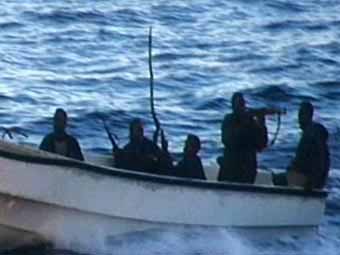
Somali Pirates Scare The Crap Out Of Arabs (NSI News Source Info) December 1, 2008: Although the Somali pirates are Moslems, and threaten the Moslem nations in the region, none of those Moslem nations is willing to carry out the only complete solution to the problem. That is, landing troops and taking control of the coastal towns and villages the pirates use as bases. Egypt, which receives nearly $6 billion a year in transit fees from users of the Suez Canal, sees that revenue threatened. If the pirates decide to move into the Red Sea, they would do great damage to the economies of Sudan, Egypt and Saudi Arabia. But none of these countries is eager to take on the Somali pirates. Everyone is calling for "the world" (non-Moslem nations) to contribute ships and soldiers to deal with the problem.

UK MoD Defends Use of Snatch Land Rovers

UK MoD Defends Use of Snatch Land Rovers
(NSI News Source Info) December 1, 2008: An article in the Daily Telegraph claims that the deaths of hundreds of soldiers are linked to Snatch Land Rover vehicles in Afghanistan and Iraq.
We take the protection of our troops very seriously, but operations are inherently risky. We take the steps we can to minimise the risks whilst remembering that we must achieve the tasks required. Equipment alone is not the answer to force protection; it is also a question of tactics - how troops operate on the ground – and a small element of chance. We cannot make our vehicles invulnerable; a large enough bomb can destroy even the most heavily armoured vehicle, and any vehicle can be overmatched if faced with an overwhelming attack.
If there was a better vehicle, a smaller vehicle, out there that we could get our hands on quickly, or could have got our hands on quickly, we would do so or would have done so.
We have been going round the international market trying to see if there is another smaller vehicle – it doesn’t exist. We are spending over £30million to upgrade all our Snatch vehicles on operations to Snatch Vixen, which provides the same level of manoeuvrability with increased protection. These modifications will give the Snatch Vixen the highest levels of protection for its size and weight class, compared to other vehicles out there on the market.
Chief of General Staff General Sir Richard Dannatt said recently:
"As far as Snatch is concerned, there has always been and there remains a requirement for a small, agile vehicle to get to some of the places both in Iraq and Afghanistan, that the larger and protected vehicles, like Warrior, Bulldog and Mastiff, can’t get to. I want to see the minimum number of Snatch as a vehicle type in our operational theatres. Snatch itself is once again going through an upgrade process – it’s going to be called Snatch Vixen."

Dutch Earmark Funds for NATO C-17 Purchase

Dutch Earmark Funds for NATO C-17 Purchase (NSI News Source Info) THE HAGUE - December 1, 2008: Defence State Secretary Jack de Vries wants to spend 70 million euros on the purchase of three C-17 transport aircraft. The money is available due to a surplus of vacancies at the armed forces.
De Vries will save 90 million euros this year due to the shortage of personnel. Of this, 70 million will go on the purchase, along with a number of NATO countries, of three C-17s. The other 20 million will cover higher than expected fuel prices, the state secretary said in the Lower House. The Christian democrats (CDA) and Labour (PvdA) also asked for funds to be spent on a bonus that military personnel should receive if they have been on foreign missions three times in the past three years. If they were away for a total of 12 months, they should get 1,000 euros net. The state secretary was sympathetic towards the proposal and will discuss it with the military unions.
The House also asked for Fennek reconnaissance vehicles to be given extra armouring, so that they could offer the Dutch troops in Afghanistan more protection against roadside bombs from the 2009 second half. The Fenneks are faster and more manoeuvrable than Bushmasters, which are much more heavily armoured. De Vries will first investigate how much money this would involve.
De Vries rejected the establishment of a centrally-managed independent complaints commission for veterans. PvdA, the Socialist party (SP), small Christian party ChristenUnie and the leftwing Greens (GroenLinks) wanted this.
The defence ministry also said the armed forces will use computer games Steel Beast Pro and Virtual Battlespace 2 to train army personnel. The simulation games, which are for sale to ordinary consumers, will be adapted with a real-time evaluation mode for the army.

India’s Astra Microwave Wins Israeli Order

India’s Astra Microwave Wins Israeli Order
(NSI News Source Info) HYDERABAD, India - December 1, 2008: Astra Microwave Products Ltd.? India’s leading provider of microwave wireless technologies used in defense, space, and telecommunications, today announced that the company has won an order worth INR 570 million (USD 11.5 million) from Israel’s ELTA Systems Ltd. A group subsidiary of Israel Aerospace Industries, ELTA is a world leader in electromagnetic sensors-based advanced defense systems for radar, electronic warfare, and communications. The order is for the supply of microwave wireless sub-systems for India’s defense radar program. The contract is effective between November 2008 and mid-2010.
The order from ELTA is Astra’s first contract under the offset obligations clause of India’s Defence Procurement Policy, 2006. The offsets clause mandates that 30% of all defense contracts worth INR 3 billion and above must be invested in the Indian defense industry by way of sourcing components, sharing technology, setting up training facilities, or using IT services. Comment by B Malla Reddy, Managing Director, Astra Microwave Products:
“The ELTA contract showcases Astra Microwave’s global technological capabilities and scale of operations to meet the demand from obligations mandated by the Defence Procurement Policy,” said B Malla Reddy, Managing Director, Astra Microwave.
“Offset obligations are a significant opportunity for manufacturers and technology providers in the Indian defense space. Our proven technological expertise, infrastructure, and processes are a strong positive differentiator with global defense suppliers. Going forward, we are confident of forging many such relationships,” Mr Malla Reddy said.
Astra Microwave Products Ltd Headquartered in Hyderabad, India, Astra Microwave Products Ltd designs, develops, and manufactures components and sub-systems for microwave wireless communications systems used in defense, space, and civilian applications. Prominent customers include, among others, the Defence Research Development Organization, Bharat Electronics, Hindustan Aeronautics, Bharat Dynamics, Electronics Corporation of India, the Indian Space Research Organization, Reliance Communications, Ericsson, and Tata Teleservices.
In FY08, Astra Microwave gross revenue was INR 1.27 billion on an equity capital of INR 107.5 million.

Pakistan pressed on India attacks

Pakistan pressed on India attacks
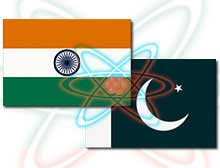
(NSI News Source Info) NEW DELHI and ISLAMABAD, PAKISTAN - December 1, 2008: After a weekend of frantic calls pleading for India to refrain from retaliation for the attacks that killed 185 people in Mumbai (Bombay), US pressure is turning toward Pakistan. On her way to London and then New Delhi, Secretary of State Condoleezza Rice told reporters Monday that "this is a time for complete, absolute, total transparency and cooperation" from Pakistan. It is acknowledgment that mounting evidence suggeststhe involvement of Pakistani militants in Mumbai – and that Pakistan might be loath to admit it. It also reflects concern that rising tension between the neighboring nations over the attacks might divert Pakistan's attention – and even troops – from the fight against militants on its border with Afghanistan. Already pulled between US pressure in its war on terror and financial collapse, Pakistan will probably face renewed demands from its longtime rival: control militants targeting India, or else. On Monday, India said it had told Pakistan's envoy that militants from Pakistan had carried out the attacks, and it demanded swift action against those responsible. It would be a difficult and enormously unpopular task to uproot groups like Lashkar-e-Taiba – the militants the Indian police have linked to the Mumbai attacks. "International pressure is needed" to get India and Pakistan to talk constructively on this point, says Ahmed Rashid, an independent political analyst in Lahore. No senior Indian official has yet accused Lashkar-e-Taiba openly. Both the prime minister and foreign minister have spoken only generally that "elements with links to Pakistan" were involved. Indeed, two days after the shooting stopped, there remain questions about the attackers. Though Indian officials claimed that there were only 10 terrorists, investigators found supplies for 15 men on the boat that carried the militants to the Mumbai coast, according to the Indian Express. It suggests some militants might have escaped. In addition, an antiterrorism squad official interviewed by The New York Times refuted the idea that all of the terrorists were from Pakistan. But numerous reports quote police officials saying that they believe the militants were trained in Pakistan. The most likely culprit is Lashkar-e-Taiba. According to a police official, the only gunman captured alive after the attacks claimed to belong to the militant group, which was created in 1989 to foment insurgency in Kashmir. The group has denied involvement in the Mumbai attacks. Pakistani President Asif Ali Zardari's civilian government has gone to great lengths to insist that it will honestly investigate any claim that Pakistanis were involved. In an interview Sunday with The Hindu, an Indian newspaper, he stated that "if any evidence points to any individual or group in my part of the country, I shall take the strictest of actions ... without any hesitation." Yet the old fault lines that have made the India-Pakistan problem so intractable show signs of resurfacing. Shortly after the attacks, Pakistani Prime Minister Yousuf Raza Gilani made an unprecedented offer to send the head of Pakistan's top intelligence agency, the Inter-Services Intelligence directorate (ISI), to India to clear the air. The offer was promptly withdrawn; neither the country nor the Army would tolerate it. Indian accusations of a Pakistani hand in the attacks have been branded as a "smear campaign" by news outlets, which have told the government to counter "Indian aggression." It points to a coming test. India does not want to provoke Pakistan further, says C. Raja Mohan, a political analyst at the S. Rajaratnam School of International Studies in Singapore. That would only strengthen the hawkish elements in Pakistan's public and Army, he says. Instead, "Let's test out what Zardari is saying," he says. "Is he serious about acting against these groups?"
The problem is that Mr. Zardari's government is probably too weak to take such action, even if there is convincing evidence. "This is going to be extremely difficult for the government if it is asked [by India] to go after Kashmiri-based militants," says Hassan Askari Rizvi, an independent political analyst in Lahore. "It would be suicidal for the government to begin a wide crackdown without taking everyone at home aboard first." On Sunday, Mr. Gilani called a conference of political leaders to discuss the current situation. But winning support to go after Kashmir-based militants is unlikely. The Pakistani Army is already stretched by operations against militants along the Afghan border. And while that war is unpopular in Pakistan, a move against Kashmiri militants would be hugely more so. Most Pakistanis believe that India illegally occupied Muslim-majority Kashmir in 1947, and the countries have fought two wars over the territory since. "A large number of people believe in the legitimacy of jihad in Kashmir," says Rifaat Hussein, a military analyst at Quaid-i-Azam University in Islamabad. Moreover, the Army has mostly ignored Lashkar-e-Taiba since signing a cease-fire with India in 2004, allowing the banned group to regain its former strength, according to several analysts. Part of this could be intentional. Though the Army may be willing to go after certain militant groups in Kashmir, it would still be hesitant to crack down on those who are strategically engaging the Indian Army in Kashmir, says Ikram Sehgal, editor of the Defence Journal in Karachi and a retired Army major. In recent years, Lashkar-e-Taiba has built ties with Al Qaeda and the Taliban. It has coordinated many of the suicide attacks in Pakistan on the Taliban's behalf, says Mr. Rashid, who also wrote the book "Taliban." "Lashkar-e-Taiba is the hit squad for Al Qaeda and the Taliban," Rashid says. These links could explain the Mumbai attacks, he adds. Lashkar-e-Taiba is suspected of attacking the Indian Parliament in 2001, essentially to create a diversion. Suspecting Pakistani involvement in the attacks, India deployed troops along its western border. In response Pakistan pulled its forces from its western border with Afghanistan in preparation for a potential war with India. In the meantime, Al Qaeda leaders escaped US forces in Tora Bora, Afghanistan, and crept across the thinly guarded western border. The Mumbai attacks could be an attempt at a repeat performance, Rashid suggests, with Al Qaeda and the Taliban now seeking respite from the Pakistani Army's increasingly intense offensive, as well as the US campaign of airstrikes. The goal is again to bring India and Pakistan to the brink of war. "If India decides to build military pressure, Pakistan will have no choice but to start redeploying its forces to its eastern border as well," says Ejaz Haider, a newspaper editor for a national English daily. Rice's comments hint at the Indian strategy for challenging anti-India militants in Pakistan: build international support. It was international pressure that forced Pakistan to outlaw Lashkar-e-Taiba after the 2001 attack. International pressure also persuaded Pakistan to go after militants on its Afghan border. "Similar pressure will be needed here," says Mr. Mohan.