 Defense Focus: Tanks still rock
(NSI News Source Info) Washington - September 5, 2008: The striking success of even relatively small forces of Russian Main Battle Tanks in the five-day conflict with Georgia proves once again how crucial tanks remain to the conduct of modern war.
Russia used a concentration of its state-of-the-art T-90 Main Battle Tanks, which also have been sold in large numbers -- 657 in all -- to India, backed up by significant numbers of older, supposedly obsolete but still highly effective models, especially the more than a quarter-century-old T-72. The Georgian army, which had been significantly strengthened over the past two years by an influx of U.S. military equipment augmented by training from American military advisers, fell apart and offered no significant resistance whatsoever.
The failure of the Georgians to provide any fight worthy of the name to the Russian ground forces contrasted with the effectiveness of Hezbollah, the Iranian-backed Party of God in southern Lebanon, in standing fast against an Israeli ground forces offensive in July 2006.
The two wars, of course, were very different. The Russians massed 10,000 troops. The Georgians did not expect an attack, were not dug in to ground positions at all, and offered no significant resistance even when they commanded key locations like the Roki Tunnel and the Kodori Gorge, or the city of Gori, where local conditions were extremely favorable for prolonged resistance such as the Palestinians put up against the Israeli army in Jenin in 2002, or the Chechens did in their capital, Grozny, against the Russian army in the first and second Chechen wars.
By contrast, the Israeli political leadership led by Prime Minister Ehud Olmert and Defense Minister Amir Peretz foolishly scrapped a general staff plan to assault Hezbollah with a major ground force of 50,000 troops and relied on the confidence of ex-Israeli air force commander and Israeli Defense Forces Chief of Staff Lt. Gen. Dan Halutz that air power without ground support could do the job.
The Israeli Merkava tanks, state-of-the-art a quarter-century ago, proved extremely vulnerable to mines and improvised explosive devices used by Hezbollah. The quality of Israel's main, non-elite ground forces' infantry units proved poor, and therefore the integration of infantry and tank forces on the ground proved extremely weak.
The Israeli failure in 2006 strengthened the fashionable impression in the United States that counterinsurgency was now the cutting edge of war and that therefore investment in expensive ground forces, primarily main battle tanks and artillery, could be drastically curtailed.
However, the success of the Russian tank forces in conquering one-third of the mountainous and forested territory of Georgia in only five days revived the lesson, which should have been taught by the U.S. armor-mobile infantry drive to Baghdad in March-April 2003, that the Main Battle Tank does indeed remain the master of large-scale ground war.
It is, in fact, extraordinary how often the obituary of the Main Battle Tank has been written in modern war over the past 60 years -- and how often it has been proven wrong.
The United States and the Soviet Union both maintained enormous land fleets of MBTs facing each other across the heart of Europe during the long decades of the Cold War for an apocalyptic showdown that never came. It therefore should be noted that neither side made the mistake of thinking it could just rattle its thermonuclear-armed arsenals of intercontinental ballistic missiles and expect the other side to either fold or be deterred.
Defense planners in the Pentagon and the Soviet Defense Ministry alike realized that in the event of any major war, you need strong land forces to conquer, hold and defend territory and that those forces would need tanks -- lots of them.
Defense Focus: Tanks still rock
(NSI News Source Info) Washington - September 5, 2008: The striking success of even relatively small forces of Russian Main Battle Tanks in the five-day conflict with Georgia proves once again how crucial tanks remain to the conduct of modern war.
Russia used a concentration of its state-of-the-art T-90 Main Battle Tanks, which also have been sold in large numbers -- 657 in all -- to India, backed up by significant numbers of older, supposedly obsolete but still highly effective models, especially the more than a quarter-century-old T-72. The Georgian army, which had been significantly strengthened over the past two years by an influx of U.S. military equipment augmented by training from American military advisers, fell apart and offered no significant resistance whatsoever.
The failure of the Georgians to provide any fight worthy of the name to the Russian ground forces contrasted with the effectiveness of Hezbollah, the Iranian-backed Party of God in southern Lebanon, in standing fast against an Israeli ground forces offensive in July 2006.
The two wars, of course, were very different. The Russians massed 10,000 troops. The Georgians did not expect an attack, were not dug in to ground positions at all, and offered no significant resistance even when they commanded key locations like the Roki Tunnel and the Kodori Gorge, or the city of Gori, where local conditions were extremely favorable for prolonged resistance such as the Palestinians put up against the Israeli army in Jenin in 2002, or the Chechens did in their capital, Grozny, against the Russian army in the first and second Chechen wars.
By contrast, the Israeli political leadership led by Prime Minister Ehud Olmert and Defense Minister Amir Peretz foolishly scrapped a general staff plan to assault Hezbollah with a major ground force of 50,000 troops and relied on the confidence of ex-Israeli air force commander and Israeli Defense Forces Chief of Staff Lt. Gen. Dan Halutz that air power without ground support could do the job.
The Israeli Merkava tanks, state-of-the-art a quarter-century ago, proved extremely vulnerable to mines and improvised explosive devices used by Hezbollah. The quality of Israel's main, non-elite ground forces' infantry units proved poor, and therefore the integration of infantry and tank forces on the ground proved extremely weak.
The Israeli failure in 2006 strengthened the fashionable impression in the United States that counterinsurgency was now the cutting edge of war and that therefore investment in expensive ground forces, primarily main battle tanks and artillery, could be drastically curtailed.
However, the success of the Russian tank forces in conquering one-third of the mountainous and forested territory of Georgia in only five days revived the lesson, which should have been taught by the U.S. armor-mobile infantry drive to Baghdad in March-April 2003, that the Main Battle Tank does indeed remain the master of large-scale ground war.
It is, in fact, extraordinary how often the obituary of the Main Battle Tank has been written in modern war over the past 60 years -- and how often it has been proven wrong.
The United States and the Soviet Union both maintained enormous land fleets of MBTs facing each other across the heart of Europe during the long decades of the Cold War for an apocalyptic showdown that never came. It therefore should be noted that neither side made the mistake of thinking it could just rattle its thermonuclear-armed arsenals of intercontinental ballistic missiles and expect the other side to either fold or be deterred.
Defense planners in the Pentagon and the Soviet Defense Ministry alike realized that in the event of any major war, you need strong land forces to conquer, hold and defend territory and that those forces would need tanks -- lots of them.
Friday, September 05, 2008
Defense Focus: Tanks still rock
Defense Focus: Tanks still rock
(NSI News Source Info) Washington - September 5, 2008: The striking success of even relatively small forces of Russian Main Battle Tanks in the five-day conflict with Georgia proves once again how crucial tanks remain to the conduct of modern war.
Russia used a concentration of its state-of-the-art T-90 Main Battle Tanks, which also have been sold in large numbers -- 657 in all -- to India, backed up by significant numbers of older, supposedly obsolete but still highly effective models, especially the more than a quarter-century-old T-72. The Georgian army, which had been significantly strengthened over the past two years by an influx of U.S. military equipment augmented by training from American military advisers, fell apart and offered no significant resistance whatsoever.
The failure of the Georgians to provide any fight worthy of the name to the Russian ground forces contrasted with the effectiveness of Hezbollah, the Iranian-backed Party of God in southern Lebanon, in standing fast against an Israeli ground forces offensive in July 2006.
The two wars, of course, were very different. The Russians massed 10,000 troops. The Georgians did not expect an attack, were not dug in to ground positions at all, and offered no significant resistance even when they commanded key locations like the Roki Tunnel and the Kodori Gorge, or the city of Gori, where local conditions were extremely favorable for prolonged resistance such as the Palestinians put up against the Israeli army in Jenin in 2002, or the Chechens did in their capital, Grozny, against the Russian army in the first and second Chechen wars.
By contrast, the Israeli political leadership led by Prime Minister Ehud Olmert and Defense Minister Amir Peretz foolishly scrapped a general staff plan to assault Hezbollah with a major ground force of 50,000 troops and relied on the confidence of ex-Israeli air force commander and Israeli Defense Forces Chief of Staff Lt. Gen. Dan Halutz that air power without ground support could do the job.
The Israeli Merkava tanks, state-of-the-art a quarter-century ago, proved extremely vulnerable to mines and improvised explosive devices used by Hezbollah. The quality of Israel's main, non-elite ground forces' infantry units proved poor, and therefore the integration of infantry and tank forces on the ground proved extremely weak.
The Israeli failure in 2006 strengthened the fashionable impression in the United States that counterinsurgency was now the cutting edge of war and that therefore investment in expensive ground forces, primarily main battle tanks and artillery, could be drastically curtailed.
However, the success of the Russian tank forces in conquering one-third of the mountainous and forested territory of Georgia in only five days revived the lesson, which should have been taught by the U.S. armor-mobile infantry drive to Baghdad in March-April 2003, that the Main Battle Tank does indeed remain the master of large-scale ground war.
It is, in fact, extraordinary how often the obituary of the Main Battle Tank has been written in modern war over the past 60 years -- and how often it has been proven wrong.
The United States and the Soviet Union both maintained enormous land fleets of MBTs facing each other across the heart of Europe during the long decades of the Cold War for an apocalyptic showdown that never came. It therefore should be noted that neither side made the mistake of thinking it could just rattle its thermonuclear-armed arsenals of intercontinental ballistic missiles and expect the other side to either fold or be deterred.
Defense planners in the Pentagon and the Soviet Defense Ministry alike realized that in the event of any major war, you need strong land forces to conquer, hold and defend territory and that those forces would need tanks -- lots of them.

Javelin Joint Venture Awarded Another Major Army Contract
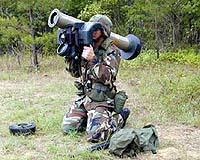 Javelin Joint Venture Awarded Another Major Army Contract
(NSI News Source Info) Tucson AZ - September 05, 2008: The Raytheon and Lockheed Martin Javelin Joint Venture has received a $111.6 million U.S. Army Global War on Terror supplemental contract to produce additional Javelin missiles and command launch units.
Javelin is the world's first man-portable fire-and-forget medium-range missile system. The compact, lightweight missile is designed for one-soldier operations in all environments. The joint venture expects to deliver the missiles and CLUs to the U.S. Army in the spring of 2011.
"The Javelin is very effective in the battlefield. It weighs only 49 pounds and is soft launched, which means the rocket motor ignites outside the launch tube. Soldiers can fire Javelin from inside a protective enclosure," said Duane Gooden, Raytheon Missile Systems' Javelin program director and president of the Javelin Joint Venture.
"Javelin's long-wave imaging infrared technology also allows use of the weapon during poor weather conditions."
The Javelin enhances direct-fire capability against armored vehicles, buildings and field fortifications. Its anti-armor defense capabilities are critical to mission success in multiple environments. Javelin is currently in service with the U.S. Army, U.S. Marine Corps and 10 allied customers.
"Javelin's infrared command launch unit is designed for easy and quick target engagement," said Hady Mourad, Lockheed Martin's vice president of the Javelin Joint Venture. "Its thermal sight is also an excellent surveillance device, which has been demonstrated in the Global War on Terror."
Javelin Joint Venture Awarded Another Major Army Contract
(NSI News Source Info) Tucson AZ - September 05, 2008: The Raytheon and Lockheed Martin Javelin Joint Venture has received a $111.6 million U.S. Army Global War on Terror supplemental contract to produce additional Javelin missiles and command launch units.
Javelin is the world's first man-portable fire-and-forget medium-range missile system. The compact, lightweight missile is designed for one-soldier operations in all environments. The joint venture expects to deliver the missiles and CLUs to the U.S. Army in the spring of 2011.
"The Javelin is very effective in the battlefield. It weighs only 49 pounds and is soft launched, which means the rocket motor ignites outside the launch tube. Soldiers can fire Javelin from inside a protective enclosure," said Duane Gooden, Raytheon Missile Systems' Javelin program director and president of the Javelin Joint Venture.
"Javelin's long-wave imaging infrared technology also allows use of the weapon during poor weather conditions."
The Javelin enhances direct-fire capability against armored vehicles, buildings and field fortifications. Its anti-armor defense capabilities are critical to mission success in multiple environments. Javelin is currently in service with the U.S. Army, U.S. Marine Corps and 10 allied customers.
"Javelin's infrared command launch unit is designed for easy and quick target engagement," said Hady Mourad, Lockheed Martin's vice president of the Javelin Joint Venture. "Its thermal sight is also an excellent surveillance device, which has been demonstrated in the Global War on Terror."
China suggests UN role in solving Georgia crisis
 China suggests UN role in solving Georgia crisis
(NSI News Source Info) Beijing - September 5, 2008: China suggested Thursday for the first time that the United Nations could play a role in solving the Georgia crisis, saying the world body should consider the interests of all parties.
"If the United Nations adopts any kind of action, it must be conducive to promoting a resolution through dialogue and consultations," foreign ministry spokeswoman Jiang Yu told journalists.
"(It should) help achieve regional peace and stability and should embody the common ground of all the various parties."
Some observers have argued that China would prefer a regional forum such as the Organisation for Security and Cooperation in Europe to deal with the crisis, rather than the United Nations.
If the UN Security Council were to consider a resolution, China would have to make its position clear, posing a potential embarrassment given its close relationship with Russia, which invaded Georgia in August.
Beijing has consistently refused to fully endorse Russia or the Western nations that have condemned Moscow.
Hostilities erupted over Moscow-backed rebel regions South Ossetia and Abkhazia, which Russia then recognised as independent. The West has expressed outrage at Russia's military action and its recognition of the rebel regions.
Jiang's comments came as US Vice President Dick Cheney arrived in Georgia for talks with President Mikheil Saakashvili, a day after the United States announced a one-billion-dollar aid package for the ex-Soviet republic.
China suggests UN role in solving Georgia crisis
(NSI News Source Info) Beijing - September 5, 2008: China suggested Thursday for the first time that the United Nations could play a role in solving the Georgia crisis, saying the world body should consider the interests of all parties.
"If the United Nations adopts any kind of action, it must be conducive to promoting a resolution through dialogue and consultations," foreign ministry spokeswoman Jiang Yu told journalists.
"(It should) help achieve regional peace and stability and should embody the common ground of all the various parties."
Some observers have argued that China would prefer a regional forum such as the Organisation for Security and Cooperation in Europe to deal with the crisis, rather than the United Nations.
If the UN Security Council were to consider a resolution, China would have to make its position clear, posing a potential embarrassment given its close relationship with Russia, which invaded Georgia in August.
Beijing has consistently refused to fully endorse Russia or the Western nations that have condemned Moscow.
Hostilities erupted over Moscow-backed rebel regions South Ossetia and Abkhazia, which Russia then recognised as independent. The West has expressed outrage at Russia's military action and its recognition of the rebel regions.
Jiang's comments came as US Vice President Dick Cheney arrived in Georgia for talks with President Mikheil Saakashvili, a day after the United States announced a one-billion-dollar aid package for the ex-Soviet republic.
China sends report to UN on military spending: govt
 China sends report to UN on military spending: govt
(NSI News Source Info) Beijing - September 5, 2008: China said Thursday that it had handed over a report on its military spending last year to the United Nations as part of efforts to enhance trust with other countries.
"The Chinese government has handed over to the United Nations the 2007 military expenditures report," foreign ministry spokeswoman Jiang Yu said.
"This shows again that the Chinese government attaches great importance to the issue of military transparency and actively endeavours to enhance military mutual trust with other countries."
The annual report is required under the UN's military budget and transparency mechanism, which China joined last year, she said.
Copies of the report would be made available through the United Nations, she added.
China sends report to UN on military spending: govt
(NSI News Source Info) Beijing - September 5, 2008: China said Thursday that it had handed over a report on its military spending last year to the United Nations as part of efforts to enhance trust with other countries.
"The Chinese government has handed over to the United Nations the 2007 military expenditures report," foreign ministry spokeswoman Jiang Yu said.
"This shows again that the Chinese government attaches great importance to the issue of military transparency and actively endeavours to enhance military mutual trust with other countries."
The annual report is required under the UN's military budget and transparency mechanism, which China joined last year, she said.
Copies of the report would be made available through the United Nations, she added.
Australia: Termination of JP129 Tactical Unmanned Aerial Vehicle Contract
 Australia: Termination of JP129 Tactical Unmanned Aerial Vehicle Contract
(NSI News Source Info) September 5, 2008: The Minister for Defence, the Hon Joel Fitzgibbon MP, today announced that the Defence Materiel Organisation (DMO) and Boeing Australia have agreed to terminate the contract for the delivery of a Tactical Unmanned Aerial Vehicle (TUAV) System. Under a contract awarded to Boeing Australia in December 2006, Joint Project 129 sought to deliver the Israel Aircraft Industries (IAI) I-View 250 TUAV System, for use by the Australian Army in airborne surveillance, reconnaissance and target acquisition. Since contract award, Boeing Australia and its subcontractors have experienced a range of technical issues making it increasingly difficult to deliver the full scope of the contract within a timeframe acceptable to Defence. With a Defence imperative to field a TUAV capability as soon as possible, and the potential for a number of lower risk alternative systems, the DMO and Boeing Australia have agreed to terminate the contract on mutually acceptable terms. Rigorous management of the program by the DMO determined that proceeding as planned would have led to unacceptable delays in the delivery of this important capability. Mr Fitzgibbon acknowledged Boeing Australia’s cooperation with the DMO in taking this action. “I note that both Boeing Australia and the DMO took a mature and positive approach towards working to a mutually acceptable conclusion to the contract. This has avoided dragging this out in a protracted legal battle that would ultimately benefited neither party,” Mr Fitzgibbon said. “This decisive action will enable Defence to focus on the earliest acquisition of an alternative TUAV to meet the JP129 requirement.” Mr Fitzgibbon also acknowledged the important role of Mr Greg Combet, Parliamentary Secretary for Defence Procurement, in assisting bringing this contract to a conclusion. The Australian Army will continue to use the Scan Eagle UAV that is currently in service in the Middle East. As part of the agreement to terminate, Boeing will refund to Defence the $6 million they have been paid to date under the contract.
Australia: Termination of JP129 Tactical Unmanned Aerial Vehicle Contract
(NSI News Source Info) September 5, 2008: The Minister for Defence, the Hon Joel Fitzgibbon MP, today announced that the Defence Materiel Organisation (DMO) and Boeing Australia have agreed to terminate the contract for the delivery of a Tactical Unmanned Aerial Vehicle (TUAV) System. Under a contract awarded to Boeing Australia in December 2006, Joint Project 129 sought to deliver the Israel Aircraft Industries (IAI) I-View 250 TUAV System, for use by the Australian Army in airborne surveillance, reconnaissance and target acquisition. Since contract award, Boeing Australia and its subcontractors have experienced a range of technical issues making it increasingly difficult to deliver the full scope of the contract within a timeframe acceptable to Defence. With a Defence imperative to field a TUAV capability as soon as possible, and the potential for a number of lower risk alternative systems, the DMO and Boeing Australia have agreed to terminate the contract on mutually acceptable terms. Rigorous management of the program by the DMO determined that proceeding as planned would have led to unacceptable delays in the delivery of this important capability. Mr Fitzgibbon acknowledged Boeing Australia’s cooperation with the DMO in taking this action. “I note that both Boeing Australia and the DMO took a mature and positive approach towards working to a mutually acceptable conclusion to the contract. This has avoided dragging this out in a protracted legal battle that would ultimately benefited neither party,” Mr Fitzgibbon said. “This decisive action will enable Defence to focus on the earliest acquisition of an alternative TUAV to meet the JP129 requirement.” Mr Fitzgibbon also acknowledged the important role of Mr Greg Combet, Parliamentary Secretary for Defence Procurement, in assisting bringing this contract to a conclusion. The Australian Army will continue to use the Scan Eagle UAV that is currently in service in the Middle East. As part of the agreement to terminate, Boeing will refund to Defence the $6 million they have been paid to date under the contract.
Navistar Wins Bid to Supply Smaller MRAPs
Navistar Wins Bid to Supply Smaller MRAPs
(NSI News Source Info) September 5, 2008: Navistar won the competition to provide the Pentagon's first batch of smaller Mine Resistant Ambush Protected (MRAP) vehicles.
A Sept. 4 contract awards $752 million to Navistar International for an unspecified number of vehicles. Navistar officials put the number at 822.
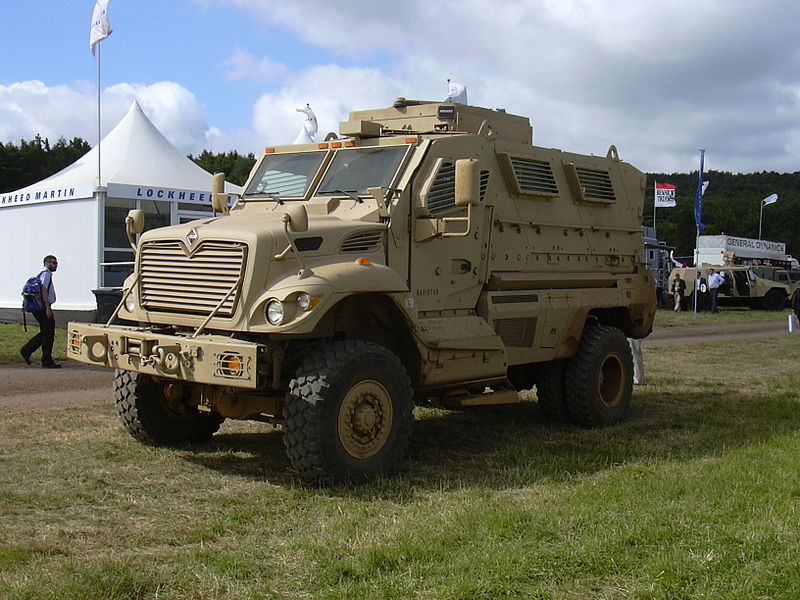
 But Navistar may not remain the Pentagon's sole source for the smaller MRAPs. The contract also provides $7 million apiece to General Dynamics Land Systems-Canada and Force Protection for five test vehicles.
All vehicles are slated to be delivered by February, according to the contract announcement. The vehicles will be deployed to Afghanistan, a senior Pentagon official said.
In August, Pentagon officials asked industry to redesign MRAPs to be more maneuverable and less prone to roll over, the official said.
Most of the 822 vehicles will be MaxxPro Dashes, 4X4s that are 2 tons lighter, 2 feet shorter in height and 8 inches shorter in length than the previous three MaxxPro variants, which weighed about 17-19 tons.
"We've reduced the center of gravity, yet really the survivability has not been impacted at all. This vehicle can absorb EFP [explosively formed penetrators] protection and it has also been designed to absorb an anti-RPG kit, like an APS [active protection system]," Navistar vice president Patrick MacArevey.
He also said the turning radius was smaller and its top speed greater.
"The torque-to-weight ratio is very high because the Dash has a similar engine to the one which runs in the 25-ton MaxxPro Plus," Navistar spokesman Tim Touhy said.
Navistar "engineers did a ride optimization and took the opportunity to upgrade the air conditioning. One of the reasons is the reduced height which means we took out our sliding cargo hatch. Now we no longer have an NBC [nuclear, biological, chemical] detection capability. We traded that for more payload and air conditioning," MacArevey said.
The Dash carries a 10,000-pound payload, and is designed to be 85 percent common with previous MaxxPros to ease the logistics burden.
The Dash was blast-tested in Israel by Plasan, an Israeli company that makes the armor for the MaxxPros.
Pentagon officials said program officials have tweaked the MRAP since the first requirements went out in fall 2006.
"The program has gone a long way and continuously upgraded things that needed to be done and made light changes in order to adjust to different situations," a Pentagon spokeswoman said. "We've always said that we will be flexible and we've always said that we will look at the requirement needs we they go along."
But Navistar may not remain the Pentagon's sole source for the smaller MRAPs. The contract also provides $7 million apiece to General Dynamics Land Systems-Canada and Force Protection for five test vehicles.
All vehicles are slated to be delivered by February, according to the contract announcement. The vehicles will be deployed to Afghanistan, a senior Pentagon official said.
In August, Pentagon officials asked industry to redesign MRAPs to be more maneuverable and less prone to roll over, the official said.
Most of the 822 vehicles will be MaxxPro Dashes, 4X4s that are 2 tons lighter, 2 feet shorter in height and 8 inches shorter in length than the previous three MaxxPro variants, which weighed about 17-19 tons.
"We've reduced the center of gravity, yet really the survivability has not been impacted at all. This vehicle can absorb EFP [explosively formed penetrators] protection and it has also been designed to absorb an anti-RPG kit, like an APS [active protection system]," Navistar vice president Patrick MacArevey.
He also said the turning radius was smaller and its top speed greater.
"The torque-to-weight ratio is very high because the Dash has a similar engine to the one which runs in the 25-ton MaxxPro Plus," Navistar spokesman Tim Touhy said.
Navistar "engineers did a ride optimization and took the opportunity to upgrade the air conditioning. One of the reasons is the reduced height which means we took out our sliding cargo hatch. Now we no longer have an NBC [nuclear, biological, chemical] detection capability. We traded that for more payload and air conditioning," MacArevey said.
The Dash carries a 10,000-pound payload, and is designed to be 85 percent common with previous MaxxPros to ease the logistics burden.
The Dash was blast-tested in Israel by Plasan, an Israeli company that makes the armor for the MaxxPros.
Pentagon officials said program officials have tweaked the MRAP since the first requirements went out in fall 2006.
"The program has gone a long way and continuously upgraded things that needed to be done and made light changes in order to adjust to different situations," a Pentagon spokeswoman said. "We've always said that we will be flexible and we've always said that we will look at the requirement needs we they go along."
But Navistar may not remain the Pentagon's sole source for the smaller MRAPs. The contract also provides $7 million apiece to General Dynamics Land Systems-Canada and Force Protection for five test vehicles.
All vehicles are slated to be delivered by February, according to the contract announcement. The vehicles will be deployed to Afghanistan, a senior Pentagon official said.
In August, Pentagon officials asked industry to redesign MRAPs to be more maneuverable and less prone to roll over, the official said.
Most of the 822 vehicles will be MaxxPro Dashes, 4X4s that are 2 tons lighter, 2 feet shorter in height and 8 inches shorter in length than the previous three MaxxPro variants, which weighed about 17-19 tons.
"We've reduced the center of gravity, yet really the survivability has not been impacted at all. This vehicle can absorb EFP [explosively formed penetrators] protection and it has also been designed to absorb an anti-RPG kit, like an APS [active protection system]," Navistar vice president Patrick MacArevey.
He also said the turning radius was smaller and its top speed greater.
"The torque-to-weight ratio is very high because the Dash has a similar engine to the one which runs in the 25-ton MaxxPro Plus," Navistar spokesman Tim Touhy said.
Navistar "engineers did a ride optimization and took the opportunity to upgrade the air conditioning. One of the reasons is the reduced height which means we took out our sliding cargo hatch. Now we no longer have an NBC [nuclear, biological, chemical] detection capability. We traded that for more payload and air conditioning," MacArevey said.
The Dash carries a 10,000-pound payload, and is designed to be 85 percent common with previous MaxxPros to ease the logistics burden.
The Dash was blast-tested in Israel by Plasan, an Israeli company that makes the armor for the MaxxPros.
Pentagon officials said program officials have tweaked the MRAP since the first requirements went out in fall 2006.
"The program has gone a long way and continuously upgraded things that needed to be done and made light changes in order to adjust to different situations," a Pentagon spokeswoman said. "We've always said that we will be flexible and we've always said that we will look at the requirement needs we they go along."
Lawmaker: Russia To Deploy Weapons Near Poland
 Lawmaker: Russia To Deploy Weapons Near Poland
(NSI News Source Info) MOSCOW - September 5, 2008: Russia will deploy high-precision weapons near Poland, following a U.S. missile defense deal signed in Warsaw last month to host an anti-missile shield on Polish soil, a senior Russian lawmaker said Thursday.
"We have new weapons types" that will be "installed near regions in Poland" where Washington plans to base 10 interceptor missiles, said Viktor Zavarzin, head of the defense committee for Russia's Duma, or lower house of parliament.
"We're working on this file," he added, without offering specifics on the types of weapons or when they would be deployed.
Russia is deeply unhappy about the agreement reached by Washington and Warsaw to site part of an anti-missile shield in Poland. The U.S. also hopes to add a radar facility in neighboring Czech Republic.
Moscow has warned that signing the U.S.-Poland missile deal would fuel a new arms race in Europe and beyond.
A senior Russian military official said in August that Poland was now a "priority" target for possible strikes against the shield.
Lawmaker: Russia To Deploy Weapons Near Poland
(NSI News Source Info) MOSCOW - September 5, 2008: Russia will deploy high-precision weapons near Poland, following a U.S. missile defense deal signed in Warsaw last month to host an anti-missile shield on Polish soil, a senior Russian lawmaker said Thursday.
"We have new weapons types" that will be "installed near regions in Poland" where Washington plans to base 10 interceptor missiles, said Viktor Zavarzin, head of the defense committee for Russia's Duma, or lower house of parliament.
"We're working on this file," he added, without offering specifics on the types of weapons or when they would be deployed.
Russia is deeply unhappy about the agreement reached by Washington and Warsaw to site part of an anti-missile shield in Poland. The U.S. also hopes to add a radar facility in neighboring Czech Republic.
Moscow has warned that signing the U.S.-Poland missile deal would fuel a new arms race in Europe and beyond.
A senior Russian military official said in August that Poland was now a "priority" target for possible strikes against the shield.
Russia sends two more aid planes to hurricane-stricken Cuba
 Russia sends two more aid planes to hurricane-stricken Cuba
(NSI News Source Info) MOSCOW - September 5, 2008: Russia sent two more aircraft carrying humanitarian aid to hurricane-stricken Cuba on Friday, a Russian emergencies service spokesperson said.
"The first Il-76 cargo aircraft took off at 10:40 a.m. Moscow time [06:40 GMT], and the second one at around 11:00 a.m. Moscow time [07:00 GMT]. They will deliver around 60 metric tons of humanitarian cargo," the spokesperson said.
Russian President Dmitry Medvedev ordered the emergencies service to send four aircraft to Cuba to deliver tents for 5,000 people, construction materials, and food in the wake of Hurricane Gustav. The first two cargo aircraft arrived in Cuba on Thursday.
Hurricane Gustav swept through Cuba last Saturday with winds reaching 300 km p/h (186 mph) as it hit the Isla de la Juventud, to the south of the Cuban mainland.
The storm later swept through the province of Pinar del Rio on the country's western tip, damaging around 86,000 houses and leaving much of the region without power.
No hurricane-related fatalities have been reported in Cuba, although Gustav took some 120 lives in other Caribbean islands, including Haiti, Jamaica, and the Dominican Republic.
Tropical Storm Hanna has also killed at least 150 people in Haiti since Tuesday.
Russia sends two more aid planes to hurricane-stricken Cuba
(NSI News Source Info) MOSCOW - September 5, 2008: Russia sent two more aircraft carrying humanitarian aid to hurricane-stricken Cuba on Friday, a Russian emergencies service spokesperson said.
"The first Il-76 cargo aircraft took off at 10:40 a.m. Moscow time [06:40 GMT], and the second one at around 11:00 a.m. Moscow time [07:00 GMT]. They will deliver around 60 metric tons of humanitarian cargo," the spokesperson said.
Russian President Dmitry Medvedev ordered the emergencies service to send four aircraft to Cuba to deliver tents for 5,000 people, construction materials, and food in the wake of Hurricane Gustav. The first two cargo aircraft arrived in Cuba on Thursday.
Hurricane Gustav swept through Cuba last Saturday with winds reaching 300 km p/h (186 mph) as it hit the Isla de la Juventud, to the south of the Cuban mainland.
The storm later swept through the province of Pinar del Rio on the country's western tip, damaging around 86,000 houses and leaving much of the region without power.
No hurricane-related fatalities have been reported in Cuba, although Gustav took some 120 lives in other Caribbean islands, including Haiti, Jamaica, and the Dominican Republic.
Tropical Storm Hanna has also killed at least 150 people in Haiti since Tuesday.
Russia's Glonass system to comprise 30 satellites by 2011
 Russia's Glonass system to comprise 30 satellites by 2011
(NSI News Source Info) MOSCOW - September 5, 2008: The number of satellites comprising Russia's Glonass navigation system will be increased from the current 16 to 30 by 2011, the head of the Russian Space Agency (Roscosmos) said on Friday.
Glonass (Global Navigation Satellite System) is the Russian equivalent of the U.S. Global Positioning System (GPS), which is designed for both military and civilian use, and allows users to identify their positions in real time.
"We will increase the number of navigation satellites to the required 30 by 2011. In all, we plan to launch six satellites by the end of 2008 and six more next year. Therefore, the satellite navigation system will become truly global," Anatoly Perminov said in an interview with Krasnaya Zvezda newspaper.
According to the Central Research Institute for Machine Building, the Glonass system currently consists of 16 satellites, with 13 satellites operating in line with their designation function, two satellites are undergoing maintenance and one is due to be withdrawn from the orbital grouping.
Perminov also said that the Russian navigation system has a number of advantages over its foreign analogues as the satellites give better coverage of Arctic zones.
"This is one of the most important preconditions for the successful development of natural deposits and for oil and gas production on the shelf," he said.
It was earlier reported that the Glonass system should include 18 satellites for continued navigation services covering the entire territory of the Russian Federation and 24 satellites to provide services worldwide.
A total of 9.9 billion rubles ($418.25 million) was allocated for Glonass from the federal budget in 2007, and 4.7 billion rubles ($200 million) in 2006.
Russia's Glonass system to comprise 30 satellites by 2011
(NSI News Source Info) MOSCOW - September 5, 2008: The number of satellites comprising Russia's Glonass navigation system will be increased from the current 16 to 30 by 2011, the head of the Russian Space Agency (Roscosmos) said on Friday.
Glonass (Global Navigation Satellite System) is the Russian equivalent of the U.S. Global Positioning System (GPS), which is designed for both military and civilian use, and allows users to identify their positions in real time.
"We will increase the number of navigation satellites to the required 30 by 2011. In all, we plan to launch six satellites by the end of 2008 and six more next year. Therefore, the satellite navigation system will become truly global," Anatoly Perminov said in an interview with Krasnaya Zvezda newspaper.
According to the Central Research Institute for Machine Building, the Glonass system currently consists of 16 satellites, with 13 satellites operating in line with their designation function, two satellites are undergoing maintenance and one is due to be withdrawn from the orbital grouping.
Perminov also said that the Russian navigation system has a number of advantages over its foreign analogues as the satellites give better coverage of Arctic zones.
"This is one of the most important preconditions for the successful development of natural deposits and for oil and gas production on the shelf," he said.
It was earlier reported that the Glonass system should include 18 satellites for continued navigation services covering the entire territory of the Russian Federation and 24 satellites to provide services worldwide.
A total of 9.9 billion rubles ($418.25 million) was allocated for Glonass from the federal budget in 2007, and 4.7 billion rubles ($200 million) in 2006.
US forces 'kill five in Pakistan'
 US forces 'kill five in Pakistan'
(NSI News Source Info) Islamabad - September 5, 2008: Tensions in the border region are rising. At least five people have been killed in another suspected US missile strike on militant targets in Pakistan's border region, Pakistani officials say.
The army has reported an incident but says it is still investigating.
It would be the third attack in three days allegedly carried out by US forces, who have not officially confirmed their involvement.
Officials said a missile strike was launched by a suspected US aircraft in the North Waziristan tribal area.
Unilateral strikes
Some reports said Islamist militants were killed, while local TV channels said women and children were among the dead.
This would be the third such attack in three days, including an unprecedented ground assault allegedly carried out by American commandos.
In recent months US forces have stepped up unilateral strikes on Taleban and al-Qaeda targets in Pakistan's tribal areas.
They say Pakistan is not doing enough to stem the flow of insurgents across the border into Afghanistan.
Pakistani security officials suspect the Americans are trying to hit senior al-Qaeda targets ahead of forthcoming US presidential elections.
Pakistan's army has warned that such direct US action could rally more tribesmen behind the Taleban and incite a wider uprising.
US forces 'kill five in Pakistan'
(NSI News Source Info) Islamabad - September 5, 2008: Tensions in the border region are rising. At least five people have been killed in another suspected US missile strike on militant targets in Pakistan's border region, Pakistani officials say.
The army has reported an incident but says it is still investigating.
It would be the third attack in three days allegedly carried out by US forces, who have not officially confirmed their involvement.
Officials said a missile strike was launched by a suspected US aircraft in the North Waziristan tribal area.
Unilateral strikes
Some reports said Islamist militants were killed, while local TV channels said women and children were among the dead.
This would be the third such attack in three days, including an unprecedented ground assault allegedly carried out by American commandos.
In recent months US forces have stepped up unilateral strikes on Taleban and al-Qaeda targets in Pakistan's tribal areas.
They say Pakistan is not doing enough to stem the flow of insurgents across the border into Afghanistan.
Pakistani security officials suspect the Americans are trying to hit senior al-Qaeda targets ahead of forthcoming US presidential elections.
Pakistan's army has warned that such direct US action could rally more tribesmen behind the Taleban and incite a wider uprising.
Subscribe to:
Posts (Atom)












