People look up in surprise as they watch the Indian Air Force Surya Kiran Aerobatics Team (SKAT) conduct sky manoeuvres at the 7th China International Aviation and Aerospace Exhibition on November 7, 2008 in Zhuhai of Guangdong Province, China.
People look up in surprise as they watch the Indian Air Force Surya Kiran Aerobatics Team (SKAT) conduct sky manoeuvres at the 7th China International Aviation and Aerospace Exhibition on November 7, 2008 in Zhuhai of Guangdong Province, China.
People look up in surprise as they watch the Indian Air Force Surya Kiran Aerobatics Team (SKAT) conduct sky manoeuvres at the 7th China International Aviation and Aerospace Exhibition on November 7, 2008 in Zhuhai of Guangdong Province, China.
 Iraqi forces secured the area around a parking lot where a car bomb exploded in Baquba, Iraq, on Monday.
 United Nations peacekeepers patrolled near Rutshuru, in eastern Congo, on Monday, inside territory held by Laurent Nkunda's rebel movement.
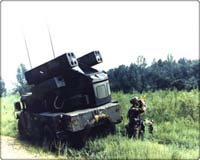 Boeing Celebrates 20th Anniversary Of First Avenger Delivery To US Army
(NSI News Source Info) Huntsville AL - November 9, 2008: Boeing has announced that Nov. 1 marked the 20th anniversary of its first Avenger fire unit delivery to the U.S. Army.
Developed and produced in Huntsville, Avenger is the Army's premier short-range air defense system, and has been used effectively in tactical defense and convoy-protection operations with U.S. units around the world.
"Boeing in Huntsville has a long legacy of providing our nation's military with reliable, effective weapons systems," said Sen. Jeff Sessions, R-Ala. "The Avenger team deserves our sincere gratitude for their commitment and dedication delivering a system designed to help ensure our men and women in uniform return home safely."
"Boeing's dedicated work force in Huntsville has been a significant contributor to our national defense, and their work on the Avenger program is no exception," said Sen. Richard Shelby, R-Ala. "As we mark the 20th anniversary of the first Avenger fire unit's delivery to our armed forces, I would like to commend the Avenger team for their hard work on this important air defense system."
"I am proud of Boeing and its entire work force in North Alabama on this significant milestone," said Rep. Bud Cramer, D-Ala.
"The Avenger has performed successfully for the past 20 years and continues to provide the necessary short-range air defense needed for our service members. I look forward to the Avenger's continued success and development."
Since the first delivery, Boeing has produced more than 1,100 Avenger systems for the Army, Army National Guard and U.S. Marine Corps. The system also is in production for international customers through U.S. Foreign Military Sales contracts.
"The 20th anniversary of the Boeing Avenger marks an important milestone in a program that has been employed by the Army and Army National Guard since 1988," said Phil Hillman, the Avenger program manager for Boeing.
"Avenger performs a very important security role by providing warfighters with unmatched short-range air defense capability through improved situational awareness and rapid target acquisition. Because Boeing and the Army are committed to warfighter safety and mission effectiveness, we have incorporated enhanced capabilities based on operational needs and lessons learned from current and previous conflicts to ensure its continued relevance on the battlefield."
Armed with Stinger missiles in two launch pods that hold four missiles each, and a .50-caliber machine gun on a gyro-stabilized turret, the Avenger was deployed to the Middle East in 1991 to support NATO troops during Operation Desert Storm and again in 2003 during Operation Iraqi Freedom.
Boeing Celebrates 20th Anniversary Of First Avenger Delivery To US Army
(NSI News Source Info) Huntsville AL - November 9, 2008: Boeing has announced that Nov. 1 marked the 20th anniversary of its first Avenger fire unit delivery to the U.S. Army.
Developed and produced in Huntsville, Avenger is the Army's premier short-range air defense system, and has been used effectively in tactical defense and convoy-protection operations with U.S. units around the world.
"Boeing in Huntsville has a long legacy of providing our nation's military with reliable, effective weapons systems," said Sen. Jeff Sessions, R-Ala. "The Avenger team deserves our sincere gratitude for their commitment and dedication delivering a system designed to help ensure our men and women in uniform return home safely."
"Boeing's dedicated work force in Huntsville has been a significant contributor to our national defense, and their work on the Avenger program is no exception," said Sen. Richard Shelby, R-Ala. "As we mark the 20th anniversary of the first Avenger fire unit's delivery to our armed forces, I would like to commend the Avenger team for their hard work on this important air defense system."
"I am proud of Boeing and its entire work force in North Alabama on this significant milestone," said Rep. Bud Cramer, D-Ala.
"The Avenger has performed successfully for the past 20 years and continues to provide the necessary short-range air defense needed for our service members. I look forward to the Avenger's continued success and development."
Since the first delivery, Boeing has produced more than 1,100 Avenger systems for the Army, Army National Guard and U.S. Marine Corps. The system also is in production for international customers through U.S. Foreign Military Sales contracts.
"The 20th anniversary of the Boeing Avenger marks an important milestone in a program that has been employed by the Army and Army National Guard since 1988," said Phil Hillman, the Avenger program manager for Boeing.
"Avenger performs a very important security role by providing warfighters with unmatched short-range air defense capability through improved situational awareness and rapid target acquisition. Because Boeing and the Army are committed to warfighter safety and mission effectiveness, we have incorporated enhanced capabilities based on operational needs and lessons learned from current and previous conflicts to ensure its continued relevance on the battlefield."
Armed with Stinger missiles in two launch pods that hold four missiles each, and a .50-caliber machine gun on a gyro-stabilized turret, the Avenger was deployed to the Middle East in 1991 to support NATO troops during Operation Desert Storm and again in 2003 during Operation Iraqi Freedom.
 1-Lockheed touts jets to Israel, flush with U.S. aid
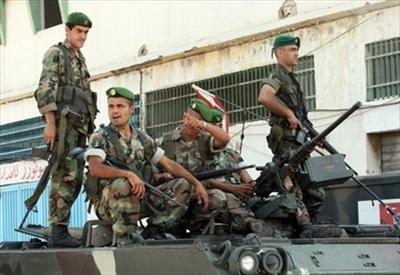 Lebanon Leader Says Russia Will Sell Arms: Reports
(NSI News Source Info) MOSCOW - November 9, 2008: The leader of Lebanon's Western-backed parliamentary majority told a Russian news agency Sunday that Moscow is willing to sell it military hardware at "advantageous prices."
Russia will "help the Lebanese army, which needs heavy weapons," Saad Hariri was initially quoted as saying by Vremia Novosti newspaper after a visit to Moscow.
Hariri told Interfax news agency separately that current American military aid is "limited to light weaponry," stressing that the Lebanese army also needs "tanks and artillery equipment.
"These needs will be addressed when the Lebanese defense minister visits Moscow this month or at the latest in December," he added.
Shiite militant group Hezbollah's weaponry is an explosive issue that bitterly divides the country's political leaders, with Hariri's grouping insisting that the state should have sole authority in taking decisions on war and peace.
The Syrian- and Iranian-backed Shiite group and its allies say that the militant group's weapons are necessary to protect Lebanon from Israeli aggression
Lebanon Leader Says Russia Will Sell Arms: Reports
(NSI News Source Info) MOSCOW - November 9, 2008: The leader of Lebanon's Western-backed parliamentary majority told a Russian news agency Sunday that Moscow is willing to sell it military hardware at "advantageous prices."
Russia will "help the Lebanese army, which needs heavy weapons," Saad Hariri was initially quoted as saying by Vremia Novosti newspaper after a visit to Moscow.
Hariri told Interfax news agency separately that current American military aid is "limited to light weaponry," stressing that the Lebanese army also needs "tanks and artillery equipment.
"These needs will be addressed when the Lebanese defense minister visits Moscow this month or at the latest in December," he added.
Shiite militant group Hezbollah's weaponry is an explosive issue that bitterly divides the country's political leaders, with Hariri's grouping insisting that the state should have sole authority in taking decisions on war and peace.
The Syrian- and Iranian-backed Shiite group and its allies say that the militant group's weapons are necessary to protect Lebanon from Israeli aggression
 U.K. monitors say Georgia attacked first - paper
(NSI News Source Info) LONDON - November 9, 2008: Two former British military officers are expected to provide crucial evidence that the conflict in South Ossetia was unleashed by Georgia, a British newspaper said on Sunday.
Georgia launched an attack on South Ossetia to seize control of the breakaway republic on the night of August 7-8, sparking a five-day war with Russia. Russia then recognized South Ossetia, along with Georgia's other separatist republic, Abkhazia, as independent states. Georgia claims the conflict was provoked by Russia.
"Ryan Grist, a former British Army captain, and Stephen Young, a former RAF wing commander, are said to have concluded that, before the Russian bombardment began, Georgian rockets and artillery were hitting civilian areas in the breakaway region of South Ossetia every 15 or 20 seconds," The Sunday Times reported.
According to the paper, the accounts by the two former British officers, who were senior figures in the mission deployed by the Organization for Security and Cooperation in Europe (OSCE) in the conflict area, seem likely to undermine the U.S.-backed claims of Georgian President Mikheil Saakashvili that his little country was the innocent victim of Russian aggression.
According to the paper, the British officers are expected to give their account of the war in South Ossetia when an international inquiry is convened to establish who started the five-day armed conflict.
"The inquiry comes as the EU softens its hardline position towards Russia amid mounting European scepticism about Saakashvili's judgment," the paper said.
U.K. monitors say Georgia attacked first - paper
(NSI News Source Info) LONDON - November 9, 2008: Two former British military officers are expected to provide crucial evidence that the conflict in South Ossetia was unleashed by Georgia, a British newspaper said on Sunday.
Georgia launched an attack on South Ossetia to seize control of the breakaway republic on the night of August 7-8, sparking a five-day war with Russia. Russia then recognized South Ossetia, along with Georgia's other separatist republic, Abkhazia, as independent states. Georgia claims the conflict was provoked by Russia.
"Ryan Grist, a former British Army captain, and Stephen Young, a former RAF wing commander, are said to have concluded that, before the Russian bombardment began, Georgian rockets and artillery were hitting civilian areas in the breakaway region of South Ossetia every 15 or 20 seconds," The Sunday Times reported.
According to the paper, the accounts by the two former British officers, who were senior figures in the mission deployed by the Organization for Security and Cooperation in Europe (OSCE) in the conflict area, seem likely to undermine the U.S.-backed claims of Georgian President Mikheil Saakashvili that his little country was the innocent victim of Russian aggression.
According to the paper, the British officers are expected to give their account of the war in South Ossetia when an international inquiry is convened to establish who started the five-day armed conflict.
"The inquiry comes as the EU softens its hardline position towards Russia amid mounting European scepticism about Saakashvili's judgment," the paper said.
 U.S. Army Upgrading The Last Hummer
(NSI News Source Info) November 9, 2008: The U.S. Army is equipping all its existing M1151 hummers (about 5,000 of them) with Vehicle Emergency Escape (VEE) Windows, at a cost of about $3,700 per vehicle. The new window takes about an hour to install, and replaces the existing bulletproof window with one that has a latch system. It takes about five seconds to turn the latches and push the window forward. This enables troops to get out of vehicles that have rolled over, or gone into the water, and jammed the doors. If the vehicle catches fire, either from an accident or roadside bomb, the VEE has already proved to be a lifesaver since it was introduced last year.
The U.S. Army is in the process of replacing about 40 percent of its 115,000 hummers with a new model, the M1151, that is built to handle the additional weight of armor protection. The key changes in the M1151 are a stronger suspension and a larger engine (a 6.5 liter turbo-diesel). This allows the vehicle to easily handle an additional 1,500 pounds of armor. More importantly, the armor is easily installed, or taken off. This allows the hummers to operate more efficiently, most of the time, without the armor.
For the last three years, the army has been buying 14,000 M1151s, and another 8,000 M1114s (with permanent armor installed). One major problem with the armored hummers is that they have more difficulty operating in mountainous areas like Afghanistan and Korea. Iraq is largely flat, at least the areas where armored hummers are needed.
The M1151 has removable armor. The M1151 will also have some armor underneath, but will otherwise look exactly like the M1114. The armor in the M1114 is added at the end of the production process, and requires special skills and tools to remove. Currently, the U.S. Army has over 10,000 M1114s. But the M1151 began replacing the M1114 last year.
The M1114 has been around since the 1990s. Originally designed for peacekeeping operations, it was meant for dangerous places like the Balkans. In 1998, only about 200 M1114s a year were being produced. The M1114 was based on a earlier armored hummer, that had served in the 1991 campaign in Kuwait.
The M1114 is basically an armored car, with a crew of four and a payload of one ton (plus two tons that can be towed.) A 190 horsepower engine gives it a top speed of 80 kilometers an hour and a max range (on one tank, on roads) of 480 kilometers. All the armored protection (against 7.62mm machine-guns and rifles, bombs, landmines and nearby bursting shells of up to 155mm) has more than doubled the cost of the M1114 ($165,000 compared to $65,000 for an unarmored model.)
The problem with putting two tons of armor on a hummer is that is causes more wear and tear to the vehicle, and they burn more fuel as well. This is especially true for a vehicle that is used day after day, in hot and dusty conditions. The extra weight is also in places that the vehicle designers did not plan on having additional weight. So the vehicles ride differently when armored. Drivers have to get used to it. The army would like to get rid of the armored hummers, and is working a new vehicle design to replace the hummer.
U.S. Army Upgrading The Last Hummer
(NSI News Source Info) November 9, 2008: The U.S. Army is equipping all its existing M1151 hummers (about 5,000 of them) with Vehicle Emergency Escape (VEE) Windows, at a cost of about $3,700 per vehicle. The new window takes about an hour to install, and replaces the existing bulletproof window with one that has a latch system. It takes about five seconds to turn the latches and push the window forward. This enables troops to get out of vehicles that have rolled over, or gone into the water, and jammed the doors. If the vehicle catches fire, either from an accident or roadside bomb, the VEE has already proved to be a lifesaver since it was introduced last year.
The U.S. Army is in the process of replacing about 40 percent of its 115,000 hummers with a new model, the M1151, that is built to handle the additional weight of armor protection. The key changes in the M1151 are a stronger suspension and a larger engine (a 6.5 liter turbo-diesel). This allows the vehicle to easily handle an additional 1,500 pounds of armor. More importantly, the armor is easily installed, or taken off. This allows the hummers to operate more efficiently, most of the time, without the armor.
For the last three years, the army has been buying 14,000 M1151s, and another 8,000 M1114s (with permanent armor installed). One major problem with the armored hummers is that they have more difficulty operating in mountainous areas like Afghanistan and Korea. Iraq is largely flat, at least the areas where armored hummers are needed.
The M1151 has removable armor. The M1151 will also have some armor underneath, but will otherwise look exactly like the M1114. The armor in the M1114 is added at the end of the production process, and requires special skills and tools to remove. Currently, the U.S. Army has over 10,000 M1114s. But the M1151 began replacing the M1114 last year.
The M1114 has been around since the 1990s. Originally designed for peacekeeping operations, it was meant for dangerous places like the Balkans. In 1998, only about 200 M1114s a year were being produced. The M1114 was based on a earlier armored hummer, that had served in the 1991 campaign in Kuwait.
The M1114 is basically an armored car, with a crew of four and a payload of one ton (plus two tons that can be towed.) A 190 horsepower engine gives it a top speed of 80 kilometers an hour and a max range (on one tank, on roads) of 480 kilometers. All the armored protection (against 7.62mm machine-guns and rifles, bombs, landmines and nearby bursting shells of up to 155mm) has more than doubled the cost of the M1114 ($165,000 compared to $65,000 for an unarmored model.)
The problem with putting two tons of armor on a hummer is that is causes more wear and tear to the vehicle, and they burn more fuel as well. This is especially true for a vehicle that is used day after day, in hot and dusty conditions. The extra weight is also in places that the vehicle designers did not plan on having additional weight. So the vehicles ride differently when armored. Drivers have to get used to it. The army would like to get rid of the armored hummers, and is working a new vehicle design to replace the hummer.
 North Korea Remain A Puzzling Block
(NSI News Source Info) November 9, 2008: South Korean intelligence officials are uncertain who is in charge up north. There is general agreement that North Korean leader Kim Jong Il is, or was, quite ill earlier this year. He appears to have had a stroke, but recovered. Maybe. There is some belief that Chang Sung Taek, the head of the secret police and Kim Jong Ils brother-in-law, is actually running things. But then, that has long appeared to be the case. The problem has always been that there was no one in charge up north, or at least that was the impression diplomats and negotiators got. For decades, there has been a small group of paranoid communist bureaucrats and military officers, trying to survive amid self-inflicted economic decline. Decisions appear to be made at random. This is, has and continues to be a major problem.
The recent release of photos showing North Korean leader Kim Jong Il is alive and well, are either undated or photoshopped (digitally altered). At best, Kim is alive and well enough to be briefly shown at a few public events. At worse, he's completely out of it and his henchmen are unwilling to publicly admit it, or deal with the public reaction. North Korean propaganda has elevated Kim Jong Il to the level of a deity, whose demise is unthinkable, and unsurvivable (since no heir has been appointed.)
In North Korea, police have been ordered to find and confiscate all illegal cell phones. Police are being told to do this, and control communications in general, to halt the spread of "rumors" about food shortages. Foreign aid agencies, that have some knowledge of conditions inside the country, believe that over half the population will be starving this Winter. Recent deserters from the army (who have escaped to China), report that the military still has food, but less of it than in the past. Malnutrition is common in the military, and morale is low. Potentially disloyal families are being expelled from the capital, increasing the fear and paranoia.
A new legal cell phone service will begin next year. Those few allowed to have cell phones, will only be able to operate them on a state controlled network that does not allow calls outside the country. The news inside North Korea is universally grim. Social order is breaking down, and crime is on the rise. Soldiers and police, who are now on short rations, increasingly steal from civilians, as a way to get more food. It's difficult to maintain discipline when the guards are hungry. However, it appears that there will not be as many starvation deaths as there were in the 1990s (when up to two million died in the great famine). That's because there is now better food distribution, and legal food markets (where those with anything to sell can buy food.) But this time around, more people will be hungry, and not happy about their condition.
The United States is trying to persuade South Korea to do some serious planning for various forms of collapse (economic, political, social) up north. The United States has long worked on such plans, but because less than five percent of the troops available in South Korea are American, it's really up to the South Koreans to carry out any operations in a North Korea that has slipped into turmoil. South Korean media are increasingly full of reports from recent North Korean escapees who have witnessed growing disorder and social collapse up north. There are more public executions and roundups by the secret police up there, and more people who suffer the lethargy of malnutrition and fear. In the south, there is growing agreement that the situation in the north is approaching that point where it all falls apart. At that point, South Korea will have to do something, and doing nothing is not among the better options.
North Korea is not giving up its nuclear weapons, and has demonstrated that it will not allow the kind of inspections needed to insure that the weapons are gone, and their development is halted. But by delaying negotiations in order to get that concession, the new famine has had more time to spread. Hunger has now spread to the cities and military units, and there are a growing number of starvation deaths in the countryside.
North Korea is still making mysterious shipments, often by air, to Iran. Is this nuclear technology, or ballistic missile assistance? The U.S. is so anxious about this cooperation, that it convinced India to refuse over-flight permission to a North Korean cargo airliner last Summer. The North Korean aircraft had landed in Myanmar, and asked permission to fly over India to Iran. At the urging of the United States, India refused, and the North Korean cargo had to find another way to get to Iran.
October 24, 2008: North Korea admitted to China, last June, that it had produced 68 pounds of plutonium, and used 4.5 pounds of that for the bomb it tested two years ago. Given the primitive state of North Korean bomb design, they could produce about eight nuclear weapons with what plutonium they have.
North Korea Remain A Puzzling Block
(NSI News Source Info) November 9, 2008: South Korean intelligence officials are uncertain who is in charge up north. There is general agreement that North Korean leader Kim Jong Il is, or was, quite ill earlier this year. He appears to have had a stroke, but recovered. Maybe. There is some belief that Chang Sung Taek, the head of the secret police and Kim Jong Ils brother-in-law, is actually running things. But then, that has long appeared to be the case. The problem has always been that there was no one in charge up north, or at least that was the impression diplomats and negotiators got. For decades, there has been a small group of paranoid communist bureaucrats and military officers, trying to survive amid self-inflicted economic decline. Decisions appear to be made at random. This is, has and continues to be a major problem.
The recent release of photos showing North Korean leader Kim Jong Il is alive and well, are either undated or photoshopped (digitally altered). At best, Kim is alive and well enough to be briefly shown at a few public events. At worse, he's completely out of it and his henchmen are unwilling to publicly admit it, or deal with the public reaction. North Korean propaganda has elevated Kim Jong Il to the level of a deity, whose demise is unthinkable, and unsurvivable (since no heir has been appointed.)
In North Korea, police have been ordered to find and confiscate all illegal cell phones. Police are being told to do this, and control communications in general, to halt the spread of "rumors" about food shortages. Foreign aid agencies, that have some knowledge of conditions inside the country, believe that over half the population will be starving this Winter. Recent deserters from the army (who have escaped to China), report that the military still has food, but less of it than in the past. Malnutrition is common in the military, and morale is low. Potentially disloyal families are being expelled from the capital, increasing the fear and paranoia.
A new legal cell phone service will begin next year. Those few allowed to have cell phones, will only be able to operate them on a state controlled network that does not allow calls outside the country. The news inside North Korea is universally grim. Social order is breaking down, and crime is on the rise. Soldiers and police, who are now on short rations, increasingly steal from civilians, as a way to get more food. It's difficult to maintain discipline when the guards are hungry. However, it appears that there will not be as many starvation deaths as there were in the 1990s (when up to two million died in the great famine). That's because there is now better food distribution, and legal food markets (where those with anything to sell can buy food.) But this time around, more people will be hungry, and not happy about their condition.
The United States is trying to persuade South Korea to do some serious planning for various forms of collapse (economic, political, social) up north. The United States has long worked on such plans, but because less than five percent of the troops available in South Korea are American, it's really up to the South Koreans to carry out any operations in a North Korea that has slipped into turmoil. South Korean media are increasingly full of reports from recent North Korean escapees who have witnessed growing disorder and social collapse up north. There are more public executions and roundups by the secret police up there, and more people who suffer the lethargy of malnutrition and fear. In the south, there is growing agreement that the situation in the north is approaching that point where it all falls apart. At that point, South Korea will have to do something, and doing nothing is not among the better options.
North Korea is not giving up its nuclear weapons, and has demonstrated that it will not allow the kind of inspections needed to insure that the weapons are gone, and their development is halted. But by delaying negotiations in order to get that concession, the new famine has had more time to spread. Hunger has now spread to the cities and military units, and there are a growing number of starvation deaths in the countryside.
North Korea is still making mysterious shipments, often by air, to Iran. Is this nuclear technology, or ballistic missile assistance? The U.S. is so anxious about this cooperation, that it convinced India to refuse over-flight permission to a North Korean cargo airliner last Summer. The North Korean aircraft had landed in Myanmar, and asked permission to fly over India to Iran. At the urging of the United States, India refused, and the North Korean cargo had to find another way to get to Iran.
October 24, 2008: North Korea admitted to China, last June, that it had produced 68 pounds of plutonium, and used 4.5 pounds of that for the bomb it tested two years ago. Given the primitive state of North Korean bomb design, they could produce about eight nuclear weapons with what plutonium they have.
 The BAE Systems RG33 6×6 and 4×4 mine-protected vehicles are in production for the US Marine Corps mine-resistant ambush-protected (MRAP) vehicle programme
The Merkava 4 has been extensively improved, in particular with new ballistic armour protection and new gun and electronics systems The Merkava 4 is slightly larger than the Merkava 3 Baz, which has been in service with the IDF since 1990. The Merkava 3 is offered for export by SIBAT based in Tel Aviv. The Merkava 4 is not offered for export but the systems and components are exported. The tank is capable of carrying eight infantry soldiers, a command group or three litter patients (stretcher casualties) in addition to the tank crew of commander, loader, gunner and driver. The tank is capable of firing on the move at moving targets and has demonstrated high hit probability in firing against attack helicopters using conventional anti-tank munitions. Major contractors include: the El Op Electro-Optic Industries subsidiary of Elbit Systems which is responsible for the fire control system; the Israel Defence Force which carries out main construction and system integration and testing; Israel Military Industries for the supply of the main gun, ballistic protection and munitions; Imco Industries for the electrical systems; Urdan Industries for the hull, main turret and castings; and IAI Ramta for protection components. The main part of the tank production, the construction of the hull and integration of all the systems is carried out in the Israel Defence Force workshop. Merkava 4 battle tank weaponry The Merkava 4 has a new all-electric turret developed by Elbit and subsidiary El-Op. Only one hatch is installed in the turret, the commander's hatch. The improved 120mm smooth-bore gun has been developed by Israel Military Industries. The improved Merkava 4 battle tank gun can fire higher power munitions including new 120mm high-penetration projectiles and guided shells. The new gun is an advanced generation of the gun developed for the Merkava 3. A Vidco thermal shroud on the gun reduces bending of the barrel resulting from environmental and firing conditions. The gun can fire higher power munitions including new 120mm high-penetration projectiles and guided shells. The loader can select semi-automatically the ammunition type. The tank carries 48 rounds of ammunition each stored in a protective container. An electrically operated revolving magazine contains 10 ready-to-fire rounds. The range of ammunition includes APFSDS-T M711 (CL 3254), the HEAT-MP-T M325 (CL 3105) and the TPCSDS-T M324 (CL 3139) supplied by the Ammunition Group of Israel Military Industries. The gun is also capable of firing French, German or US 120mm rounds. The tank is fitted with 7.62mm machine guns and an internally operated 60mm mortar system developed by Soltam Ltd. The mortar can fire explosive and illumination rounds to a range of 2,700m. The protection suite includes an advanced electromagnetic threat identification and warning system. El Op fire control The new fire control system, developed by El Op, includes very advanced features including the capability to acquire and lock onto moving targets, even airborne helicopters, while the tank itself is on the move. The computer-controlled fire control system includes line-of-sight stabilisation in two axes, a second-generation television sight and automatic thermal target tracker, a laser range finder, an improved thermal night vision system and a dynamic cant angle indicator. The commander's station is fitted with a stabilised panoramic day and night sight. The integrated operating system includes advanced data communications and battle management. Tadiran developed the Merkava's communications system, the inter communication system and the VRC 120 vehicular transceiver radio with embedded auxiliary receivers . The Merkava 4's sensors include radar with four antennas placed around the vehicle. Countermeasures The tank is fitted with the Amcoram LWS-2 laser warning system, with threat warning display installed at the commander's station. This links to the Israel Military Industries POMALS (pedestal-operated multi-ammunition launching system) decoy launcher. One launcher is fitted on either side of the tank, which can launch smoke grenades and decoys. A Merkava 4 has also been fitted with the Rafael Trophy Active Protection System. Trophy provides 360° coverage against anti-tank rockets, anti-tank missiles and tank HEAT (high-explosive anti-tank) rounds. Once Trophy has detected a threat, it is tracked and classified and the optimal intercept point is computed, prior to launching a countermeasure. Sensors include radar with four antennas placed around the vehicle. The system development was completed in April 2007 and the IDF has approved production for fitting on new Merkava tanks. The Trophy system entered low-rate initial production (LRIP) in June 2008 and is planned to achieve initial operating capability in late 2009. GD 883 V-12 diesel engine The Merkava 4 is powered by a V-12 diesel engine rated at 1,500hp. The engine compartment and one fuel tank are at the front of the tank and two fuel tanks are at the back. The new engine represents a 25% increase in power compared to the 1,200hp powerpack installed on the Merkava 3. The German company MTU manufactures the engine components and the GD 883 engine is manufactured under licensed production by General Dynamics Land Systems in the USA. The engine is transferred to Israel for installation and integration with the automatic transmission and with the engine computer control system. The tank has automatic five-gear transmission rather than four gears as in the Merkava 3. The transmission system is manufactured by Renk. The single position rotary shock absorbers are installed externally. Hull The redesign of the hull around the installation of the new powerpack has provided improved frontal armour protection and improvement to the driver's field of view. For improved reverse driving the driver uses a camera. The Merkava 4 is powered by a V-12 diesel engine rated at 1,500hp. A new feature of the tank is that the fitted modular special armour covers the turret. The tank is protected against a range of threats, including air-launched precision-guided missiles and advanced and top-attack anti-tank weapons. Automatic fire detection and suppression has been installed. The underside of the hull has been fitted with additional armour protection against mines. The driver and crew compartments are equipped with heating and cooling air conditioning and a Shalon Chemical Industries combined individual and overpressure protection systems against contamination by NBC warfare.
 Taliban Making Crude Bombs In Afghanistan
(NSI News Source Info) November 9, 2008: In Afghanistan, the Taliban have apparently run out of munitions left over from the 1980s war with Russia, and are increasingly using fertilizer based explosives for their roadside bombs. Mix fertilizer with the right amount of diesel or gasoline, use a detonator to set it off, and it goes off like second rate explosives.
Fertilizer explosives are bulkier than the kind of military explosives found in 1980s era bombs and shells. The explosive power varies with the skill of whoever is mixing the fertilizer and fuel. Thus the roadside bombs are often less powerful than the ones using military or commercial explosives, and often much larger and easier to spot. NATO troops, learning from their Iraqi experienced U.S. counterparts, are getting more effective at spotting these bombs.
Currently, about 90 percent of the roadside bombs are detected and disarmed or destroyed before they can hurt anyone. A lot of these bombs are found because local civilians tip the troops off. While the civilians risk retaliation from the Taliban, it is civilians who suffer the most casualties from these devices. The troops increasingly travel in well protected vehicles, and the explosion tends to hurt any unprotected civilians within range. The Taliban don't try too hard to avoid civilian casualties.
Taliban Making Crude Bombs In Afghanistan
(NSI News Source Info) November 9, 2008: In Afghanistan, the Taliban have apparently run out of munitions left over from the 1980s war with Russia, and are increasingly using fertilizer based explosives for their roadside bombs. Mix fertilizer with the right amount of diesel or gasoline, use a detonator to set it off, and it goes off like second rate explosives.
Fertilizer explosives are bulkier than the kind of military explosives found in 1980s era bombs and shells. The explosive power varies with the skill of whoever is mixing the fertilizer and fuel. Thus the roadside bombs are often less powerful than the ones using military or commercial explosives, and often much larger and easier to spot. NATO troops, learning from their Iraqi experienced U.S. counterparts, are getting more effective at spotting these bombs.
Currently, about 90 percent of the roadside bombs are detected and disarmed or destroyed before they can hurt anyone. A lot of these bombs are found because local civilians tip the troops off. While the civilians risk retaliation from the Taliban, it is civilians who suffer the most casualties from these devices. The troops increasingly travel in well protected vehicles, and the explosion tends to hurt any unprotected civilians within range. The Taliban don't try too hard to avoid civilian casualties.
 Nato Covered Eastern Europe Skies
(NSI News Source Info) November 9, 2008: For the last ten years, Western firms have been installing modern air defense communications systems all over Eastern Europe (Czech Republic, Hungary, Poland, Slovakia, Slovenia, Lithuania, Latvia, Estonia, Bulgaria and Romania.) In addition, dozens of new Western surveillance radars have been installed as well. The communications systems enable air defense commanders to see a complete picture of what all the radars military (and many civilian) surveillance radars can see. These systems also provide voice and data links, as well as integrating air defenses (both ground based and aircraft.) For the new NATO members in Eastern Europe, these systems also enable them to plug into the NATO air defense system.
This sort of thing doesn't get much publicity, but it is very important in terms of safe air travel (especially when military aircraft are training) and in keeping track of intruders. The Western systems are much superior to the stuff the Russians developed during the Cold War. This was made clear in 1987, when a German teenager flew a single engine civilian aircraft through Russia and landed in Red Square in Moscow. Several Russian generals and defense officials were fired, but the damage was already done to the reputation of Russian air defenses.
Nato Covered Eastern Europe Skies
(NSI News Source Info) November 9, 2008: For the last ten years, Western firms have been installing modern air defense communications systems all over Eastern Europe (Czech Republic, Hungary, Poland, Slovakia, Slovenia, Lithuania, Latvia, Estonia, Bulgaria and Romania.) In addition, dozens of new Western surveillance radars have been installed as well. The communications systems enable air defense commanders to see a complete picture of what all the radars military (and many civilian) surveillance radars can see. These systems also provide voice and data links, as well as integrating air defenses (both ground based and aircraft.) For the new NATO members in Eastern Europe, these systems also enable them to plug into the NATO air defense system.
This sort of thing doesn't get much publicity, but it is very important in terms of safe air travel (especially when military aircraft are training) and in keeping track of intruders. The Western systems are much superior to the stuff the Russians developed during the Cold War. This was made clear in 1987, when a German teenager flew a single engine civilian aircraft through Russia and landed in Red Square in Moscow. Several Russian generals and defense officials were fired, but the damage was already done to the reputation of Russian air defenses.
 M109A6 Paladin
 Chinese Navy New Missile Frigate Under Construction
 At least 20 killed in Russian submarine accident - 2
(NSI News Source Info) MOSCOW - November 9, 2008: At least 20 people were killed and another 21 injured in an accident on a Russian Pacific Fleet nuclear submarine which was undergoing routine tests, an aide to the Russian Navy commander said on Sunday.
"More than 20 people were killed during sea trials as a result of the accidental launch of the fire-extinguishing system on a nuclear submarine of the Pacific Fleet on November 8," Capt. 1st Rank Igor Dygalo said. "Shipyard workers and service personnel are among the victims."
Dygalo said 208 people, including 81 service personnel had been onboard the submarine at the time of the incident.
He said the Navy commander-in-chief had ordered a halt to the trials and said the submarine is being escorted to a temporary base by the large anti-submarine ship Admiral Tributs and the rescue vessel Sayany. He stressed that the sub's reactor had not been affected.
All the injured have been evacuated on to the Admiral Tributs and will be taken to hospitals in Vladivostok.
First Deputy Defense Minister Alexander Kolmakov and Navy commander-in-chief, Adm. Vladimir Vysotsky are heading to the accident scene, Dygalo added. He did not give details of the type and name of the submarine.
A source at the Amur shipyard, however, said the submarine was called the Nerpa and had recently started sea trials in the Sea of Japan.
"The submarine is being moved to a temporary base in the Primorye Region, where a team from Moscow is heading and a Pacific Fleet commission and the military prosecutor are already located," the source said.
A high-ranking source in the Pacific Fleet said the accident had occurred in the nose section of the submarine and confirmed that it had not damaged the submarine's reactor.
The most serious accident on a Russian submarine occurred on August 12, 2000, when the nuclear submarine Kursk sank following an onboard torpedo explosion, killing all 118 crewmembers.
The construction of the Akula II class Nerpa nuclear attack submarine started in 1991 but has been suspended for over a decade due to lack of funding. Akula II class vessels are considered the quietest and deadliest of Russian nuclear-powered attack submarines.
The Nerpa had started sea trials on October 27.
At least 20 killed in Russian submarine accident - 2
(NSI News Source Info) MOSCOW - November 9, 2008: At least 20 people were killed and another 21 injured in an accident on a Russian Pacific Fleet nuclear submarine which was undergoing routine tests, an aide to the Russian Navy commander said on Sunday.
"More than 20 people were killed during sea trials as a result of the accidental launch of the fire-extinguishing system on a nuclear submarine of the Pacific Fleet on November 8," Capt. 1st Rank Igor Dygalo said. "Shipyard workers and service personnel are among the victims."
Dygalo said 208 people, including 81 service personnel had been onboard the submarine at the time of the incident.
He said the Navy commander-in-chief had ordered a halt to the trials and said the submarine is being escorted to a temporary base by the large anti-submarine ship Admiral Tributs and the rescue vessel Sayany. He stressed that the sub's reactor had not been affected.
All the injured have been evacuated on to the Admiral Tributs and will be taken to hospitals in Vladivostok.
First Deputy Defense Minister Alexander Kolmakov and Navy commander-in-chief, Adm. Vladimir Vysotsky are heading to the accident scene, Dygalo added. He did not give details of the type and name of the submarine.
A source at the Amur shipyard, however, said the submarine was called the Nerpa and had recently started sea trials in the Sea of Japan.
"The submarine is being moved to a temporary base in the Primorye Region, where a team from Moscow is heading and a Pacific Fleet commission and the military prosecutor are already located," the source said.
A high-ranking source in the Pacific Fleet said the accident had occurred in the nose section of the submarine and confirmed that it had not damaged the submarine's reactor.
The most serious accident on a Russian submarine occurred on August 12, 2000, when the nuclear submarine Kursk sank following an onboard torpedo explosion, killing all 118 crewmembers.
The construction of the Akula II class Nerpa nuclear attack submarine started in 1991 but has been suspended for over a decade due to lack of funding. Akula II class vessels are considered the quietest and deadliest of Russian nuclear-powered attack submarines.
The Nerpa had started sea trials on October 27.
 India, China to Hold Joint Army Exercise in December, 2008
(NSI News Source Info) Source PTI - November 9, 2008: Taking the thaw in military-to-military relations between them a notch higher, India and China on Friday agreed to hold their next joint army exercise at Belgaum in Karnataka this December.The fortnight-long exercise, the first on Indian soil, comes a year after the Indian Army and the Peoples Liberation Army had conducted their maiden military counter-terrorism exercise on Chinese soil last December at Kunming in south west China. Army headquarters sources told PTI that though the dates and venue for the exercise were agreed to "tentatively," at the bilateral meeting in progress in Beijing at present, a final confirmation from the Chinese was expected soon.Belgaum has been suggested as the exercise venue by India, as it is home for its Army's Commando School. "December is when the school will be holding no courses and the campus would be available to host the Chinese troops," said an army officer who is closely associated with the talks in Beijing. India and China, which had fought a short war in 1962 that had strained relations for nearly four decades, had since the dawn of the 21st Century improved their defence ties.Mukherjee, who had this week named China as a futuristic threat to India's economic and strategic national interest, was the architect of the improved defence ties, which was firmed up when he as defence minister in 2006 signed agreements for greater military-to-military exercises between New Delhi and Beijing. Incidentally, Chinese navy chief Admiral Wu Sheng Li had visited New Delhi this week on a five-day visit to further strengthen navy-to-navy ties. Both navies have in the past held joint naval exercises too, particularly in 2007 as part of confidence building measures when Indian warships had visited the eastern coast of China and held naval war games.Also, Indian Air Force chief Air Chief Marshal Fali Homi Major is currently in China to meet his Peoples Liberation Army-Air Force counterpart and senior defence officials, apart from visiting air defence establishments in Beijing and Hanzhou, and attending the Zhuhai air show. The IAF has also loaned its Suryakiran aerobatics team for performing in the Chinese skies, for the first time, during the Zhuhai air show and it has already enthralled the audience there this week. Major also carried India's proposal for a joint air exercise between the IAF and PLAAF, which both sides are currently discussing.India has time and again expressed doubts over Chinese defence forces' expansion plans, particularly their deployment along the line of actual control along Tibet and the growing incursions by its navy in the Indian Ocean Region.
India, China to Hold Joint Army Exercise in December, 2008
(NSI News Source Info) Source PTI - November 9, 2008: Taking the thaw in military-to-military relations between them a notch higher, India and China on Friday agreed to hold their next joint army exercise at Belgaum in Karnataka this December.The fortnight-long exercise, the first on Indian soil, comes a year after the Indian Army and the Peoples Liberation Army had conducted their maiden military counter-terrorism exercise on Chinese soil last December at Kunming in south west China. Army headquarters sources told PTI that though the dates and venue for the exercise were agreed to "tentatively," at the bilateral meeting in progress in Beijing at present, a final confirmation from the Chinese was expected soon.Belgaum has been suggested as the exercise venue by India, as it is home for its Army's Commando School. "December is when the school will be holding no courses and the campus would be available to host the Chinese troops," said an army officer who is closely associated with the talks in Beijing. India and China, which had fought a short war in 1962 that had strained relations for nearly four decades, had since the dawn of the 21st Century improved their defence ties.Mukherjee, who had this week named China as a futuristic threat to India's economic and strategic national interest, was the architect of the improved defence ties, which was firmed up when he as defence minister in 2006 signed agreements for greater military-to-military exercises between New Delhi and Beijing. Incidentally, Chinese navy chief Admiral Wu Sheng Li had visited New Delhi this week on a five-day visit to further strengthen navy-to-navy ties. Both navies have in the past held joint naval exercises too, particularly in 2007 as part of confidence building measures when Indian warships had visited the eastern coast of China and held naval war games.Also, Indian Air Force chief Air Chief Marshal Fali Homi Major is currently in China to meet his Peoples Liberation Army-Air Force counterpart and senior defence officials, apart from visiting air defence establishments in Beijing and Hanzhou, and attending the Zhuhai air show. The IAF has also loaned its Suryakiran aerobatics team for performing in the Chinese skies, for the first time, during the Zhuhai air show and it has already enthralled the audience there this week. Major also carried India's proposal for a joint air exercise between the IAF and PLAAF, which both sides are currently discussing.India has time and again expressed doubts over Chinese defence forces' expansion plans, particularly their deployment along the line of actual control along Tibet and the growing incursions by its navy in the Indian Ocean Region.


 |