Showing posts with label Intellectual Property (IP) Rights Agreement. Show all posts

Saturday, January 05, 2013

DTN News - CHINA DEFENSE NEWS: China Celebrates Another Grand Theft

DTN News - CHINA DEFENSE NEWS: China Celebrates Another Grand Theft
Source: DTN News - - This article compiled by Roger Smith from reliable sources Strategy Page
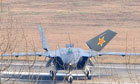
(NSI News Source Info) TORONTO, Canada - January 5, 2013: China has officially revealed its copy of the Russian Su-30MK2 and is calling it the J-16, claiming that the aircraft is of Chinese design. Many unauthorized pictures of the J-16 have shown up in the past year. These made it clear that the J-16 was a copy of the Russian Su-30MK2. At least 24 J-16s have been built and are being delivered to the Chinese Navy.

Russia and China jointly developed the two seat version of the Su-30, as the Su-30MKK in the late 1990s, and, a decade ago, an upgraded version (the Su-30MK2). China has received about a hundred legal Su-30MK2s but now nearly identical J-16s are showing up. Russia is not amused or fooled.

This kind of blatant technology theft is nothing new. The Chinese J-11 jet fighter is an illegal Chinese copy of the Russian Su-27. This plagiarism has been a source of friction between Russia and China for nearly a decade. It all began, legally, in 1995, when China paid $2.5 billion for the right to build 200 Su-27s. Russia would supply engines and electronics, with China building the other components according to Russian plans and specifications. But after 95 of the Chinese built aircraft were built Russia cancelled the agreement. They claimed that China was using the knowledge acquired with this Su-27 program to build their own copy of the Su-27, the J-11. Russia kept the piracy issue quiet for as long as it could and warned the Chinese that simply copying Russian technology would produce an inferior aircraft. Apparently the Chinese did not agree and are continuing their work on the J-11, using only, what they claim, is Chinese technology.

The J-11 is believed to now include better electronics and some other Chinese design modifications. China can manufacture most of the components of the J-11, the one major element it must import are the engines. China believes it will be free from dependence on Russia for military jet engines within the next 5-10 years. Currently, China imports two Russian engines, the $3.5 million AL-31 (for the Su-27/30, J-11, J-10) and the $2.5 million RD-93 (a version of the MiG-29s RD-33) for the JF-17 (an F-16 type aircraft developed in cooperation with Pakistan). Despite the ongoing technology theft dispute, Russia still sells jet engines to China for its illegal copies of Russian aircraft. China agreed, in 2008, to stop stealing Russian military tech but went on to ignore that agreement and deny that it had reneged on its promise to stop the tech theft.

The Su-30MK2 is a 34 ton fighter-bomber similar to the American F-15E. The Su-30MK2 can carry 8 tons of smart bombs and missiles. It can be refueled in the air and is equipped to operate over land and open water. The Chinese Navy is operating 24 Su-30MK2s and some of the J-16s that have already been built.

China also has a stealthy version (J-17) of the Su-27. There is also an aircraft carrier version of the Su-30 (the Su-33, obtained from Ukraine) that is now being produced as the J-15. China insists these are all Chinese designs that just happen to bear some resemblance to Russian fighters. In response, Russia had halted (for nearly a decade) combat aircraft sales to China but still sold jet engines for these aircraft. So far China has been unsuccessful in building copies of these engines. The engine sales are too lucrative to pass up, as they enable the Russian engine manufacturers to continue developing new designs. The Chinese plan to steal these as soon as they figure out how to handle the exotic manufacturing methods and skills required to build these engines.

Recently, after years of negotiating, especially over how to prevent technology theft, Russia agreed to sell China 48 Su-35BM fighter-bombers. This aircraft is the latest version of the Su-27 design, with a more robust airframe (good for 6,000 flight hours) and better maneuverability and reliability. It’s unclear if the Chinese are also going to get all the improved electronics.

The long negotiations were the result of Russia seeking ways to halt unauthorized Chinese copying and production of the Su-35BM. This proved very difficult, especially since Russia and China are supposed to be allies these days. Earlier this year this deal was stalled because China refused to allow a "no unauthorized duplication" clause in the contract. The Chinese wanted to buy the Su-35s but were not willing to sign a binding agreement to not copy the Russian design. That appears to have changed, although just how enforceable this is remains to be seen. 


Disclaimer statement
Whilst every effort has been made to ensure the accuracy of the information supplied herein, DTN News ~ Defense-Technology News cannot be held responsible for any errors or omissions. Unless otherwise indicated, opinions expressed herein are those of the author of the page and do not necessarily represent the corporate views of DTN News ~ Defense-Technology News.


*Link for This article compiled by Roger Smith from reliable sources Strategy Page
*Speaking Image - Creation of DTN News ~ Defense Technology News 
*This article is being posted from Toronto, Canada By DTN News ~ Defense-Technology News Contact:dtnnews@ymail.com 
©COPYRIGHT (C) DTN NEWS DEFENSE-TECHNOLOGY NEWS

Sunday, February 05, 2012

DTN News - DEFENSE & INTELLIGENCE NEWS: China's Cyber Thievery Is National Policy—And Must Be Challenged

DTN News - DEFENSE & INTELLIGENCE NEWS: China's Cyber Thievery Is National Policy—And Must Be Challenged
*It is more efficient for the Chinese to steal innovations and intellectual property than to incur the cost and time of creating their own.
Source: DTN News - - This article compiled by Roger Smith from reliable sources WSJ – Mike McConnell, Michael Chertoff, William Lynn
 (NSI News Source Info) TORONTO, Canada - February 5, 2012:Only three months ago, we would have violated U.S. secrecy laws by sharing what we write here—even though, as a former director of national intelligence, secretary of homeland security, and deputy secretary of defense, we have long known it to be true. The Chinese government has a national policy of economic espionage in cyberspace. In fact, the Chinese are the world's most active and persistent practitioners of cyber espionage today.

Evidence of China's economically devastating theft of proprietary technologies and other intellectual property from U.S. companies is growing. Only in October 2011 were details declassified in a report to Congress by the Office of the National Counterintelligence Executive. Each of us has been speaking publicly for years about the ability of cyber terrorists to cripple our critical infrastructure, including financial networks and the power grid. Now this report finally reveals what we couldn't say before: The threat of economic cyber espionage looms even more ominously.
The report is a summation of the catastrophic impact cyber espionage could have on the U.S. economy and global competitiveness over the next decade. Evidence indicates that China intends to help build its economy by intellectual-property theft rather than by innovation and investment in research and development (two strong suits of the U.S. economy). The nature of the Chinese economy offers a powerful motive to do so.
According to 2009 estimates by the United Nations, China has a population of 1.3 billion, with 468 million (about 36% of the population) living on less than $2 a day. While Chinese poverty has declined dramatically in the last 30 years, income inequality has increased, with much greater benefits going to the relatively small portion of educated people in urban areas, where about 25% of the population lives.
The bottom line is this: China has a massive, inexpensive work force ravenous for economic growth. It is much more efficient for the Chinese to steal innovations and intellectual property—the source code of advanced economies—than to incur the cost and time of creating their own. They turn those stolen ideas directly into production, creating products faster and cheaper than the U.S. and others.
Cyberspace is an ideal medium for stealing intellectual capital. Hackers can easily penetrate systems that transfer large amounts of data, while corporations and governments have a very hard time identifying specific perpetrators.
Unfortunately, it is also difficult to estimate the economic cost of these thefts to the U.S. economy. The report to Congress calls the cost "large" and notes that this includes corporate revenues, jobs, innovation and impacts to national security. Although a rigorous assessment has not been done, we think it is safe to say that "large" easily means billions of dollars and millions of jobs.
So how to protect ourselves from this economic threat? First, we must acknowledge its severity and understand that its impacts are more long-term than immediate. And we need to respond with all of the diplomatic, trade, economic and technological tools at our disposal.
The report to Congress notes that the U.S. intelligence community has improved its collaboration to better address cyber espionage in the military and national-security areas. Yet today's legislative framework severely restricts us from fully addressing domestic economic espionage. The intelligence community must gain a stronger role in collecting and analyzing this economic data and making it available to appropriate government and commercial entities.
Congress and the administration must also create the means to actively force more information-sharing. While organizations (both in government and in the private sector) claim to share information, the opposite is usually the case, and this must be actively fixed.
The U.S. also must make broader investments in education to produce many more workers with science, technology, engineering and math skills. Our country reacted to the Soviet Union's 1957 launch of Sputnik with investments in math and science education that launched the age of digital communications. Now is the time for a similar approach to build the skills our nation will need to compete in a global economy vastly different from 50 years ago.
Corporate America must do its part, too. If we are to ever understand the extent of cyber espionage, companies must be more open and aggressive about identifying, acknowledging and reporting incidents of cyber theft. Congress is considering legislation to require this, and the idea deserves support. Companies must also invest more in enhancing their employees' cyber skills; it is shocking how many cyber-security breaches result from simple human error such as coding mistakes or lost discs and laptops.
In this election year, our economy will take center stage, as will China and its role in issues such as monetary policy. If we are to protect ourselves against irreversible long-term damage, the economic issues behind cyber espionage must share some of that spotlight.
Mr. McConnell, a retired Navy vice admiral and former director of the National Security Agency (1992-96) and director of national intelligence (2007-09), is vice chairman of Booz Allen Hamilton. Mr. Chertoff, a former secretary of homeland security (2005-09), is senior counsel at Covington & Burling. Mr. Lynn has served as deputy secretary of defense (2009-11) and undersecretary of defense (1997-2001).
*Speaking Image - Creation of DTN News ~ Defense Technology News 
*This article is being posted from Toronto, Canada By DTN News ~ Defense-Technology News Contact:dtnnews@ymail.com 
©COPYRIGHT (C) DTN NEWS DEFENSE-TECHNOLOGY NEWS


Thursday, July 28, 2011

DTN News - CHINA NEWS: Fake Apple Store Popular In Chongqing

DTN News - CHINA NEWS: Fake Apple Store Popular In Chongqing
(NSI News Source Info)

CHONGQING, China

- July 28, 2011:

A local watchdog called on Wednesday for an investigation to begin into an unauthorized Apple store found in Southwest China's Chongqing municipality.

Fake Apple store popular in Chongqing The fake Apple store on a pedestrian street in Southwest China's Chongqing municipality on July 26, 2011. [Photo/CFP]

Yan Xin, an official from the publicity department of the Chongqing Administration for Industry and Commerce, told China Daily that an unauthorized Apple store had been found in the municipality's Jiangbei district and that the administration has begun to investigate the case.

According to the website apple.com.cn, only four official Apple stores exist on the mainland: the Sanlitun and Xidan Joy City stores in Beijing, and the Pudong and Hong Kong Plaza stores in Shanghai. The situation is far different in the United States. There, 236 Apple stores sell electronics to a population that is roughly a fourth the size of China's.

Some entrepreneurs evidently thought the Chinese market could support a few more Apple outlets and were willing to test out their hypothesis without first obtaining the company's approval.

On a pedestrian street in Chongqing, a 60-square-meter store decorated to resemble an authorized Apple store was filled on Wednesday afternoon with about 30 shoppers, most of whom were young.

The sales staff then at work wore matching blue T-shirts bearing Apple logos. One salesman told China Daily that all of the Apple products sold inside were genuine. He even demonstrated how a shopper could use the Internet to trace the products' serial numbers.

Yin Qianyu, 21, a sophomore at Chongqing University and a fan of Apple products, told China Daily that the absence of an official Apple store in Chongqing has led him to ask friends who had trips planned to Hong Kong to buy Apple products for him while they were away.

"I bought a Macintosh last month from a local reseller," Yin said. "I hope it always runs well because getting repairs made to Apple products is really difficult for me since there are no Apple stores here in Chongqing."

In Kunming, capital of Yunnan province, authorities have closed one of the five stores they have found to be selling iPhones and iPads. The store, the authorities explained, lacked a business license.

A local authority had previously said that two of the stores were suspended for not having business licenses. But the local industrial and commercial bureau confirmed to the Shanghai Morning Post on Tuesday that one of them had in fact obtained a license on June 22 and thus could stay open.

Fake Apple store popular in Chongqing A staff member at the fake Apple store on a pedestrian street in Southwest China's Chongqing municipality comes out of the shop to stop the reporter from taking photos on July 26, 2011. [Photo/CFP]

The four stores are likely to stay in business at least until the bureau determines whether their deliberate mimicking of Apple's trademark minimalist shops constitutes an infringement of intellectual property rights.

Fake Apple store popular in Chongqing A staff member at the fake Apple store on a pedestrian street in Southwest China's Chongqing municipality comes out of the shop to stop the reporter from taking photos on July 26, 2011. [Photo/CFP]

Chen Guocang, an economic lawyer in Beijing, told China Daily on Wednesday that current laws and regulations prohibit the use of a company's brand and logo without that company's authorization.

"The existence of unauthorized Apple retail stores might promote the sales of Apple products in the short run," Chen said. "But it would make it difficult for Apple to open authorized retail stores in the future."

China Daily could not reach Apple China for comments about the unauthorized retail store issue on Wednesday.

Apple's iPads command about 60 percent of China's tablet PC market, according to figures from the domestic IT research company Analysys International. The company has predicted that it will sell 4.5 million tablet PCs in China this year.

*Link for This article compiled by Roger Smith from reliable sources
By An Baijie and Jia Lifu China Daily
*Speaking Image - Creation of DTN News ~ Defense Technology News
*This article is being posted from Toronto, Canada By DTN News ~ Defense-Technology News

©

COPYRIGHT (C) DTN NEWS DEFENSE-TECHNOLOGY NEWS

Tuesday, January 25, 2011

DTN News - DEFENSE NEWS: China Denies Using US Stealth Fighter Technology

DTN News - DEFENSE NEWS: China Denies Using US Stealth Fighter Technology
Source: DTN News - - This article compiled by Roger Smith from reliable sources Associated Press in Beijing guardian.co.uk, Tuesday 25 January 2011 09.51 GMT
(NSI News Source Info) TORONTO, Canada - January 25, 2011: An official Chinese newspaper has dismissed a report that the country used technology taken from a downed US airplane in its own stealth fighter programme.

The J-20 prototype stealth fighter, which could one day challenge US air superiority, made its first-known test flight early this month during a rare visit to China by the US defence secretary, Robert Gates. It surprised many defence analysts, seemingly indicating that China was acquiring cutting-edge technology more rapidly than thought.

China says the plane is based entirely on indigenous designs, and the Global Times today quoted an unidentified defence ministry official as dismissing an Associated Press report citing Balkan military officials and other experts claiming that China likely gleaned some know-how from an American F-117 Nighthawk shot down over Serbia in 1999.

"It's not the first time foreign media has smeared newly unveiled Chinese military technologies. It's meaningless to respond to such speculations," the official was quoted as saying by the newspaper, which is published by the ruling Communist party's flagship People's Daily.

Calls to the defence ministry went unanswered today. The foreign ministry spokesman Hong Lei said he had no information about the matter.

The defence ministry has made little comment on the test flight other than to assert that China continues to arm for defensive purposes only.

The US fields the only stealth fighter in active service, the F-22 Raptor, the successor to the Nighthawk. The US is also employing stealth technology on the F-35 Joint Strike Fighter, while Russia's Sukhoi T-50 stealth fighter made its maiden flight last year and is set to enter service in about four years' time.

No direct evidence or specific allegation has been offered on how China could have exploited the downed plane, although Balkan military officials say Chinese agents hunted for pieces of the F-117 wreckage and may have shared intelligence with their Serbian allies.

Western diplomats have said China maintained an intelligence post in its Belgrade embassy during the Kosovo war. The building was mistakenly struck by US bombers in May 1999, killing three people inside, and cementing firm Chinese opposition to the Nato air campaign.

Serbia shot down the F-117 in March of that year, marking the first time one of the much-touted "invisible" fighters had ever been hit. The Pentagon believed a combination of clever tactics and sheer luck allowed a Soviet-built SA-3 missile to bring down the jet.

"At the time, our intelligence reports told of Chinese agents crisscrossing the region where the F-117 disintegrated, buying up parts of the plane from local farmers," Admiral Davor Domazet-Loso, Croatia's military chief of staff during the Kosovo war, told AP.

"We believe the Chinese used those materials to gain an insight into secret stealth technologies ... and to reverse-engineer them," Domazet-Loso said.

Parts of the downed F-117 wreckage, such as the left wing with US Air Force insignia, the cockpit canopy, ejection seat, pilot's helmet and radio, are exhibited at Belgrade's aviation museum.

However, most of the wreckage was simply carted off by anyone who desired a piece, according to Belgrade's Blic newspaper.

"It was not just the Chinese who got parts of the airplane. Anyone who wanted them took them. The Russians ended up with an entire wing," Blic quoted Milovan Azdejkovic, who in 1999 was a department head at the Military Technical Institute in Belgrade, as saying.

While not completely invisible to radar, the F-117's shape and radar-absorbent coating made detection extremely difficult. The radar cross-section was further reduced because the wings' leading and trailing edges were composed of nonmetallic honeycomb structures that do not reflect radar rays.

Experts say insight into this critical technology, and particularly the plane's secret radiation-absorbent exterior coating, would have significantly enhanced China's stealth know-how.

The Chinese newspaper denial comes a day after a US federal judge sentenced an engineer of an earlier generation of stealth aircraft, the B-2 bomber, to 32 years in prison for selling military secrets to China.

Noshir Gowadia, 66, who was born in India, was convicted in August on 14 counts, including communicating national defence information to aid a foreign nation and violating the arms export control act.

Prosecutors said Gowadia helped China design a stealth cruise missile in return for help paying his $15,000-a-month mortgage on his luxurious home overlooking the ocean on the Hawaiian island of Maui. They say he pocketed at least $110,000 by selling military secrets.

The defence argued Gowadia provided only unclassified information to China.

World news

© Copyright (c) DTN News Defense-Technology News

  •