Showing posts with label UH-60 Black Hawk Helicopters. Show all posts

Friday, October 12, 2012

DTN News - DEFENSE NEWS: U.S. DoD Awarded Rockwell-Collins Inc., Contract For Repair of Navigational And Communication Components of U.S. Navy Various Aircrafts And Helicopters

DTN News - DEFENSE NEWS: U.S. DoD Awarded Rockwell-Collins Inc., Contract For Repair of Navigational And Communication Components of U.S. Navy Various Aircrafts And Helicopters
Source: DTN News - - This article compiled by Roger Smith from reliable sources U.S. Department Of Defense No. 808-12 October 10, 2012
(NSI News Source Info) TORONTO, Canada - October 12, 2012: Rockwell-Collins Inc., Government Systems Division, Cedar Rapids, Iowa, is being awarded a $17,172,085 requirements contract for the repair of navigational and communication components for the E2C, EA-6B, F/A-18, P-3, H-1, H-46, H45-D aircraft, and the H53 and H60 helicopters.  


Work will be performed in Cedar Rapids, Iowa (80 percent) and Atlanta, Ga., (20 percent), and work is expected to be completed by October 2017.  

The applicable Navy Working Capital Funds will not expire at the end of the current fiscal 2013.  

This contract was not a full and open competition in accordance with FAR 6.302-1, only one responsible source and no other supplies or services will satisfy agency requirement.   

Naval Supply Systems Command Weapon Systems Support, Philadelphia, Pa., is the contracting activity (N00383-13-D-048G). 


*Link for This article compiled by Roger Smith from reliable sources U.S. Department Of Defense No. 808-12 October 10, 2012
*Speaking Image - Creation of DTN News ~ Defense Technology News 
*This article is being posted from Toronto, Canada By DTN News ~ Defense-Technology News Contact:dtnnews@ymail.com 
©COPYRIGHT (C) DTN NEWS DEFENSE-TECHNOLOGY NEWS

Friday, June 15, 2012

DTN News - QATAR DEFENSE NEWS: Sikorsky To Supply 12 UH-60M BLACK HAWK Utility Helicopters To Qatar

DTN News - QATAR DEFENSE NEWS: Sikorsky To Supply 12 UH-60M BLACK HAWK Utility Helicopters To Qatar
Source: DTN News - - This article compiled by Roger Smith from reliable sources DSCA Defense Security Cooperation Agency
(NSI News Source Info) TORONTO, Canada - June 15, 2012: The Defense Security Cooperation Agency notified Congress on June 12 of a possible Foreign Military Sale to the Government of Qatar of 12 UH-60M BLACK HAWK Utility Helicopters, 26 T700-GE-701D Engines (24 installed and 2 spares), 15 AN/AAR-57 V(7) Common Missile Warning Systems, 15 AN/AVR-2B Laser Detecting Sets, 15 AN/APR-39A(V)4 Radar Signal Detecting Sets, 26 M240H Machine Guns, and 26 AN/AVS-6 Night Vision Goggles. The estimated cost is $1.112 billion. 

The Government of Qatar has requested a possible sale of 12 UH-60M BLACK HAWK Utility Helicopters, 26 T700-GE-701D Engines (24 installed and 2 spares), 15 AN/AAR-57 V(7) Common Missile Warning Systems, 15 AN/AVR-2B Laser Detecting Sets, 15 AN/APR-39A(V)4 Radar Signal Detecting Sets, 26 M240H Machine Guns, and 26 AN/AVS-6 Night Vision Goggles. Also included are M206 infrared countermeasure flares, M211 and M212 Advanced Infrared Countermeasure Munitions (AIRCM) flares, M134D-H Machine Guns, system integration and air worthiness certification, simulators, generators, transportation, wheeled vehicles and organization equipment, spare and repair parts, support equipment, tools and test equipment, technical data and publications, personnel training and training equipment, U.S. government and contractor engineering, technical, and logistics support services, and other related elements of logistics support. 

The estimated cost is $1.112 billion. 


This proposed sale will contribute to the foreign policy and national security of the United States by helping to improve the security of a friendly country that has been, and continues to be, an important force for political and economic progress in the Middle East. Qatar is host to the U.S. AFCENT forces and serves as a critical forward-deployed location in the region. 

The proposed sale of the UH-60M BLACK HAWK helicopters will improve Qatar's capability to meet current and future threats and provide greater security for its critical oil and natural gas infrastructure, and significant national events. 

Qatar will use the enhanced capability to strengthen its homeland defense. Qatar will have no difficulty absorbing these helicopters into its armed forces. The proposed sale of this equipment and support will not alter the basic military balance in the region. 

The prime contractors will be Sikorsky Aircraft Company in Stratford, Connecticut, and General Electric Aircraft Company in Lynn, Massachusetts. There are no known offset agreements proposed in connection with this potential sale. 

Implementation of this proposed sale will require the assignment of two contractor representatives to Qatar for a minimum of three years to support delivery of the helicopters and provide support and equipment familiarization. In addition, Qatar has expressed an interest in a Technical Assistance Fielding Team for in-country pilot and maintenance training. To support the requirement, a team of 12 personnel (one military team leader and 11 contractors) would be deployed to Qatar for approximately three years. 

There will be no adverse impact on U.S. defense readiness as a result of this proposed sale. This notice of a potential sale is required by law and does not mean the sale has been concluded. 


*Link for This article compiled by Roger Smith from reliable sources DSCA Defense Security Cooperation Agency  
*Speaking Image - Creation of DTN News ~ Defense Technology News 
*This article is being posted from Toronto, Canada By DTN News ~ Defense-Technology News Contact:dtnnews@ymail.com 
©COPYRIGHT (C) DTN NEWS DEFENSE-TECHNOLOGY NEWS

Thursday, May 17, 2012

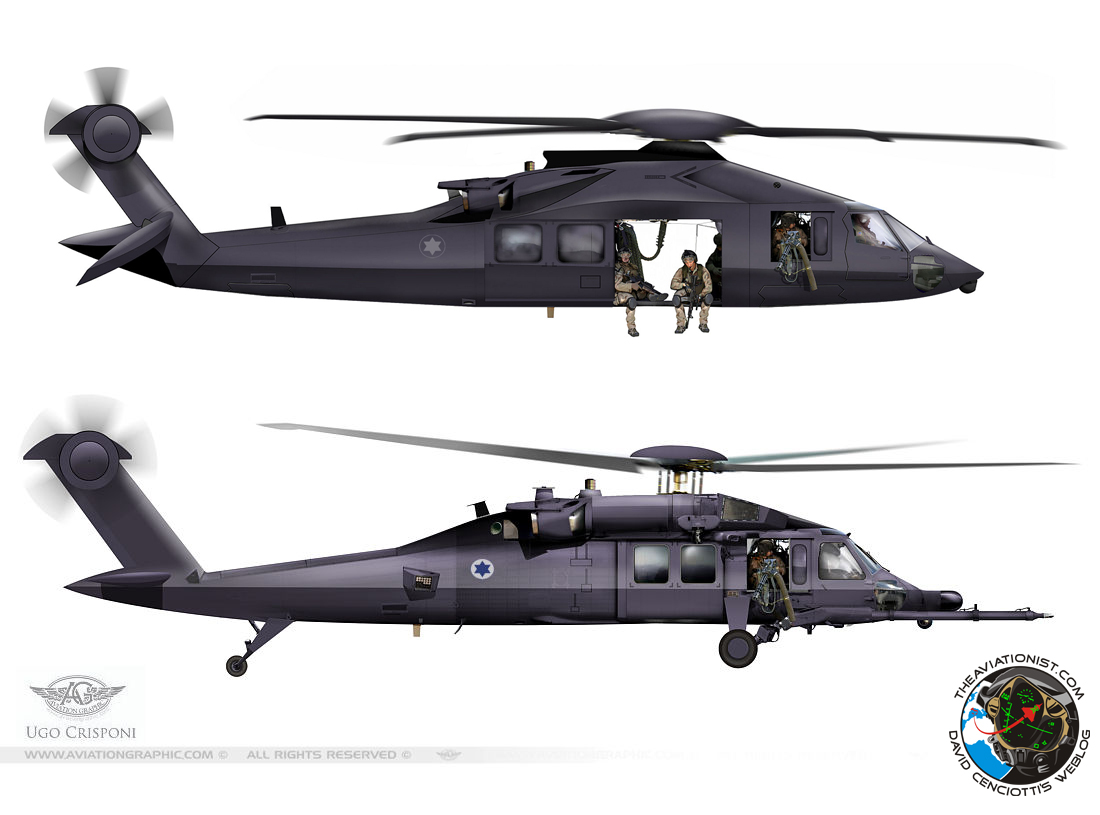
DTN News - ISRAELI DEFENSE NEWS: Stealth Yansh - The Israeli Top Secret Radar-Evading Chopper Used To Drop Spies In Iran

DTN News - ISRAELI DEFENSE NEWS: Stealth Yansh - The Israeli Top Secret Radar-Evading Chopper Used To Drop Spies In Iran
Source: DTN News - - This article compiled by Roger Smith from reliable sources Posted by David Cenciotti in Stealth Black Hawk
(NSI News Source Info) TORONTO, Canada - May 17, 2012: According to F. Michael Maloof, a former Pentagon senior policy analyst the Israeli Air Force is equipped with the same Stealth Black Hawk helicopter used by the U.S. Navy SEALs to kill Osama Bin Laden last year.


Believed to be an exclusive U.S. “black project”, the radar-evading chopper (most probably a quiet one, rather than an actual helicopter invisible to radars), such helos would be used by the IAF to drop Iranian dissidents into Iran to gather intelligence on the Tehran’s nuclear program, according to a report written by Maloof for G2 bulletin, a global intelligence newsletter.
This is the first time someone reports about radar-evading choppers in the hands of Israel.
Even if it’s quite unlikely that the Washington shared the secrets of its most advanced helicopter with Jerusalem, considered that the American Stealth Hawk is probably based on 1978 study freely available on the Internet, we can’t rule out the possibility that the Israeli industry has found a way to modify the IAF Black Hawks (nicknamed “Yanshuf”, English for “Owl”) to make them stealthy.
Provided a Stealth Yanshuf really exists, this is what it would look like in two updated versions of the renderings I conceived with AviationGraphic.com‘s Ugo Crisponi: above, the famous highly modified version with retractable landing gear MH-X (please remember this is not the actual designation), whose shape reminds the one of an S-76; below, the more likely slightly-modified Stealth Black Hawk (described here).

*Link for This article compiled by Roger Smith from reliable sources Posted by David Cenciotti in Stealth Black Hawk
*Speaking Image - Creation of DTN News ~ Defense Technology News 
*This article is being posted from Toronto, Canada By DTN News ~ Defense-Technology News Contact:dtnnews@ymail.com 
©COPYRIGHT (C) DTN NEWS DEFENSE-TECHNOLOGY NEWS


Saturday, April 14, 2012

DTN News - DEFENSE NEWS: Special Operations Boost Demand For Helicopters

DTN News - DEFENSE NEWS: Special Operations Boost Demand For Helicopters 
Source: DTN News - - This article compiled by Roger Smith from reliable sources By Dan Parsons - National Defense
(NSI News Source Info) TORONTO, Canada - April 14, 2012: Special operations forces have a dedicated fleet of tricked-out helicopters at their disposal, but as their workload grows, they are increasingly reliant on conventional aircraft to get their jobs done.


A high operational tempo in Afghanistan has married conventional and special operations forces like never before, forcing a heightened level of cooperation at all levels, from commanding generals to aircraft pilots and crews.

It wasn’t always so, especially when it came to sharing information and aircraft, according to Maj. Gen. Anthony Crutchfield, commander of the U.S. Army Aviation Center of Excellence. 

As a combat aviation brigade commander in Afghanistan, Crutchfield was once asked to provide aircraft in support of a special operations mission, he said at the Army Aviation Association of America’s annual symposium. 

Seeking information from his special operations counterpart, Crutchfield was turned away because he “didn’t have a need to know.”

“That was not the right answer … telling that to a brigade commander who is supplying the aircraft for you to fly the mission,” he said. “Quite frankly, it pissed me off.”

Now the once-tense relationship has changed, at least from the perspective of Army aviation, which takes the lead on most rotary wing development and acquisitions. At least until the close of the war in Afghanistan, the services will be forced to continue that cooperation. At present, half of all special operations missions flown in that conflict are carried out using conventional aircraft.

“Since 9/11, special operations forces have become increasingly reliant on general-purpose forces to complete [their] mission,” said Brig. Gen. Kevin Mangum, commander of Army Special Operations Aviation Command. “We can’t do what we do without the great work our combat aviation brigades are doing  on the battlefield.”

Special operators fly versions of the UH-60 Black Hawk and CH-47 Chinook that are upgraded to fly farther and faster and with better sensor capabilities than  standard aircraft. They also fly the CV-22, a version of the tilt-rotor Osprey operated by Air Force Special Operations Command. 

Both the conventional and special operations versions of the various aircraft are essentially the same when built. All the elite gear for SOF is added after the basic model is manufactured.

“You’re typically going to have improvements like extra fuel capacity, self-protection and additional sensors,” said Douglas Royce, an aerospace analyst with Forecast International. “Generally, it’s stuff that makes the aircraft fly farther and gives it greater situational awareness. But in order to create a special operations version of any aircraft, it takes money. This way, it is much cheaper to adapt an existing design than to develop a new aircraft.”

While many SOF aircraft are similar at the core, for many special operations missions, there are technologies required that are either too expensive or unnecessary for conventional troops. Aircraft flown by Navy SEALs and Marine Corps special operators have to be weatherized to withstand maritime environments, for example. The A/M-H6 Little Bird light attack helicopter was specially designed and is exclusively used by special operations forces. It is too small and expensive to be useful for large-scale operations by conventional forces.

The door swings both ways, however. Conventional ground forces often travel in larger numbers and shorter distances into enemy territory. Therefore it is to their advantage that their helicopters are not weighed down with high-end sensors and unnecessary add-ons like mid-air refueling nozzles. 

Those unique capabilities on the “fringes” of overall helicopter design are where special operations aviation should focus its funding, Mangum said.

One of those SOF-unique equipment packages is the common aviation architecture system, built by Rockwell Collins. The CAAS cockpit will eventually be installed in all special operations Blackhawk and Chinook helicopters. 

In 2001, when Rockwell Collins began working with special operations aviation, there were five different cockpit configurations in Chinooks and Blackhawks, said Daniel Toy, principal marketing manager for rotary wing systems for Rockwell Collins. The diversity of systems created logistical difficulties for forces that were, by definition, supposed to travel light and remain nimble. 

With the installation of the CAAS cockpit, SOF aircraft are being upgraded and standardized simultaneously. The equipment provides an unprecedented level of interoperability while reducing logistics costs, according to Toy.

Chinooks are either newly manufactured or recapitalized by Boeing, at which point the specialized cockpit and other SOF-specific components are added. Blackhawks are delivered directly to the Army, in which case Rockwell Collins sends its equipment to an Army depot, where it is installed.

“The multi-function displays in their Chinooks are the exact same as the displays in their Blackhawks,” Toy said. “They’re interchangeable. The software recognizes which aircraft it’s in and reconfigures itself automatically.”

With the upgraded aircraft, SOF can deploy with a mixed detachment of aircraft and only have the need for a single set of common cockpit components. 

The scheme is typical of how special forces in all services retrofit their aircraft, including the most secretive projects that don’t show up on budget documents. The stealth helicopters used in the raid to kill Osama bin Laden were developed under such a cloak. The equipment that went into those aircraft has been speculated upon but not confirmed, said Royce. Still, the stealth aircraft were not newly developed platforms, but modified versions of the Blackhawk and Chinook.

“But that was in the black budget,” said Royce. “It is possible that they are continuing to develop these super-secret aircraft under that cover, but we’ll never know about it. Because the black budget is so big, it’s possible for them to have these sorts of programs.”

Even the portions of SOF’s budget that the public is privy to are getting a boost where rotorcraft are concerned.
In an effort to meet demand for SOF aviation and in anticipation of a future U.S. military strategy that relies heavily on special operations, the command’s fiscal year 2013 budget request includes increases in nearly every rotary wing line item.

Of a total aviation procurement budget of $761 million, more than half will go to rotary wing platforms. That $475 million will buy 16 MH-60M Blackhawks, bringing the total production to 62 platforms. It also calls for procurement of seven MH-47 Chinooks and four CV-22’s, for a total fleet strength of 48 for that aircraft.

Rotary wing upgrade and sustainment jumped by nearly 100 percent from $41.4 million in fiscal 2012 to a $74.8 million request for the current fiscal year. Flight operations funding, which is a portion of the overseas contingency operations budget, also increased by $195 million to more than $1.1 billion for fiscal 2013. Though that total includes fixed-wing aircraft and funding for unmanned aerial vehicles, it is an indication of the high demand placed on special operations aviation in Central Asia. 

Research and development did take a hit in 2013, however. That line item fell by more than half, from $51.1 million in fiscal 2012 to a requested $24.4 million in the current fiscal year. 

In all, the 2010 Quadrennial Defense Review supports 165 tilt-rotor and fixed-wing mobility and fire support aircraft. It calls for the addition of a company of upgraded Chinooks to the Army’s 160th Special Operations Aviation Regiment and two dedicated helicopter squadrons for direct support to naval special warfare units.

But all of that procurement is still within the realm of traditional helicopter technology that is often deemed slow and dangerous. The only new-start platform in the past 25 years in the special operations’ inventory is the CV-22 Osprey. 

Looking to the future, aviation commanders from both conventional and special operations aviation are putting their heads together to develop the future vertical lift platform — a revolutionary technology that will begin to replace existing helicopter fleets by 2030.

The Army, on behalf of all services that use vertical-lift aircraft, leads that ongoing development effort. For the first time, a special operations aviator is working directly with Army aviation leaders to ensure the final product is a common airframe that can be used by both SOF and conventional forces with minimal retooling.

“We’re not developing a special operations aircraft and a conventional aircraft,” said Crutchfield, who oversees FVL. 

The aircraft that results from that program should be designed to ferry special operators deeper and faster while keeping them safer than any aircraft available today. It will likely also differ slightly from the versions of FVL used by conventional forces, but as cooperation between the two groups continues to mature, the differences should diminish, he said. There is the added difficulty that it will be required to be as aerodynamic as possible, meaning that its systems and weapons will be designed into the aircraft itself. The current practice of bolting new systems and weapons to the outside of the aircraft likely won’t be an option. 

No one yet knows what the aircraft will look like — whether it will be an advanced helicopter, a tilt-rotor or have a hybrid fixed-wing/rotary wing design. The Army is looking at all three possibilities, aided in research and development by several companies, including Boeing, Bell Helicopter, Sikorsky and Lockheed Martin. It plans to build two test aircraft by 2017.

Whatever the result, it will amplify the effectiveness of special operations, said Mangum. 

“The speed and lift of that FVL will provide us will be an absolute game changer,” he said. “We will be able to operate over a distributed battlefield where we can cover a huge area with a much smaller force.” 
 

*Link for This article compiled by Roger Smith from reliable sources By Dan Parsons - National Defense
*Speaking Image - Creation of DTN News ~ Defense Technology News 
*This article is being posted from Toronto, Canada By DTN News ~ Defense-Technology News Contact:dtnnews@ymail.com 
©COPYRIGHT (C) DTN NEWS DEFENSE-TECHNOLOGY NEWS


Thursday, July 07, 2011

DTN News - SIKORSKY DEFENSE NEWS: Sikorsky Delivers 300th UH-60M BLACK HAWK Helicopter to U.S. Army

DTN News - SIKORSKY DEFENSE NEWS: Sikorsky Delivers 300th UH-60M BLACK HAWK Helicopter to U.S. Army
(NSI News Source Info) TORONTO, Canada / STRATFORD, Connecticut - July 7, 2011: Sikorsky Aircraft Corp. today announced the delivery of the 300th UH-60M BLACK HAWK helicopter to the U.S. Army. Sikorsky is a United Technologies Corp. (NYSE:UTX) company.
"The war-fighter has provided outstanding reviews of the UH-60M BLACK HAWK helicopter’s performance in theater,” said Lt. Col. Heyward Wright, Product Manager, representing Col. Thomas Todd of the U.S. Army's Utility Helicopters Project Office. "In my estimation, the UH-60M aircraft sets the standard for a successful utility platform in a combat environment."
Sikorsky began delivering UH-60M aircraft to the U.S. Army in 2006. With a new airframe, avionics and propulsion system, the aircraft is the most modern in a series of BLACK HAWK variants that Sikorsky has been delivering to the Army since 1978. Sikorsky Aircraft also has delivered UH-60M aircraft to other U.S. federal government agencies, and to international customers.
“The UH-60M platform brings the most up-to-date technology to the war-fighter to keep our troops safe for their diverse missions,” said John Palumbo, Sikorsky Vice President, Army Programs. “We continue to receive very positive feedback from the U.S. Army because the UH-60M BLACK HAWK helicopter provides reduced pilot workload, increased lift, better protection and enhanced survivability. It is a proven, reliable combat aircraft.”
Sikorsky is expected to deliver more than 950 UH-60M aircraft to the U.S. Army by 2025.
Additionally, the Army plans to buy more than 400 HH-60M MEDEVAC aircraft used to extract wounded troops from the battlefield. Exact procurement numbers year-to-year and across the life of the program will be determined by budget authorizations and specific contract awards.
Sikorsky continues to improve the aircraft via the UH-60M Modernization program. This includes a fly-by-wire flight control system and FADEC-equipped GE-701 engine.
BLACK HAWK helicopters of all variants flown by the U.S. Army in the Iraq and Afghanistan theaters of war have accumulated more than one million fleet flight hours without a single Class A material failure. The combined operational sortie rate in both theaters stands at 85 percent. The U.S. Army’s total BLACK HAWK helicopter fleet exceeds 1,945 aircraft.
More than 3,000 BLACK HAWK helicopters of all variants are in use today, operating in 30 countries. Designed to stringent U.S. military standards, the BLACK HAWK helicopter has become the leader in multi-mission type aircraft. Among the mission configurations it serves are troop transport, medical evacuation, electronic warfare, attack, assault support and special operations.
Sikorsky Aircraft Corp., based in Stratford, Conn., is a world leader in helicopter design, manufacturing and service. United Technologies Corp., of Hartford, Conn., provides a broad range of high-technology products and support services to the aerospace and building systems industries.
This press release contains forward-looking statements concerning potential production and sale of helicopters. Actual results may differ materially from those projected as a result of certain risks and uncertainties, including but not limited to changes in government procurement priorities and practices, budget plans or availability of funding or in the number of aircraft to be built; challenges in the design, development, production and support of advanced technologies; as well as other risks and uncertainties, including but not limited to those detailed from time to time in United Technologies Corporation’s Securities and Exchange Commission filings.
Sikorsky Related News;
07.07.11-Sikorsky Delivers 300th UH-60M BLACK HAWK Helicopter to U.S. Army Sikorsky Aircraft Corp. today announced the delivery of the 300th UH-60M BLACK HAWK helicopter to the U.S. Army. Sikorsky... more
07.06.11-Sikorsky Aerospace Services Advances State-of-the-Art BLACK HAWK Training Center in Colombia Sikorsky Aerospace Services (SAS) announced today that construction of a new UH-60 BLACK HAWK Helicopter Flight Simulator... more
06.23.11-S-76D™ Helicopter Continues Reliability and Safety of its Predecessor as S-76C++™ Production Program Closes The S-76C++ helicopter is officially “sold out.” Sikorsky Aircraft Corp., a subsidiary of United Technologies Corp. (NYSE:... more
06.22.11-Sikorsky Aerospace Services and Rheinmetall Defence Electronics Sign Teaming Agreement for Aftermarket Support in Germany Sikorsky Aerospace Services (SAS) announced today the signing of a teaming agreement at the Paris Show with Rheinmetall Defence... more
06.22.11-Colombian BLACK HAWK Helicopter Fleet Exceeds 300,000 Flight Hour Milestone Sikorsky Aircraft Corp. announced today at the Paris Air Show that Colombia’s UH-60 BLACK HAWK helicopter fleet has surpassed... more
06.21.11-Availability Rates for Sikorsky S-92® Offshore Fleet Top 90% for Three Years in a Row Sikorsky’s S-92® helicopter achieved an average availability rate of 96% for the offshore oil operators’ fleet... more
06.21.11-Sikorsky Delivers Six S-76C++™ Helicopters to SonAir Sikorsky Aircraft Corp. today announced the baseline delivery of six S-76C++™ helicopters to SonAir Servico Aereo S.A.... more
06.21.11-Sikorsky Aerospace Services and RUAG Aviation Sign Agreement for Customer Service Center in Switzerland Sikorsky Aerospace Services announced today the signing of an agreement with RUAG Aviation to designate its Alpnach helicopter... more
*Speaking Image - Creation of DTN News ~ Defense Technology News
*This article is being posted from Toronto, Canada By DTN News ~ Defense-Technology News

©

COPYRIGHT (C) DTN NEWS DEFENSE-TECHNOLOGY NEWS
Monday, June 27, 2011

DTN News - UAE DEFENSE NEWS: UAE Looks To Purchase Five UH-60M Blackhawk Helicopters

DTN News - UAE DEFENSE NEWS: UAE Looks To Purchase Five UH-60M Blackhawk Helicopters
(NSI News Source Info) TORONTO, Canada - June 27, 2011: The Defense Security Cooperation Agency notified the US Congress last week of a possible Foreign Military Sale to the Government of the United Arab Emirates of five UH-60M Blackhawk VIP helicopters and associated equipment, parts, training and logistical support for an estimated cost of $217 million.
The Government of the United Arab Emirates (UAE) has requested a possible sale of five UH-60M Blackhawk VIP helicopters, 12 T700-GE-701D engines (10 installed and two spares), six AN/APR-39A(V)4 Radar Signal Detecting Sets, 80 AN/AVS-9 Night Vision Devices, six Star Safire III Forward Looking Infrared Radar Systems, six AAR-57(V)3 Common Missile Warning Systems, six AN/AVR-2B Laser Warning Sets, C406 Electronic Locator Transmitters, Traffic Collision Avoidance Systems and Weather Radars, Aviation Mission Planning Station, government furnished equipment, ferry support, spare and repair parts, publications and technical documentation.
The request also includes support equipment, personnel training and training equipment, ground support, communications equipment, U.S. Government and contractor technical and logistics support services, tools and test equipment, and other related elements of logistics support.
This proposed sale is seen as contributing to the foreign policy and national security of the United States by meeting the legitimate security and defense needs of a partner nation that has been - and continues to be - an important force for peace, political stability and economic progress in the Middle East.
The UAE will use these helicopters for intra-country transportation of UAE officials to militarily critical training and operation sites. The UH-60M Blackhawk helicopters will enhance the safety of key UAE personnel by providing for the detection and avoidance of rocket/missile attacks by indigenous or foreign terrorist elements. The UAE will have no difficulty absorbing these helicopters into its armed forces.
It is thought that the proposed sale of this equipment and support will not alter the basic military balance in the region and that there will be no adverse impact on U.S. defense readiness as a result of this proposed sale. The notice of a potential sale is required by law and does not mean the sale has been concluded.
The principal contractors will be: Sikorsky Aircraft Corporation of Stratford, Connecticut, and General Electric Aircraft Company of Lynn, Massachusetts. The purchaser has requested offsets; however, at this time, agreements are undetermined and will be defined in negotiations between the purchaser and contractor.
Implementation of this proposed sale will require the deployment of a minimum of two Contractor Field Service representatives to the United Arab Emirates for approximately two years after initial fielding to assist in the delivery and deployment of the helicopters.
*Speaking Image - Creation of DTN News ~ Defense Technology News
*This article is being posted from Toronto, Canada By DTN News ~ Defense-Technology News

©

COPYRIGHT (C) DTN NEWS DEFENSE-TECHNOLOGY NEWS



