Showing posts with label Greek. Show all posts

Monday, June 18, 2012

DTN News - FINANCIAL NEWS: Global Markets Jump After Greek Vote Eases Fears

DTN News - FINANCIAL NEWS: Global Markets Jump After Greek Vote Eases Fears
*Global markets jump as Angela Merkel tells election victor Antonis Samaras she is confident Greece will abide by bailout pledges, and world leaders gather in Mexico for the G20.
Source: DTN News - - This article compiled by Roger Smith from reliable sources The Globe & Mail
(NSI News Source Info) TORONTO, Canada - June 18, 2012: Asian stock markets were up sharply Monday after elections in Greece eased fears of global financial turmoil, but analysts warned that the economic crisis shaking the 17 nations that use the euro was far from over. Stock markets rejoiced at the narrow victory by Greek conservatives who favour upholding an austerity program that their recession-mired country entered into in exchange for a financial bailout from international lenders.

Tokyo’s benchmark Nikkei 225 index was up 1.9 per cent at 8,731.57. Hong Kong’s Hang Seng rose 1.6 per cent to 19,548.83. Australia’s S&P/ASX200 added 1.8 per cent to 4,129.20 and South Korea’s Kospi rose 2.1 per cent at 1,897.62.

On Wall Street, Dow Jones industrial average futures were up 62 points on Sunday night, suggesting the market could open higher Monday. The euro rose to $1.2700 (U.S.) from $1.2637 late Friday in New York. The U.S. dollar rose to 79.22 yen from 78.71 yen.

The New Zealand and Australian dollars were also higher. Both currencies typically rise when investors have more appetite for risk. The Australian dollar was trading above $1.01 and the New Zealand dollar was trading above 79 cents.

Masahiro Yamaguchi, a manager at Mizuho Securities Co. in Tokyo, said the perk in Tokyo stocks came from a sense of relief that the worst had been avoided in Greece.

“There’s is a rebound simply because the risks are now reduced,” he said. “There’s a sense that, at least, things are okay for now. The solution is far from basic.”

On Sunday, pro-bailout parties in Greece won enough seats to form a coalition government.

Greece has been dependent on rescue loans to operate since May 2010, after it was shut out of international markets following years of profligate spending and falsifying financial data.

The country is mired in a fifth year of recession, with unemployment spiralling above 22 per cent and tens of thousands of businesses shutting down.

Greece had to agree to austerity measures to get its bailout. Measures included deep spending cuts on everything from health care to education and infrastructure as well as tax hikes and cuts in salaries and pensions. Anger at the measures has sent Greeks into the streets in frequent strikes and protests, some of them violent.

Some analysts said the election results could overstate the willingness of Greeks to embrace austerity.

“Overall, the Greek election result, while welcome, does not imply that the Greek people are embracing the tough reforms tied to the bailout package. It merely meant that fear overruled anger,” analysts at DBS Bank Ltd. in Singapore wrote in a market commentary.

No one is sure how bad a Greek exit from the euro would have been. Greece would almost have certainly defaulted on its debt, triggering losses for European banks that own its government bonds. The outcome of the election, however tenuous, gives Greece a chance to breathe life into its moribund economy.

“It will be tough, but Greece will survive because I think the tourist industry and the agriculture sector will help it recover from its dire straits right now,” said Francis Lun, managing director of Lyncean Holdings in Hong Kong.

Japanese vehicle makers soared on hopes that Europe, a huge export market, would avoid deepening economic turbulence. Mazda Motor Corp. jumped 4 per cent and Yamaha Motor Co. gained 4.5 per cent.

Steelmakers and shipyards also gained ground. South Korea’s top shipbuilder, Hyundai Heavy Industries, rose 3.1 per cent. Japan’s JFE Holdings Inc. added 4 per cent and Kobe Steel rose 3.3 per cent.

Samsonite International SA rebounded 5.8 per cent after it issued a statement saying its luggage is safe, following a Hong Kong Consumer Council report last week that found carcinogens in the handles of some models, which caused its shares to dive 16 per cent.

But stock market operator Hong Kong Exchanges and Clearing Ltd. fell 2.8 per cent as investors worried a $2.2-billion bid announced last week for the London Metal Exchange was too high.

Benchmark oil for July delivery was up 91 cents to $84.94 per barrel in electronic trading on the New York Mercantile Exchange. The contract rose 12 cents to end at $84.03 a barrel in New York on Friday.

  DTN STOCK MARKET


*Link for This article compiled by Roger Smith from reliable sources The Globe & Mail
*Speaking Image - Creation of DTN News ~ Defense Technology News 
*This article is being posted from Toronto, Canada By DTN News ~ Defense-Technology News Contact:dtnnews@ymail.com 
©COPYRIGHT (C) DTN NEWS DEFENSE-TECHNOLOGY NEWS

Tuesday, March 29, 2011

DTN News - DEFENSE NEWS: Probe into German-Greek Arms Deals Reveals Murky Side Of Defense Sales

DTN News - DEFENSE NEWS: Probe into German-Greek Arms Deals Reveals Murky Side Of Defense Sales
(NSI News Source Info)

ATHENS, Greece,

-
March 29, 2011:
Despite being heavily in debt, Greece keeps spending on arms. A probe into its accounts has led to an investigation into submarine deals with Germany and alleged corruption in the grey areas of the EU's defense sector.

Greek financial investigators have ascertained that more than $140 million in bribes were paid by a German submarine maker to local politicians and officials to facilitate a lucrative defense contract.

The deal focused on the purchase of four submarines, a $1.5 billion controversial contract that had drawn heated political debate.

Sources told the Greek Kathimerini newspaper that "numerous bribes were paid before the contract was signed," alleging that some of the ways in which the final bill was inflated involved requests by the Greek navy and Defense Ministry for extra equipment on the submarines.

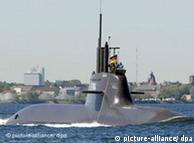
The first submarine, named Papanikolis, was commissioned for development by Howaldtswerke-Deutsche Werft in Kiel, Germany, with the remaining three scheduled for construction at Greece's Hellenic Shipyards, west of Athens.

Shortly after the Papanikolis was built in 2001 and launched three years later, Greek navy experts determined a host of technical problems with the T-214 diesel-electric submarine. The most severe: excessive rolling in bad weather conditions when the submarine surfaced for sea keeping in high seas.

After months of haggling over its involvement in the unprecedented European Union bailout to save Greece from defaulting, Germany finds itself at the center of another financial tangle with the debt-ridden Mediterranean nation - this time involving defense contracts Greece could ill afford and the shadowy deals behind them.

At the same time that German Chancellor Angela Merkel's cabinet was approving 22.4 billion euros ($29.7 billion) in aid to Greece, prosecutors in Germany began investigating whether defense contractors had paid millions of euros in bribes to Greek officials in connection with the sale of two German submarines in a deal worth more than a billion euros.

The investigation, which began in May, is focussing on the deal - part of a larger, complicated decade-old contract to provide Greece with a total of six submarines - struck between Berlin and Athens in March as Greece lurched toward bankruptcy. The investigation is also looking at similar defense deals struck between Germany and Portugal, another EU member state teetering on the brink of financial collapse.

German firm at the heart of bribery allegations

German submarine U34, Class 212Bildunterschrift: Großansicht des Bildes mit der Bildunterschrift: A German company is suspected of being involved in bribery

The probe is looking into allegations that Ferrostaal AG, one of the German companies helping to build the submarines, was involved in bribery. Ferrostaal executives are suspected by Munich prosecutors of authorizing payments worth millions of euros to politicians to win the initial deal in 2000 through a Greek company called Marine Industrial Enterprises.

According to records unearthed by the German investigation, Ferrostaal allegedly used false consulting contracts to cover up the bribes before distributing payments to "officials and decision-makers" in Greece. The prosecutors also allege that Ferrostaal accepted fees from other companies for bribes paid on their behalf, in effect operating a policy of subcontracted bribery.

While no charges have been brought in the on-going investigation into the submarine deal, several Ferrostaal executives stepped down in May and three company representatives have been indicted, along with individuals in Portugal linked to the Portuguese deals. The company itself could face fines in excess of 120 million euros if found guilty of bribing officials in Greece and Portugal.

Greece's economic crimes unit is also probing the transaction as part of its investigation into all weapons deals made by Athens over the past decade, deals said to be in the region of 16 billion euros in total, to determine whether Greece overpaid or agreed to deals for military equipment it didn't need.

Greece is the largest importer of conventional weapons in Europe and its military spending, the highest in the European Union, is widely accepted as one of the main reasons for the parlous state of its finances.

EU urged to clamp down on defence sector corruption

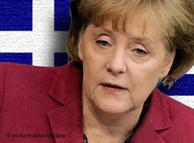
Angela Merkel Bildunterschrift: Großansicht des Bildes mit der Bildunterschrift: Merkel's government has denied exploiting Greece

The revelations and investigations in the deals between Germany, Greece and Portugal have also prompted members of the European Parliament to call for the EU to launch its own probe, with some officials accusing Germany of making their military dealings with Greece a condition for its involvement in the country's bailout and profiting from Athens' profligacy.

German government officials have vehemently denied that Germany took advantage of Greece's spending habits to land lucrative defense deals and have dismissed claims that its involvement in the rescue package, in which Germany was the largest EU contributor of financial aid, was dependent on agreements being signed.

"This is a very difficult matter," Dr. Christian Moelling, a European defense expert from the German Institute for International and Security Affairs, told Deutsche Welle. "If Greece wants to spend the money, then of course it can but at the moment it is spending EU money...or, in fact, mostly Germany's money."

"The problem is that this submarine deal is an old deal. It was signed in 2000 before Greece had this level of financial problems. As with any deal, it is very hard to get out of the contract and the private actors in this deal have every right to get their money."

As well as the submarine deals themselves, it is thought that "offset contracts" were also signed to the tune of one billion euros. Offsets are arrangements made by purchasing governments with their suppliers, requiring the contractors to reinvest a percentage of the value of the deal in the importing country.

Offset deals under scrutiny in addition to illegal payments

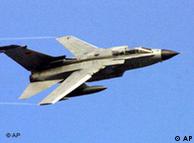
A German airforce Tornado Bildunterschrift: Großansicht des Bildes mit der Bildunterschrift: Buying military hardware sometimes comes with extras

"The arms trade is already an incubator of corruption with such large sums of money flowing around, and all that secrecy," Nick Whitney, a European defence expert at the European Council for Foreign Relations, told Deutsche Welle. "It's so easy to avoid clear accountability about what you've bought, and why. The best antidotes are transparency, and competition. But if you add offsets to the deal, it only gets murkier."

"The temptation to look for offsets - compensation for a big export of state capital - is understandable for some countries especially if you don't have an armaments industry of your own, and so can't expect to get compensated on a 'swings and roundabouts' basis."

Dr. Moelling describes offsets as side deals. "Direct offsets are deals which happen thus: the purchaser will say, for example, 'we want to buy your fighter aircraft but we also want you to provide us with the industrial capability to build the missiles which goes with it.' The seller will perhaps build the factory, pass on the technical knowledge or include the license to build the missiles in the deal for the plane."

"Indirect offsets work in much the same way but the additional deal will include something not attached to original product; we buy the plane, you build a hospital," he added. "These offsets often go beyond just the supplying company and can include participation by the supplier's government. In the case of the submarines, this would be the German government."

Grey area of EU defense sector open to abuse

Under many trade agreements and in most industries, offsets are illegal but the EU allows them in defense procurement where member states can invoke a "national security" exemption. Opponents of offset agreements say they are negotiated among companies with government favoritism and violate the EU's internal market competition rules.

Suitcase full of cashBildunterschrift: Großansicht des Bildes mit der Bildunterschrift: Defense deals within the EU are sweetened by offsets

"In the civilian field, offsets are illegal but in the defense sector, they are legal," Dr. Moelling added. "In the EU, article 346 of the current treaty says that any agreement can be overruled if it is claimed to be in the national security. The problem is that there are many different opinions on offsets in the EU. Germany says they are not helpful as they blur the actual price of products. Greece meanwhile has a very active offset policy while other countries have no official policy. Offests aren't part of any typical market so they're very hard to monitor and are highly politicized."

"The European defense agency recently brokered an agreement amongst European member states to limit offset to 100 percent of the value of the arms contract," Nick Witney said.

"Previously, many member states were looking for a lot more. Austria was the most striking case - they used to demand 300 percent offset. In such circumstances, weapon-buying becomes the least important part of the transaction - the big money is in the offset. So any pretence that you are buying the best weapon at the best price for your military needs goes out of the window - noone can really disentangle why you've bought what you've bought."

The EU has been called upon to tackle the "national security" exemption invoked by member states when dealing in offsets. The EU is planning to introduce a new "defense procurement directive" which will restrict the areas in which governments can use the exemption and demand that the offsets they are involved in are necessary for the protection of security interests and do not break competition rules.

"It's not only on the weapons side of the deal that competition gets distorted," Witney added. "If the arms seller agrees to buy 1,000 trucks from you in compensation, what's that done to all the rules of the single market about fair trade in trucks? The treaties make clear that, although 'national security' gives member states latitude to ignore single market rules in their arms purchases, they must not in doing so distort competition in non-military goods."

*Speaking Image - Creation of DTN News ~ Defense Technology News
*This article is being posted from Toronto, Canada By DTN News ~ Defense-Technology News

©

COPYRIGHT (C) DTN NEWS DEFENSE-TECHNOLOGY NEWS

Thursday, July 22, 2010

DTN News: Israeli, Greek Leaders Vow Closer Ties

DTN News: Israeli, Greek Leaders Vow Closer Ties
Source: DTN News / AFP
(NSI News Source Info) JERUSALEM, Israel - July 23, 2010: Israeli Prime Minister Benjamin Netanyahu met with visiting Greek Prime Minister George Papandreou on Thursday, announcing a tightening of ties between the two nations.
The visit comes at a time of crisis in the once-warm relationship between Israel and Greece's arch-rival, Turkey, since an Israeli commando raid on a Gaza-bound aid ship in which nine Turkish activists were killed on May 31. "At the end of the meeting they agreed to a major upgrade of relations between Israel and Greece on a range of bilateral issues," said Netanyahu's office, adding that Papandreou had invited Netanyahu to visit Athens. Papandreou, on a two-day visit to the region, was to meet Palestinian president Mahmud Abbas later on Thursday. Netanyahu asked the Greek leader to urge Abbas to begin direct peace talks with Israel. The Palestinians have refused to move from US-brokered indirect talks to face-to-face peace negotiations without a complete freeze on Israeli settlement expansion on occupied land.

Friday, March 20, 2009

Lockheed Delivers First Of 30 New F-16 Block 52s To Greece /Lockheed Martin, Hellenic Air Force Celebrate Inauguration Of Newest Advanced F-16 Fighter

Lockheed Delivers First Of 30 New F-16 Block 52s To Greece / Lockheed Martin, Hellenic Air Force Celebrate Inauguration Of Newest Advanced F-16 Fighter
(NSI News Source Info) March 20, 2009: Ceremonies were held today at Lockheed Martin in Fort Worth, Texas, to commemorate the F-16 Peace Xenia IV program for Greece. The ceremony marks an important production milestone, demonstrating that the program is on schedule and on budget. This F-16 acquisition is the fourth for the Hellenic Air Force (HAF) and the nation of Greece.
Greece has ordered a total of 170 F-16s in four batches, and will begin to take delivery in May of the final batch of 30 Block 52+ aircraft. An earlier F-16D Block 52+ is shown here. (Photo I. Lekkas)
Lt. Gen. Ioannis Giagkos, chief of the Hellenic Air Force General Staff, accepted the first Peace Xenia IV F-16 Block 52 advanced aircraft on behalf of his nation and expressed satisfaction with its timely delivery. "I am grateful to everyone who contributed to the design and construction of this ultra-modern weapon system. With these new aircraft, the defense and deterrent force of the Hellenic Air Force will be significantly enhanced," he said.
U.S. officials attending the ceremony included Bruce Lemkin, deputy undersecretary of the Air Force for International Affairs. Hosting the ceremony were Ralph D. Heath, executive vice president of Lockheed Martin and president of Lockheed Martin Aeronautics; Dennys Plessas, vice president of business development in Greece; and John Larson, vice president of F-16 Programs.
"Lockheed Martin is pleased that through this government-to-government agreement, we are able to offer for the first time, a fully integrated and comprehensive weapon system, including a self-protection system, weapons and other subsystems which make this advanced version of the F-16 particularly effective for the operational needs of the Hellenic Air Force," said Plessas. "The recent completion of the infrastructure facilities as a special project in conjunction with this aircraft buy at Araxos Air Base, 116 Combat Wing guarantees the immediate use of this weapon system by the Hellenic Air Force."
"The F-16 we see before us today is a symbol of our 66-year friendship with the Hellenic Air Force, providing a path for the future to the next generation in aircraft with the F-35, as we continue to deliver on our promises between Lockheed Martin and the country of Greece," said Larson.
The Peace Xenia IV purchase program raises the total fighters ordered by the HAF to 170. The aircraft rolled out today is the first of 30 Block 52 Advanced F-16s being produced in the newest lot. The HAF received the F-16 Block 30 version starting in 1988, the Block 50 version starting in 1997 and the Block 52+ version in 2003. Greece has been a Lockheed Martin customer since 1943, when it acquired its first squadron of Martin A-30 Baltimore Mk III, IV and Vs. The Peace Xenia IV program includes 20 F-16Cs and 10 F-16Ds, all powered by the Pratt & Whitney F100-PW-229 engine. This first aircraft - a single-seat F-16C model - was accepted by the U.S. government (as agent for Greece in the Foreign Military Sales process) in January 2009, one month ahead of schedule. The U.S. government also accepted the first two-seat F-16D version in January. The first four aircraft will be ferried to Greece in May with the remainder following in 2009 and 2010.(Emphasis added—Ed.)
BACKGROUND INFORMATION
The F-16 is the choice of 25 nations. More than 4,400 aircraft have been delivered worldwide from assembly lines in five countries. The F-16 program has been characterized by unprecedented international cooperation among governments, air forces and aerospace industries. Major upgrades to all F-16 versions are being incorporated to keep the fleet modern and fully supportable over the aircraft's long service life.
Headquartered in Bethesda, Md., Lockheed Martin is a global security company that employs about 146,000 people worldwide and is principally engaged in the research, design, development, manufacture, integration and sustainment of advanced technology systems, products and services. The corporation reported 2008 sales of $42.7 billion.

Lockheed Martin, Hellenic Air Force Celebrate Inauguration Of Newest Advanced F-16 Fighter

Lockheed Martin, Hellenic Air Force Celebrate Inauguration Of Newest Advanced F-16 Fighter
(NSI News Source Info) FORT WORTH, Texas - March 20, 2009: Ceremonies were held March 19., at Lockheed Martin in Fort Worth, Texas, to commemorate the F-16 Peace Xenia IV program for Greece. The ceremony marks an important production milestone, demonstrating that the program is on schedule and on budget. This F-16 acquisition is the fourth for the Hellenic Air Force (HAF) and the nation of Greece. HAF F-16C block 52 #022 is on a pre-delivery test flight when spotted on approach into NAS Fort Worth. (2-13-09, Keith Robinson) Lt. Gen. Ioannis Giagkos, chief of the Hellenic Air Force General Staff, accepted the first Peace Xenia IV F-16 Block 52 advanced aircraft on behalf of his nation and expressed satisfaction with its timely delivery. "I am grateful to everyone who contributed to the design and construction of this ultra-modern weapon system. With these new aircraft, the defense and deterrent force of the Hellenic Air Force will be significantly enhanced," he said. U.S. officials attending the ceremony included Bruce Lemkin, deputy undersecretary of the Air Force for International Affairs. Hosting the ceremony were Ralph D. Heath, executive vice president of Lockheed Martin and president of Lockheed Martin Aeronautics; Dennys Plessas, vice president of business development in Greece; and John Larson, vice president of F-16 Programs. "Lockheed Martin is pleased that through this government-to-government agreement, we are able to offer for the first time, a fully integrated and comprehensive weapon system, including a self-protection system, weapons and other subsystems which make this advanced version of the F-16 particularly effective for the operational needs of the Hellenic Air Force," said Plessas. "The recent completion of the infrastructure facilities as a special project in conjunction with this aircraft buy at Araxos Air Base, 116 Combat Wing guarantees the immediate use of this weapon system by the Hellenic Air Force." "The F-16 we see before us today is a symbol of our 66-year friendship with the Hellenic Air Force, providing a path for the future to the next generation in aircraft with the F-35, as we continue to deliver on our promises between Lockheed Martin and the country of Greece," said Larson. The Peace Xenia IV purchase program raises the total fighters ordered by the HAF to 170. The aircraft rolled out today is the first of 30 Block 52 Advanced F-16s being produced in the newest lot. The HAF received the F-16 Block 30 version starting in 1988, the Block 50 version starting in 1997 and the Block 52+ version in 2003. Greece has been a Lockheed Martin customer since 1943, when it acquired its first squadron of Martin A-30 Baltimore Mk III, IV and Vs. The Peace Xenia IV program includes 20 F-16Cs and 10 F-16Ds, all powered by the Pratt & Whitney F100-PW-229 engine. This first aircraft - a single-seat F-16C model - was accepted by the U.S. government (as agent for Greece in the Foreign Military Sales process) in January 2009, one month ahead of schedule. The U.S. government also accepted the first two-seat F-16D version in January. The first four aircraft will be ferried to Greece in May with the remainder following in 2009 and 2010. BACKGROUND INFORMATION The F-16 is the choice of 25 nations. More than 4,400 aircraft have been delivered worldwide from assembly lines in five countries. The F-16 program has been characterized by unprecedented international cooperation among governments, air forces and aerospace industries. Major upgrades to all F-16 versions are being incorporated to keep the fleet modern and fully supportable over the aircraft's long service life. Headquartered in Bethesda, Md., Lockheed Martin is a global security company that employs about 146,000 people worldwide and is principally engaged in the research, design, development, manufacture, integration and sustainment of advanced technology systems, products and services. The corporation reported 2008 sales of $42.7 billion.

Friday, January 30, 2009

F-16 Seen As Still Competitive, Has Backlog Of 215 Orders / Lockheed Martin's F-16 Still Competitive In Fighter Market

F-16 Seen As Still Competitive, Has Backlog Of 215 Orders / Lockheed Martin's F-16 Still Competitive In Fighter Market
(NSI News Source Info) NEWTOWN, Conn. - January 30, 2009: The Lockheed Martin F-16 has been continually upgraded since production began decades ago, and the latest Block 50/52 and Block 60/E/F variants remain highly capable and affordable multirole fighters. Lockheed Martin received an order from Morocco at the end of 2007, snatching the 24-aircraft order away from Dassault's Rafale in a last minute effort.
Lockheed Martin is able to be aggressive on pricing the F-16, and as in prior years the purchase of F-16s is one way of increasing a nation’s ties with the American defense establishment.
The Lockheed Martin F-16 Fighting Falcon is a multirole jet fighter aircraft originally developed by General Dynamics for the United States Air Force. Designed as a lightweight fighter, it evolved into a successful multirole aircraft. The Falcon's versatility is a paramount reason it has proven a success on the export market, having been selected to serve in the air forces of 25 nations. The F-16 is the largest Western jet fighter program with over 4,400 aircraft built since production was approved in 1976.
Other recent customers include Turkey, which executed a Letter of Offer and Acceptance for 30 aircraft during 2007 (consisting of 14 single-seat C models and 16 two-seat Ds). The Turkish aircraft will be assembled and delivered by TUSAS beginning in 2011. The new aircraft will replace about half the TuAF's elderly F-4 fleet in the near term as the service waits for the new Lockheed Martin F-35 Lightning II to arrive on the scene.
Greece ordered 30-unit Block 52+ F-16s in December 2005, but the Greek government later announced that it would not be exercising a 10-aircraft option under the deal and would be looking elsewhere to fill an ongoing requirement for another 30 fighters.
The Pakistani Air Force has ordered 18 new fighters through the Pentagon's Foreign Military Sales program at the end of 2007. The order is part of a bigger deal to upgrade the PAF's existing fleet of A/B model F-16s. Pakistan took an option to purchase an additional 18 fighters under the deal. Pakistan may exercise these options, but funding the purchase will be difficult at the same time the PAF is purchasing large numbers of Chengdu FC-1s. Ongoing political turmoil in the country could also cause further deliveries of F-16s to be blocked by the U.S. government. Israel noted back in mid-2005 that it was considering additional purchases F-16 fighters if the F-35 program were to suffer further delays. Israel has also made noises about cutting its requirement for F-35s than expected.
Taiwan has long been expected to order 66 F-16s as part of an effort to recapitalize a portion of its fighter fleet, but domestic political wrangling has held up the process, along with the Bush administration's seeming ambivalence to the deal. Washington is currently looking to China to cooperate on a number of security issues, including efforts to end the nuclear threat posed by North Korea. The Taiwanese Air Force's plan to order 66 new F-16s will likely never reach fruition.
The F-16 also is in the running for a potentially huge order by the Indian Air Force, which issued a long-awaited Request for Proposals in August 2007 to fill a requirement for 126-200 new multirole fighters. The Medium Multi-Role Combat Aircraft program is intended to replace many of the service's elderly MiG-21s. Competing against the F-16 are the Boeing F/A-18E/F Super Hornet, the Dassault Rafale, the MiG-35, and the Saab Gripen. Among the Western-built aircraft, the F-16 and Gripen are single-engined fighters that provide a “low-cost” alternative to the heavier, twin-engined Super Hornet and Rafale. The MiG-35 is a follow-on to the MiG-29, which is already in service with the IAF.
The RFP was not made available to the public, and it is not clear from the outside what factors the IAF considers most important in selecting a new fighter. In making its selection, India can be expected to be wary of offending long-time supplier Russia, but the nation is currently in a period of warming relations with the U.S. government, and U.S. recognition of India's right to develop its nuclear facilities may be rewarded by a large aircraft purchase.
Elsewhere, Lockheed Martin notes that “several customers” are showing high interest in the F-16E/F (formerly the Block 60 model developed for the United Arab Emirates), but many nations that would offer the best prospects for a new order are the same nations Lockheed Martin believes will be drawn to the F-35.
The F-35 was designed with the idea of supplanting the F-16 as the pre-eminent “affordable” multirole fighter in the western and Asian defense markets. Looking ahead, and Lockheed Martin may find itself in the same position as Dassault when the latter was offering customers both the Mirage 2000 and Rafale at the same time. Offering two aircraft that compete against each other may become an undesirable position for Lockheed Martin, or the F-16 may continue to be offered to customers that cannot afford the expected higher cost of the F-35.
Forecast International's projections call for production of the F-16 out to 2016, but additional orders could well extend production out several more years.
Eastern Europe has shown an affinity for cheap, single-engine fighters in recent years as countries in the region look to meet NATO responsibilities without breaking their limited defense budgets. Romania and Bulgaria is reported to be interested in acquiring 16 fighters, and the F-16 and Gripen are prime contenders for orders from these nations. Romania is looking for 48 fighters to replace 100 MiG-21s in its inventory. Funding is an obstacle, however. The near-term costs of the acquisition could be reduced by purchasing a mixture of new and refurbished aircraft or signing a lease deal.
The continuing interest in Lockheed Martin's F-16 is keeping GE and Pratt & Whitney busy building F110 and F100 engines for export orders, while both companies are developing engines for 5th generation fighters like the F-22 and F-35.
Overall, production during the 2009-2018 forecast period is projected to total 215 aircraft.

Tuesday, January 13, 2009

US Cancels Arms Shipment Over Greek Objections: Official / US Looking For An Alternative To Arrange Arms Shipment: Report

US Cancels Arms Shipment Over Greek Objections: Official / US Cancels Israel Arms Shipment Over Greek Objections / US Looking For An Alternative To Arrange Arms Shipment: Report (NSI News Source Info) WASHINGTON - January 13, 2009: The US military has to had to cancel a planned shipment of munitions from a Greek port to a US warehouse in Israel due to objections from Athens, a Pentagon spokesman said on Tuesday.
The Greek "government had some objection to offloading that shipment in their country," spokesman Geoff Morrell told a news conference.
He said the shipment to the US warehouse had been agreed before the current Israeli offensive in Gaza and that Washington was now looking for an alternative.
He said the United States had operated the munitions stockpile for nearly 20 years and that Israel "can ask for permission to access" the munitions. He said he did not know the nature of Greece's objection and whether it was related to security or political concerns.

Saturday, January 03, 2009

Russian Carrier-Based Aircraft To Exercise In Greek Airspace

Russian Carrier-Based Aircraft To Exercise In Greek Airspace (NSI News Source Info) ATHENS - January 3, 2009: Deck-based aviation of Russia's heavy aircraft carrier Admiral Kuznetsov will hold exercises in the Greek airspace in January, the Greek National Defense General Staff said on Friday. "The exercises will take place on January 3-4 and on January 8-10 southeast of Rhodes Island and on January 11 south of Crete," the General Staff said. The exercises will be held in international waters but the aircraft will fly in the Athens airspace, the General Staff said. Russia announced in 2007 that its Navy had resumed and would build up a constant presence in different regions of the world's oceans.