Showing posts with label Aircraft. Show all posts

Friday, December 13, 2013

DTN News - RUSSIA DEFENSE NEWS: Russia Buys New Aircraft, Armored Vehicles and Missiles

DTN News - RUSSIA DEFENSE NEWS: Russia Buys New Aircraft, Armored Vehicles and Missiles
Source: DTN News - - This article compiled by K. V. Seth from reliable sources By Jaroslaw Adamowski
(NSI News Source Info) TORONTO, Canada - December 13, 2013: Russia’s military will acquire more than 210 new planes and helicopters, over 250 armored vehicles and more than 40 intercontinental ballistic missiles in 2014, President Vladimir Putin announced. The ongoing program to modernize the Russia’s military armament has developed “a good rhythm of work,” Putin said, according to local daily Kommersant.

The announcement came Tuesday at the meeting of the Russian Defense Ministry’s board in the presence of Defense Minister Sergei Shoigu. The acquisitions will be part of the country’s plan to spend US $650 billion on new arms and military equipment by 2020.

Putin said that Russia might be facing a number of potential security threats and challenges in the near future. These include armed conflicts in the Middle East, the withdrawal of international forces from Afghanistan, and plans to expand US missile defense to Europe. He also noted the Russian Navy would need to protect the country’s security and interests in the Arctic.

Shoigu said that, along with procurements of new arms, there was a necessity to intensify the training of troops. In 2013, Russia’s armed forces acquired 56 planes, 122 helicopters, 260 tanks, 112 armored infantry fighting vehicles, 279 armored personnel carriers, six vessels, a submarine, and a number of missile and gun systems, the defense minister said.

The Russian Navy missile cruiser Marshal Ustinov is expected to rejoin the fleet in 2015 following delays in the warship’s refit, the Zvezdochka shipyard said Friday.

The Marshal Ustinov, a Slava-class missile cruiser, was launched in 1982 and commissioned with the Russian Northern Fleet in 1986. It has been undergoing a refit at the Zvezdochka shipyard in northern Russia since 2011.

The completion of the work, which included repair of the propulsion system and overhaul of the ship’s missile, communications and navigation systems, was originally scheduled for 2014. However, diagnostics revealed that the majority of electrical cables on the vessel must be replaced, the yard said.

*Link for This article compiled by K. V. Seth from reliable sources By Jaroslaw Adamowski
*Speaking Image - Creation of DTN News ~ Defense Technology News 
*Photograph: IPF (International Pool of Friends) + DTN News / otherwise source stated
*This article is being posted from Toronto, Canada By DTN News ~ Defense-Technology News Contact:dtnnews@ymail.com 
©COPYRIGHT (C) DTN NEWS DEFENSE-TECHNOLOGY NEWS

Tuesday, August 03, 2010

DTN News: India Plane Demand Seen $130 Billion Over 20 Years According Dinesh Keskar Of Boeing

DTN News: India Plane Demand Seen $130 Billion Over 20 Years According Dinesh Keskar Of Boeing
* Indian carriers will need 1,150 jets by 2030 - Boeing * Raises forecast from 1,000 aircraft
Source: DTN News / Reuters By Bappa Majumdar
(NSI News Source Info) NEW DELHI, India - August 3, 2010: India's expanding aviation sector will require 1,150 commercial jets valued at $130 billion over the next 20 years, a Boeing Co (BA.N) executive said on Tuesday. Dinesh Keskar, the head of the U.S. aircraft manufacturer's operations in India, said with more private carriers entering the aviation sector the demand for aircraft was increasing. "This is a market representing more than 4 percent of Boeing commercial airplanes' worldwide forecast," he told reporters. In 2009, the firm had said India would require 1,000 planes worth $100 billion over 20 years. "We went through the deepest recession in the history of aviation but now India's recovery is one of the fastest," Keskar said. "We believe there will be a record 50 million passengers this year if the trend continues," he said. Indian airlines carried 44 million passengers in 2009. Keskar also said that state carrier Air India [AI.UL] was entitled to compensation from Boeing for delays in the delivery of Dreamliner planes. Last month Air India said it has sought compensation from Boeing for the delay in deliveries of the Dreamliner. The first Dreamliner was originally scheduled to be delivered in 2008. Air India says it has plans to acquire 27 Dreamliners from Boeing in phases. Boeing plans the first delivery of the lightweight carbon-composite 787 Dreamliner, which is already more than two years behind schedule, in the fourth quarter. But it also said the delivery may slip into 2011. "Delays in 787 delivery entitles Air India for a compensation," Keskar said.
(Additional reporting by Devidutta Tripathy; Editing by Ranjit Gangadharan and Muralikumar Anantharaman)
Reuters - Most Popular News

Monday, November 09, 2009

DTN News: Russian Fighter Jets Worse Than Those Of USA And Europe?

DTN News: Russian Fighter Jets Worse Than Those Of USA And Europe? *Source: Bigness.ru By Sergey Malinin (NSI News Source Info) MOSCOW, Russia - November 10, 2009: The failure of the deal to sell Russian IL-78 fuel tankers to India once again raised the issue of the competitive ability decrease of Russian arms and military technique on the world market. Russia’s "Оboronka" (the defense industry) is facing yet harder problems in handling export contracts and servicing clients of earlier transactions. “It is impossible to improve the situation”, our expert concludes. IL-78 tanker aircraft. ~ The IAF says the A330-200 is its choice for the projected Multi Role Tanker Transport requirement, not the IL-78 Midas tanker. Air Chief Marshal Fali Homi Major told HT in an interview, “We have finished all evaluations and selected the A330 MRTT. The deal will come up for final approval by the Cabinet Committee on Security (CCS) very soon. The Russian platform did not meet certain requirements.” The Air Chief appeared to be piqued at the poor vendor support for equipment procured from Russia. "After the disintegration of the Soviet Union, Russia has changed the whole pattern of doing defense business. Now we are faced with issues concerning spares, vendor support and built-in delays in the structure of their centralized military corporations.” India's MOD issued a request for proposals (RFP) for delivery of six Multi Role Tanker Transport (MRTT) in 2007. The RFP stipulates deliveries of the new tankers to begin three years after contract signature. EADS subsidiary Airbus has offered the A330-200-in a three-hose configuration and Russia's United Aircraft (UAC) has offered a more advanced version of the Ilyushin Il-78 Midas tanker, 12 of which are in service with the IAF. According to Russian and foreign media sources, India refused to buy Russian Il-78 fuel tanker aircraft. Indian officials motivated this decision with the non-conformity of planes to the customer’s requisitions. The spare parts supply and the after-sales service were also mentioned. “After the collapse of the Soviet Union, Russia alternated its approach to the handling of the defense business. Nowadays we are facing problems with spare parts, the support of manufacturers and the delays conditioned by the centralized structure of their defense corporations”, Fali Homi Major, the Commander-in-Chief of Indian Air Force told RIA Novosti. Instead of Russian planes India is likely to buy Airbus A330 MRTT manufactured by the European company EADS. This is not the first juicy scandal connected with Russia’s defense exports. “The most well-known case is the scandal with Algeria when they refused to take the already procured MiG aircraft and sent them back to us. There are plenty of scandals with India in relation to various types of arms. It concerns naval weapons in the first place”, said Mr. Alexander Khramchihin of the Institute of Political and Defense Analysis in an interview to Bigness.ru. Recollecting the year 2007 with the outbreak of scandal with 15 MiG-29CMT fighters shipped to Algeria . It appeared that the jet fighters, which were sold as brand new, contained “second-hand” parts. According to some information, the units from the planes with several hundreds of flight hours were used when assembling those aircraft. One can recollect habitual claims from India which is one of our key partners in the field of defense cooperation. We remind the endless complaints with The Gorshkov aircraft carrier which was designed for India. The budget for its refurbishment was mounting endlessly which enormously irritated our client. Perplexity was also connected with the problems in the modernization of the ship. Technical problems haunted Russia in the transfer of frigates, which India ordered from Russia . Air defense missile systems stubbornly failed to hit air targets. In many scandal situations (e.g. in the case of airplanes returned by Algeria) some observers incriminate the international backroom deal. However, politically motivated relations with India could only take place in times of the Cold War, but definitely not today. “Earlier India oriented itself to Russia during the Cold War, and there were truly political factors there”, says A.Khramchihin. “Today India can buy weapons from whoever it wants to. The market also became more abundant than before. In his words everything in this sphere is explained by the quality including India’s denial. This is the signal to us that we produce low-quality weapons”, he affirms. Formerly, competitive advantage of the Soviet military technique was in its low price (sometimes even dumping), its simplicity and reliability. However, the Russian military hardware, still being simple, started losing its former reliability. Nevertheless, the prices on it were growing against all odds. The answer is in the high inflation rise of the defense sphere surpassing the average price growth in the industry as well as the degradation of the military-industrial complex. Whereas the amount of the state defense contracts and foreign contracts is growing, the national defense industry still fails to regain its capability to tackle the large-scale production of military equipment. “Old factories which produced hardware in sufficient quantities and quality in the course of many years are not coping with the assignment of today”, said Mr. Ruslan Pukhov, of the Center of Strategy and Technology Analysis told Bigness.ru. The staff deficit still persists – “money is there but people are not”. ”The situation is impossible to amend”, grumbles A.Kramchihin.
If the situation does not change (according to military experts it will be next to impossible to reverse it) Russia will be losing its share in the market of arms and military equipment. These tendencies have already started to take shape. Thus. according to studies of Stockholm International Peace Research Institute (SIPRI) and Bonn International Converse Center (BICC) Russia is reducing its share on the world arms market. The turnover on the world arms market in 2004-2008 has increased by 21 percent as compared to previous five-year period (1999-2003). At that time the increase in sales of Russian arms was only 14 percent. The figures testify that our share in the arms market started to curtail. Disclaimer statement Whilst every effort has been made to ensure the accuracy of the information supplied herein, DTN News ~ Defense-Technology News cannot be held responsible for any errors or omissions. Unless otherwise indicated, opinions expressed herein are those of the author of the page and do not necessarily represent the corporate views of DTN News ~ Defense-Technology News.

Wednesday, September 09, 2009

DTN News: Boeing Projects Asia Pacific Will Be Largest Aviation Market in World

DTN News: Boeing Projects Asia Pacific Will Be Largest Aviation Market in World
*Region will invest $1.1 trillion in new airplanes, 35 percent of world value
*Source: DTN News / Int'l Media
(NSI News Source Info) HONG KONG - September 9, 2009: Boeing (NYSE: BA) forecasts that the Asia Pacific region will rank as the world's largest aviation market over the next 20 years, requiring 8,960 new commercial jets valued at approximately $1.1 trillion. Asia Pacific is the largest market in the forecast for new airplanes in terms of both units required and market value. "Twenty years from now more than 40 percent of the world's airline traffic will begin, end or take place within the Asia Pacific region," said Boeing Commercial Airplanes Vice President - Marketing, Randy Tinseth. "That's a big leap for a region that was not even mentioned in our earliest Boeing market forecasts back in the 1950s." Tinseth said between now and 2028, Asia Pacific air travel will grow from 32 percent of the world market to 41 percent. (Image: Boeing rivals Airbus A380) The Asia Pacific region covers a broad area including Japan, Korea, China, Australia and India and currently accounts for more than 8,300 flights and 1.2 million travelers daily. In less than 10 years, it will be the largest air travel market in the world, according to the Boeing outlook released today in Hong Kong. Travel in the region is expected to grow at an average annual rate of 6.5 percent over the next 20 years. "This is clearly a difficult time in the aviation market, and today's challenges are reflected in the Boeing forecast, but we do expect the growing Asia markets to lead the industry into recovery," said Tinseth. Strong domestic growth in China, India and other emerging Asian nations will contribute to high demand for single-aisle airplanes. Over the 20-year forecast period, more than half of the deliveries, some 5,600, will be single-aisles. With just 330 deliveries, the percentage of the fleet's large category will decrease from 10 to 4 percent as airlines switch to more efficient mid-size twins and even larger single-aisle jets. Airlines in the Asia Pacific region will take delivery of 2,590 twin-aisle airplanes. Regional jet deliveries will total 440. The Asia Pacific fleet will nearly triple from 3,910 to a total of 11,170 airplanes. More than 80 percent of this demand will be for growth. Delivery of new, more fuel-efficient airplanes ensures the region's fleets will remain among the youngest in the world. Boeing's projection also shows the Asia Pacific region as a growth leader in the long-term global air cargo market, with routes within China, within Asia and those connecting Asia to other regions outpacing the global average growth annual rate of 5.4 percent over the next 20 years. "Despite an unprecedented contraction during 2008 and 2009, we remain confident in the strength of the global air cargo market over the long haul," said Jim Edgar, regional director, Cargo Marketing, Boeing Commercial Airplanes. "The air cargo industry is supported by sound fundamentals -- the imperative for speed, consumer product innovation and global industrial interdependence are key drivers -- as well as global GDP projections of about 3 percent annual growth." Asian carriers will add about 750 freighters to the region's fleet to accommodate growth and airplane retirements, about 27 percent of the world requirement - second only to the more mature, but slower growing, North America market. More information on the Asia Pacific market forecast can be found at: www.boeing.com/cmo

Sunday, August 02, 2009

DTN News: Plane Carrying 16 Disappears Over Indonesian Papua

DTN News: Plane Carrying 16 Disappears Over Indonesian Papua
*Source: DTN News / Int'l Media
(NSI News Source Info) JAKARTA, Indonesia - August 2, 2009: A plane carrying 16 people disappeared over eastern Indonesia on Sunday, an airline official said.
This image provided by NOAA shows a Aug. 10, 2007 file photo of a DeHavilland DHC6 Twin Otter similar to the one belonging to Merpati Nusantari airline that has gone missing over Indonesia's Papua region early Sunday Aug. 2, 2009.
The Twin Otter plane was on a commercial flight in the remote Papua region when it lost contact with ground officials, said Capt. Nikmatullah, the director of operations of the airline operating the plane, Merpati Nusantara. Nikmatullah, who goes by a single name, said no trace had been found of the plane more then four hours after it took off. The aircraft was carrying enough fuel to keep it in the air for 3 1/2 hours, he told Metro TV station. The plane was on a 50-minute journey from Sentani, a major airport in Papua, to the town of Oksibil, he said. Much of Papua is covered with impenetrable jungles and mountains. In the past, crashed planes have never been found. Indonesia, a nation of more than 18,000 islands, has seen a string of air crashes in recent years.

Saturday, August 01, 2009

DTN News: Russia Expects $2.6 Billion In Military Aircraft Sales In 2009

DTN News: Russia Expects $2.6 Billion In Military Aircraft Sales In 2009 *Source: DTN News / RIA Novosti (NSI News Source Info) MOSCOW, Russia - August 1, 2009: Russia's state arms exporter Rosoboronexport has said military aircraft will continue to dominate the company's foreign sales in 2009, and will total about $2.6 billion. The arms export monopoly is planning to sell about $6.5 billion worth of military hardware in 2009, and earlier said its defense order portfolio was worth $27 billion. "Aviation has always been a predominant part of Rosoboronexport's foreign sales portfolio, and 2009 will not be an exception. According to our plans, exports of Russian military aircraft will worth about $2.6 billion or 40.6% of the total," said Alexander Mikheyev, the company's deputy general director. Although India, China, Malaysia, Algeria and Venezuela remain Russia's key customers in the area of military aviation, Rosoboronexport is seeking to expand its presence on other markets. "We are expecting a major breakthrough in the Libyan direction, because Soviet and Russian-made combat aircraft continue to be the backbone of the Libyan air force," Mikheyev said in an interview with the Arms Export Journal, which is published by Moscow-based Centre for Analysis of Strategies and Technologies. According to some sources, the Libyan air force has at least 25 MiG-21 and 125 MiG-23 fighter jets, a number of Su-22 and Su-24 attack aircraft, combat helicopters and military transport planes. "At present, Libya is expressing an interest in MiG-35 [multirole fighter], Su-35 [multirole fighter], advanced attack helicopters, and air defense systems. We are expecting to resume traditional contacts with Libya [in sales of military aircraft] in the near future," the official said. A source in the Russian defense industry earlier told RIA Novosti that Russia had signed and had started the implementation of a contract with Libya on the overhaul of Su-24 attack aircraft in service with the Libyan air force.

Saturday, February 28, 2009

Russia Slams As Farce Canada's Statement On Tu-160 Flight

Russia Slams As Farce Canada's Statement On Tu-160 Flight
(NSI News Source Info) MOSCOW - February 28, 2009: A Russian government source expressed astonishment on Friday over a statement made by Canada's defense minister over a flight by a Russian strategic bomber near the Canadian border. The Tupolev Tu-160 is a supersonic, variable-geometry heavy bomber designed by the Soviet Union. It is similar in configuration to the B-1 Lancer but is significantly faster than the B-1B at altitude with a greater combat range and payload capacity. Entered service in 1987 with the 184 Guards Bomber Regiment, based at Priluki, Ukraine, the Tu-160 was the last strategic bomber designed by the Soviet Union but remains in production, with at least 16 currently in service with the Russian Air Force. Pilots of the Tu-160 call it the “White Swan”, due to its maneuverability and antiflash white finish. Although several civil and military transport aircraft are bigger, the Tu-160 has the greatest total thrust, and the heaviest takeoff weight of any combat aircraft, and the highest top speed as well as one of the largest payloads of any current heavy bomber. Peter Mackay said two Canadian fighters forced the Russian Tu-160 Blackjack to make a U-turn on February 18 as it neared Canadian airspace less then 24 hours before U.S. President Barack Obama was due to visit Ottawa. The Canadian minister said the move was "a strong coincidence." "The Canadian defense minister's statements concerning the flights of our long-haul aircraft are totally unclear... This was a routine flight. The countries adjacent to the flight path had been notified and the planes did not violate the airspace of other countries. In this light the statements by the Canadian Defense Ministry provoke astonishment and can only be called a farce," the source said. The Russian Defense Ministry spokesman, Col. Alexander Drobyshevsky, confirmed that all the neighboring states had received prior notification of the flights by Russian strategic aircraft. Lt. Col. Vladimir Drik, a Russian Air Force spokesman, said earlier the Tu-160 flights were in compliance with international agreements and rules and did not violate Canadian airspace.

Thursday, February 26, 2009

China Stepping Into Aviation Industry / Leading Aircraft Manufacturers Would Face Competition "Made In China" In Near Future - Report

China Stepping Into Aviation Industry / Leading Aircraft Manufacturers Would Face Competition "Made In China" In Near Future - Report
(NSI News Source Info) February 26, 2009: In this March 30, 2007 file photo, workers gather for a ceremony marking the start of final assembly of the homegrown ARJ-21 regional jet at the Shanghai Aircraft Manufacturing Factory in Shanghai, China. Aviation Industry Corp. of China, which makes the homegrown ARJ-21 jet and Beijing's fighter jets, says it will recruit its first executives from abroad, an unprecedented step for the secretive world of Chinese military contractors, amid efforts to create a commercial aerospace supplier to compete with Boeing Co. and Europe's Airbus.
AVIC is looking for vice presidents for 13 subsidiaries who have experience at multinational companies in marketing, research and production, said Ding Zhiyong, a company spokesman.
He said most posts were in civilian areas such as helicopters and cargo planes but some were in defense, though he declined to give other details.
The company says it plans to formally launch the recruiting efforts Thursday, Feb. 26.

Monday, January 05, 2009

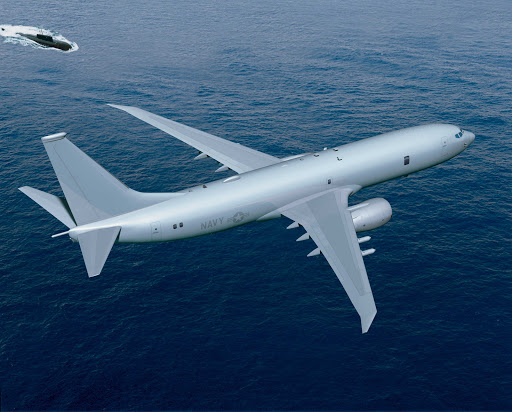
India Signs $2.1 Billion Defence Deal With Boeing / India Signed Deal for Eight Boeing P-8I Long Range Maritime Reconnaissance Aircraft

India Signs $2.1 Billion Defence Deal With Boeing / India Signed Deal for Eight Boeing P-8I Long Range Maritime Reconnaissance Aircraft
(NSI News Source Info) NEW DELHI - January 5, 2009: India has signed a $2.1 billion contract with leading U.S. aircraft manufacturer Boeing Co for naval patrol aircraft as part of an overhaul of the South Asian nation's mainly old Soviet military hardware. India, fast becoming one of the world's biggest arms importers, said at least eight of the P-8I anti-submarine and anti-surface warfare planes would be delivered in four years. 'The deal has been signed and the delivery of the P-8I should start in four years' time,' defence ministry spokesman Sitanshu Kar said on Monday. India is looking to spend $30 billion on imports over the next five years to modernise its largely Soviet-era arms and is also trying to strengthen its navy by introducing new weapons systems. Boeing plans to make inroads into the South Asian defence market and has already submitted a bid for a contract to supply India with 126 multi-role fighter jets, potentially worth more than $10 billion. Last July, Boeing said it would bid for defence projects in India worth up to $20 billion over the next 10 years. India is also keen to strengthen its own aerospace industry and has asked major weapons exporting countries to transfer defence technology to India. Defence experts said the P-8I would give India an edge over its rivals. The aircraft would carry air-to-surface missiles as well as anti-shipping missiles to tackle sea-based threats, a defence official said.
A Boeing spokesman in New Delhi said the company would release a detailed statement on the deal in two days. Last month, India successfully tested a supersonic cruise missile from a moving ship, in what officials said was a major boost for its defence capabilities.



