 Russia to provide $200 mln in urgent aid for S. Ossetia
(NSI News Source Info) BRUSSELS, August 11, 2008 - Russia's government has allocated $200 million in urgent aid for South Ossetia, to tackle a growing humanitarian catastrophe in the violence-torn separatist Georgian province, Russia's envoy to NATO said on Monday.
The breakaway republic will next year receive $400 million from Russia in reconstruction aid. Provincial capital Tskhinvali has been left in ruins by Georgia's military offensive, while Russia says more than 2,000 civilians have been killed, and over 34,000 have fled.
"Russia's government has urgently earmarked more than $200 million to prevent the humanitarian catastrophe from worsening," Dmitry Rogozin told a briefing.
Russia's finance minister had earlier said urgent humanitarian aid could be added to reconstruction allocations, which will be taken from Russia's 2009 budget.
"We have reserved 10 billion for 2009. But of course reconstruction should be started this year. Whether it will take a billion, two, or three will be determined, and then we will make adjustments in the 2008 budget," Alexei Kudrin said.
Most of South Ossetia's 80,000 residents are Russian citizens.
Russia to provide $200 mln in urgent aid for S. Ossetia
(NSI News Source Info) BRUSSELS, August 11, 2008 - Russia's government has allocated $200 million in urgent aid for South Ossetia, to tackle a growing humanitarian catastrophe in the violence-torn separatist Georgian province, Russia's envoy to NATO said on Monday.
The breakaway republic will next year receive $400 million from Russia in reconstruction aid. Provincial capital Tskhinvali has been left in ruins by Georgia's military offensive, while Russia says more than 2,000 civilians have been killed, and over 34,000 have fled.
"Russia's government has urgently earmarked more than $200 million to prevent the humanitarian catastrophe from worsening," Dmitry Rogozin told a briefing.
Russia's finance minister had earlier said urgent humanitarian aid could be added to reconstruction allocations, which will be taken from Russia's 2009 budget.
"We have reserved 10 billion for 2009. But of course reconstruction should be started this year. Whether it will take a billion, two, or three will be determined, and then we will make adjustments in the 2008 budget," Alexei Kudrin said.
Most of South Ossetia's 80,000 residents are Russian citizens.
Monday, August 11, 2008
Russia to provide $200 mln in urgent aid for S. Ossetia
Russia to provide $200 mln in urgent aid for S. Ossetia
(NSI News Source Info) BRUSSELS, August 11, 2008 - Russia's government has allocated $200 million in urgent aid for South Ossetia, to tackle a growing humanitarian catastrophe in the violence-torn separatist Georgian province, Russia's envoy to NATO said on Monday.
The breakaway republic will next year receive $400 million from Russia in reconstruction aid. Provincial capital Tskhinvali has been left in ruins by Georgia's military offensive, while Russia says more than 2,000 civilians have been killed, and over 34,000 have fled.
"Russia's government has urgently earmarked more than $200 million to prevent the humanitarian catastrophe from worsening," Dmitry Rogozin told a briefing.
Russia's finance minister had earlier said urgent humanitarian aid could be added to reconstruction allocations, which will be taken from Russia's 2009 budget.
"We have reserved 10 billion for 2009. But of course reconstruction should be started this year. Whether it will take a billion, two, or three will be determined, and then we will make adjustments in the 2008 budget," Alexei Kudrin said.
Most of South Ossetia's 80,000 residents are Russian citizens.

Ukraine seeks deal limiting use of Russian Black Sea Fleet
 Ukraine seeks deal limiting use of Russian Black Sea Fleet
(NSI News Source Info) KIEV, August 11, 2008 - Ukraine wants Moscow to agree to a deal restricting the use of Russia's Crimea-based Black Sea Fleet in armed conflicts, a top Ukrainian diplomat said on Monday, following Russia's deployment of warships near Georgia.
Ukraine, whose pro-Western leadership shares the NATO ambitions of Georgia, threatened on the weekend to refuse to allow the Russian vessels to return to the Sevastopol naval base. The ships were patrolling the waters near Georgia during a Russian peace enforcement operation that begun after Georgia's costly offensive in breakaway South Ossetia.
"We hope that this situation will compel both parties to sign such an agreement. The Ukrainian side is ready for this," Deputy Foreign Minister Konstyantyn Yeliseyev said. He reiterated Kiev's position that the use of the Russian ships in armed hostilities is unacceptable.
Russia's Defense Ministry said on Sunday that the Russian Navy had sunk a Georgian vessel transporting missile launchers.
The Ukrainian diplomat said the country does not want confrontation with Russia but "normal, constructive dialogue that must take Ukraine's interests into consideration."
Two Russian warships - the Moskva missile cruiser and Smetlivy patroller - returned to the Russian port of Novorossiisk on Sunday evening. The Moskva had been docked at the Sevastopol base before its deployment near Georgia.
Ukraine seeks deal limiting use of Russian Black Sea Fleet
(NSI News Source Info) KIEV, August 11, 2008 - Ukraine wants Moscow to agree to a deal restricting the use of Russia's Crimea-based Black Sea Fleet in armed conflicts, a top Ukrainian diplomat said on Monday, following Russia's deployment of warships near Georgia.
Ukraine, whose pro-Western leadership shares the NATO ambitions of Georgia, threatened on the weekend to refuse to allow the Russian vessels to return to the Sevastopol naval base. The ships were patrolling the waters near Georgia during a Russian peace enforcement operation that begun after Georgia's costly offensive in breakaway South Ossetia.
"We hope that this situation will compel both parties to sign such an agreement. The Ukrainian side is ready for this," Deputy Foreign Minister Konstyantyn Yeliseyev said. He reiterated Kiev's position that the use of the Russian ships in armed hostilities is unacceptable.
Russia's Defense Ministry said on Sunday that the Russian Navy had sunk a Georgian vessel transporting missile launchers.
The Ukrainian diplomat said the country does not want confrontation with Russia but "normal, constructive dialogue that must take Ukraine's interests into consideration."
Two Russian warships - the Moskva missile cruiser and Smetlivy patroller - returned to the Russian port of Novorossiisk on Sunday evening. The Moskva had been docked at the Sevastopol base before its deployment near Georgia.
Georgia Claims Russians Have Cut Country in Half
Georgia Claims Russians Have Cut Country in Half
August 11, 2008 NSI News Source Info

 Georgia Claims Russians Have Cut Country in Half
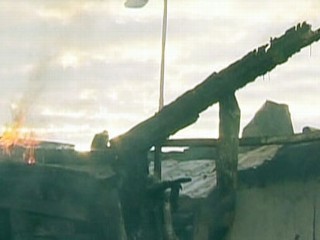
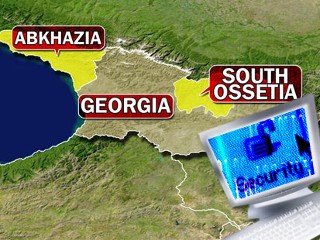
(NSI News Source Info) August 11, 2008: Russian forces seized several towns and a military base deep in western Georgia on Monday, opening a second front in the fighting. Georgia's president said his country had been effectively cut in half with the capture of the main east-west highway near Gori.
Fighting also raged Monday around Tskhinvali, the capital of the separatist province of South Ossetia. Russian warplanes launched new air raids across Georgia, with at least one sending screaming civilians running for cover.
The reported capture of the key Georgian city of Gori and the towns of Senaki, Zugdidi and Kurga came despite a top Russian general's claim earlier Monday that Russia had no plans to enter Georgian territory. By taking Gori, which sits on Georgia's only east-west highway, Russia can cut off eastern Georgia from the country's western Black Sea coast.
"(Russian forces) came to the central route and cut off connections between western and eastern Georgia," Georgian President Mikhail Saakashvili told a national security meeting.
The news agency Interfax, however, cited a Russian Defense Ministry official as denying Gori was captured.
Georgia Claims Russians Have Cut Country in Half
(NSI News Source Info) August 11, 2008: Russian forces seized several towns and a military base deep in western Georgia on Monday, opening a second front in the fighting. Georgia's president said his country had been effectively cut in half with the capture of the main east-west highway near Gori.
Fighting also raged Monday around Tskhinvali, the capital of the separatist province of South Ossetia. Russian warplanes launched new air raids across Georgia, with at least one sending screaming civilians running for cover.
The reported capture of the key Georgian city of Gori and the towns of Senaki, Zugdidi and Kurga came despite a top Russian general's claim earlier Monday that Russia had no plans to enter Georgian territory. By taking Gori, which sits on Georgia's only east-west highway, Russia can cut off eastern Georgia from the country's western Black Sea coast.
"(Russian forces) came to the central route and cut off connections between western and eastern Georgia," Georgian President Mikhail Saakashvili told a national security meeting.
The news agency Interfax, however, cited a Russian Defense Ministry official as denying Gori was captured.
Georgia Claims Russians Have Cut Country in Half
(NSI News Source Info) August 11, 2008: Russian forces seized several towns and a military base deep in western Georgia on Monday, opening a second front in the fighting. Georgia's president said his country had been effectively cut in half with the capture of the main east-west highway near Gori.
Fighting also raged Monday around Tskhinvali, the capital of the separatist province of South Ossetia. Russian warplanes launched new air raids across Georgia, with at least one sending screaming civilians running for cover.
The reported capture of the key Georgian city of Gori and the towns of Senaki, Zugdidi and Kurga came despite a top Russian general's claim earlier Monday that Russia had no plans to enter Georgian territory. By taking Gori, which sits on Georgia's only east-west highway, Russia can cut off eastern Georgia from the country's western Black Sea coast.
"(Russian forces) came to the central route and cut off connections between western and eastern Georgia," Georgian President Mikhail Saakashvili told a national security meeting.
The news agency Interfax, however, cited a Russian Defense Ministry official as denying Gori was captured.
First C-130J Super Hercules Visit to Canada Since Contract Signing
 First C-130J Super Hercules Visit to Canada Since Contract Signing
(NSI News Source Info) August 11, 2008: OTTAWA - The Abbotsford Air Show is the first Canadian event to host a C-130J Super Hercules since Lockheed Martin signed a contract with the Government of Canada valued at $1.4 billion to purchase 17 of the world's most advanced tactical airlifters plus related equipment and services. One C-130J Super Hercules from the 146th Airlift Wing of the Channel Islands Air National Guard Station will be on display at the Abbotsford Air Show in British Columbia from August 8 through 10. This is the same type of aircraft that will be delivered to the Canadian Forces starting in 2010. Canada has joined the growing number of nations with C-130J fleets-allied operators include the United States, Australia, Denmark, Italy, Norway and the United Kingdom. "The C-130J is a proven, available, rugged aircraft capable of performing a full spectrum of tactical airlift missions in demanding environments," said Jim Grant, Lockheed Martin Vice-President for Air Mobility. "We are confident it will become Canada's new workhorse and serve the Canadian Forces well for years to come." The new C-130J generates much greater operational efficiency than the older C-130s, such as Canada's E and H model, by flying farther, faster, with more payload and higher reliability. Additionally, the C-130J only requires three crew members for most missions so fewer flight crew members are exposed to potential threats in-theatre. C-130Js are currently deployed in several theatres and are operating at a very high tempo efficiently and reliably. C-130Js are being used daily for troop and equipment re-supply via ground delivery and airdrop, for air-to-air refuelling, ground refuelling and humanitarian relief. "Contract signing began the process of working with the Federal Government and Canadian industry to put a 20-year In-Service Support (ISS) program in place for the new fleet," said Mr. Grant. Lockheed Martin will conduct a series of competitions to select Canadian companies to deliver the ISS capability in Canada. "We look forward to utilizing this acquisition to strengthen our relationship with Canada," added Grant. "It is in that spirit that we will be announcing Canadian partnerships-and the full C-130J Canadian Industrial Team-later this year." Headquartered in Bethesda, Md., Lockheed Martin employs approximately 140,000 people worldwide and is principally engaged in the research, design, development, manufacture, integration and sustainment of advanced technology systems, products and services. The Corporation reported 2007 sales of $41.9 billion.
First C-130J Super Hercules Visit to Canada Since Contract Signing
(NSI News Source Info) August 11, 2008: OTTAWA - The Abbotsford Air Show is the first Canadian event to host a C-130J Super Hercules since Lockheed Martin signed a contract with the Government of Canada valued at $1.4 billion to purchase 17 of the world's most advanced tactical airlifters plus related equipment and services. One C-130J Super Hercules from the 146th Airlift Wing of the Channel Islands Air National Guard Station will be on display at the Abbotsford Air Show in British Columbia from August 8 through 10. This is the same type of aircraft that will be delivered to the Canadian Forces starting in 2010. Canada has joined the growing number of nations with C-130J fleets-allied operators include the United States, Australia, Denmark, Italy, Norway and the United Kingdom. "The C-130J is a proven, available, rugged aircraft capable of performing a full spectrum of tactical airlift missions in demanding environments," said Jim Grant, Lockheed Martin Vice-President for Air Mobility. "We are confident it will become Canada's new workhorse and serve the Canadian Forces well for years to come." The new C-130J generates much greater operational efficiency than the older C-130s, such as Canada's E and H model, by flying farther, faster, with more payload and higher reliability. Additionally, the C-130J only requires three crew members for most missions so fewer flight crew members are exposed to potential threats in-theatre. C-130Js are currently deployed in several theatres and are operating at a very high tempo efficiently and reliably. C-130Js are being used daily for troop and equipment re-supply via ground delivery and airdrop, for air-to-air refuelling, ground refuelling and humanitarian relief. "Contract signing began the process of working with the Federal Government and Canadian industry to put a 20-year In-Service Support (ISS) program in place for the new fleet," said Mr. Grant. Lockheed Martin will conduct a series of competitions to select Canadian companies to deliver the ISS capability in Canada. "We look forward to utilizing this acquisition to strengthen our relationship with Canada," added Grant. "It is in that spirit that we will be announcing Canadian partnerships-and the full C-130J Canadian Industrial Team-later this year." Headquartered in Bethesda, Md., Lockheed Martin employs approximately 140,000 people worldwide and is principally engaged in the research, design, development, manufacture, integration and sustainment of advanced technology systems, products and services. The Corporation reported 2007 sales of $41.9 billion.
The Indian Navy will receive an Akula-class
 The Indian Navy will receive an Akula-class nuclear attack submarine from Russia next year.
August 11, 2008 NSI News Source Info
NATO Forces Closer to Attaining C-17s
 NATO Forces Closer to Attaining C-17s
(NSI News Source Info) August 11, 2008: BRUSSELS, Belgium --- Affectionately named the “Moose,” the C-17 cargo aircraft is close to finding a new home on Papa Air Base, Hungary. After years of planning, 14 NATO members and partners are only a few signatures away from gaining access to three C-17s to share for their national requirements, to include NATO missions in Afghanistan. “Some countries don’t have enough [need for] airlift to purchase their own C-17s,” said Peter Flory, assistant secretary general for NATO’s Defense Investment. The solution is to share the C-17s. The initiative, called NATO Strategic Airlift Capability, allows the 14 nations to draw on the aircraft’s capabilities at a fixed rate. First, all the nations must sign a memorandum of understanding. Then they pay the acquisition cost. After that, they only have to pay the operating cost at the end of each year. The nations then request flight hours with an operations team located at Papa AB. The team at Papa factors in time between aircraft usage for emergency use. The nations also can trade their flight hours with other nations in the group. If maintenance is required, the consortium will pull the costs from its operating budget to repair the problem. The decision to use C-17s for the initiative was made with the capabilities available at the time, said a U.S. defense advisor to the European Union. NATO countries were looking for an aircraft that could carry large cargo and land while under combat and on short runways. The C-17s fit that description. The C-17s are being offered by U.S. company Boeing at a reduced price, marking the first time these countries are purchasing U.S.-made avionics. According to Boeing, the recommended use of the C-17 is 1,000 flight hours a year, which gives the aircraft a life expectancy of 30 years. “In an ideal situation, the C-17 can go a distance of 2,400 kilometers and up to 28,000 feet and can land on a short runway as long as it’s strong,” said U.S. Air Force Col. John Zazworksy, commander of the NATO Heavy Airlift Wing at Ramstein Air Base, Germany, and commander of C-17 operations for the Strategic Airlift Capability at Papa Air Base. “The C-17 was designed around the cargo load. It can convert to airline or cargo seats. It can handle a combination of passengers, vehicles, track vehicles, cargo, medical evacuations, hummers, fire trucks, helicopters, an Abrams tank -- up to 80,000 metric tons,” he said. The United States will be providing personnel to operate the NATO C-17s until each nation in the consortium is ready to handle them on its own. “Initially, there will only be U.S. personnel manning the C-17s,” Zazworksy said. “But with training, the countries will be able to use their own pilots, crew, aircraft commanders and loadmasters. It will take a year and a half to train the countries’ crew and for them to be comfortable with the C-17 to fly on their own.” NATO and the United States will each purchase one C-17 for the initiative. The contract calls for the 14 nations to buy the third. However, all three aircraft will be owned by the consortium and can be used at the nations’ discretion. NATO officials say they hope to receive the first aircraft in November.
NATO Forces Closer to Attaining C-17s
(NSI News Source Info) August 11, 2008: BRUSSELS, Belgium --- Affectionately named the “Moose,” the C-17 cargo aircraft is close to finding a new home on Papa Air Base, Hungary. After years of planning, 14 NATO members and partners are only a few signatures away from gaining access to three C-17s to share for their national requirements, to include NATO missions in Afghanistan. “Some countries don’t have enough [need for] airlift to purchase their own C-17s,” said Peter Flory, assistant secretary general for NATO’s Defense Investment. The solution is to share the C-17s. The initiative, called NATO Strategic Airlift Capability, allows the 14 nations to draw on the aircraft’s capabilities at a fixed rate. First, all the nations must sign a memorandum of understanding. Then they pay the acquisition cost. After that, they only have to pay the operating cost at the end of each year. The nations then request flight hours with an operations team located at Papa AB. The team at Papa factors in time between aircraft usage for emergency use. The nations also can trade their flight hours with other nations in the group. If maintenance is required, the consortium will pull the costs from its operating budget to repair the problem. The decision to use C-17s for the initiative was made with the capabilities available at the time, said a U.S. defense advisor to the European Union. NATO countries were looking for an aircraft that could carry large cargo and land while under combat and on short runways. The C-17s fit that description. The C-17s are being offered by U.S. company Boeing at a reduced price, marking the first time these countries are purchasing U.S.-made avionics. According to Boeing, the recommended use of the C-17 is 1,000 flight hours a year, which gives the aircraft a life expectancy of 30 years. “In an ideal situation, the C-17 can go a distance of 2,400 kilometers and up to 28,000 feet and can land on a short runway as long as it’s strong,” said U.S. Air Force Col. John Zazworksy, commander of the NATO Heavy Airlift Wing at Ramstein Air Base, Germany, and commander of C-17 operations for the Strategic Airlift Capability at Papa Air Base. “The C-17 was designed around the cargo load. It can convert to airline or cargo seats. It can handle a combination of passengers, vehicles, track vehicles, cargo, medical evacuations, hummers, fire trucks, helicopters, an Abrams tank -- up to 80,000 metric tons,” he said. The United States will be providing personnel to operate the NATO C-17s until each nation in the consortium is ready to handle them on its own. “Initially, there will only be U.S. personnel manning the C-17s,” Zazworksy said. “But with training, the countries will be able to use their own pilots, crew, aircraft commanders and loadmasters. It will take a year and a half to train the countries’ crew and for them to be comfortable with the C-17 to fly on their own.” NATO and the United States will each purchase one C-17 for the initiative. The contract calls for the 14 nations to buy the third. However, all three aircraft will be owned by the consortium and can be used at the nations’ discretion. NATO officials say they hope to receive the first aircraft in November.
Russian budget suffers corrosive effects of inflation
 Russian budget suffers corrosive effects of inflation
(NSI News Source Info) 11 August 2008: Soaring oil prices have enriched Russia and seemingly allowed the Kremlin to raise defence spending to a post-Cold War high, with official expenditure on course to break RUR1 trillion (USD42 billion) in 2009.
But dig below the surface of the official figures and it quickly becomes apparent that this spending bonanza is far from the full story. In fact, Russia's inability to control its oil and credit-fuelled inflationary problems has seen defence spending growth falter in real terms.
Comparing Russia's inflation-adjusted defence budget growth to nominal figures demonstrates the problem. From the accession of Vladimir Putin as president in 2000, the budget increased substantially in real terms from RUR201 billion to RUR322 billion in 2006, marking a rise of 86 per cent, but since then growth has slowed. 2006 was in fact the peak year and real-terms budgets are not programmed to exceed it again until 2010 at the earliest.
This is primarily because high levels of inflation in the Russian economy have eroded the real-terms buying power of the Ministry of Defence (MoD). According to GDP inflation data published by the International Monetary Fund (IMF), the Russian government has been consistently unable to control price rises in recent years.
Although 2004 and 2005 saw the highest inflation with rates of 20 per cent annually, since 2004 energy prices have soared even further, enriching Russia, but at the same time further feeding inflationary pressures. This resulted in annual GDP inflation of 17.5 per cent in 2006 and 13.5 per cent in 2007. By the end of 2008, the IMF estimates inflation will have risen again to more than 16.5 per cent. This is substantially higher than CPI inflation reported by the OECD, which peaked in 2001 and currently sits at about 10 per cent.
Russian budget suffers corrosive effects of inflation
(NSI News Source Info) 11 August 2008: Soaring oil prices have enriched Russia and seemingly allowed the Kremlin to raise defence spending to a post-Cold War high, with official expenditure on course to break RUR1 trillion (USD42 billion) in 2009.
But dig below the surface of the official figures and it quickly becomes apparent that this spending bonanza is far from the full story. In fact, Russia's inability to control its oil and credit-fuelled inflationary problems has seen defence spending growth falter in real terms.
Comparing Russia's inflation-adjusted defence budget growth to nominal figures demonstrates the problem. From the accession of Vladimir Putin as president in 2000, the budget increased substantially in real terms from RUR201 billion to RUR322 billion in 2006, marking a rise of 86 per cent, but since then growth has slowed. 2006 was in fact the peak year and real-terms budgets are not programmed to exceed it again until 2010 at the earliest.
This is primarily because high levels of inflation in the Russian economy have eroded the real-terms buying power of the Ministry of Defence (MoD). According to GDP inflation data published by the International Monetary Fund (IMF), the Russian government has been consistently unable to control price rises in recent years.
Although 2004 and 2005 saw the highest inflation with rates of 20 per cent annually, since 2004 energy prices have soared even further, enriching Russia, but at the same time further feeding inflationary pressures. This resulted in annual GDP inflation of 17.5 per cent in 2006 and 13.5 per cent in 2007. By the end of 2008, the IMF estimates inflation will have risen again to more than 16.5 per cent. This is substantially higher than CPI inflation reported by the OECD, which peaked in 2001 and currently sits at about 10 per cent.
Saudi Arabia Eyes More BAE Eurofighter Jets
 Saudi Arabia Eyes More BAE Eurofighter Jets
(NSI News Source Info) 11 Aug, 2008: LONDON - Saudi Arabia has begun discussions to buy a second batch of Eurofighter Typhoon jets from BAE Systems and could double its fleet to 144, the Financial Times said Aug. 11.
"The Gulf kingdom could buy up to 72 more of the multirole aircraft, an adviser to the Saudi government confirmed [Sunday] night," the FT added.
BAE and Saudi Arabia last year signed a 4.43 billion-pound deal to supply 72 Eurofighter Typhoon planes to Riyadh.
Saudi Arabia Eyes More BAE Eurofighter Jets
(NSI News Source Info) 11 Aug, 2008: LONDON - Saudi Arabia has begun discussions to buy a second batch of Eurofighter Typhoon jets from BAE Systems and could double its fleet to 144, the Financial Times said Aug. 11.
"The Gulf kingdom could buy up to 72 more of the multirole aircraft, an adviser to the Saudi government confirmed [Sunday] night," the FT added.
BAE and Saudi Arabia last year signed a 4.43 billion-pound deal to supply 72 Eurofighter Typhoon planes to Riyadh.
U.S. military aircraft bring 800 Georgian troops home from Iraq
 U.S. military aircraft bring 800 Georgian troops home from Iraq
(NSI News Source Info) MOSCOW, August 11, 2008 - U.S. military aircraft have flown 800 Georgian troops and a number of armored vehicles back home from Iraq amid an armed conflict in breakaway South Ossetia, a senior Russian military official said on Monday.
NBC reported on Monday that U.S. military transport planes had started to bring all the Georgian troops deployed in Iraq back home.
"U.S. aircraft have made eight flights to bring Georgian troops home from Iraq," Col. Gen. Anatoly Nogovitsyn said.
Nogovitsyn pledged to take adequate measures. "We are ready to increase our forces in view of the relocation of Georgian troops." He said following Russia's deployment of 58th Army units to supplement its peacekeepers in South Ossetia, Georgian and Russian troop numbers in the conflict zone were around the same.
Georgian troops launched a major ground and air offensive on South Ossetia on Friday, which according to Russia left around 2,000 civilians dead. The attacks prompted Russia to send in tanks and hundreds of troops. The capital of South Ossetia, Tskhinvali, has been virtually destroyed in the violence.
Until Georgia made the decision to pull out its troops from Iraq, the country had 2,000 service personnel deployed in the Middle East region, the third largest contingent after the U.S. and Britain.
Russian Prime Minister Vladimir Putin said the U.S., which has backed Georgia's NATO membership aspirations, is hampering the peacekeeping operation in South Ossetia by flying the Georgian troops from Iraq to Georgia.
"It's a pity that some of our partners instead of helping are trying to get in the way, I mean the United States using its military transport aircraft to relocate Georgia's military contingent from Iraq virtually into the conflict zone, among other things," Putin said during a government meeting.
Putin said pulling Georgian troops out of Iraq would not change the situation, but called the move a "step back from a settlement."
He said he was astonished by the double standards and cynicism of U.S. foreign policy and accused U.S. diplomats of retaining a Cold-War mentality, labeling the aggressor the victim while the real victim ends up being blamed as the aggressor.
"Of course, it was right that Saddam Hussein was hanged for butchering several Shia villages, while the current Georgian rulers, who wiped out ten Ossetian villages in no time and burnt people alive in their homes, must be protected," Putin said sarcastically.
A top Russian diplomat accused foreign media on Sunday of showing pro-Georgian bias in their coverage of the ongoing conflict.
U.S. military aircraft bring 800 Georgian troops home from Iraq
(NSI News Source Info) MOSCOW, August 11, 2008 - U.S. military aircraft have flown 800 Georgian troops and a number of armored vehicles back home from Iraq amid an armed conflict in breakaway South Ossetia, a senior Russian military official said on Monday.
NBC reported on Monday that U.S. military transport planes had started to bring all the Georgian troops deployed in Iraq back home.
"U.S. aircraft have made eight flights to bring Georgian troops home from Iraq," Col. Gen. Anatoly Nogovitsyn said.
Nogovitsyn pledged to take adequate measures. "We are ready to increase our forces in view of the relocation of Georgian troops." He said following Russia's deployment of 58th Army units to supplement its peacekeepers in South Ossetia, Georgian and Russian troop numbers in the conflict zone were around the same.
Georgian troops launched a major ground and air offensive on South Ossetia on Friday, which according to Russia left around 2,000 civilians dead. The attacks prompted Russia to send in tanks and hundreds of troops. The capital of South Ossetia, Tskhinvali, has been virtually destroyed in the violence.
Until Georgia made the decision to pull out its troops from Iraq, the country had 2,000 service personnel deployed in the Middle East region, the third largest contingent after the U.S. and Britain.
Russian Prime Minister Vladimir Putin said the U.S., which has backed Georgia's NATO membership aspirations, is hampering the peacekeeping operation in South Ossetia by flying the Georgian troops from Iraq to Georgia.
"It's a pity that some of our partners instead of helping are trying to get in the way, I mean the United States using its military transport aircraft to relocate Georgia's military contingent from Iraq virtually into the conflict zone, among other things," Putin said during a government meeting.
Putin said pulling Georgian troops out of Iraq would not change the situation, but called the move a "step back from a settlement."
He said he was astonished by the double standards and cynicism of U.S. foreign policy and accused U.S. diplomats of retaining a Cold-War mentality, labeling the aggressor the victim while the real victim ends up being blamed as the aggressor.
"Of course, it was right that Saddam Hussein was hanged for butchering several Shia villages, while the current Georgian rulers, who wiped out ten Ossetian villages in no time and burnt people alive in their homes, must be protected," Putin said sarcastically.
A top Russian diplomat accused foreign media on Sunday of showing pro-Georgian bias in their coverage of the ongoing conflict.
Russia says Georgian troops in S.Ossetia surrendering
 Russia says Georgian troops in S.Ossetia surrendering
(NSI News Source Info) MOSCOW, August 11, 2008 - Georgian troops have been surrounded in South Ossetia and are giving themselves up, a senior Russian military official said on Monday.
"Russian troops are currently disarming the surrounded Georgian forces in South Ossetia," Col. Gen. Anatoly Nagovitsyn, deputy head of the General Staff, told a news conference.
Russian troops are currently forcing all Georgian troops out of Georgian-populated villages in the east and west of the breakaway region, he said.
Russian President Dmitry Medvedev said earlier on Monday that the operation declared on Saturday to "force Georgia to accept peace" was almost complete.
Russia drove Georgian troops out of the devastated capital of South Ossetia, Tskhinvali, on Sunday, two days after Tbilisi launched a major ground and air offensive to regain control of the pro-Russian region.
Shelling and bombing attacks continued on Monday morning. Russia, which has maintained peacekeepers in the region since conflicts in the early 1990s, said over 2,000 civilians have been killed by Georgian forces. Moscow has also highlighted a humanitarian catastrophe in the region.
Georgia says it has lost 150 people in the conflict, and that hundreds of Georgians are injured. Nagovitsyn said 18 Russian troops have been killed and 52 wounded.
He warned that in the Black Sea near Georgia's other breakaway region, Abkhazia, Russian forces will attack all Georgian ships and aircraft entering the security zone to deter a Georgian attack on Abkhazia.
Earlier reports said Russia had sent more than 9,000 troops and 350 armored vehicles into Abkhazia.
On Saturday Russia sent vessels to patrol the area near Abkhazia, where martial law has been declared. On Sunday, Russian defense officials said one Georgian missile boat was destroyed after it attacked Russian ships.
Nagoviotsyn also said two more Russian military aircraft have been downed in the conflict zone in the past 24 hours, bringing the Air Force's overall losses to four aircraft. He said Russia has gained full control over Georgian airspace, and is preventing all flights by Georgian combat aircraft.
"We have eliminated the possibility of an aerial threat from Georgia in the Georgian-South Ossetian conflict zone," Nogovitsyn said.
He denied Georgian claims that Russian warplanes have targeted Georgian oil pipelines in bombing raids, in particular the Baku-Tbilisi-Ceyhan, which pumps crude from the Caspian to Europe.
"We did not bomb Georgia's oil pipelines. If we had done this, oil spills and possible oil fires could have led to a regional environmental disaster," Nogovitsyn said.
The general also denied reports that Russia had dropped bombs on Tbilisi's international airport or any other civilian targets, but admitted to an attack on a radar facility.
The United States and other Western nations have criticized Russia for what they have called a 'disproportionate' response to Georgia's attack on South Ossetia, and are urging both Russia and Georgia to stop armed hostilities.
Georgian President Mikheil Saakashvili, who seeks NATO membership for the South Caucasus country, has pledged to bring the two pro-Russian separatists republics under central control. Most people in both republics have Russian passports.
Russia says Georgian troops in S.Ossetia surrendering
(NSI News Source Info) MOSCOW, August 11, 2008 - Georgian troops have been surrounded in South Ossetia and are giving themselves up, a senior Russian military official said on Monday.
"Russian troops are currently disarming the surrounded Georgian forces in South Ossetia," Col. Gen. Anatoly Nagovitsyn, deputy head of the General Staff, told a news conference.
Russian troops are currently forcing all Georgian troops out of Georgian-populated villages in the east and west of the breakaway region, he said.
Russian President Dmitry Medvedev said earlier on Monday that the operation declared on Saturday to "force Georgia to accept peace" was almost complete.
Russia drove Georgian troops out of the devastated capital of South Ossetia, Tskhinvali, on Sunday, two days after Tbilisi launched a major ground and air offensive to regain control of the pro-Russian region.
Shelling and bombing attacks continued on Monday morning. Russia, which has maintained peacekeepers in the region since conflicts in the early 1990s, said over 2,000 civilians have been killed by Georgian forces. Moscow has also highlighted a humanitarian catastrophe in the region.
Georgia says it has lost 150 people in the conflict, and that hundreds of Georgians are injured. Nagovitsyn said 18 Russian troops have been killed and 52 wounded.
He warned that in the Black Sea near Georgia's other breakaway region, Abkhazia, Russian forces will attack all Georgian ships and aircraft entering the security zone to deter a Georgian attack on Abkhazia.
Earlier reports said Russia had sent more than 9,000 troops and 350 armored vehicles into Abkhazia.
On Saturday Russia sent vessels to patrol the area near Abkhazia, where martial law has been declared. On Sunday, Russian defense officials said one Georgian missile boat was destroyed after it attacked Russian ships.
Nagoviotsyn also said two more Russian military aircraft have been downed in the conflict zone in the past 24 hours, bringing the Air Force's overall losses to four aircraft. He said Russia has gained full control over Georgian airspace, and is preventing all flights by Georgian combat aircraft.
"We have eliminated the possibility of an aerial threat from Georgia in the Georgian-South Ossetian conflict zone," Nogovitsyn said.
He denied Georgian claims that Russian warplanes have targeted Georgian oil pipelines in bombing raids, in particular the Baku-Tbilisi-Ceyhan, which pumps crude from the Caspian to Europe.
"We did not bomb Georgia's oil pipelines. If we had done this, oil spills and possible oil fires could have led to a regional environmental disaster," Nogovitsyn said.
The general also denied reports that Russia had dropped bombs on Tbilisi's international airport or any other civilian targets, but admitted to an attack on a radar facility.
The United States and other Western nations have criticized Russia for what they have called a 'disproportionate' response to Georgia's attack on South Ossetia, and are urging both Russia and Georgia to stop armed hostilities.
Georgian President Mikheil Saakashvili, who seeks NATO membership for the South Caucasus country, has pledged to bring the two pro-Russian separatists republics under central control. Most people in both republics have Russian passports.
Subscribe to:
Posts (Atom)












