 Russia to support Abkhazia, S.Ossetia if they are attacked
(NSI News Source Info) SOCHI - August 26, 2008: Russia will defend Abkhazia and South Ossetia with all necessary support if they come under attack, President Dmitry Medvedev said on Tuesday.
"Under the decree recognizing independence of both republics, which I have signed, our country will help Abkhazia and South Ossetia to ensure their security and if they are attacked we will certainly offer them appropriate support," Medvedev told CNN.
Russia's president signed decrees earlier on Tuesday recognizing Georgia's breakaway South Ossetia and Abkhazia as independent states and called on other countries to follow suit.
The president said that recognizing the independence of Abkhazia and South Ossetia was in line with international law, adding that during the independence debate in Kosovo, Russia's western partners said Kosovo was a special case.
"Each case of recognizing independence is a special case," he said, "A special case in Kosovo, a special case in Abkhazia and South Ossetia."
Abkhazia and South Ossetia broke away from Georgia following the collapse of the Soviet Union in the early 1990s. Georgia has long sought to bring the breakaway regions back under its control, while accusing Russia of trying to annex the republics.
"Until recently we tried to help restore [Georgia's] state unity, but the last nail was driven in following [Georgia's] decision to attack," Medvedev said.
He also said that Russia, while recognizing the independence of S. Ossetia and Abkhazia, had no intention of interfering in other conflicts on the post-Soviet territory.
"As to our involvement in other conflicts, we naturally are not going to do this," he said.
"However, Russia is a state which has to ensure its interests along the entire length of its border, this is absolutely clear," he added.
The move to recognize the rebel republics will further worsen Russia's relations with Western powers, already strained over what they called Moscow's disproportionate response to Georgia's military offensive on South Ossetia.
The United States and the EU have already condemned Russia's decision as "unacceptable and regrettable."
Russia to support Abkhazia, S.Ossetia if they are attacked
(NSI News Source Info) SOCHI - August 26, 2008: Russia will defend Abkhazia and South Ossetia with all necessary support if they come under attack, President Dmitry Medvedev said on Tuesday.
"Under the decree recognizing independence of both republics, which I have signed, our country will help Abkhazia and South Ossetia to ensure their security and if they are attacked we will certainly offer them appropriate support," Medvedev told CNN.
Russia's president signed decrees earlier on Tuesday recognizing Georgia's breakaway South Ossetia and Abkhazia as independent states and called on other countries to follow suit.
The president said that recognizing the independence of Abkhazia and South Ossetia was in line with international law, adding that during the independence debate in Kosovo, Russia's western partners said Kosovo was a special case.
"Each case of recognizing independence is a special case," he said, "A special case in Kosovo, a special case in Abkhazia and South Ossetia."
Abkhazia and South Ossetia broke away from Georgia following the collapse of the Soviet Union in the early 1990s. Georgia has long sought to bring the breakaway regions back under its control, while accusing Russia of trying to annex the republics.
"Until recently we tried to help restore [Georgia's] state unity, but the last nail was driven in following [Georgia's] decision to attack," Medvedev said.
He also said that Russia, while recognizing the independence of S. Ossetia and Abkhazia, had no intention of interfering in other conflicts on the post-Soviet territory.
"As to our involvement in other conflicts, we naturally are not going to do this," he said.
"However, Russia is a state which has to ensure its interests along the entire length of its border, this is absolutely clear," he added.
The move to recognize the rebel republics will further worsen Russia's relations with Western powers, already strained over what they called Moscow's disproportionate response to Georgia's military offensive on South Ossetia.
The United States and the EU have already condemned Russia's decision as "unacceptable and regrettable."
Tuesday, August 26, 2008
Russia to support Abkhazia, S.Ossetia if they are attacked
Russia to support Abkhazia, S.Ossetia if they are attacked
(NSI News Source Info) SOCHI - August 26, 2008: Russia will defend Abkhazia and South Ossetia with all necessary support if they come under attack, President Dmitry Medvedev said on Tuesday.
"Under the decree recognizing independence of both republics, which I have signed, our country will help Abkhazia and South Ossetia to ensure their security and if they are attacked we will certainly offer them appropriate support," Medvedev told CNN.
Russia's president signed decrees earlier on Tuesday recognizing Georgia's breakaway South Ossetia and Abkhazia as independent states and called on other countries to follow suit.
The president said that recognizing the independence of Abkhazia and South Ossetia was in line with international law, adding that during the independence debate in Kosovo, Russia's western partners said Kosovo was a special case.
"Each case of recognizing independence is a special case," he said, "A special case in Kosovo, a special case in Abkhazia and South Ossetia."
Abkhazia and South Ossetia broke away from Georgia following the collapse of the Soviet Union in the early 1990s. Georgia has long sought to bring the breakaway regions back under its control, while accusing Russia of trying to annex the republics.
"Until recently we tried to help restore [Georgia's] state unity, but the last nail was driven in following [Georgia's] decision to attack," Medvedev said.
He also said that Russia, while recognizing the independence of S. Ossetia and Abkhazia, had no intention of interfering in other conflicts on the post-Soviet territory.
"As to our involvement in other conflicts, we naturally are not going to do this," he said.
"However, Russia is a state which has to ensure its interests along the entire length of its border, this is absolutely clear," he added.
The move to recognize the rebel republics will further worsen Russia's relations with Western powers, already strained over what they called Moscow's disproportionate response to Georgia's military offensive on South Ossetia.
The United States and the EU have already condemned Russia's decision as "unacceptable and regrettable."

Western leaders blast Russia for recognizing Abkhazia, S.Ossetia
 Western leaders blast Russia for recognizing Abkhazia, S.Ossetia
(NSI News Source Info) MOSCOW - August 26, 2008: Foreign leaders spoke out Tuesday against Russia's decision to recognize Abkhazia and South Ossetia, while people in the Georgian breakaway regions greeted the news with raucous celebrations.
Britain, the United States, Germany, France and Italy expressed their support for Georgia's sovereignty. The British Foreign Office said Russia's decision did not contribute to a peaceful settlement in the Caucasus and was out of line with its international commitments.
"We reject this categorically and reaffirm Georgia's sovereignty and territorial integrity," a Foreign Office spokesperson said.
U.S. Secretary of State Condoleezza Rice called Russia's recognition of Abkhazia and South Ossetia "regrettable."
Germany's Angela Merkel said Russia's decision was "totally unacceptable," adding that she hoped the European Union would say the same. France also called the decision "regrettable," while Italy said the move was illegal.
Georgia called the decision to recognize the republics "an unconcealed annexation" and said its ties with Russia would now "stall for a long time, if not for good."
Georgia attacked South Ossetia on August 8 in an attempt to regain control over the separatist republic, which split from Tbilisi in the early 1990s. Most people living in South Ossetia have Russian citizenship and Moscow subsequently launched an operation to "force Georgia to accept peace." The operation was concluded on August 12.
Russia's president signed decrees Tuesday recognizing South Ossetia and Abkhazia as independent states and called on other countries to follow suit.
"This is not an easy decision, but it is the only way to protect people's lives," Dmitry Medvedev said in a televised address a day after both houses of Russia's parliament voted unanimously on resolutions asking the Russian leader to recognize the independence of the two republics following requests from their leaders.
Russian officials have said Georgia lost its right to the two regions following its military offensive against South Ossetia, in which hundreds of people died and thousands were forced to flee the devastated capital, Tskhinvali.
Western leaders blast Russia for recognizing Abkhazia, S.Ossetia
(NSI News Source Info) MOSCOW - August 26, 2008: Foreign leaders spoke out Tuesday against Russia's decision to recognize Abkhazia and South Ossetia, while people in the Georgian breakaway regions greeted the news with raucous celebrations.
Britain, the United States, Germany, France and Italy expressed their support for Georgia's sovereignty. The British Foreign Office said Russia's decision did not contribute to a peaceful settlement in the Caucasus and was out of line with its international commitments.
"We reject this categorically and reaffirm Georgia's sovereignty and territorial integrity," a Foreign Office spokesperson said.
U.S. Secretary of State Condoleezza Rice called Russia's recognition of Abkhazia and South Ossetia "regrettable."
Germany's Angela Merkel said Russia's decision was "totally unacceptable," adding that she hoped the European Union would say the same. France also called the decision "regrettable," while Italy said the move was illegal.
Georgia called the decision to recognize the republics "an unconcealed annexation" and said its ties with Russia would now "stall for a long time, if not for good."
Georgia attacked South Ossetia on August 8 in an attempt to regain control over the separatist republic, which split from Tbilisi in the early 1990s. Most people living in South Ossetia have Russian citizenship and Moscow subsequently launched an operation to "force Georgia to accept peace." The operation was concluded on August 12.
Russia's president signed decrees Tuesday recognizing South Ossetia and Abkhazia as independent states and called on other countries to follow suit.
"This is not an easy decision, but it is the only way to protect people's lives," Dmitry Medvedev said in a televised address a day after both houses of Russia's parliament voted unanimously on resolutions asking the Russian leader to recognize the independence of the two republics following requests from their leaders.
Russian officials have said Georgia lost its right to the two regions following its military offensive against South Ossetia, in which hundreds of people died and thousands were forced to flee the devastated capital, Tskhinvali.
Russia not seeking new Cold War, but not afraid - Medvedev
 Russia not seeking new Cold War, but not afraid - Medvedev
(NSI News Source Info) SOCHI - August 26, 2008: Russia does not want a new Cold War but is not afraid of one should it occur, the Russian president told the Russia Today international news channel on Tuesday.
President Dmitry Medvedev signed decrees on Tuesday recognizing Georgia's breakaway South Ossetia and Abkhazia as independent states despite warnings by Western leaders against the move.
"We are not afraid of anything, including the prospect of a new Cold War, but we don't want one, and in this situation everything depends on the position of our partners," Medvedev said, adding that the West should understand why Moscow recognized Abkhazia and South Ossetia's sovereignty.
Medvedev also said that U.S. presidential candidates may use this current situation in their election campaigns, although "voters are indifferent to events abroad during U.S. elections."
The president said that recognizing the independence of Abkhazia and South Ossetia was in line with international law, adding that during the independence debate in Kosovo, Russia's western partners said Kosovo was a special case.
"Each case of recognizing independence is a special case," he said, "A special case in Kosovo, a special case in Abkhazia and South Ossetia."
"Until recently we tried to help restore state unity, but the last nail was driven in following [Georgia's] decision to attack," Medvedev said.
The move to recognize the rebel republics will further worsen Russia's relations with Western powers, already strained over what they called Moscow's disproportionate response to Georgia's military offensive on South Ossetia.
Russian officials said Georgia lost its right to the two regions after launching a military offensive to retake the rebel region on August 8 in which hundreds of people died and thousands were forced to flee the devastated capital Tskhinvali.
Georgia called the decision to recognize the republics "an unconcealed annexation" and said its ties with Russia would now "stall for a long time, if not for good."
U.S. Secretary of State Condoleezza Rice called Russia's recognition of Abkhazia and South Ossetia "regrettable."
Russia not seeking new Cold War, but not afraid - Medvedev
(NSI News Source Info) SOCHI - August 26, 2008: Russia does not want a new Cold War but is not afraid of one should it occur, the Russian president told the Russia Today international news channel on Tuesday.
President Dmitry Medvedev signed decrees on Tuesday recognizing Georgia's breakaway South Ossetia and Abkhazia as independent states despite warnings by Western leaders against the move.
"We are not afraid of anything, including the prospect of a new Cold War, but we don't want one, and in this situation everything depends on the position of our partners," Medvedev said, adding that the West should understand why Moscow recognized Abkhazia and South Ossetia's sovereignty.
Medvedev also said that U.S. presidential candidates may use this current situation in their election campaigns, although "voters are indifferent to events abroad during U.S. elections."
The president said that recognizing the independence of Abkhazia and South Ossetia was in line with international law, adding that during the independence debate in Kosovo, Russia's western partners said Kosovo was a special case.
"Each case of recognizing independence is a special case," he said, "A special case in Kosovo, a special case in Abkhazia and South Ossetia."
"Until recently we tried to help restore state unity, but the last nail was driven in following [Georgia's] decision to attack," Medvedev said.
The move to recognize the rebel republics will further worsen Russia's relations with Western powers, already strained over what they called Moscow's disproportionate response to Georgia's military offensive on South Ossetia.
Russian officials said Georgia lost its right to the two regions after launching a military offensive to retake the rebel region on August 8 in which hundreds of people died and thousands were forced to flee the devastated capital Tskhinvali.
Georgia called the decision to recognize the republics "an unconcealed annexation" and said its ties with Russia would now "stall for a long time, if not for good."
U.S. Secretary of State Condoleezza Rice called Russia's recognition of Abkhazia and South Ossetia "regrettable."
Moscow says NATO begins supplying new arms to Georgia
 Moscow says NATO begins supplying new arms to Georgia
(NSI News Source Info) BOCHAROV RUCHEI (Sochi) - August 26, 2008: NATO countries are starting new arms deliveries to Georgia, the Russian foreign minister said Tuesday.
Sergei Lavrov accused those who were supporting the Georgian leadership, which started the hostilities in South Ossetia, of being "cynical and hypocritical."
"According to our information, they are even starting to supply new types of weapons, restoring the military infrastructure that was used in the aggression," he said.
Lavrov said Georgian President Mikheil Saakashivli had received promises that "NATO will defend him" and "rearm his regime."
Asked precisely which countries were currently rearming Georgia, the Russian minister said: "Virtually all states that are supplying arms to Georgia are NATO member countries."
He said Saakashvili's "foreign sponsors" had played an extremely "destructive" role in providing him with offensive weapons prior to the armed confrontation with Georgia's breakaway provinces of Abkhazia and South Ossetia.
He stressed that all such supplies were at odds with OSCE and EU rules and regulations.
"These weapons, which were supplied to Georgia both overtly and covertly, were eventually used against Russian citizens," Lavrov said.
He added that Russian warships would patrol the Black Sea and the Mediterranean Sea, "as well as other parts of the world's oceans," on a regular basis.
Moscow says NATO begins supplying new arms to Georgia
(NSI News Source Info) BOCHAROV RUCHEI (Sochi) - August 26, 2008: NATO countries are starting new arms deliveries to Georgia, the Russian foreign minister said Tuesday.
Sergei Lavrov accused those who were supporting the Georgian leadership, which started the hostilities in South Ossetia, of being "cynical and hypocritical."
"According to our information, they are even starting to supply new types of weapons, restoring the military infrastructure that was used in the aggression," he said.
Lavrov said Georgian President Mikheil Saakashivli had received promises that "NATO will defend him" and "rearm his regime."
Asked precisely which countries were currently rearming Georgia, the Russian minister said: "Virtually all states that are supplying arms to Georgia are NATO member countries."
He said Saakashvili's "foreign sponsors" had played an extremely "destructive" role in providing him with offensive weapons prior to the armed confrontation with Georgia's breakaway provinces of Abkhazia and South Ossetia.
He stressed that all such supplies were at odds with OSCE and EU rules and regulations.
"These weapons, which were supplied to Georgia both overtly and covertly, were eventually used against Russian citizens," Lavrov said.
He added that Russian warships would patrol the Black Sea and the Mediterranean Sea, "as well as other parts of the world's oceans," on a regular basis.
Georgia.... Today's in Pictures
Georgia....Today's in Pictures
August 26, 2008 NSI News Source Info
 Acting a day after Russia's Parliament unanimously supported the request of South Ossetia and Abkhazia to secede, President Dmitri A. Medvedev announced that he had signed decrees recognizing the two territories' independence, and some residents in both regions celebrated. He blamed the Georgian president, Mikheil Saakashvili, for causing the bloodshed and forcing Moscow's hand. A South Ossetian fired his weapon from a bullet-riddled car in Tskhinvali as celebrants drove through the streets with flags.
 People in Sukhumi, the capital of Abkhazia, embraced during a celebration of Russia's recognition of the region. People there took to the streets carrying Abkhazia flags.
 Georgian refugees from surrounding villages are seen in the central square in the town of Gori, northwest of the Georgian capital of Tbilisi and near the breakaway region of South Ossetia. Gori was occupied by Russian troops until late last week.
Acting a day after Russia's Parliament unanimously supported the request of South Ossetia and Abkhazia to secede, President Dmitri A. Medvedev announced that he had signed decrees recognizing the two territories' independence, and some residents in both regions celebrated. He blamed the Georgian president, Mikheil Saakashvili, for causing the bloodshed and forcing Moscow's hand. A South Ossetian fired his weapon from a bullet-riddled car in Tskhinvali as celebrants drove through the streets with flags.
People in Sukhumi, the capital of Abkhazia, embraced during a celebration of Russia's recognition of the region. People there took to the streets carrying Abkhazia flags.
Georgian refugees from surrounding villages are seen in the central square in the town of Gori, northwest of the Georgian capital of Tbilisi and near the breakaway region of South Ossetia. Gori was occupied by Russian troops until late last week.
CIA used Swiss to thwart foreign nuclear programs: report
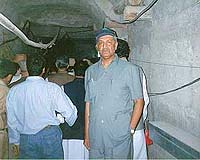 CIA used Swiss to thwart foreign nuclear programs: report
(NSI News Source Info) Washington - August 26, 2008: The CIA recruited a family of Swiss engineers to help it thwart the Libyan and Iranian nuclear programs as well as an underground network of Pakistani nuclear scientist Abdul Qadeer Khan, The New York Times reported Monday.
The newspaper said the operation involved Friedrich Tinner and his two sons, who have been accused in Switzerland of dealing with rogue nations seeking nuclear equipment and expertise.
The Swiss case against them has been hampered by the destruction of relevant documents, which Swiss officials have said was to prevent their falling into terrorist hands.
But the Times said the real reason for the destruction was pressure from the US Central Intelligence Agency, which feared that its ties with the Tinners would be exposed.
Over four years, the CIA paid the Tinners 10 million dollars, some of which was delivered to them in a suitcase stuffed with cash, the newspaper reported, citing unnamed officials.
In return the engineers delivered a flow of secret information that helped end Libya's nuclear weapons program, expose Iran's atomic efforts and undo Khan's nuclear supply network.
The Tinners also played an important role in a clandestine American operation to funnel sabotaged nuclear equipment to Libya and Iran, according to the Times.
Contacted by AFP, CIA spokesman Mark Mansfield declined to comment on the Tinner case, but noted that "the disruption of the AQ Khan network is a genuine and very significant intelligence success -- a success that has helped make the world a safer place."
Friedrich Tinner began working with Khan in the mid-1970s, using his expertise in vacuum technology to help Khan develop atomic centrifuges, the Times said.
But in 2000, the CIA recruited his son, Urs Tinner, who eventually persuaded his father and younger brother to join him as moles.
As part of their services, the Swiss engineers helped the CIA sabotage atomic gear bound for Libya and Iran, the report said.
In 2003 and 2004, inspectors from the International Atomic Energy Agency discovered vacuum pumps delivered to Iran and Libya that had been damaged cleverly so that they looked perfectly fine but failed to operate properly, according to The Times.
They traced the defective parts from Pfeiffer Vacuum in Germany to the Los Alamos National Laboratory in the US state of New Mexico.
U.S. Army discuss route-clearing plans on Route Canucks in Iraq on Aug. 19, 2008.
U.S. Army discuss route-clearing plans on Route Canucks in Iraq on Aug. 19, 2008.
August 26, 2008 NSI News Source Info
 U.S. Army discuss route-clearing plans on Route Canucks in Iraq on Aug. 19, 2008. The service members are clearing the route of obstacles for a convoy consisting of four large generators headed to designated Iraqi communities.
U.S. Army discuss route-clearing plans on Route Canucks in Iraq on Aug. 19, 2008. The service members are clearing the route of obstacles for a convoy consisting of four large generators headed to designated Iraqi communities.
Peru, Pakistan Asking About Korean Dragonflys
 Peru, Pakistan Asking About Korean Dragonflys
(NSI News Source Info) August 26, 2008: The A-37 Dragonfly was developed from the T-37 Tweet trainer as a counter-insurgency support aircraft, whereupon it was sent to Vietnam and became only aircraft to undergo operational testing in actual combat. The jet’s slow speed, excellent maneuverability when performing close air support, maintainability on the ground, and ability to carry its own weight in ordnance made it a popular and effective choice on the front lines. Several Latin American air forces still fly the A-37, and now Pakistan and Peru have expressed interest in the A-37Bs used by South Korea’s Black Eagles aerobatic flight team since 1994. The A-37Bs will be replaced shortly by South Korea’s own supersonic T-50s.
In January 2008, KOIS reported that Peru’s air force chief of staff had asked about Korea’s A-37Bs during his October 2007 meeting with Defense Acquisition Program Administration (DAPA) commissioner Lee Sun-hi. Peru already operates the A-37B with Grupo Aereo 7 at Piura, near its northern border with Ecuador. Its air force is a mix of Russian and Western types, but budget issues and low readiness are often cited as problems with the fleet.
Pakistan requested engine parts, and possibly aircraft, via a diplomatic channel in May 2007. The Pakistani Air Force does not operate A-37s in an attack role, though its ongoing civil war may make that option attractive. It does operate T-37 Tweet trainers at its Academy in Risalpur, however; they are scheduled for withdrawal once the K-8 Karakorum (aka. Hongdu JL-8) arrives in sufficient numbers, but until then they will need to be maintained.
UPDATE: The USA approved the sale of 20 T-37s to Pakistan in August 2008, in return for the cost of shipping them.
Australian Agreement re: A$ 1B+ AP-3C Orion Support & Upgrade Program
 Australian Agreement re: A$ 1B+ AP-3C Orion Support & Upgrade Program
(NSI News Source Info) August 26, 2008: In November 2005, the Australian Government, Tenix Defence and Eurocopter subsidiary Australian Aerospace (AA) have signed the P3 Accord Master Agreement to provide capability upgrades and Through Life Support (TLS) for the Royal Australian Air Force (RAAF) AP-3C Orion maritime patrol and anti-submarine warfare aircraft. The three parties have established a Joint Management Office (JMO) to supervise all Accord activities under a unique risk-sharing contractual arrangement. The JMO will develop and implement all RAAF AP-3C capability upgrades and TLS solutions through to the aircraft’s planned withdrawal date – at which point it will likely be replaced by the 737-based AP-8A MMA.
The combined value of the TLS and block upgrades to the aircraft is expected to be more than A$ 1 billion…
Australia’s AP-3C Programs [updated]
The AP-3 Accord
AP-3 Accord Updates [updated]
Australia’s AP-3C Programs
TLS responsibility. The alliance will develop and implement all needed logistics support solutions through to the AP-3C’s planned withdrawal date. An Industry Plan will be developed to foster the role of small and medium-sized enterprises, providing niche expertise to the fleet. A comprehensive workforce development and sustainment program will be established. In addition to the TLS responsibility, Tenix and AA will manage a number of upgrade programs, including:
JP 2070 Lightweight Torpedo EuroTorp MU90 LWT integration
AIR 5418 Follow on Stand-Off Weapon. Contenders include Lockheed’s JASSM, EADS’ Taurus 350, and Boeing’s Harpoon-derived SLAM-ER. AIR 5418 will also equip the RAAF’s F/A-18s and F-35 Joint Strike Fighters. Australian Aviation had an excellent analysis of the contenders, and the tactical employment of these types of weapons. In the end, Lockheed Martin’s JASSM was picked – but this weapon is not currently integrated with the P-3.
Other upgrades will include:
AIR 5276 Ph 4 Electronic Warfare Self Protection
AIR 5276 Ph 5B Electro-Optics Integration
AIR 5276 Ph 6 Data Links
AIR 5276 Ph 8A & B ESM Update
MIS 886 Acoustic Data Collection and Recording System, and
MIS 554-P3 Crash Data Recorder
Tenix has been involved in the support and upgrade of the P-3 Orion since the mid 1990s, including the RAAF’s much-criticized Project Air 5276” modernization effort as well as other activities. Australian Aerospace has been the deeper maintenance provider for the P3 Fleet since 1993 and was the prime integrator for the Royal New Zealand Air Force Kestrel Program, which successfully extended the life of the RNZAF P-3 Fleet.
Australian Agreement re: A$ 1B+ AP-3C Orion Support & Upgrade Program
(NSI News Source Info) August 26, 2008: In November 2005, the Australian Government, Tenix Defence and Eurocopter subsidiary Australian Aerospace (AA) have signed the P3 Accord Master Agreement to provide capability upgrades and Through Life Support (TLS) for the Royal Australian Air Force (RAAF) AP-3C Orion maritime patrol and anti-submarine warfare aircraft. The three parties have established a Joint Management Office (JMO) to supervise all Accord activities under a unique risk-sharing contractual arrangement. The JMO will develop and implement all RAAF AP-3C capability upgrades and TLS solutions through to the aircraft’s planned withdrawal date – at which point it will likely be replaced by the 737-based AP-8A MMA.
The combined value of the TLS and block upgrades to the aircraft is expected to be more than A$ 1 billion…
Australia’s AP-3C Programs [updated]
The AP-3 Accord
AP-3 Accord Updates [updated]
Australia’s AP-3C Programs
TLS responsibility. The alliance will develop and implement all needed logistics support solutions through to the AP-3C’s planned withdrawal date. An Industry Plan will be developed to foster the role of small and medium-sized enterprises, providing niche expertise to the fleet. A comprehensive workforce development and sustainment program will be established. In addition to the TLS responsibility, Tenix and AA will manage a number of upgrade programs, including:
JP 2070 Lightweight Torpedo EuroTorp MU90 LWT integration
AIR 5418 Follow on Stand-Off Weapon. Contenders include Lockheed’s JASSM, EADS’ Taurus 350, and Boeing’s Harpoon-derived SLAM-ER. AIR 5418 will also equip the RAAF’s F/A-18s and F-35 Joint Strike Fighters. Australian Aviation had an excellent analysis of the contenders, and the tactical employment of these types of weapons. In the end, Lockheed Martin’s JASSM was picked – but this weapon is not currently integrated with the P-3.
Other upgrades will include:
AIR 5276 Ph 4 Electronic Warfare Self Protection
AIR 5276 Ph 5B Electro-Optics Integration
AIR 5276 Ph 6 Data Links
AIR 5276 Ph 8A & B ESM Update
MIS 886 Acoustic Data Collection and Recording System, and
MIS 554-P3 Crash Data Recorder
Tenix has been involved in the support and upgrade of the P-3 Orion since the mid 1990s, including the RAAF’s much-criticized Project Air 5276” modernization effort as well as other activities. Australian Aerospace has been the deeper maintenance provider for the P3 Fleet since 1993 and was the prime integrator for the Royal New Zealand Air Force Kestrel Program, which successfully extended the life of the RNZAF P-3 Fleet.
U.S. Orders Thousands of Hellfire Missiles
 U.S. Orders Thousands of Hellfire Missiles(NSI News Source Info) 26 August, 2008: The U.S. Army has purchased thousands of Hellfire II precision-strike, laser-guided missiles for helicopters, UAVs, and possibly, tripods and Humvees, service officials said.
A U.S. AH-1 Cobra fires a Hellfire II missile. (Lockheed Martin Missiles and Fire Control)
Signed Aug. 21, the $357 million deal is to begin delivery in 2010. It also includes options to buy more in 2009 and 2010; if exercised, these options would sustain Hellfire production into 2013 and put the total number of missiles purchased over 15,000, the U.S. Army's largest Hellfire purchase to date, said Lockheed Martin Air-to-Ground Missile System Program Manager Ken Musculus.
The purchase will also send missiles to France, Greece and the Netherlands via the Foreign Military Sales program.
The purchase will be France's first, bringing the total of Hellfire-customer nations to 16, U.S. Army Joint Attack Munitions Systems Program Manager Col. Mike Cavalier said. France will use the missile to arm its 40 HAD Tiger attack helicopters, scheduled to arrive in 2012.
The Army plans to use the missiles, which will include high-explosive anti-tank and blast-fragmentation variants, to arm UAVs.
"The Air Force has been putting them on the Predator and the Reaper. The Sky Warrior A [Army UAV] has been weaponized and fielded," Cavalier said.
The Army also plans to experiment with mounting the missile on other land-based platforms.
"Over the past four years, we have started to get aggressive with Hellfire," Musculus said. "All I can say is we do have several programs we are undertaking to put the Hellfire missiles on a BMP [Soviet-built infantry fighting vehicle], on tripods and on applications to put it on ships."
The Army's Future Combat Systems modernization program is exploring possible uses for the weapon.
"We have Future Combat Systems out here and we work with them on a daily basis," Cavalier said. "There are some initiatives that have come up."
Other allied nations may buy the missiles, Lockheed and Army officials said: the Spanish Navy for its helicopters and Turkey for its T-129 attack helicopter.
In service since the early 1990s on attack helicopters such as the Apache, the Hellfire II uses laser guidance to lock on targets from as far as eight kilometers away.
U.S. Orders Thousands of Hellfire Missiles(NSI News Source Info) 26 August, 2008: The U.S. Army has purchased thousands of Hellfire II precision-strike, laser-guided missiles for helicopters, UAVs, and possibly, tripods and Humvees, service officials said.
A U.S. AH-1 Cobra fires a Hellfire II missile. (Lockheed Martin Missiles and Fire Control)
Signed Aug. 21, the $357 million deal is to begin delivery in 2010. It also includes options to buy more in 2009 and 2010; if exercised, these options would sustain Hellfire production into 2013 and put the total number of missiles purchased over 15,000, the U.S. Army's largest Hellfire purchase to date, said Lockheed Martin Air-to-Ground Missile System Program Manager Ken Musculus.
The purchase will also send missiles to France, Greece and the Netherlands via the Foreign Military Sales program.
The purchase will be France's first, bringing the total of Hellfire-customer nations to 16, U.S. Army Joint Attack Munitions Systems Program Manager Col. Mike Cavalier said. France will use the missile to arm its 40 HAD Tiger attack helicopters, scheduled to arrive in 2012.
The Army plans to use the missiles, which will include high-explosive anti-tank and blast-fragmentation variants, to arm UAVs.
"The Air Force has been putting them on the Predator and the Reaper. The Sky Warrior A [Army UAV] has been weaponized and fielded," Cavalier said.
The Army also plans to experiment with mounting the missile on other land-based platforms.
"Over the past four years, we have started to get aggressive with Hellfire," Musculus said. "All I can say is we do have several programs we are undertaking to put the Hellfire missiles on a BMP [Soviet-built infantry fighting vehicle], on tripods and on applications to put it on ships."
The Army's Future Combat Systems modernization program is exploring possible uses for the weapon.
"We have Future Combat Systems out here and we work with them on a daily basis," Cavalier said. "There are some initiatives that have come up."
Other allied nations may buy the missiles, Lockheed and Army officials said: the Spanish Navy for its helicopters and Turkey for its T-129 attack helicopter.
In service since the early 1990s on attack helicopters such as the Apache, the Hellfire II uses laser guidance to lock on targets from as far as eight kilometers away.
Subscribe to:
Posts (Atom)












