Thursday, September 04, 2008

NATO Repeating Soviet Mistake In Afghanistan

NATO Repeating Soviet Mistake In Afghanistan
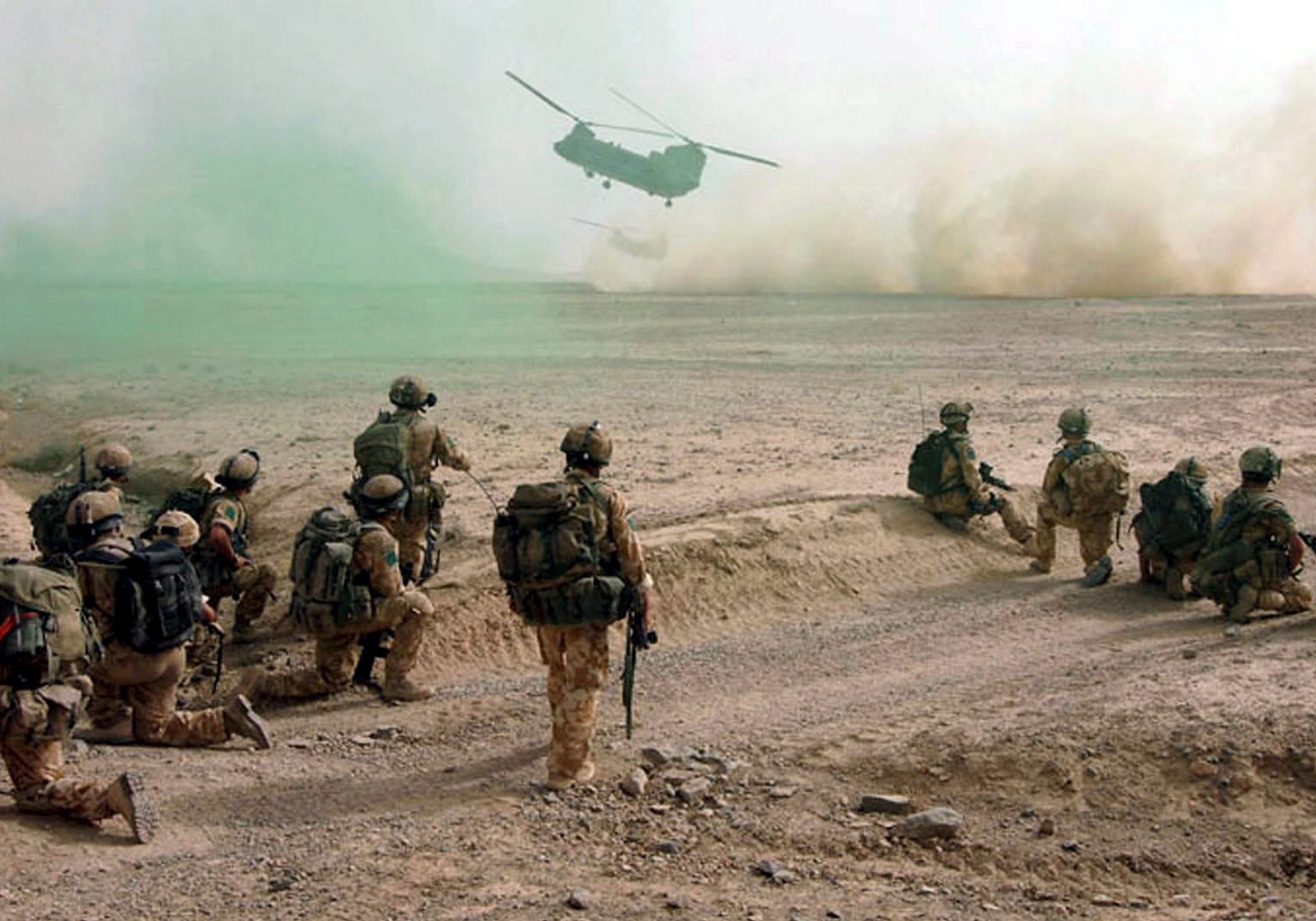
(NSI News Source Info) Moscow - September 4, 2008: The recent events in Afghanistan have again called into question the effectiveness and professionalism of NATO and the anti-terrorist coalition in that country. First, a French task force from the International Security Assistance Force (ISAF) was ambushed, and lost 10 soldiers. Last Friday, on August 22, more than 70 civilians were killed during an operation in the Shindand District in the Herat Province. The media reported that this operation was conducted by the coalition forces, that is, the U.S. Air Force. This event set the whole country in turmoil. Now Afghan President Hamid Karzai insists on revising the status of international forces in the country. They are represented in Afghanistan by the U.S.-led international anti-terrorist coalition and the UN-mandated ISAF mission under NATO's general command. The goal of the former is to destroy al-Qaeda and Taliban commandos, while the latter is designed to guarantee stability on the territories from which they are ousted. Operations conducted by these two missions are incomparable. The coalition is much more prone to make mistakes, and it has to prepare thoroughly for each operation. But what prevents the United States from doing so, all the more so since it already has some bitter experience? During a similar operation in the Deh Raud District in the Uruzgan Province in July 2002, a U.S. aircraft bombed a wedding. Ironically, the bomb hit the house where Karzai had once taken shelter from the Taliban. This was the first blunder, and the sides did not give it too much publicity. But this time, Karzai has expressed strong displeasure with the U.S. army and accused it of inability to coordinate its actions with the Afghan army. In turn, the U.S. command blamed the Afghan army for insisting on the bombing and indicating targets. This is a familiar situation. Actions seem to have been coordinated but there is no one-man rule, or responsibility. The Afghan government is certainly right in insisting on a change in the status of the coalition troops. Judging by everything, it would like the coalition not only to coordinate its operations against al-Qaeda with the Afghan side, but have them endorsed by the latter. What happened with the French soldiers is quite different. They were ambushed some 50 km (31 miles) from Kabul. Never before has NATO sustained such losses in a single combat, especially near the capital. The French public had a predictable and immediate reaction. One French newspaper put it bluntly: "Faut-il partir?" (Is it time to leave?). It is also alarming that Kabul was rocketed for the first time in nearly five years. Perhaps the central government is losing its contacts with the population in the Kabul Province. This is all but the only province where NATO more or less controls the situation. But Herat was also considered a safe province until recently. Maybe, it is indeed time to go. But then what was the point of going into Afghanistan? It seems that NATO has been extremely unlucky in Afghanistan recently, and I feel sorry for the troops. I remember the appearance of the first ISAF units in that country in early 2002. Without any delay, NATO started persistently building the Afghan National Army (ANA). I spent almost 15 years in Afghanistan in the field of military-technical cooperation alone and took direct part in the Afghan army's development, and I can spot the difference. I think that NATO is conducting its mission in Afghanistan professionally. The current trouble was easily predictable. The two international missions consist of 60,000, which is obviously not enough to destroy al-Qaeda commandos, guarantee reliable stability in the entire country, and actively contribute to the recovery effort. However, both NATO and the United States repeated the Soviet mistake in Afghanistan by carrying out missions that should be fulfilled by the Afghans themselves. They planned a 70,000-strong ANA, which is not adequate at all. Now they are talking about 120,000 and even more, but the time has been lost. Meanwhile, the current Russian Ambassador Zamir Zakirov emphasized many times that stability in Afghanistan directly depends on its army and that its strength was obviously inadequate. Now the United States and NATO will probably change their attitude to Russia's Afghan experience and advice. After all, cooperation with Moscow on Afghanistan should not be limited to the transit of NATO cargoes through Russian territory.

U.S. Special Forces....Task Force Black

U.S. Special Forces....Task Force Black (NSI News Source Info) September 4, 2008: One important component of the U.S. "Surge Offensive" in Iraq last year was actually a three year old, generally discreet, commando operation. This was Task Force Black (TFB). Composed of only a few hundred troops, the core of this force was operators from the British SAS and the U.S. Delta Force. Task Force Black was assigned to go after the Islamic terrorists who were actually planning and carrying out the suicide bombings that were killing thousands of Iraqi civilians a month until last year. TFB tactics were bold and dangerous, as they went after terrorists who were on their way to an operation (either on foot with explosive belts, or suicide car bombers.) These attacks were are the most carefully planned and executed terrorist operations, and the objective of TFB was to take down the attackers before they could detonate their explosives. This is easier to do if you catch them before they are close to their target, because the bombers are not poised to set off their explosives on short notice. Some suicide bomber teams do not rig their detonators to work until they are close to the target. They have good reason for this, for there have been accidental detonations, which kill the support staff as well as the suicide bomber. This is not good for the morale of the escorts, security detail and bomb technicians that make all the preparations for these attacks. The bombers themselves only do it once, and are not as highly trained and difficult to replace. Without the support people, who are harder to recruit than suicide bombers, these attacks are much less effective. When Israel began going after the support staff five years ago, the Palestinian suicide attacks on Israel greatly diminished, and there were more accidents from poorly made bombs, and more bombers were caught before they could reach their targets. TFB often brought along American and Iraqi troops to make a follow up sweep to grab as many of the support staff as possible. TFB used all available intelligence resources to find terrorist gangs that were making the suicide attacks. Most of these terrorists worked for "al Qaeda in Iraq," but some were run by various Sunni Arab groups trying to get a civil war going between Sunni and Shia Arabs. The terrorists believed that such a conflict would result in a Sunni Arab victory. Three years ago, realizing that an outcome like that was highly unlikely, some of the terrorist gangs began shutting down, and there was a decline on terrorist attacks because of it. But the attacks continued, and in 2006, they increased as Shia death squads proliferated. TFB had a rough time of it for over a year, as Shia terrorists now began setting off bombs in Sunni Arab neighborhoods. But throughout that period, the intelligence picture kept getting better. The TFB operators spent much of their time among Iraqis, so when the Surge Offensive kicked off in early 2007, there was an opportunity to hit many of the suicide bomber support groups hard. By the time the Surge Offensive wound down earlier this year, TFB had taken down (killed or captured) nearly 4,000 Islamic terrorists. Most of them were the hard to replace support staff. This was reflected in the sharp decline in the number of terror bombs going off. From a peak of over a hundred bombs a month going off in Baghdad, to as little as two. TFB suffered about 20 percent casualties through all this. After the Surge Offensive, many surviving terrorists fled north, to Mosul and surrounding areas. The terrorists still being hunted there, mostly by Iraqis soldiers and police.

U.S. Navy is getting its fifth Virginia class SSN

U.S. Navy is getting its fifth Virginia class SSN (NSI News Source Info) September 4, 2008: The U.S. Navy is getting its fifth Virginia class SSN (nuclear attack sub) eight months ahead of schedule, and under budget. The SSN New Hampshire cost $2.21 billion and took 72 months to construct. The New Hampshire will be commissioned at the end of October. Another new Virginia class SSN was commissioned this year, the first time in twelve years that the navy put two nuclear subs of the same class into service in one year. The navy expects to be doing that regularly in four years, as many of the old Lost Angeles class SSNs reach the end of their useful lives and are replaced by the Virginias. The U.S. currently has three classes of SSN. Most are the 6,900 ton Los Angeles-class SSNs. Sixty-two of these submarines were built, and most are still in service. Armed with four 21-inch (533-millimeter) torpedo tubes, they carry twenty-six weapons for those tubes (either the Mk 48 torpedoes, UGM-84 Harpoon anti-ship missiles, or BGM-109 Tomahawk cruise missiles). The last 31 Los Angeles-class SSNs added the Mk 45 vertical-launch system (VLS), which carries another twelve Tomahawks. If built today, these late model Los Angeles class boats would cost about $1.5 billion each. The twenty-nine, 9,000 ton Seawolf-class SSNs were supposed to replace the Los Angeles boats, but they proved too expensive. Only three Seawolfs were built. The Seawolf was designed for the Cold War, carrying fifty weapons for its eight 26-inch (660-millimeter) torpedo tubes. Seawolf was fast (top speed of over 60 kilometers an hour), and much quieter than the Los Angeles boats. To replace the un-built Seawolfs, the 7,800 ton Virginia-class was designed. Think of it as a Los Angeles size hull with a lot of Seawolf technology installed. The Virginia-class boats ended costing about half as much as the Seawolfs. But that was largely possible because the Virginias used a lot of the new technology developed for Seawolf.

The T-34 Forever

The T-34 Forever (NSI News Source Info) September 4, 2008: In the early 1950s, the Soviet Union gave China 1,837 T-34/85 tanks. As of a few years ago, there are at least a hundred of them still in storage and these vehicles appeared to be in good shape (as judged by Chinese military buffs who had come across the storage area without getting arrested). The T-34 was one of the most successful tank designs of World War II. Over 84,000 were manufactured, 57,000 by the end of the war, and the rest from 1946-58. The first versions had a 76.2mm gun, but all built after 1944 had an 85mm gun. The four man crew also had two 7.62mm machine-guns, one mounted next to the driver in the hull, and the other one on the turret. The 27 ton tank had a top speed of 53 kilometers an hour, which was quite fast for World War II. It's 52mm (2 inch) armor was formidable in 1941, and the T-34 was quite a shock to the invading Germans that encountered it. The T-34/85 led the advance into Germany and Berlin itself in 1945. Russia exported over 10,000 T-34s, to at least 40 countries. North Korea used them to good effect against U.S. troops in 1950, during the Korean war. American tank crews were startled at how maneuverable and fast the T-34 was. When the Cold War ended in the early 1990s, at least two dozen nations still had the T-34 in service. The last known combat use of a T-34 was in 1995, when some Bosnian Serbs used one in an attack on UN peacekeepers. There are probably over a thousand T-34s that are still in running condition, or close to it. While inferior in protection and firepower to most modern IFVs (Infantry Fighting Vehicles like the U.S. M-2 Bradley), they can still be useful in keeping civilians in line. Which may be why the Chinese have not melted down all of theirs.

Russia Explains Its Plan Of Conquest

Russia Explains Its Plan Of Conquest (NSI News Source Info) September 4, 2008: Russia has proclaimed five strategic operating principles for how it will operate in the future. First, Russia observes international law. Second, it rejects U.S. dominance of world affairs in what it calls a unipolar world. Next, it seeks friendly relations with other nations. Fourth, it will defend Russian citizens and business interests abroad. And fifth, it claims its own sphere of influence in the world. The idea of obeying international law would be commendable if Russia hadn't just invaded Georgia in August and asserted it was going to annex the Georgian separatist regions of South Ossetia and Abkhazia. Its cloak for the Georgian operation was to prevent "genocide" in the two regions. This shifted any blame of international law violation to the Georgian government. Such Russian doublespeak continued with its insistence that it seeks friendly relations with other nations. Such Russian platitudes reminds one of the constitution of the former Soviet Union. To a reader who didn't know about Soviet terror against its citizens, it might look just like the American Constitution wrapped in extra flowers of freedom. The old Soviet Constitution guaranteed freedom of speech, freedom of the press, freedom of assembly and the right to religious belief and worship. In addition, the constitution provided for freedom of artistic work, protection of the family, inviolability of the person and home, and the right to privacy. The document also granted the rights to work, rest and leisure, health protection, care in old age and sickness, housing, education, and cultural benefits. Of course it was all a sham. And it sprang from the same source as Russia's twenty-first century operating principles -- the Russian capital of Moscow. Americans might accept Russia's right to defend its citizens and business interests if the Russian policy wasn't coupled with a direct threat against American dominance on the world scene, and a statement by the Russian president that Russia reserves the right of privileged interests in nations within its sphere of influence, which it does not restrict to border states. The best that can be said about Russia's five points is that at least the West has been warned. On September 1, the leaders of the 27 European Union (EU) nations ended a three-hour special summit, and declared that relations with Moscow were at a crossroads because of Russia's invasion of Georgia. Despite pressure from Poland and other former Soviet bloc nations, the EU countries made no mention of diplomatic or economic sanctions against Russia. NATO also has dithered from the beginning. And the current wars in Iraq and Afghanistan have left America's armed forces too extended to move combat troops into Georgia. Because the United States and the world bodies are speaking in whimpers, the past is peeking over our shoulders and breathing heavily into our ears. It is reminding us of 1938 when the UK Prime Minister announced "peace for our time," while the Nazi army was carrying out his own strategic operating principles by overrunning Europe. -- Fred Edwards

Russian Navy aircraft test new equipment over the Arctic

Russian Navy aircraft test new equipment over the Arctic (NSI News Source Info) MURMANSK - September 4, 2008: Tu-142MK aircraft from Russia's Northern Fleet conducted on September 2-3 reconnaissance flights over the Barents and Laptev seas and successfully tested new electronic on-board equipment, the fleet's press service said Thursday. Tu-142 Bear-F is the maritime reconnaissance/strike version of the Tu-95 Bear strategic bomber, designed mainly for anti-submarine warfare. "The tests of new on-board electronic equipment and weapons-control systems showed their high effectiveness," the press service said in a statement. The flights have been conducted strictly in accordance with international agreements and the norms of international law, the statement said. Russia has recently stepped up regular patrols over the Arctic and said it may soon shift the focus of its military strategy toward the northern latitudes in order to protect its national interests in the Arctic, especially on its continental shelf, which may contain large deposits of oil and natural gas.

Ukraine to hold air defense drills with live firing in September

Ukraine to hold air defense drills with live firing in September (NSI News Source Info) SEVASTOPOL - September 4, 2008: Ukraine is planning to conduct large-scale air defense exercises with live firing on the Crimean peninsula at the end of September, a Ukrainian navy source said on Thursday. The exercises are part of a practical stage of the Sea Knot-2008 command-and-staff maneuvers that began in spring and involve units from all branches of the Ukrainian armed forces. The drills will involve about 350 air defense systems, including S-300, Buk-M1, Osa and Tunguska, and up to 30 combat aircraft. "In addition, the troops will practice an amphibious assault landing, an air assault operation and live firing drills involving naval and ground support aircraft at the Opuk training range in the Crimea," the source said. The Crimea, which has a predominantly Russian-speaking population, has been the focus of frequent disputes between the Russian and Ukrainian leaders, over the Russian Black Sea Fleet's lease of the Soviet-era Sevastopol naval base. During the recent conflict between Russia and Georgia that followed Tbilisi's August 8 offensive in breakaway South Ossetia, Ukraine threatened to bar entry to vessels from Russia's Black Sea Fleet that had been deployed near Georgia's coast.

Israel says stopped arms supplies to Georgia prior to conflict

Israel says stopped arms supplies to Georgia prior to conflict (NSI News Source Info) MOSCOW - September 4, 2008: Israel imposed an embargo on arms supplies to Tbilisi a week before Georgia attacked its breakaway region of South Ossetia, the Israeli ambassador to Russia said on Thursday. Russia's Defense Ministry earlier said Israel had sold unmanned reconnaissance aircraft, and electronic artillery systems to Georgia and planned to supply armored vehicles and small arms. Some reports claimed that Israeli military experts had been training Georgian reconnaissance units since the fall of 2007. "A week before the conflict we decided to halt all arms supplies to Georgia," Anna Azari said. She also stressed that Israel previously supplied Georgia only with non-offensive weaponry and refused to sell heavy armor to Tbilisi despite Georgia's request. "As an example, I can tell you that several months before the start of the conflict [in South Ossetia] the Georgian leadership insisted that we sell 300 Merkava tanks to Tbilisi, but we refused to do so," the Israeli diplomat said. South Ossetia was attacked by Georgian forces on August 8. The majority of residents of South Ossetia hold Russian citizenship, and Moscow launched a massive operation to expel Georgian troops from the region and to reinforce its peacekeepers. According to information provided last month by the Russian General Staff, since 2005, prior to August 8 Georgian tank numbers increased from 98 to 183, armored vehicles from 83 to 134, artillery weapons from 96 to 238, combat helicopters from three to nine, and warplanes from seven to nine. Russian Foreign Minister Sergei Lavrov said on Monday that Moscow would like to see an embargo on arms supplies to Georgia introduced until a change of leadership takes place in the Caucasus state.

General Dynamics Awarded 64.6 Million Euros for 100 RG-31 MK5E Vehicles by the Spanish Army

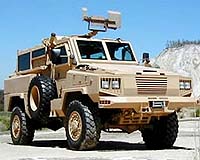
General Dynamics Awarded 64.6 Million Euros for 100 RG-31 MK5E Vehicles by the Spanish Army (NSI News Source Info) VIENNA – September 4, 2008: General Dynamics Santa Bárbara Sistemas has been awarded a 64.6 million Euro ($102 million) contract by the Spanish Government to supply RG-31 Mk5E mine protected vehicles for the Army. General Dynamics Santa Bárbara Sistemas is one of four companies that comprise General Dynamics European Land Systems.The contract calls for the delivery of 100 vehicles – 85 Armored Personnel Carriers (APCs), 10 Ambulances and 5 Command Post variants – plus integration of Remote Controlled Weapon Station (RCWS) turrets and ongoing integrated logistic support (ILS). Work under the contract is expected to be completed by 2009. The contract includes an option for a second phase for 80 additional vehicles that will include some manufacturing in Spain.General Dynamics Santa Bárbara Sistemas, as prime contractor, will provide program management, engineering and logistic support. BAE Systems Land Systems OMC of South Africa will supply the vehicles as a subcontractor to General Dynamics. General Dynamics Land Systems-Canada (Ottawa) has a similar program with BAE Systems Land Systems OMC for this vehicle. The RG-31 Mk5E is a 4x4 armored vehicle with a combat mass of up to 17,000 kg, including 3,500 kg of payload. In standard Armored Personel Carrier configuration, this air-conditioned vehicle carries a crew of 10 (driver plus nine). It is in service with many other countries including the United States and Canada and has been operating in Afghanistan and Iraq.About BAE SystemsBAE Systems is the premier global defence and aerospace company delivering a full range of products and services for air, land and naval forces, as well as advanced electronics, information technology solutions and customer support services. With 97,500 employees worldwide, BAE Systems' sales exceeded £15.7 billion (US$31.4 billion) in 2007.About General Dynamics General Dynamics European Land Systems, headquartered in Vienna, Austria, is a business unit of General Dynamics (NYSE: GD), and conducts its business through four European operating sites located in Spain, Germany, Austria and Switzerland. With more than 3,250 highly skilled technical employees, General Dynamics European Land Systems companies design, manufacture and deliver land combat systems, including wheeled, tracked, and amphibious vehicles, armaments and munitions, to global customers.General Dynamics, headquartered in Falls Church, Va., employs approximately 84,600 people worldwide and anticipate 2008 revenues of $29.5 billion. More information about the company is available online at www.generaldynamics.com.

Kaman to Showcase Super Seasprite at Black Sea Defense & Aerospace Exposition

Kaman to Showcase Super Seasprite at Black Sea Defense & Aerospace Exposition (NSI News Source Info) BLOOMFIELD, CT - September 4, 2008: Kaman Helicopters will display an SH-2G(I) Super Seasprite helicopter for the first time at the Black Sea Defense & Aerospace Exposition Sept. 24-26 in Bucharest, Romania (U.S. Pavilion, C214). Company officials and suppliers will be in attendance to brief potential customers and the news media about the helicopter and its capabilities. The aircraft is one of 11 multi-mission maritime helicopters now available for immediate delivery. The SH-2G(I) is the latest and most capable variant of Kaman’s H-2 Series of maritime helicopters. It is fully equipped to perform a variety of naval and coast guard missions, including: -- Surface surveillance: Provide over-the-horizon surveillance, threat classification and targeting capability to the ship using Inverse Synthetic Aperture Radar (ISAR), FLIR, ESM -- Anti-ship weapon delivery: Deploy air-to-surface missiles to engage hostile vessels -- Deliver torpedo: On intelligence from other sources, drop anti-submarine torpedoes -- Boarding party deployment: Up to six fully-armed troops -- Search and rescue, medevac, disaster response -- Law enforcement, drug interdiction, pollution control -- Homeland security and counter-terrorism -- Transport, Vertrep, utility The 11 aircraft feature an advanced Integrated Tactical Avionics System (ITAS), which provides a high degree of autonomy, allowing a crew of two to effectively perform missions otherwise requiring a crew of three or four. They are also equipped with a fully digital automatic flight control system. Kaman is offering the helicopters with a three-year spares package, full crew and maintenance manuals, a validated training program, ground-based simulators, including desktop trainers, and a full motion flight simulator, software support center, and mission preparation and debrief facility. “These are fully-capable multi-mission aircraft,” said Kaman Helicopters President Sal Bordonaro. "We are proud to offer them to the international naval community.” The U.S. Delegation to NATO recently sponsored an initiative for the Baltic and Black Sea states to consider the SH-2G(I) for regional modernization, standardization and interoperability for joint exercises. This is one of several reasons Kaman is kicking off its marketing effort in Bucharest. Kaman Aerospace Corporation is a subsidiary of Kaman Corporation of Bloomfield, Conn. The subsidiary is a subcontractor for complex metallic and composite structures and components for commercial, military and general aviation aircraft; designs and manufactures fuzing devices for the U.S. and allied militaries; and markets and supports its SH-2G and K-MAX helicopters.