American helicopters
 Monday, November 03, 2008
Syria Unexpected Surprised By American Helicopters
Syria Unexpected Surprised By American Helicopters
(NSI News Source Info) November 3, 2008: On October 26th, four American helicopters crossed from Iraq into Syria. Two of the helicopters landed near the village of Sukariyya, and Special Forces troops engaged in a brief gun battle with members of the Abu Ghadiyahas network, who had been using the village as part of the smuggling network that brought money, weapons and suicide bombers into Iraq. Eight people died, two were taken captive, and the American soldiers left unharmed.
American helicopters
The timing of the strike is somewhat curious. President Assad of Syria had been moving to close off the border for terrorists, and was making other overtures, though slowly, probably trying to figure out how to stay in power regardless of who wins what. A strike like this, with high potential fallout should have been vetted at the highest level. Was the guy the Special Forces were going after worth it? The fallout is serious, with most Arab states in the neighborhood, including Iraq, criticizing it. Iran was particularly angry, and upset. That's probably because Iran has also supported terrorists based in its territory, and allowing them to move men, money and weapons across the border. Shia radical leader Muqtada al Sadr is hiding out in Iran, where his followers are trained to be better terrorists, then sent back to Iraq.
U.S. officials offered international law as justification for this "invasion" of Syria. It goes like this. The United Nations Charter allows nations to defend themselves when under attack, and allows operations inside a foreign nation that cannot, or will not, stop attacks on a foreign country from within its borders. This clause was included to cover a common situation, where one nation will tolerate rebels from another taking refuge inside its borders. This is usually rebels or bandits who use that bases to conduct raids and banditry inside the neighboring nation. Often, the sanctuary nation is unable to clean out the hostile gunmen, or unwilling to do so because they support the goals of the gunmen, or simply want to weaken their neighbor by making it easier for the rebels or bandits to operate.
Afghanistan and Iraq would appear to meet these criteria. Afghan and Iraqi officials have long complained about terrorists crossing over from neighboring countries (Pakistan, Iraq and Iran), often with the assistance of border guards. Pakistan had something of an excuse, as they have never been able to control the tribes along the border, and have special laws that grant some autonomy to the border tribes, as long as they control cross-border raids. Pakistan has obviously not been controlling the Taliban and al Qaeda terrorists, so the U.S., as an ally of the Afghans, has been crossing the border, in compliance with the UN Charter, to strike at the hostile forces. This has been going on for nearly a year. Now the practice has spread to Syria, and the Iranians fear they are next.
It's this legal angle that has prevents any of the invaded countries from taking the U.S. before an international court. Syria, Pakistan and Iran know that there is a preponderance of evidence proving that terrorists are camping out in their territory, and operating across the border.
Even so, the reaction from the Syrians has been rather muted, almost pro forma – they could easily be a lot more vehement about it, let the "rioters" do lots of damage to US property, recall their ambassador, and so on. Could it be that they're not terribly unhappy the raid took place? Assad and his henchmen certainly must realize that al Qaeda ultimately is a threat to their own power, given that Syria is run by secular Shia nationalist socialists (the Baath party). Al Qaeda in Syria only holds back from attacking the government because Assad has been turning a blind eye to operations by Abu Ghadiyahas and his gang. As al Qaeda loses in Iraq, and as Iraq becomes increasingly able to handle its own security, the Abu Ghadiyahas net in Syria could pose a threat in several ways – turning against Assad directly would be the most serious, but also if they take actions that could involve risk to Syrian interests, such as trying to stir the pot in Iraq or Lebanon, or organize strikes against Israel. Going deeper, could the Americans have been tipped off by Assad to the presence of Abu Ghadiyahas with a wink and a nod, possibly through the Israelis, with whom Assad seems to be developing a covert relationship?
American helicopters 
ELSORV Prototypes Test Run In Afghanistan
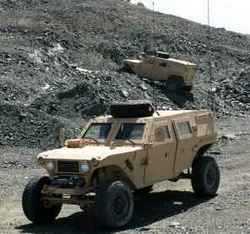 ELSORV Prototypes Test Run In Afghanistan
(NSI News Source Info) November 3, 2008: The enhanced logistic off-road vehicle, known as the ELSORV, may be the answer to navigating Afghanistan’s rugged terrain.
Three prototypes are being tested. Afghanistan’s rocky terrain makes the going slow and difficult for supply convoys, evacuation and basic ground transportation.
“This vehicle was brought on as an operation need,” said Charlie Copsey, one of the engineers who built the ELSORV. “Rapid Equipment Force funded the building of the prototypes.”
All three prototypes are in Afghanistan so soldiers can learn how they handle in the terrain. Over the past year, the ELSORVs went through operational assessments in the United States, and now they are here for a real-world assessment by the soldiers who could end up using the vehicles.
“The ELSORV is unlike any other military vehicle I’ve driven,” said Army Sgt. Lance Davis, one of the test drivers. “It goes wherever you want it to go.”
Copsey said ELSORVs can carry 2,700 pounds, and they have modified Humvee engines that can conquer approach angles of 90 degrees and climb slopes at 80 degrees.
“As long as they have power going to one of the wheels, they’re going to stay mobile,” Copsey said.
The ELSORVs allow soldiers to go over obstacles without getting hung up on the undercarriage. The vehicle can go 90 mph safely on a hard surface.
“The best place for these vehicles is here in Afghanistan,” Davis said.
France Looks to Regain Export Prominence
France Looks to Regain Export Prominence
(NSI News Source Info) November 3, 2008: “Russian Arms Exports Taking Another Jump in 2008” noted the recovery of Russia’s arms industry, which faces significant rebuilding challenges but appears to be on track to surpass the $7.4 billion worth of deals signed in 2007. As “France Trying to Streamline Arms Exports” explained, a cumbersome system was dragging another key exporter down.
 VBL
VBL
VBL
Aviation Week’s DTI reports that the reforms are having some effect. France’s defense ministry reported that it had signed off on nearly EUR 4 billion in export contracts by the end of Q3 2008, and is on track to meet its 2008 goal of EUR 6 billion. That’s slightly above previous years, and almost double the nadir reached in 2004. Defense Minister Herve Morin says that France’s long-term goal is to regain the share of the export market it enjoyed during the 1990s, and recover to 13% or about EUR 10 billion by 2010.
Key losses in Saudi Arabia and Morocco appear to have stung France’s bureaus into action. Morin credits some of the improved performance to MNA Yves Fromion’s approval reforms, which lengthened general approvals’ duration, discarded them for deals under EUR 150,000, and streamlined the application process. Morin says that wait times have dropped by over 60% to just 30 days on average, with 97% of applications now processed within a month and 20% of contracts given expedited treatment. The reforms also created an inter-ministerial committee to handle major deals, with 67 deals approved by the committee in the last 16 months. Morin is cautiously optimistic that contracts with Libya and Brazil can be signed before year’s end.
British Forces New Mobility "Jackal".... Supacat’s HMT Vehicles
British Forces New Mobility "Jackal".... Supacat’s HMT Vehicles
(NSI News Source Info) November 3, 2008: Britain is part of the general push by western countries to field heavier, mine-protected vehicles, via orders for the Mastiff Cougar variant and it’s smaller 4×4 Ridgback companion. UK forces are also fielding vehicles like the Land Rover WMIK (Weapons Mounted Installation Kit) that have a very different concept: firepower and visibility over protection. When deployed in mixed groups with more protected vehicles, and used on open terrain like the plains of southern Afghanistan, ‘the porcupine’ (WMIK) has earned enemy respect and commander requests.
 Jackal, Afghanistan
 Supacat’s HMT Vehicles
Jackal, Afghanistan
Supacat’s HMT Vehicles
The British sought to build on the WMIK’s strengths, in order to create a comparable vehicle with greater firepower and off-road mobility. Supacat’s HMT has been adopted by the British as the MWMIK or “Jackal”. The vehicle has picked up an additional order from Britain, will be used by Australia’s SAS commandos, and is drawing interest from other countries as a special forces platform.
The British Land Rover WMIK lacks even the protection level of an armored Hummer. It’s a flat-bottomed vehicle with the troops are positioned over the axles, which is where pressure mines will detonate. It has very little armor on the sides, no doors, and lacks a roof to protect its crew from the elements. Its weapons even lack transparent gunshields.
This is sometimes costly, vid. the June 9/07 incident outside of Sangin, Afghanistan. What the WMIK it does have is a pair of weapon mounts for firepower overmatch. The main mount can take a heavy machine gun for accurate ranged fire, or the 40mm grenade machine guns that have been in demand for their devastating area effects, or even a Javelin missile for use as a scouting mechanism and ultra-accurate long range shot. There’s also a lighter 7.62mm machine gun mount next to the “shotgun” front seat.
The “infantry enhancement” effect is similar to adding one of the Royal Marines’ popular BvS-10 Viking tracked vehicles, but with an adjusted set of plusses and minuses.
US NavyCarrier Pilots’ T-45 Training System
US Navy Carrier Pilots’ T-45 Training System
(NSI News Source Info) November 3, 2008: The US Navy uses the Hawk-based T-45TS system to train its pilots for the transition from T-6A Texan II/ JPATS aircraft to modern jet fighters – and carrier landings. This is not a risk-free assignment, by any means. Nevertheless, it is a critical link in the naval aviation chain.
 The T-45 Training System (T45TS), developed for and used by the U.S. Naval Air Training Command, is the first totally integrated jet aircraft training system. It comprises the Boeing-built T-45 Goshawk, advanced flight and instrument simulators, computer-assisted instructional programs, and a computerized training integration system. The integration of all five elements produces a superior pilot in less time and at lower cost than previous training systems. The T45TS has enabled the U.S. Navy to reduce total student flight-hours by 28 percent and duration of training by 17 weeks.
The T-45 Training System (T45TS), developed for and used by the U.S. Naval Air Training Command, is the first totally integrated jet aircraft training system. It comprises the Boeing-built T-45 Goshawk, advanced flight and instrument simulators, computer-assisted instructional programs, and a computerized training integration system. The integration of all five elements produces a superior pilot in less time and at lower cost than previous training systems. The T45TS has enabled the U.S. Navy to reduce total student flight-hours by 28 percent and duration of training by 17 weeks.
Sunday, November 02, 2008
U.S. Army Ordered 27 Buffalo A2 Route-Clearance Vehicles
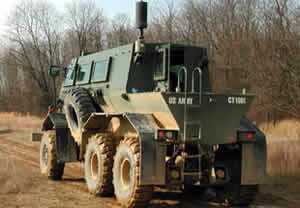 U.S. Army Ordered 27 Buffalo A2 Route-Clearance Vehicles
(NSI News Source Info) November 2, 2008: On Oct 24. Force Protection, Inc. announced that it has received an additional order under contract W56HZV-08-C-0028 for the delivery of 27 Buffalo A2 route-clearance vehicles. The undefinitized contract modification carries a dollar value not to exceed $26.2 million and fulfills an urgent operational need. These vehicles are to be delivered prior to June 2009. Michael Moody, Chairman and Chief Executive Officer of Force Protection, commented, “We are very pleased to be in a position to respond to incremental needs for the vitally important Buffalo route clearance vehicle. We believe that the unique nature of the vehicle and the importance of the missions it performs will enable us to continue at current rates of production well into the future.” About Force Protection, Inc. Force Protection, Inc. is a leading American designer, developer and manufacturer of life saving survivability solutions and equipment, predominantly ballistic- and blast-protected wheeled vehicles currently deployed by the U.S. military and its allies to support armed forces and security personnel in conflict zones. The Company’s specialty vehicles, the Cougar, the Buffalo and the Cheetah, are designed specifically for reconnaissance, forward command and control, and urban operations and to protect their occupants from landmines, hostile fire, and improvised explosive devices (IEDs, commonly referred to as roadside bombs). The Company also is the developer and manufacturer of ForceArmor™ an armor package providing superior protection against explosively formed projectiles (EFPs) now available for a wide range of tactical-wheeled vehicles. The Company is one of the original developers and primary providers of vehicles for the U.S. military’s Mine Resistant Ambush Protected, or MRAP, vehicle program. For more information on Force Protection and its vehicles, visit www.forceprotection.net. Safe Harbor Language This press release contains forward looking statements that are not historical facts, including statements about our beliefs and expectations are forward-looking statements. These statements are based on beliefs and assumptions by Force Protection’s management, and on information currently available to management. Forward-looking statements speak only as of the date they are made, and we undertake no obligation to update any of them publicly in light of new information or future events. A number of important factors could cause actual result to differ materially from those contained in any forward-looking statements. Examples of these factors include, but are not limited to, our ability to fulfill the above described order on a timely basis, our ability to effectively manage the risks in our business; the reaction of the marketplace to the foregoing; and other risk factors and cautionary statements listed in the Company’s periodic reports filed with the Securities and Exchange Commission, including the risks set forth in the Company’s 2007 Annual Report on Form 10-K for the year ended December 31, 2007.
Russia wants to compromise with Japan on disputed islands
 Russia wants to compromise with Japan on disputed islands
(NSI News Source Info) MOSCOW - November 2, 2008: Russia wants to reach a compromise with Japan on the territorial dispute over the Kuril Islands, the foreign minister told Japanese reporters on Saturday.
Sergei Lavrov is scheduled to visit Japan in early November to discuss the signing of a peace treaty to formally end World War II hostilities, which has been delayed due to the ongoing dispute over the South Kurils, a former Japanese territory annexed by the Soviet Union after WWII.
The four southernmost islands of the Kuril chain, which stretches from Russia's Kamchatka Peninsula to the north-east coast of Japan's Hokkaido Island, remain Russian territory.
"We have the desire to solve this problem. A compromise is needed for the resolution of various issues," Japan's Kyodo news agency quoted Lavrov as saying.
"It is important for our nations not to get stuck in problems of the past, but to turn their attention to the potential of the future cooperation, and to form public opinion in a spirit of good-neighborliness," Lavrov said.
During his visit, which includes stops in Hokkaido and Tokyo, Sergei Lavrov will meet with his Japanese counterpart Hirofumi Nakasone to discuss the territorial dispute.
The foreign ministers will also consider the possibility of holding a high-level meeting between the Japanese and Russian leaders in November at the Asia-Pacific Economic Cooperation (APEC) summit in Peru.
The plans by Russian Prime Minister Vladimir Putin to pay a visit to Japan later this year as part of agreements reached at the G8 summit will be also on the agenda of the forthcoming talks.
Russia wants to compromise with Japan on disputed islands
(NSI News Source Info) MOSCOW - November 2, 2008: Russia wants to reach a compromise with Japan on the territorial dispute over the Kuril Islands, the foreign minister told Japanese reporters on Saturday.
Sergei Lavrov is scheduled to visit Japan in early November to discuss the signing of a peace treaty to formally end World War II hostilities, which has been delayed due to the ongoing dispute over the South Kurils, a former Japanese territory annexed by the Soviet Union after WWII.
The four southernmost islands of the Kuril chain, which stretches from Russia's Kamchatka Peninsula to the north-east coast of Japan's Hokkaido Island, remain Russian territory.
"We have the desire to solve this problem. A compromise is needed for the resolution of various issues," Japan's Kyodo news agency quoted Lavrov as saying.
"It is important for our nations not to get stuck in problems of the past, but to turn their attention to the potential of the future cooperation, and to form public opinion in a spirit of good-neighborliness," Lavrov said.
During his visit, which includes stops in Hokkaido and Tokyo, Sergei Lavrov will meet with his Japanese counterpart Hirofumi Nakasone to discuss the territorial dispute.
The foreign ministers will also consider the possibility of holding a high-level meeting between the Japanese and Russian leaders in November at the Asia-Pacific Economic Cooperation (APEC) summit in Peru.
The plans by Russian Prime Minister Vladimir Putin to pay a visit to Japan later this year as part of agreements reached at the G8 summit will be also on the agenda of the forthcoming talks.
Russia, EU to sign deal on Chad peacekeeping operation Nov. 5
 Russia, EU to sign deal on Chad peacekeeping operation Nov. 5
(NSI News Source Info) BRUSSELS - November 2, 2008: Russia will sign an agreement with the EU on participation in a peacekeeping operation in Chad and the Central African Republic on November 5 in Brussels, a Russian diplomat said on Saturday.
A staffer at the Permanent Mission of Russia to the EU in Brussels told RIA Novosti that the document will be signed by Russian EU envoy Vladimir Chizhov and EU foreign policy chief Javier Solana.
Russia's Air Force is ready to send a helicopter group with more than 100 servicemen to Chad.
Russian President Dmitry Medvedev signed a decree in early September on sending a Russian military contingent to Chad and the neighboring Central African Republic in support of a UN mission in the region.
The Russian peacekeeping contingent, totaling up to 200 servicemen, and four Mi-8MT helicopters, will be deployed in the conflict zone for up to a year.
Clashes between Chadian rebels, allegedly supported and armed by Sudan, and government troops have been devastating the region since 2003 when a loose coalition of three opposition groups attempted for the first time to oust President Idriss Deby. The groups' leaders accuse Deby, who seized power in 1990, of embezzling millions of dollars in oil revenue.
The foreign ministers of the 27 EU member states approved in April a plan to send a peacekeeping mission to Chad and the Central African Republic. The EUFOR contingent, comprising 3,700 servicemen from 14 EU countries, began a yearlong UN mandate in March to help facilitate humanitarian work and protect Sudanese refugees and internally displaced Chadians.
Russia has already deployed a helicopter support group in neighboring Sudan. It currently comprises 120 personnel and four Mi-8 helicopters, reequipped to UN and international standards.
The group provides transport for UN military observers in Sudan, while also transporting and accompanying cargoes. It also carries out rescue operations.
Chad gained independence from France in 1960. Since 2003, Chad and Sudan have accused each other of inciting conflict on their common border, which includes most of the troubled west Sudanese region of Darfur.
Russia, EU to sign deal on Chad peacekeeping operation Nov. 5
(NSI News Source Info) BRUSSELS - November 2, 2008: Russia will sign an agreement with the EU on participation in a peacekeeping operation in Chad and the Central African Republic on November 5 in Brussels, a Russian diplomat said on Saturday.
A staffer at the Permanent Mission of Russia to the EU in Brussels told RIA Novosti that the document will be signed by Russian EU envoy Vladimir Chizhov and EU foreign policy chief Javier Solana.
Russia's Air Force is ready to send a helicopter group with more than 100 servicemen to Chad.
Russian President Dmitry Medvedev signed a decree in early September on sending a Russian military contingent to Chad and the neighboring Central African Republic in support of a UN mission in the region.
The Russian peacekeeping contingent, totaling up to 200 servicemen, and four Mi-8MT helicopters, will be deployed in the conflict zone for up to a year.
Clashes between Chadian rebels, allegedly supported and armed by Sudan, and government troops have been devastating the region since 2003 when a loose coalition of three opposition groups attempted for the first time to oust President Idriss Deby. The groups' leaders accuse Deby, who seized power in 1990, of embezzling millions of dollars in oil revenue.
The foreign ministers of the 27 EU member states approved in April a plan to send a peacekeeping mission to Chad and the Central African Republic. The EUFOR contingent, comprising 3,700 servicemen from 14 EU countries, began a yearlong UN mandate in March to help facilitate humanitarian work and protect Sudanese refugees and internally displaced Chadians.
Russia has already deployed a helicopter support group in neighboring Sudan. It currently comprises 120 personnel and four Mi-8 helicopters, reequipped to UN and international standards.
The group provides transport for UN military observers in Sudan, while also transporting and accompanying cargoes. It also carries out rescue operations.
Chad gained independence from France in 1960. Since 2003, Chad and Sudan have accused each other of inciting conflict on their common border, which includes most of the troubled west Sudanese region of Darfur.
Nicaragua to fix ties with S.Ossetia, Abkhazia at later date
 Nicaragua to fix ties with S.Ossetia, Abkhazia at later date
(NSI News Source Info) MOSCOW - November 2, 2008: Nicaragua, which joined Russia in recognizing South Ossetia and Abkhazia as independent states, will have contact with the republics via Russia and later establish direct diplomatic relations, the foreign minister said.
Nicaragua is the only country other than Russia to have recognized the Georgian separatist republics. Russia recognized them on August 26, two weeks after its five-day war with Georgia that followed Tbilisi's attack on South Ossetia.
Foreign Minister Samuel Santos Lopez told his Russian counterpart Sergei Lavrov in Moscow: "The decision to recognize these two republics was just and appropriate. They need time for self-organization, and when the moment is right we will agree on the conditions or opportunities for establishing direct diplomatic ties."
Lavrov expressed his thanks to Nicaragua for the country's recognition of the two republics, calling it "a step aimed at supporting justice in international affairs, the rights of peoples to their development, and activities to block attempts to solve conflicts by force."
Western nations have strongly criticized Russia for its "disproportionate" response to Georgia's attack and the subsequent recognition the republics.
Nicaraguan President Daniel Ortega, who led a Soviet-backed government that battled U.S.-supported Contra rebels in the late 1980s, has sharply criticized the West for attempting to surround Russia and investing millions of dollars through NATO to "build a military fence against Russia."
Nicaragua to fix ties with S.Ossetia, Abkhazia at later date
(NSI News Source Info) MOSCOW - November 2, 2008: Nicaragua, which joined Russia in recognizing South Ossetia and Abkhazia as independent states, will have contact with the republics via Russia and later establish direct diplomatic relations, the foreign minister said.
Nicaragua is the only country other than Russia to have recognized the Georgian separatist republics. Russia recognized them on August 26, two weeks after its five-day war with Georgia that followed Tbilisi's attack on South Ossetia.
Foreign Minister Samuel Santos Lopez told his Russian counterpart Sergei Lavrov in Moscow: "The decision to recognize these two republics was just and appropriate. They need time for self-organization, and when the moment is right we will agree on the conditions or opportunities for establishing direct diplomatic ties."
Lavrov expressed his thanks to Nicaragua for the country's recognition of the two republics, calling it "a step aimed at supporting justice in international affairs, the rights of peoples to their development, and activities to block attempts to solve conflicts by force."
Western nations have strongly criticized Russia for its "disproportionate" response to Georgia's attack and the subsequent recognition the republics.
Nicaraguan President Daniel Ortega, who led a Soviet-backed government that battled U.S.-supported Contra rebels in the late 1980s, has sharply criticized the West for attempting to surround Russia and investing millions of dollars through NATO to "build a military fence against Russia."
U.S. Air Force Hiring Pilots
U.S. Air Force Hiring Pilots
(NSI News Source Info) November 2, 2008: The U.S. Air Force is making a major effort to get 900 reserve pilots to switch to active duty, mainly to operate UAVs (like the Predator and Reaper), but also for intelligence jobs in general. Some 15 percent of these reservists had recently participated in a voluntary downsizing program, and transferred to the reserves. In the last year, pressure from the other services, and the new Secretary of Defense, caused the air force to increase its efforts to put more UAVs into service, and to halt its downsizing program. Now the air force is increasing its strength from 324,191, to 330,000 over the next two years. Most of the new troops, and more besides, will be assigned to reconnaissance and intelligence work, as well as UAV and nuclear weapons units.
 Reaper, (also known as Predator B) an outgrowth of the combat proven Predator A UAS, became operational in 2007 and as it began flying combat missions over Afghanistan. This Medium Altitude Long Endurance UAV overcomes most of the difficulties encountered with previous UAVs that commonly must compromise between conflicting demands for payload, speed, altitude, speed and persistence. With an operational ceiling of 50,000ft, and higher cruising speed, Reaper can cover a larger area, under all weather conditions carrying payloads of more than 1.5 tons. The aircraft is powered by a single Honeywell TP331-10 engine, producing 950 shp, provides a maximum airspeed of 260 kts and a cruise speed for maximum endurance of 150-170 kts.
Reaper, (also known as Predator B) an outgrowth of the combat proven Predator A UAS, became operational in 2007 and as it began flying combat missions over Afghanistan. This Medium Altitude Long Endurance UAV overcomes most of the difficulties encountered with previous UAVs that commonly must compromise between conflicting demands for payload, speed, altitude, speed and persistence. With an operational ceiling of 50,000ft, and higher cruising speed, Reaper can cover a larger area, under all weather conditions carrying payloads of more than 1.5 tons. The aircraft is powered by a single Honeywell TP331-10 engine, producing 950 shp, provides a maximum airspeed of 260 kts and a cruise speed for maximum endurance of 150-170 kts.
Since 2005, the air force had been reorganizing and downsizing, and that included the junior officers who are usually immune to such cuts. In the last two years, 2,000 lieutenants were dismissed The air force had planned to cut their strength by 5,400 personnel this fiscal year (which began last October). The downsizing was halted as of this Summer.
The air force has long been accused (by members of the other services) of operating more like a corporation than a military organization. That's a little harsh, because the air force is the most tech minded of the services, and has always taken the lead in adapting commercial innovations to military use. But both the air force and navy decided on downsizing in response to the impact of technology, outsourcing and automation, in a process similar to that faced by many civilian firms. Unlike previous downsizing efforts, where many troops were fired, most of the reduction this time around is from retirement and people not re-enlisting. Higher standards for re-enlisting were used to make cuts, by making it more difficult to stay in. This had a side benefit of improving the overall quality of the force.
The air force is still going to lose jobs that are no longer needed. Most of the personnel in surplus jobs will be retrained. The original impetus for the cuts was money. Each active duty airman costs over $100,000 a year. The money saved was to go towards purchasing more technology. A year ago that means more F-22s, but now it's more likely to be more UAVs and transports.
After three years of cuts, the U.S. Air Force has fewer people on active duty than at any other time in its history. However, if you add in reservists (181,000), strength is a bit higher than it was when the air force was formed (from the U.S. Army Air Force) in 1948. The air force also has slightly more officers on active duty today (65,000) than it did in 1948, but that's a reflection of the growing importance of technology. Air Force personnel today have much more education than they did sixty years ago, and that is reflected in higher pay and, on average, higher rank.
Subscribe to:
Posts (Atom)