Thursday, February 05, 2009

Experts Tell Congress Iraq, Afghanistan May Cost $860 Billion By 2019

Experts Tell Congress Iraq, Afghanistan May Cost $860 Billion By 2019 By Leo Shane III, Stars and Stripes Mideast Edition
(NSI News Source Info) WASHINGTON — February 6, 2009: Ongoing combat operations overseas could cost the United States more than $860 billion over the next 10 years, further ballooning the defense budget, experts told Congress on Wednesday. That total includes plans to dramatically draw down the number of troops in Iraq in the next few years, according to officials from the Congressional Budget Office. Even with reducing the number of deployed combat troops to 75,000 worldwide, the CBO estimates that the Defense Department faces recurring personnel costs of at least $69 billion a year, coupled with other equipment repair costs. Lawmakers on the House Budget Committee said those estimates will only increase the pressure on budget planners to make difficult choices in how to properly fund the department. "Let there be no mistake: We’ll spend whatever we need to make sure our national security needs are met," said committee Chairman John Spratt Jr., D-S.C. "But now more than ever, with the budget that we have, we must make sure that we so do in a fiscally sound manner." The Pentagon has spent $864 billion on combat operations since 2001, with more than three-fourths of that going into Iraq. Supplemental war costs for fiscal 2007 and 2008 alone topped more than $350 billion. J. Michael Gilmore, assistant director for the CBO, said that helped push fiscal 2008 defense spending to nearly $800 billion, its highest levels since the end of World War II when adjusted for inflation. To keep up with long-term defense goals, he said, the department may need to consider scaling back or dropping major weapons systems in order to balance capabilities with affordability. In addition, the budget office found $18 billion in savings for fiscal 2010 with personnel cuts such as a reduction in Army combat brigades ($7.7 billion), a drop in Marine Corps end-strength ($2.3 billion) and an increase in enrollment fees for Tricare ($2.1 billion), although officials said they were not necessarily recommending any such moves. Ranking committee member Paul Ryan, R-Wis., noted that the Defense Department remains on the Government Accountability Office’s list of "high risk" agencies because of continued concerns about wasteful or negligent spending. Fixing those problems, he said, is crucial to solving the funding issues. "While we must ensure our troops are fully funded, we cannot simply throw money at the Pentagon without the proper oversight or accountability," he said.

Boeing Wins $250M to Support Missile Defense / Boeing Awarded $250 Million Missile Defense Support Contract

Boeing Wins $250M to Support Missile Defense / Boeing Awarded $250 Million Missile Defense Support Contract
(NSI News Source Info) ST. LOUIS - February 6, 2009: Boeing has been awarded a one-year, $250 million Missile Defense Agency (MDA) contract for Ground-based Midcourse Defense (GMD) maintenance and operations support, ensuring the United States' only defense against long-range ballistic missiles remains ready for operational service.
The contract, awarded Feb. 2, includes an option for 2010 and covers operator and maintainer training, supply chain services, on-site engineering support and technical data development. "Boeing has led the missile defense industry team from inception to operation," said Terry Kunkel, director, GMD Operations and Sustainment for Boeing. "This contract recognizes the GMD team's unmatched performance and builds upon the progress of this vital national security program."
GMD, an integral element of the global ballistic missile defense system, consists of interceptors in underground silos, radars, command and control facilities, communications terminals and a 20,000-mile, fiber-optic communications network. The program has more than 400 partners and suppliers with operations in 36 states and operational sites in Alaska, California and Colorado, as well as the Sea-Based X-Band (SBX) radar system.
MDA recently announced it will solicit competitive bids for future GMD operations and sustainment support no later than 2011. As an industry leader in performance-based logistics, Boeing is well positioned to compete for and win additional GMD support contracts.
"We rely on talent from across Boeing and our industry teammates to bring the best value, the lowest risk and highest performance to our customer," said Kunkel. "With 11 performance-based logistics programs currently under contract, we have the necessary experience to support the Missile Defense Agency today and in the future."
A unit of The Boeing Company, Boeing Integrated Defense Systems is one of the world's largest space and defense businesses specializing in innovative and capabilities-driven customer solutions, and the world's largest and most versatile manufacturer of military aircraft. Headquartered in St. Louis, Boeing Integrated Defense Systems is a $32 billion business with 70,000 employees worldwide

US Army Extends Lockheed's M299 Launcher Contract / U.S. Army Extends Lockheed Martin's M299 Launcher Contract

US Army Extends Lockheed's M299 Launcher Contract / U.S. Army Extends Lockheed Martin's M299 Launcher Contract
(NSI News Source Info) ORLANDO, Fla. - February 6, 2009: Lockheed Martin has received a $31.3 million contract modification to provide additional M299 Launchers and related equipment to the U.S. Army. The M299 is used aboard a variety of platforms to launch all variants of the HELLFIRE missile.
Under the modification to the $51.3 million Launcher Bridge 3 contract awarded in 2007, Lockheed Martin will supply an additional 298 M299 helicopter-mounted four-rail missile launchers, 134 launcher electronic assemblies (LEAs) and multiple spares. The original contract called for delivery of 430 launchers and 376 LEAs to U.S. and international forces, and it also included multiple spares, engineering services and depot support.
Deliveries under the original Bridge 3 contract are currently underway. Lockheed Martin is increasing the rate of production to accommodate the additional launchers, LEAs and spares. With the additional orders, deliveries are scheduled to be completed in 2011.
"The M299's versatility supports multiple missions in a single sortie by any of several platforms," said Ken Musculus, program director for Air-to- Ground Missile Systems at Lockheed Martin Missiles and Fire Control. "Both the M299 and its modernized lightweight successor will accommodate the new JAGM [Joint Air-to-Ground Missile]. This will ensure seamless integration of JAGM into the tri-services arsenal."
Lockheed Martin produces the electronics for the M299 launcher at its facility in Ocala, FL. Marvin Engineering in Inglewood, CA, performs final assembly and test. This contract update will extend M299 production activity in Ocala and Inglewood until 2011.
The all-digital M299 "smart" launcher supports HELLFIRE II or LONGBOW HELLFIRE missiles. Its ability to fire multiple missile variants in any sequence provides maximum operational flexibility on the battlefield. The M299 is integrated on the AH-64D Apache LONGBOW, AH-1Z Cobra, Eurocopter Tiger, SH-60-B Seahawk and UK AH MK1 Apache helicopters.
More than 2,000 M299 launchers have been produced for the U.S. Armed Forces as well as international forces equipped with HELLFIRE weapon systems.
Lockheed Martin was awarded a $30 million contract last year to lead the U.S. Army's modernization of the M299 launcher family. Building on experience gained on producing and supporting the fielded and combat-proven M299, this next-generation lightweight launcher will carry HELLFIRE II and JAGM on attack and reconnaissance helicopters, with a growth path for the DAGR system and other manned and unmanned platforms. The modernized M299 launcher production is scheduled to begin in 2011.

DCNS to Upgrade Colombian Frigates / Colombian Navy Chooses DCNS

DCNS to Upgrade Colombian Frigates / Colombian Navy Chooses DCNS
(NSI News Source Info) February 6, 2009: The Colombian Ministry of Defence signed a 100 million euro contract with DCNS for the modernization of the combat management systems of its Almirante Padilla-class frigates.
The Almirante Padilla Class Frigate is a group of frigates operated by the Colombian Navy. The designation of this class is Type FS 1500 and there are 4 ships in service. The ships were built by Howaldtswerke in Kiel, Germany. Two similar ships operate in the Malaysian Navy as the Kasturi class frigates.
This contract, which is covered by a government-to-government agreement between France and Colombia, will see DCNS and Thales partnering for the modernization of the sensors and the Combat Management System of four Colombian frigates.
This latest success, obtained in the face of intense competition, again illustrates the know-how of French industry in the field of mid-life modernization and upgrade of major surface combatants.

Boeing Bids For $1.6 Billion A-10 Support Contract / Boeing Submits A-10 Sustainment/Integration Contract Proposal To US Air Force

Boeing Bids For $1.6 Billion A-10 Support Contract / Boeing Submits A-10 Sustainment/Integration Contract Proposal To US Air Force
(NSI News Source Info) ST. LOUIS - February 6, 2009: The Boeing Company today submitted a proposal to the U.S. Air Force to participate as an associate prime contractor in the projected $1.6 billion A-10 Thunderbolt Life-Cycle Program Support (TLPS) contract to support the sustainment of the A-10 Thunderbolt II weapon system and integration of current and future requirements.
The A-10 Thunderbolt II is an American single-seat, twin-engine, straight-wing jet aircraft developed by Fairchild-Republic for the United States Air Force to provide close air support (CAS) of ground forces by attacking tanks, armored vehicles, and other ground targets, with a limited air interdiction capability. It is the first U.S. Air Force aircraft designed exclusively for close air support.
"We are confident the Air Force will continue to recognize the resources and competencies that The Boeing Company brings to the warfighter," said Steve Waltman, director of Boeing Aircraft Sustainment & Maintenance, a subdivision of the company's Maintenance, Modifications & Upgrades division. "We are committed to the standard of excellence we have exhibited on the current A-10 Wing Replacement Program and, if selected, we will deliver the same outstanding level of customer satisfaction and performance on the TLPS contract."
Boeing won the $2 billion A-10 Wing Replacement Program contract in June 2007. The program includes engineering services and the manufacture of up to 242 wing sets for the Air Force's A-10 fleet. The program is on schedule as Boeing develops the 3-D models that provide the engineering foundation for current wing sustainment needs, design improvements to prevent cracking, and production of the enhanced wing sets.
"The Boeing solution for the A-10 Wing Replacement Program allows the A-10 fleet to fly for at least another 20 years, providing the close-air support our troops need," said Bill Moorefield, A-10 program manager for Boeing. "Our proposal for TLPS takes that one step further -- providing support for the aircraft fleet while ensuring relevance and viability through 2028 and beyond."
The Air Force will select up to three contractors to compete for individual task and delivery orders over the life of the contract. Work will include avionics, mechanical, structural, and propulsion system upgrade work and a program integration support task.
The A-10, also known as the Warthog, was first introduced into the Air Force inventory in 1976. The twin-engine aircraft provides close-air support of ground forces and employs a wide variety of conventional munitions, including general-purpose bombs. The simple, effective and survivable single-seat aircraft can be used against all ground targets, including tanks and other armored vehicles. The aircraft is currently supporting operations in Afghanistan and Iraq.

India Denies Chinese Submarine Reports

India Denies Chinese Submarine Reports
(NSI News Source Info) February 6, 2009: Indian naval officials have denied media reports that Chinese warships forced an Indian submarine to surface in a stand-off in waters off Somalia. Reports in China said that after the submarine was detected by sonar, it was pursued by two Chinese destroyers and an anti-submarine helicopter. The Chinese ships had been on passage to take part in anti-piracy patrols. The two sides were reportedly trying to test each other's sonar systems for weaknesses. However, the Indian navy says none of its submarines was forced to surface in the area. "None of our submarines surfaced in the Gulf of Aden region as reported in a section of the Chinese media," a naval official told Indian reporters. Several Indian newspapers reported the allegations, and cited Indian naval sources as admitting their submarine had tracked the Chinese warships. "Every nation does it," one was quoted as saying. Chinese submarines surprised the US navy in October 2006, by successfully tracking the USS Kitty Hawk in the Pacific Ocean. Stand-off? Several versions of one report on the incident were circulating on Chinese websites this week, including Sina.com and QQ. These claimed that a tense stand-off occurred between Chinese warships and an Indian submarine on 15 January near the Bab Al-Mandab Strait, which separates Yemen and Djibouti, at the western end of the Gulf of Aden. The Chinese destroyers had picked up an unidentified submarine on their sonar, the reports said. The Chinese navy soon identified it as a 70m-long (230ft) vessel armed with 20 torpedoes. The Chinese reports said the Chinese ships had sent an anti-submarine helicopter to help track the submarine, which had tried to jam the Chinese warships' sonar system. But the two destroyers eventually cornered the submarine and forced it to surface, reports said. The Indian vessel then apparently left without further confrontation. Chinese media said the submarine had been trailing the Chinese ships since they had entered the Indian Ocean on the way to Somalia. But India has denied the reports, which have also not been carried by China's official news outlets, Xinhua and the China Daily. There were more than 100 pirate attacks in 2008 in the Gulf of Aden and Indian Ocean, in what is one of the world's busiest shipping lanes. An EU anti-piracy task force set up in December was the first such naval operation of its kind. India, Iran, the US and China are among other nations with naval forces off Somalia.

South Korea: Christening T-50 Golden Eagle To A-50 Monster Eagle As Tank Killer

South Korea: Christening T-50 Golden Eagle To A-50 Monster Eagle As Tank Killer
(NSI News Source Info) February 5, 2009: South Korea is buying 82 U.S. 20mm automatic gun systems for the A-50 (the attack version of its T-50 jet trainer).
The three barrel rotating barrel 20mm gun carries 204 rounds and can fire them at the rate of up to 3,000 rounds per minute.
The T-50 Golden Eagle is a South Korean supersonic advanced trainer and light attack jet, developed by the Korean Aerospace Industries beginning in the late-1990s. The T-50 is South Korea's first indigenous supersonic aircraft and the world's only high-performance supersonic trainer in production. Currently, KAI is upgrading its four prototypes of the T-50 Golden Eagle trainer to advanced light fighters designated FA-50.
That provides the pilot with about four seconds worth of fire. The system experiences one jam every 9,000 rounds fired. The system weighs 300 pounds and the current model has been in service since 2004. The A-50 is a 13 ton aircraft that is basically an armed version of the T-50 supersonic jet trainer.
South Korea: Christening T-50 Golden Eagle to A-50 Monster Eagle as Tank Killer with 20mm automatic gun systems the attack version.
The T-50 was designed to service as both a trainer and a combat aircraft. Deliveries of the 20mm gun systems will begin next year.

Iran Receives Two Mi-171 Civil Helicopters / Ulan-Ude Aviation Plant Has Delivered To Iran Two Civil Mi-171 Helicopters

Iran Receives Two Mi-171 Civil Helicopters / Ulan-Ude Aviation Plant Has Delivered To Iran Two Civil Mi-171 Helicopters
(NSI News Source Info) ULAN-UDE - February 5, 2009: Within the framework of the Contract signed in the end of 2007, Ulan-Ude Aviation Plant has delivered to Iran two civil Mi-171 helicopters.
The helicopters will be operated by Red Crescent Society - nongovernmental organization, the main activity of which is carrying out of humanitarian missions. The Society has its own aviation department and successful experience in operation of Russian helicopters.Iran Receives Two Mi-171 Civil Helicopters / Ulan-Ude Aviation Plant Has Delivered To Iran Two Civil Mi-171 Helicopters.
The helicopters will be used for civil missions, particularly, for carrying out of search and rescue missions and transportation of people injured in natural calamities. As per the contract totally five Mi-171 helicopters are planned for delivery.
Delivery to the customer of the second batch of the Mi-171 helicopters in quantity of three pieces is planned for the end of February - beginning of March of this year.

Lockheed Signs MoUs With 30 Indian Cos; Says Navy Interested In F-35 JSF News

Lockheed Signs MoUs With 30 Indian Cos; Says Navy Interested In F-35 JSF News (NSI News Source Info) New Delhi - February 5, 2009: America's biggest defence contractor, Lockheed Martin Corp, said it has signed about 30 initial agreements with Indian companies aimed at meeting the country's industrial and military offset requirements for an $11 billion, 126 medium range multi-role combat aircraft (MMRCA) tender for the Indian Air Force (IAF).C-130J HerculesUnder the offset provisions, the Indian government requires the winning bidder in a military tender valued at more than $300 million to source production and services of at least 30 per cent of the contract value through local vendors. In the case of the MMRCA contract the offset requirements are higher – at least 50 per cent. Lockheed has offered its scaled up Block 60 F-16IN fighter in the competition which also features Boeing's F/A-18E/F Super Hornet, the European Aeronautic Defence and Space Company's Eurofighter Typhoon, the Swedish Saab Gripen's JAS-39, the French Dassault's Rafale and the Russian MiG-35. "We've signed these memorandums of understanding with the Indian industry in anticipation of the Indian Air Force's medium multi-role combat aircraft order," Orville Prins, Lockheed's vice-president for business development in India said.
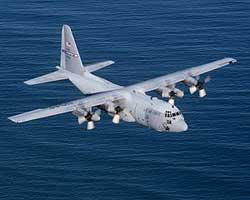
Lockheed's agreements include developing a simulator for the C130J Hercules transport aircraft with Mumbai-based Mahindra & Mahindra Ltd, a top Indian utility vehicle maker. The IAF has already contracted for the supply of six of these classic military transporters with options for at least six more.The $1 billion deal was of immense significance for the US government and contractors as it broke a decade's long drought of near-zero sales by American companies to this country.F 35B
Lockheed said it is also developing a flight refueling system with state-run Hindustan Aeronautic Ltd. Other foreign partners on this project are Israel Aerospace Industries Ltd. and Sargent Fletcher Inc.
"In Asia, India is the most significant opportunity," said Ralph Heath, executive vice president at Lockheed Martin and president of Lockheed Martin Aeronautics Co."The Border Security Force has expressed interest in one or two C130J planes," Heath added. He also said that the company was looking at partnering Indian companies in developing products for the global market. "There is technical expertise here that will add value to Lockheed Martin's products...so we are seeking a two-way partnership to benefit all," Heath said."
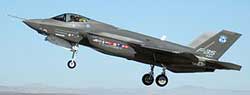
In fact, the Indian Navy has expressed an interest in the F-35B which has short-takeoff and vertical-landing capability for aircraft carrier operations," Prins informed the media. "It (the F-16) is the bridge to the F-35 for India."
The fifth-generation F-35 Lightning II joint strike fighter is currently being developed with first deliveries slated for 2010. Lockheed, Pentagon's biggest contractor by sales, is also looking at civil contracts from the Indian government.

United States, East Africa Allies Must Overcome Radical Islam

United States, East Africa Allies Must Overcome Radical Islam
To reshape the region's security, RAND study finds
(NSI News Source Info) February 5, 2009: While al Qaeda is the primary terrorist/extremist threat in East Africa, the region suffers more broadly from a danger of radical Islamist groups and organizations that the United States and its allies must address to reshape the region's security environment, according to a RAND Corporation study issued today. "The internal conflict and corruption enveloping weak African governments make it easy for terrorists to move, plan and organize," said Angel Rabasa, the report's author and a senior policy analyst at RAND, a nonprofit research organization. "The United States and its allies in the region need an effective, long-term solution to rid the area of the extremist and terrorist elements that reside there." Rabasa writes that the most serious threat is al Qaeda, which has made East Africa a central part of its global strategy. But the terrorist organization is just one component of a much larger universe of radical Islamist groups and organizations. Numerous indigenous radical Islamist groups with varying degrees of affinity to al Qaeda's agenda also populate the region. Of particular concern is the radical Shabaab militia in Somalia that has regrouped and intensified its operations in the wake of the Ethiopian occupation of Mogadishu. Despite the inroads of radical groups, East Africa is not particularly fertile soil for radical Islam. "Although Salafism has made inroads among the educated elites, traditional and Sufi practices dominate the Muslim population," Rabasa said. "Despite the effects of proliferation of Gulf charities in the region, the strength of Islam rooted in local cultures acts to retard the spread of extremist ideas." He writes that existing counterterrorism programs in East Africa can help to lay the groundwork for stronger counterterrorism collaboration in the region. But this assistance alone is unlikely to provide the effective long-term solution of attacking the conditions that make the region open to extremist and terrorist elements. Among the report's key recommendations: *Establish a long-term U.S. military presence in East Africa by building the required infrastructure. *Use Defense Resource Management Studies program funds in East Africa to strengthen military and internal security structures in East African nations. *Take stronger steps to promote a political settlement among Somali factions that would permit the withdrawal of Ethiopian forces from Mogadishu. *Consider diplomatic recognition for Somaliland (the region at the north end of Somalia) as an incentive to keep the region on a democratic track and secure effective cooperation in counterterrorism. *Assist cooperative regional governments in gaining better control of their land and maritime borders. "The aim should be to build sustained national resilience that is intolerant of terrorists and extremists," Rabasa said. "This will occur only if hard security measures are linked with a broader array of policies designed to promote political, social and economic stability. Otherwise, there is little chance that counterterrorist efforts will work."