 A Long March-4B rocket carrying satellites coded as the 03 Group of the Shijian-6 serial research satellites blasts off from the launch pad at the Taiyuan Satellite Launch Center, north China's Shanxi Province, on Oct. 25, 2008. China successfully launched two satellites with a Long March-4B carrier rocket early Saturday morning.(Xinhua/Wang Yongji)
Saturday, October 25, 2008
China to launch satellite on Saturday
China to launch satellite on Saturday
(NSI News Source Info) TAIYUAN - October 25, 2008: China will project a satellite coded as the 03 Group of the Shijian-6 serial research satellites sometime on Saturday, according to an official with the Taiyuan Satellite Launch Center in north China's Shanxi Province.
The rocket carrier would be a Long March 4B, said the official, noting both the satellite and the rocket were in good condition and all the preparations for the launch had been done.
A Long March-4B rocket carrying satellites coded as the 03 Group of the Shijian-6 serial research satellites blasts off from the launch pad at the Taiyuan Satellite Launch Center, north China's Shanxi Province, on Oct. 25, 2008. China successfully launched two satellites with a Long March-4B carrier rocket early Saturday morning.(Xinhua/Wang Yongji)
A Long March-4B rocket carrying satellites coded as the 03 Group of the Shijian-6 serial research satellites blasts off from the launch pad at the Taiyuan Satellite Launch Center, north China's Shanxi Province, on Oct. 25, 2008. China successfully launched two satellites with a Long March-4B carrier rocket early Saturday morning.(Xinhua/Wang Yongji)

Royal Air Force Regiment Force Protection Wing Patrolling Basra
Royal Air Force Regiment Force Protection Wing Patrolling Basra
(NSI News Source Info) BASRA, IRAQ - OCTOBER 25, 2008: People gather around a Land Rover as it arrives at the village Al Houta on October 18 2008 near Basra, Iraq. The trip by the 51 Sqn Royal Air Force Regiment Force Protection Wing was part of a 'key leader engagement' (KLE) visit to the village close to the Basra Airbase to recruit local labour and engage with the village shiek. Visits of this type are seen as key in efforts to continue winning the support of the local Iraqi population. Although improved security in the region has brought some benefits such as improved trade and commerce, much of the infrastructure remains in a poor state of repair. Britain's Prime Minister Gordon Brown has indicated that the number of UK troops could be scaled down - especially as the security situation in the south of the country continues to improve.

Indian Air Force to Induct the BrahMos Cruise Missile by 2012
 Indian Air Force to Induct the BrahMos Cruise Missile by 2012
(NSI News Source Info) October 25, 2008: The Indian Air Force (IAF) would get its own version of Brahmos — a supersonic cruise missile — by 2012, A Sivanthu Pillai, chief executive officer and managing director, Brahmos Airspace, said on Wednesday.Pillai was addressing media persons after inaugurating IWAPS 2008, a two-day international workshop on ‘Advances in processing of solid propellant rocket motors’ at High Energy Materials Research Laboratory (HEMRL) here as part of the Golden Jubilee celebrations of the Defence Research & Development Organisation (DRDO) and centenary celebrations of HEMRL.“Trials and tests will be carried out by 2011 and it is expected to be inducted into the IAF by 2012,” he said, adding that the Army and Navy already had variants of the missile provided by Brahmos Airspace.Stressing on the importance of research in nanotechnology, Pillai, who is also chief controller, R & D (ACE & NS) at DRDO, said the organisation would lay more emphasis on this domain. “Materials such as nano-aluminium, which will augment weight reduction of equipment, will be increasingly used in various defence applications.Meanwhile, the DRDO will continue to develop innovative equipment,” he said. Around 300 scientists from several countries will participate in the workshop, which will also discuss futuristic development programmes.
USAF Creates Global Strike Command
 USAF Creates Global Strike Command
(NSI News Source Info) October 25, 2008: The U.S. Air Force will stand up a new major command called Global Strike Command devoted strictly to the nuclear enterprise, the service announced Oct. 24 at the Pentagon.
“We’ve taken many corrective actions in response to painful lessons learned,” Air Force Secretary Michael Donley told reporters, but “more work remains to be done.”
Air Force leaders released a so-called roadmap, titled “Reinvigorating the Air Force Nuclear Enterprise,” that details major actions the service will take, including:
* Establish the new command, led by a three-star, lieutenant general, and a Headquarters Air Force staff office, both devoted to nuclear enterprise matters;
* Consolidate sustainment functions under Air Force Materiel Command’s Air Force Nuclear Weapons Center;
* Improve nuclear stewardship in Air Force corporate processes; and
* Create strategic plans that address long-term nuclear requirements, including those for cruise missiles, bombers, dual-capable aircraft and intercontinental ballistic missiles (ICBMs).
Nuclear-coded B-52 and B-2 bombers from the 8th Air Force and nuclear-tipped ICBMs under the 20th Air Force will fall under Global Strike Command instead. Yet the move splits the bomber force, with B-1s staying in Air Combat Command, according to the secretary.
The so-called Schlesinger Report - from the Secretary of Defense Task Force on Nuclear Weapons Management chaired by James Schlesinger, who has been both an energy and defense secretary - had recommended all bombers fall under a new command. But, Donley said, “We thought we should preserve the gains made in the last 15 years in making the bomber force more effective for support of theater [operations].”
Initial operating capability for the new command is expected in September 2009, officials said.
The decision to stand up a new major, nuclear command was made early this month at a conference of the air services’ four-star generals. The move follows the firing of the last Air Force secretary and chief of staff in June, as well as a series of disciplinary actions taken after nuclear management mishaps.
A definitive, high-level report last month detailed 180 corrective actions, costing up to $1.5 billion.
USAF Creates Global Strike Command
(NSI News Source Info) October 25, 2008: The U.S. Air Force will stand up a new major command called Global Strike Command devoted strictly to the nuclear enterprise, the service announced Oct. 24 at the Pentagon.
“We’ve taken many corrective actions in response to painful lessons learned,” Air Force Secretary Michael Donley told reporters, but “more work remains to be done.”
Air Force leaders released a so-called roadmap, titled “Reinvigorating the Air Force Nuclear Enterprise,” that details major actions the service will take, including:
* Establish the new command, led by a three-star, lieutenant general, and a Headquarters Air Force staff office, both devoted to nuclear enterprise matters;
* Consolidate sustainment functions under Air Force Materiel Command’s Air Force Nuclear Weapons Center;
* Improve nuclear stewardship in Air Force corporate processes; and
* Create strategic plans that address long-term nuclear requirements, including those for cruise missiles, bombers, dual-capable aircraft and intercontinental ballistic missiles (ICBMs).
Nuclear-coded B-52 and B-2 bombers from the 8th Air Force and nuclear-tipped ICBMs under the 20th Air Force will fall under Global Strike Command instead. Yet the move splits the bomber force, with B-1s staying in Air Combat Command, according to the secretary.
The so-called Schlesinger Report - from the Secretary of Defense Task Force on Nuclear Weapons Management chaired by James Schlesinger, who has been both an energy and defense secretary - had recommended all bombers fall under a new command. But, Donley said, “We thought we should preserve the gains made in the last 15 years in making the bomber force more effective for support of theater [operations].”
Initial operating capability for the new command is expected in September 2009, officials said.
The decision to stand up a new major, nuclear command was made early this month at a conference of the air services’ four-star generals. The move follows the firing of the last Air Force secretary and chief of staff in June, as well as a series of disciplinary actions taken after nuclear management mishaps.
A definitive, high-level report last month detailed 180 corrective actions, costing up to $1.5 billion.
Portuguese Army Receives First Leopard 2A6 Tanks
Portuguese Army Receives First Leopard 2A6 Tanks
(NSI News Source Info) October 25, 2008: The Minister of National Defence, Nuno Severiano Teixeira, will preside at 11 o’clock this morning the reception ceremony for the first eight Leopard 2A6 tanks delivered to the Portuguese Army. The ceremony will be held at the Santa Margarida army base in Constancia.
 Leopard 2A6 tanks
The Leopard acquisition program, part of the Military Program Law, is intended to equip the army with modern vehicles, with a high degree of operational capabilities and versatility, and adequate levels of security and protection. With the acquisition of the Leopard 2A6 tanks, the Portuguese Army will obtain technical innovations that will place it on a par with Allied armies, and will reinforce the capabilities of the Mechanised Brigade, whose capabilities in terms of mobility and firepower will be significantly improved. In addition, this program will contribute to the modernization of the armed forces and to the rationalization of their equipment and will improve their effective combat capability for all types of missions. It will allow Portugal to participate in joint operations with its Allies, with similar levels of technology and of operational capabilities. To equip the Army, Portugal acquired from the Netherlands 37 Leopard 2A6 main battle tanks, manufactured in Germany, to replace the M-60A3 tanks in service. The Leopard 2A6 is one of the most successful tanks of the latest-generation. More than 3,200 Leopard tanks have been produced and are in service in a large number of countries which operate them in a wide range of organizations and operational doctrines. These include Austria, Netherlands, Norway, Denmark, Germany, Switzerland, Spain, Greece, Canada, Chile and Singapore.
Leopard 2A6 tanks
The Leopard acquisition program, part of the Military Program Law, is intended to equip the army with modern vehicles, with a high degree of operational capabilities and versatility, and adequate levels of security and protection. With the acquisition of the Leopard 2A6 tanks, the Portuguese Army will obtain technical innovations that will place it on a par with Allied armies, and will reinforce the capabilities of the Mechanised Brigade, whose capabilities in terms of mobility and firepower will be significantly improved. In addition, this program will contribute to the modernization of the armed forces and to the rationalization of their equipment and will improve their effective combat capability for all types of missions. It will allow Portugal to participate in joint operations with its Allies, with similar levels of technology and of operational capabilities. To equip the Army, Portugal acquired from the Netherlands 37 Leopard 2A6 main battle tanks, manufactured in Germany, to replace the M-60A3 tanks in service. The Leopard 2A6 is one of the most successful tanks of the latest-generation. More than 3,200 Leopard tanks have been produced and are in service in a large number of countries which operate them in a wide range of organizations and operational doctrines. These include Austria, Netherlands, Norway, Denmark, Germany, Switzerland, Spain, Greece, Canada, Chile and Singapore.
Leopard 2A6 tanksAlenia Aeronautica Signs Contract Worth 130 Million Euro to Supply Four C-27Js to Morocco
Alenia Aeronautica Signs Contract Worth 130 Million Euro to Supply Four C-27Js to Morocco
(NSI News Source Info) October 25, 2008: The C-27J tactical transport aircraft, designed and produced by Alenia Aeronautica, a Finmeccanica company, has achieved a further success on the international markets, with a 130 million Euro order for four aircraft to be supplied to the Moroccan Defence Ministry.
 C-27J Spartan
This brings the total number of orders received to 121, making the C-27J the world’s most successful transport aircraft in its category. After receiving 39 orders in Europe from Italy, Greece, Romania, Bulgaria and Lithuania, and 78 in the United States for the US Army and the US Air Force, this is the first C-27J order from a non-NATO country. The C-27J is a multirole aircraft able to perform logistical re-supply, MEDEVAC, troop transport, airdrop operations, Search and Rescue, humanitarian assistance and missions in support of homeland security.
C-27J Spartan
This brings the total number of orders received to 121, making the C-27J the world’s most successful transport aircraft in its category. After receiving 39 orders in Europe from Italy, Greece, Romania, Bulgaria and Lithuania, and 78 in the United States for the US Army and the US Air Force, this is the first C-27J order from a non-NATO country. The C-27J is a multirole aircraft able to perform logistical re-supply, MEDEVAC, troop transport, airdrop operations, Search and Rescue, humanitarian assistance and missions in support of homeland security.
C-27J SpartanDoD To Buy New Interim Vehicles
DoD To Buy New Interim Vehicles
(NSI News Source Info) October 25, 2008: The U.S. Army and Marine Corps plan to rapidly develop and buy a fleet of 7- to 10-ton vehicles intended to fend off increasingly frequent roadside bombs yet be more mobile than MRAPs, a senior Pentagon official said.
 Plasan Sand Cat
To be developed along the fast-track model used for Mine Resistant Ambush Protected (MRAP) vehicles, the so-called interim vehicles will meet an urgent need in Afghanistan for tough transports that can go off-road, he said.
"We will replicate what we did with MRAP," in terms of speedy procurement, the senior official said.
Army, Marine Corps and Pentagon acquisition officials are eyeing potential candidates, including Oshkosh's Sandcat and Force Protection's 7-ton Cheetah vehicle. Pentagon acquisition chief John Young plans to meet with Army and Marine Corps vehicle programmers, after the military announces the winners of three development contracts for the Joint Light Tactical Vehicle (JLTV) early next week.
The military may first buy 2,000 interim vehicles, and may ultimately field 5,000 interim vehicles or more to fill the void until the actual JLTV is ready around 2013.
"It does not surprise me that people are considering bridging strategies. The need is there now whether the JLTV technology is there or not," said Rickey Smith, director of the Army Capabilities Integration Center – Forward.
Plasan Sand Cat
To be developed along the fast-track model used for Mine Resistant Ambush Protected (MRAP) vehicles, the so-called interim vehicles will meet an urgent need in Afghanistan for tough transports that can go off-road, he said.
"We will replicate what we did with MRAP," in terms of speedy procurement, the senior official said.
Army, Marine Corps and Pentagon acquisition officials are eyeing potential candidates, including Oshkosh's Sandcat and Force Protection's 7-ton Cheetah vehicle. Pentagon acquisition chief John Young plans to meet with Army and Marine Corps vehicle programmers, after the military announces the winners of three development contracts for the Joint Light Tactical Vehicle (JLTV) early next week.
The military may first buy 2,000 interim vehicles, and may ultimately field 5,000 interim vehicles or more to fill the void until the actual JLTV is ready around 2013.
"It does not surprise me that people are considering bridging strategies. The need is there now whether the JLTV technology is there or not," said Rickey Smith, director of the Army Capabilities Integration Center – Forward.
Plasan Sand CatFriday, October 24, 2008
Pakistan & Taliban Have Deep Connections
Pakistan & Taliban Have Deep Connections
(NSI News Source Info) October 24, 2008: In Pakistan, the army continues to battle Taliban and al Qaeda fighters in the Bajaur and Swat valleys. In the third Taliban stronghold, North Waziristan, the Taliban are keeping their heads down, noting the beating their fellow radicals are taking elsewhere. The Waziristan Taliban are maintaining the peace deal signed with the government earlier this year, despite continued American missile attacks (Hellfires fired from Predator and Reaper UAVs). The Taliban are, howe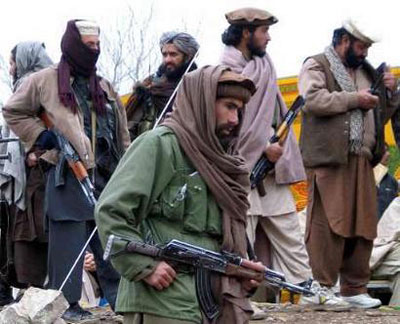 ver, suspected of kidnapping prominent people in Waziristan, including a prominent doctor. This caused the government to shut down all the clinics in North Waziristan, until the doctor was released.
Pakistan has persuaded some of the tribes in pro-Taliban areas to switch sides. This is often not too difficult, as the tribes along the border spend more time fighting each other than in going after outsiders. The U.S. is providing money and weapons for these pro-government tribes, as well as tribesmen who join the Frontier Corps (the locally recruited security force that watches the Afghan border.) The Pakistani government has also declared that all illegal foreigners (Islamic radicals) will be expelled from the border areas.
The Afghan drug gangs, seeing their Taliban allies taking a beating in Pakistan, have sent guns and money across the border, to help out. The Afghan drug gangs have become the main supporters of the Taliban on both sides of the border. Two decades ago, Pakistan pushed the heroin production business across the border into Afghanistan. Pakistani officials have warned their Afghan counterparts that taking bribes from the drug gangs does not work in the long run. The large amount of opium and heroin produced leaks into the local culture, producing a plague of local addicts that poisons society and causes many new problems. More and more Afghan officials are coming to understand that, but many are still on the drug gang payroll, so cooperation against the Taliban by the two countries is still spotty. But Pakistan and Afghanistan have agreed not to have any more peace talks with the Taliban and to keep fighting the Islamic radicals.
The increasing anti-Taliban attitudes in Pakistan has produced more tips from locals, and provided American UAVs with more targets. At least once a week, Hellfire missiles hit a building along the border, killing Taliban and al Qaeda personnel. These attacks seek to take out the leadership, but often they just kill some gunmen staying over for the night. The Taliban are still seeking the local "spies" who are alerting the Americans and identifying the buildings where the terrorists are staying. The information the Americans are getting appears to be very accurate, but a lot of it can be coming from high-resolution cameras in UAVs and aircraft, and electronic eavesdropping that appears to pick up everything. Meanwhile, anyone who is in the least bit suspicious risks a beating or beheading.
October 23, 2008: In a worrisome development, Maoist rebel groups in eastern India have formed alliances with tribal separatist groups in the northeast (particularly Manipur, which is on the border with Myanmar.)
October 22, 2008: In and around Mumbai, India, there has been several days of violence because a right-wing politician was arrested. The conservatives are hostile to migrants from other parts of India.
October 21, 2008: In northeast India, a bomb went off outside a military base in the city of Imphal, killing 17 and wounding 30. Tribal separatists have long been fighting the government over the policy of allowing migrants from other parts of India to flood into the region. The day before, a grenade was detonated outside the well guarded compound of a senior politician.
October 19, 2008: Over the weekend, Pakistani troops moved into a large Taliban training camp in the hills surrounding the Swat valley. Over 60 Taliban died in the camp, which consisted of dozens of structures and many habitable caves. The air force bombed the camp before the troops moved in. Similar operations continue in the Bajaur valley.
October 18, 2008: The recent death of Pakistan Taliban leader Baitullah Mehsud has caused, as expected, a split in the local Taliban solidarity. A large number of Taliban in North Waziristan have split away to form a "local Taliban" group. This new outfit announced that it would not fight the Pakistani army, but would instead concentrate on supporting the fighting against foreign troops across the border in Afghanistan. That will be difficult, because the gunmen are coming the other way now, with Afghan Taliban sending fighters to try and rescue the Taliban movements in the Bajaur and Swat valleys. When the Taliban is crushed in those valleys, the army indicates that it will move on to North Waziristan. This won't be the first time the flatlanders have gone into the hills to pacify the Pushtun tribes. The British did this as recently as 1945, two years before they "gave" the previously independent Waziristan to the newly created state of Pakistan. North Waziristan is only 4,700 square kilometers, and 365,000 people. But most of the adult men have guns, and using them is considered both an obligation and something of an outdoor sport. Despite its smaller population, North Waziristan is considered a tougher objective than the Bajaur and Swat valleys. The North Waziristan tribes can put over 30,000 armed (if not very well trained or equipped) men into action. Like Bajaur, a river runs through it (the Tochi, and into Afghanistan via the Tochi pass.)
ver, suspected of kidnapping prominent people in Waziristan, including a prominent doctor. This caused the government to shut down all the clinics in North Waziristan, until the doctor was released.
Pakistan has persuaded some of the tribes in pro-Taliban areas to switch sides. This is often not too difficult, as the tribes along the border spend more time fighting each other than in going after outsiders. The U.S. is providing money and weapons for these pro-government tribes, as well as tribesmen who join the Frontier Corps (the locally recruited security force that watches the Afghan border.) The Pakistani government has also declared that all illegal foreigners (Islamic radicals) will be expelled from the border areas.
The Afghan drug gangs, seeing their Taliban allies taking a beating in Pakistan, have sent guns and money across the border, to help out. The Afghan drug gangs have become the main supporters of the Taliban on both sides of the border. Two decades ago, Pakistan pushed the heroin production business across the border into Afghanistan. Pakistani officials have warned their Afghan counterparts that taking bribes from the drug gangs does not work in the long run. The large amount of opium and heroin produced leaks into the local culture, producing a plague of local addicts that poisons society and causes many new problems. More and more Afghan officials are coming to understand that, but many are still on the drug gang payroll, so cooperation against the Taliban by the two countries is still spotty. But Pakistan and Afghanistan have agreed not to have any more peace talks with the Taliban and to keep fighting the Islamic radicals.
The increasing anti-Taliban attitudes in Pakistan has produced more tips from locals, and provided American UAVs with more targets. At least once a week, Hellfire missiles hit a building along the border, killing Taliban and al Qaeda personnel. These attacks seek to take out the leadership, but often they just kill some gunmen staying over for the night. The Taliban are still seeking the local "spies" who are alerting the Americans and identifying the buildings where the terrorists are staying. The information the Americans are getting appears to be very accurate, but a lot of it can be coming from high-resolution cameras in UAVs and aircraft, and electronic eavesdropping that appears to pick up everything. Meanwhile, anyone who is in the least bit suspicious risks a beating or beheading.
October 23, 2008: In a worrisome development, Maoist rebel groups in eastern India have formed alliances with tribal separatist groups in the northeast (particularly Manipur, which is on the border with Myanmar.)
October 22, 2008: In and around Mumbai, India, there has been several days of violence because a right-wing politician was arrested. The conservatives are hostile to migrants from other parts of India.
October 21, 2008: In northeast India, a bomb went off outside a military base in the city of Imphal, killing 17 and wounding 30. Tribal separatists have long been fighting the government over the policy of allowing migrants from other parts of India to flood into the region. The day before, a grenade was detonated outside the well guarded compound of a senior politician.
October 19, 2008: Over the weekend, Pakistani troops moved into a large Taliban training camp in the hills surrounding the Swat valley. Over 60 Taliban died in the camp, which consisted of dozens of structures and many habitable caves. The air force bombed the camp before the troops moved in. Similar operations continue in the Bajaur valley.
October 18, 2008: The recent death of Pakistan Taliban leader Baitullah Mehsud has caused, as expected, a split in the local Taliban solidarity. A large number of Taliban in North Waziristan have split away to form a "local Taliban" group. This new outfit announced that it would not fight the Pakistani army, but would instead concentrate on supporting the fighting against foreign troops across the border in Afghanistan. That will be difficult, because the gunmen are coming the other way now, with Afghan Taliban sending fighters to try and rescue the Taliban movements in the Bajaur and Swat valleys. When the Taliban is crushed in those valleys, the army indicates that it will move on to North Waziristan. This won't be the first time the flatlanders have gone into the hills to pacify the Pushtun tribes. The British did this as recently as 1945, two years before they "gave" the previously independent Waziristan to the newly created state of Pakistan. North Waziristan is only 4,700 square kilometers, and 365,000 people. But most of the adult men have guns, and using them is considered both an obligation and something of an outdoor sport. Despite its smaller population, North Waziristan is considered a tougher objective than the Bajaur and Swat valleys. The North Waziristan tribes can put over 30,000 armed (if not very well trained or equipped) men into action. Like Bajaur, a river runs through it (the Tochi, and into Afghanistan via the Tochi pass.)
ver, suspected of kidnapping prominent people in Waziristan, including a prominent doctor. This caused the government to shut down all the clinics in North Waziristan, until the doctor was released.
Pakistan has persuaded some of the tribes in pro-Taliban areas to switch sides. This is often not too difficult, as the tribes along the border spend more time fighting each other than in going after outsiders. The U.S. is providing money and weapons for these pro-government tribes, as well as tribesmen who join the Frontier Corps (the locally recruited security force that watches the Afghan border.) The Pakistani government has also declared that all illegal foreigners (Islamic radicals) will be expelled from the border areas.
The Afghan drug gangs, seeing their Taliban allies taking a beating in Pakistan, have sent guns and money across the border, to help out. The Afghan drug gangs have become the main supporters of the Taliban on both sides of the border. Two decades ago, Pakistan pushed the heroin production business across the border into Afghanistan. Pakistani officials have warned their Afghan counterparts that taking bribes from the drug gangs does not work in the long run. The large amount of opium and heroin produced leaks into the local culture, producing a plague of local addicts that poisons society and causes many new problems. More and more Afghan officials are coming to understand that, but many are still on the drug gang payroll, so cooperation against the Taliban by the two countries is still spotty. But Pakistan and Afghanistan have agreed not to have any more peace talks with the Taliban and to keep fighting the Islamic radicals.
The increasing anti-Taliban attitudes in Pakistan has produced more tips from locals, and provided American UAVs with more targets. At least once a week, Hellfire missiles hit a building along the border, killing Taliban and al Qaeda personnel. These attacks seek to take out the leadership, but often they just kill some gunmen staying over for the night. The Taliban are still seeking the local "spies" who are alerting the Americans and identifying the buildings where the terrorists are staying. The information the Americans are getting appears to be very accurate, but a lot of it can be coming from high-resolution cameras in UAVs and aircraft, and electronic eavesdropping that appears to pick up everything. Meanwhile, anyone who is in the least bit suspicious risks a beating or beheading.
October 23, 2008: In a worrisome development, Maoist rebel groups in eastern India have formed alliances with tribal separatist groups in the northeast (particularly Manipur, which is on the border with Myanmar.)
October 22, 2008: In and around Mumbai, India, there has been several days of violence because a right-wing politician was arrested. The conservatives are hostile to migrants from other parts of India.
October 21, 2008: In northeast India, a bomb went off outside a military base in the city of Imphal, killing 17 and wounding 30. Tribal separatists have long been fighting the government over the policy of allowing migrants from other parts of India to flood into the region. The day before, a grenade was detonated outside the well guarded compound of a senior politician.
October 19, 2008: Over the weekend, Pakistani troops moved into a large Taliban training camp in the hills surrounding the Swat valley. Over 60 Taliban died in the camp, which consisted of dozens of structures and many habitable caves. The air force bombed the camp before the troops moved in. Similar operations continue in the Bajaur valley.
October 18, 2008: The recent death of Pakistan Taliban leader Baitullah Mehsud has caused, as expected, a split in the local Taliban solidarity. A large number of Taliban in North Waziristan have split away to form a "local Taliban" group. This new outfit announced that it would not fight the Pakistani army, but would instead concentrate on supporting the fighting against foreign troops across the border in Afghanistan. That will be difficult, because the gunmen are coming the other way now, with Afghan Taliban sending fighters to try and rescue the Taliban movements in the Bajaur and Swat valleys. When the Taliban is crushed in those valleys, the army indicates that it will move on to North Waziristan. This won't be the first time the flatlanders have gone into the hills to pacify the Pushtun tribes. The British did this as recently as 1945, two years before they "gave" the previously independent Waziristan to the newly created state of Pakistan. North Waziristan is only 4,700 square kilometers, and 365,000 people. But most of the adult men have guns, and using them is considered both an obligation and something of an outdoor sport. Despite its smaller population, North Waziristan is considered a tougher objective than the Bajaur and Swat valleys. The North Waziristan tribes can put over 30,000 armed (if not very well trained or equipped) men into action. Like Bajaur, a river runs through it (the Tochi, and into Afghanistan via the Tochi pass.)
Somali pirates threatening to kill Ukrainian crew
 Somali pirates threatening to kill Ukrainian crew MOSCOW - October 24, 2008: The Somali pirates holding the MV Faina Ukrainian vessel have threatened to kill the crew tomorrow, Ukraine's Segodnya newspaper said on Wednesday.
The newspaper said that it had spoken on the phone to one of the pirates, who said that there was no food or water left and that "the crew would probably die tomorrow."
A spokesman for the ship owners said that the crew ran out of food and water a week ago and the pirates had been feeding the sailors up to October 21 with supplies brought from the mainland.
The Faina, carrying at least 33 tanks and other heavy weaponry, was seized by Somali pirates on September 25. The pirates are also holding hostage 17 Ukrainian nationals, two Russians, and one Lithuanian.
The Russian captain of the Faina died of a heart attack after the vessel was seized. The pirates holding the ship have demanded an $8 million ransom, and have threatened to kill the hostages if a military operation is launched against them.
A Russian naval vessel passed through the Suez Canal on Wednesday en route to join an international naval group which has surrounded the Faina.
The warship's task is to protect Russian vessels and foreign ships with Russian crewmembers from pirate attacks.
Pirates are increasingly active in the waters off Somalia, which has no effective government and no navy to police its coastline. Somali pirates have seized around 30 ships so far this year off the coast of the east African nation.
Somali pirates threatening to kill Ukrainian crew MOSCOW - October 24, 2008: The Somali pirates holding the MV Faina Ukrainian vessel have threatened to kill the crew tomorrow, Ukraine's Segodnya newspaper said on Wednesday.
The newspaper said that it had spoken on the phone to one of the pirates, who said that there was no food or water left and that "the crew would probably die tomorrow."
A spokesman for the ship owners said that the crew ran out of food and water a week ago and the pirates had been feeding the sailors up to October 21 with supplies brought from the mainland.
The Faina, carrying at least 33 tanks and other heavy weaponry, was seized by Somali pirates on September 25. The pirates are also holding hostage 17 Ukrainian nationals, two Russians, and one Lithuanian.
The Russian captain of the Faina died of a heart attack after the vessel was seized. The pirates holding the ship have demanded an $8 million ransom, and have threatened to kill the hostages if a military operation is launched against them.
A Russian naval vessel passed through the Suez Canal on Wednesday en route to join an international naval group which has surrounded the Faina.
The warship's task is to protect Russian vessels and foreign ships with Russian crewmembers from pirate attacks.
Pirates are increasingly active in the waters off Somalia, which has no effective government and no navy to police its coastline. Somali pirates have seized around 30 ships so far this year off the coast of the east African nation.
Thailand spurns U.S., buys Russian helicopters
 Thailand spurns U.S., buys Russian helicopters
(NSI News Source Info)
Thailand spurns U.S., buys Russian helicopters
(NSI News Source Info)  MOSCOW - October 24, 2008: In a break with tradition, the Thai government has decided to buy several transport helicopters from Russia, a Russian business daily reported on Thursday.
Until now Thailand has only bought arms and military equipment from the United States, but according to Kommersant, Thai Prime Minister Somchai Wongsawat, who is also defense minister, has signed off on a $27.5 million deal to buy three Mi-17 (Hip) transport helicopters.
"It is a civilian modification, but the helicopter is a dual purpose machine," a source in the defense industry was quoted as saying.
The Thai armed forces currently have over 200 U.S.-built helicopters, but almost half of them are more than 20 years old and not operational. In the past year there have been seven accidents involving military helicopters involving casualties.
This is the first time that the Southeast Asian country has let down its military ally, the U.S., and chosen Russia, according to Alexei Kirichenko, an associate professor at the Institute of Asian and African Studies.
"Moscow has repeatedly tried to sell military equipment to Thailand, but all of those deals were invariably blocked, mainly for political reasons," he said.
MOSCOW - October 24, 2008: In a break with tradition, the Thai government has decided to buy several transport helicopters from Russia, a Russian business daily reported on Thursday.
Until now Thailand has only bought arms and military equipment from the United States, but according to Kommersant, Thai Prime Minister Somchai Wongsawat, who is also defense minister, has signed off on a $27.5 million deal to buy three Mi-17 (Hip) transport helicopters.
"It is a civilian modification, but the helicopter is a dual purpose machine," a source in the defense industry was quoted as saying.
The Thai armed forces currently have over 200 U.S.-built helicopters, but almost half of them are more than 20 years old and not operational. In the past year there have been seven accidents involving military helicopters involving casualties.
This is the first time that the Southeast Asian country has let down its military ally, the U.S., and chosen Russia, according to Alexei Kirichenko, an associate professor at the Institute of Asian and African Studies.
"Moscow has repeatedly tried to sell military equipment to Thailand, but all of those deals were invariably blocked, mainly for political reasons," he said.
Subscribe to:
Posts (Atom)












