 Though it was unusual that the two military aircraft did not land at the nearby Masroor or Faisal air bases, their presence validates November reports in local media about their impending arrival.
But reports that Cobham was to equip Pakistan's Il-78s with refueling pods were incorrect. A Cobham official said at last week's biannual Pakistani defense exhibition, IDEAS2008, that the pods were still the Soviet-designed UPAZs, and that the refueling kits on receiving aircraft, such as the newly upgraded Mirage-IIIs, were likely to be South African in origin.
The Il-78s will give the PAF its first airborne refueling capability. They will help train Pakistani crews in mid-air refueling techniques, and once operational will be used to refuel the Mirage-III and eventually JF-17 Thunder.
Air Force officials did confirm the $108 million order of 100 MAR-1 anti-radiation missiles from the Brazilian company Mectron, a deal signed in April but only now revealed. Few details are known about the MAR-1, and for many years its existence was denied. With confirmation of the deal, Pakistan appears to be the first export customer for the missile, which is also in service with the Brazilian air force.
Though it was unusual that the two military aircraft did not land at the nearby Masroor or Faisal air bases, their presence validates November reports in local media about their impending arrival.
But reports that Cobham was to equip Pakistan's Il-78s with refueling pods were incorrect. A Cobham official said at last week's biannual Pakistani defense exhibition, IDEAS2008, that the pods were still the Soviet-designed UPAZs, and that the refueling kits on receiving aircraft, such as the newly upgraded Mirage-IIIs, were likely to be South African in origin.
The Il-78s will give the PAF its first airborne refueling capability. They will help train Pakistani crews in mid-air refueling techniques, and once operational will be used to refuel the Mirage-III and eventually JF-17 Thunder.
Air Force officials did confirm the $108 million order of 100 MAR-1 anti-radiation missiles from the Brazilian company Mectron, a deal signed in April but only now revealed. Few details are known about the MAR-1, and for many years its existence was denied. With confirmation of the deal, Pakistan appears to be the first export customer for the missile, which is also in service with the Brazilian air force.
Thursday, December 04, 2008
Il-78 Tankers Arrive in Pakistan
Il-78 Tankers Arrive in Pakistan
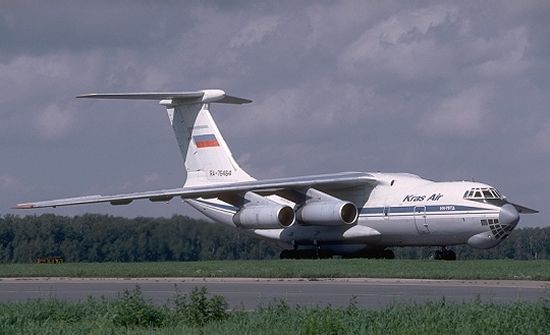
(NSI News Source Info) ISLAMABAD - December 5, 2008: Two Il-78MP Midas tanker aircraft have arrived in Pakistan, apparently the first of four purchased from the Ukraine.
Though the Pakistan Air Force declined to comment, the two aircraft landed at Jinnah International Airport in Karachi on Dec. 2, and were clearly visible from the observation lounge in their low-observation-gray PAF livery.Though it was unusual that the two military aircraft did not land at the nearby Masroor or Faisal air bases, their presence validates November reports in local media about their impending arrival.
But reports that Cobham was to equip Pakistan's Il-78s with refueling pods were incorrect. A Cobham official said at last week's biannual Pakistani defense exhibition, IDEAS2008, that the pods were still the Soviet-designed UPAZs, and that the refueling kits on receiving aircraft, such as the newly upgraded Mirage-IIIs, were likely to be South African in origin.
The Il-78s will give the PAF its first airborne refueling capability. They will help train Pakistani crews in mid-air refueling techniques, and once operational will be used to refuel the Mirage-III and eventually JF-17 Thunder.
Air Force officials did confirm the $108 million order of 100 MAR-1 anti-radiation missiles from the Brazilian company Mectron, a deal signed in April but only now revealed. Few details are known about the MAR-1, and for many years its existence was denied. With confirmation of the deal, Pakistan appears to be the first export customer for the missile, which is also in service with the Brazilian air force.
Though it was unusual that the two military aircraft did not land at the nearby Masroor or Faisal air bases, their presence validates November reports in local media about their impending arrival.
But reports that Cobham was to equip Pakistan's Il-78s with refueling pods were incorrect. A Cobham official said at last week's biannual Pakistani defense exhibition, IDEAS2008, that the pods were still the Soviet-designed UPAZs, and that the refueling kits on receiving aircraft, such as the newly upgraded Mirage-IIIs, were likely to be South African in origin.
The Il-78s will give the PAF its first airborne refueling capability. They will help train Pakistani crews in mid-air refueling techniques, and once operational will be used to refuel the Mirage-III and eventually JF-17 Thunder.
Air Force officials did confirm the $108 million order of 100 MAR-1 anti-radiation missiles from the Brazilian company Mectron, a deal signed in April but only now revealed. Few details are known about the MAR-1, and for many years its existence was denied. With confirmation of the deal, Pakistan appears to be the first export customer for the missile, which is also in service with the Brazilian air force.

China Reorganizes Aerospace Industry
China Reorganizes Aerospace Industry
(NSI News Source Info) Source; Forbes - December 5, 2008: New operat ions and company mergers aim to increase China's global competitiveness.
China is reorganizing its aerospace sector again in a bid to increase competitiveness and raise its profile. This reflects national ambitions to develop a range of world-class indigenous products and to take on more challenging collaborative programs.
The reorganization has seen the merger of the two state aerospace companies, AVIC I and AVIC II, effectively returning the industry to where it was in 1999, when the original state monolith was divided to encourage competition and increase efficiency.
ions and company mergers aim to increase China's global competitiveness.
China is reorganizing its aerospace sector again in a bid to increase competitiveness and raise its profile. This reflects national ambitions to develop a range of world-class indigenous products and to take on more challenging collaborative programs.
The reorganization has seen the merger of the two state aerospace companies, AVIC I and AVIC II, effectively returning the industry to where it was in 1999, when the original state monolith was divided to encourage competition and increase efficiency.
ions and company mergers aim to increase China's global competitiveness.
China is reorganizing its aerospace sector again in a bid to increase competitiveness and raise its profile. This reflects national ambitions to develop a range of world-class indigenous products and to take on more challenging collaborative programs.
The reorganization has seen the merger of the two state aerospace companies, AVIC I and AVIC II, effectively returning the industry to where it was in 1999, when the original state monolith was divided to encourage competition and increase efficiency. Activities. The new AVIC will be responsible for both civil and military aircraft, and have five main businesses, namely:
--air transport manufacturing
--general aviation
--helicopters
--engines
--aircraft systems
These will be more clearly focused on discreet product and sectoral activity. The aim is to create distinct centers of excellence, facilitating the development of 'national champions.' AVIC will now control the bulk of Chinese aerospace research activities, including the provision of civil and other market forecasts for manufacturing subsidiaries.
Comac. A separate operation--the Commercial Aircraft Corporation of China (Comac)--now oversees the development of China's $7.1 billion indigenous 150-seat jet airliner program. China hopes to have its new 150-seater airliner in service by 2020 and is aiming at a potential domestic market of 2,200 narrow-bodied airliners. This would provide a massive launch pad to attack world markets, although it would face stiff competition from Airbus and Boeing.
Military production. Military production is located in Xian, retaining a separation of civil and military development activities. (This could help China work more closely with Western companies affected by political constraints on technology transfer.) The Defense Division remains under the full control of AVIC, and it will be fully responsible for programs such as the Chengdu J-10 fighter as well as AVIC's guided weapons business.
Longer term, China appears to want to develop a defense systems company comparable to BAE Systems or Lockheed Martin, and in the future AVIC's Defense Division may incorporate other aspects of China's defense industrial base.
Outlook. The future for China's general aviation and helicopter sector appears promising. The economy is still growing strongly, which should raise commercial flying. Business flying is likely to develop, as should activities such as search and rescue operations or in support of exploration and the extractive industries.
China's main weaknesses lie in engine and systems technology, although international collaboration on the 150-seat airliner will go some way to raising capabilities. The U.S. government will continue to oppose transfers of sensitive, dual-use technology associated with engines and systems. However, the creation of a single center for engine development will help China meld its collaborative and indigenous experiences.
The new systems division faces the hardest task in merging existing firms comprising over 40 factories and research centers. It is also an area where the extensive links between civil and military development may make collaboration with Western suppliers more difficult.
Mexico To Buy Antidrug Aircraft With U.S. Funds
Mexico To Buy Antidrug Aircraft With U.S. Funds
(NSI News Source Info) December 5, 2008: Aircraft will be among the first equipment purchased by Mexi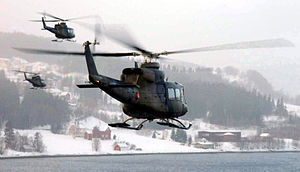 co with funds provided by the U.S. government under the Merida Initiative to provide assistance in combating drug trafficking in the region.
The initial $197 million of $400 million in fiscal 2008 funds approved by Congress for the initiative were released on Dec.3 after the signing of a letter of agreement between the Mexican and U.S. governments.
Merida is planned as a three-year, $1.4 billion initiative, with the majority of funding going to Mexico for equipment, technology and training and a smaller amount going to Central American allies.
A significant portion of the FY '08 and '09 funding will go towards acquiring or upgrading aircraft used by Mexico for counternarcotics and counterterrorist surveillance and support.
The Mexican navy is to receive $200 million for four EADS Casa CN-235 maritime patrol aircraft, with the Mexican government planned to buy another six with its own funds. The aircraft will have the same configuration as the HC-144A Ocean Sentry variants flown by the U.S Coast Guard under the Deepwater program.
The CN-235s will augment seven maritime-patrol EADS Casa C-212s operated by the navy and replace three ex-Israel Northrop Grumman E-2Cs that have been retired.
The Mexican air force is to get $104 million for eight Bell 412EP utility helicopters to augment four already in service and provide a complete squadron to support rapid-reaction forces.
Mexico's Federal Police Force likewise is to get $106 million for three Sikorsky UH-60 transport helicopters, while the Office of the Attorney General is to receive $2.8 million to refurbish two Cessna Citation IIs used to intercept drug-running aircraft.
co with funds provided by the U.S. government under the Merida Initiative to provide assistance in combating drug trafficking in the region.
The initial $197 million of $400 million in fiscal 2008 funds approved by Congress for the initiative were released on Dec.3 after the signing of a letter of agreement between the Mexican and U.S. governments.
Merida is planned as a three-year, $1.4 billion initiative, with the majority of funding going to Mexico for equipment, technology and training and a smaller amount going to Central American allies.
A significant portion of the FY '08 and '09 funding will go towards acquiring or upgrading aircraft used by Mexico for counternarcotics and counterterrorist surveillance and support.
The Mexican navy is to receive $200 million for four EADS Casa CN-235 maritime patrol aircraft, with the Mexican government planned to buy another six with its own funds. The aircraft will have the same configuration as the HC-144A Ocean Sentry variants flown by the U.S Coast Guard under the Deepwater program.
The CN-235s will augment seven maritime-patrol EADS Casa C-212s operated by the navy and replace three ex-Israel Northrop Grumman E-2Cs that have been retired.
The Mexican air force is to get $104 million for eight Bell 412EP utility helicopters to augment four already in service and provide a complete squadron to support rapid-reaction forces.
Mexico's Federal Police Force likewise is to get $106 million for three Sikorsky UH-60 transport helicopters, while the Office of the Attorney General is to receive $2.8 million to refurbish two Cessna Citation IIs used to intercept drug-running aircraft.
co with funds provided by the U.S. government under the Merida Initiative to provide assistance in combating drug trafficking in the region.
The initial $197 million of $400 million in fiscal 2008 funds approved by Congress for the initiative were released on Dec.3 after the signing of a letter of agreement between the Mexican and U.S. governments.
Merida is planned as a three-year, $1.4 billion initiative, with the majority of funding going to Mexico for equipment, technology and training and a smaller amount going to Central American allies.
A significant portion of the FY '08 and '09 funding will go towards acquiring or upgrading aircraft used by Mexico for counternarcotics and counterterrorist surveillance and support.
The Mexican navy is to receive $200 million for four EADS Casa CN-235 maritime patrol aircraft, with the Mexican government planned to buy another six with its own funds. The aircraft will have the same configuration as the HC-144A Ocean Sentry variants flown by the U.S Coast Guard under the Deepwater program.
The CN-235s will augment seven maritime-patrol EADS Casa C-212s operated by the navy and replace three ex-Israel Northrop Grumman E-2Cs that have been retired.
The Mexican air force is to get $104 million for eight Bell 412EP utility helicopters to augment four already in service and provide a complete squadron to support rapid-reaction forces.
Mexico's Federal Police Force likewise is to get $106 million for three Sikorsky UH-60 transport helicopters, while the Office of the Attorney General is to receive $2.8 million to refurbish two Cessna Citation IIs used to intercept drug-running aircraft.Bulgaria To Orders Gowind-200 Corvettes From DCNS?
Bulgaria To Orders Gowind-200 Corvettes From DCNS?
(NSI News Source Info) December 5, 2008: Following his October 2006 meeting with French President Nicolas Sarkozy, Bulgarian Prime Minister Sergei Stanishev initially gave the go-ahead for negotiations to buy 4 Gowind corvettes. A French-Bulgarian working group was then set up to finalize the estimated EUR 900 million (then about $1.25 billion) contract before the end of 2007, but Bulgaria subsequently backed out, saying that it could not afford the contract. Instead, in December 2007 the Bulgarian navy spent EUR 54 million on a pair of used frigates and a minesweeping vessel from Belgium. 
One of the two Gowind 200 corvettes that Bulgaria will purchase from the French company Armaris is to be produced in the shipyard in the city of Varna
Still, one should never underestimate the power of diplomacy. A July 2008 trip by President Sarkozy appears to have snatched victory from the jaws of defeat.
DCNS’ 103m, 1,950t (338 ft., 2,150 ton) Gowind corvettes are directly derived from the design and technological lead advances of the new Franco-Italian FREMM multi-mission frigates – and they could also help give new life to another French weapon.
The Gowind Class Corvette
Gowind is designed to deploy Unmanned Surface Vehicles (USVs) and Underwater Unmanned Vehicles (UUVs), though it lacks the full mission module system in Denmark’s Standard Fle 300 corvettes or the USA’s Littoral Combat ships. An aft deck has been provided allowing for up to 10-ton class helicopters, or even Unmanned Aerial Vehicle (UAV) launch. The weapon system builds around a Setis combat system with a multi-functional radar, and 16 vertical-launch cells that can hold Aster 15, Mica-VL, or Crotale-VT1 anti-air missiles. It can also be armed with 8 MM40 Exocet or Harpoon anti-ship missiles, and carries a naval gun.
Gowind corvettes are shaped for stealth. Its single central mast that replaces several sensor masts in other ships, and provides both improved signature and a 360-degree view for radars and other sensors. The ship’s propulsion system is based on Combined Diesel and Diesel (CODAD) but has no gas exhaust chimney, channeling exhaust into the water-jets in order to create maneuverability in shallow waters, high-speed performance, improved infared signature, and improved visibility for its top-mounted sensors.
The ships come in several sizes. Gowind-200 ships are distinguished from the Gowind-120 and -170 ships by their larger size, which allows them to carry a suite of anti-submarine warfare equipment in addition to their other armament.
The Gowind corvette deal may have wider ramifications for Bulgaria than the role it will play in that country’s military modernization. There are reports that only the first ship will be built in Lorienne, with the other 3 built in Varna by Bulyard Shipbuilding Industry, and equipment installed by the Bulgarian ship repairing yard Terem-KRZ Flotski Arsena. Dozens of Bulgarian engineers and technicians would need be trained in France as part of these arrangements, and French unions have already expressed concerns that outsourcing to Bulgaria’s cheaper shipyards may become permanent build locations as DCNS works to sell these ships abroad.
Russia Arms Exports To Hit Record 8 Bln Dollars In 2008: Report
Russia Arms Exports To Hit Record 8 Bln Dollars In 2008: Report
(NSI News Source In fo) Moscow - December 5, 2008: Russia’s military exports will exceed $8.5 billion in 2008, a senior government official said here. Russia has doubled annual arms exports since 2000 to $7 billion last year, becoming the world’s second largest exporter of conventional arms after the US.
Military exports “are planned at $8.5 billion this year (2008), and I think we will fully meet the plan, and even exceed it,” Mikhail Dmitriyev, head of the Federal Service for Military-Technical Cooperation, told a news conference.
Russia exports weapons to about 80 countries. Among key buyers of Russian-made weaponry are China, India, Algeria, Venezuela, Iran, Malaysia and Serbia.
“Our foreign customers are queuing up for new Russian-made weaponry,” Dmitriyev said. “Among our main 10-15 customers are China, India, almost all Middle East countries, Algeria, Morocco and Venezuela.”
The most popular types of weaponry bought from Russia are Sukhoi and MiG fighters, air defence systems, helicopters, main battle tanks, armoured personnel carriers and infantry fighting vehicles.
Russia also maintains traditionally strong positions in sales of small arms, and anti-tank and air-defence missile systems.
Dmitriyev said Russia’s defence companies were overloaded with orders and urgently needed to increase capacity to meet existing orders and ensure future growth in arms exports.
“I think our defence industry can handle this situation,” he said.
Additional Info - Related Previous Posting Link;
http://defense-technologynews.blogspot.com/2008/10/russian-arms-exports-taking-another.html
fo) Moscow - December 5, 2008: Russia’s military exports will exceed $8.5 billion in 2008, a senior government official said here. Russia has doubled annual arms exports since 2000 to $7 billion last year, becoming the world’s second largest exporter of conventional arms after the US.
Military exports “are planned at $8.5 billion this year (2008), and I think we will fully meet the plan, and even exceed it,” Mikhail Dmitriyev, head of the Federal Service for Military-Technical Cooperation, told a news conference.
Russia exports weapons to about 80 countries. Among key buyers of Russian-made weaponry are China, India, Algeria, Venezuela, Iran, Malaysia and Serbia.
“Our foreign customers are queuing up for new Russian-made weaponry,” Dmitriyev said. “Among our main 10-15 customers are China, India, almost all Middle East countries, Algeria, Morocco and Venezuela.”
The most popular types of weaponry bought from Russia are Sukhoi and MiG fighters, air defence systems, helicopters, main battle tanks, armoured personnel carriers and infantry fighting vehicles.
Russia also maintains traditionally strong positions in sales of small arms, and anti-tank and air-defence missile systems.
Dmitriyev said Russia’s defence companies were overloaded with orders and urgently needed to increase capacity to meet existing orders and ensure future growth in arms exports.
“I think our defence industry can handle this situation,” he said.
Additional Info - Related Previous Posting Link;
http://defense-technologynews.blogspot.com/2008/10/russian-arms-exports-taking-another.html
fo) Moscow - December 5, 2008: Russia’s military exports will exceed $8.5 billion in 2008, a senior government official said here. Russia has doubled annual arms exports since 2000 to $7 billion last year, becoming the world’s second largest exporter of conventional arms after the US.
Military exports “are planned at $8.5 billion this year (2008), and I think we will fully meet the plan, and even exceed it,” Mikhail Dmitriyev, head of the Federal Service for Military-Technical Cooperation, told a news conference.
Russia exports weapons to about 80 countries. Among key buyers of Russian-made weaponry are China, India, Algeria, Venezuela, Iran, Malaysia and Serbia.
“Our foreign customers are queuing up for new Russian-made weaponry,” Dmitriyev said. “Among our main 10-15 customers are China, India, almost all Middle East countries, Algeria, Morocco and Venezuela.”
The most popular types of weaponry bought from Russia are Sukhoi and MiG fighters, air defence systems, helicopters, main battle tanks, armoured personnel carriers and infantry fighting vehicles.
Russia also maintains traditionally strong positions in sales of small arms, and anti-tank and air-defence missile systems.
Dmitriyev said Russia’s defence companies were overloaded with orders and urgently needed to increase capacity to meet existing orders and ensure future growth in arms exports.
“I think our defence industry can handle this situation,” he said.
Additional Info - Related Previous Posting Link;
http://defense-technologynews.blogspot.com/2008/10/russian-arms-exports-taking-another.html
Singapore To Supply Armored Vehicles To U.K.
Singapore to Supply Armored Vehicles to U.K.
(NSI News Source Info) LONDON - December 5, 2008: Singapore Technologies Kinetics has secured a deal to supply its Bronco armored all-terrain vehicle to the British military.
Negotiations on the sale of just over 100 vehicles have been completed in the last 48 hours, government sources said. The contract is expected to be announced officially by the MoD within the week.  Bronco All Terrain Tracked Carrier by Singapore Technologies. (SINGAPORE TECHNOLOGIES)
Bronco All Terrain Tracked Carrier by Singapore Technologies. (SINGAPORE TECHNOLOGIES) The Ministry of Defence denied the deal had been completed.
In a statement it said, "Discussions are still ongoing as to the vehicle type to fulfill the Warthog requirement for operations in Afghanistan. We will procure over 100 new vehicles with deliveries starting at the end of next year."
A spokeswomen for STK declined to comment.
The selection is a major setback for armored vehicle supplier BAE Systems. The company's Viking all-terrain vehicle has been in service with the Royal Marines for several years. It's also been in use in Afghanistan by the British Army.
BAE's Swedish subsidiary, Hägglunds, bid a Mark 2 version of the Viking but failed to overcome its Singaporean rival who offered a higher payload and more capacity to transport troops. Bronco deliveries are expected to start next year.
The vehicles, to be known as Warthogs in British service, will replace Vikings currently being operated in southern Afghanistan by the British military.
Bronco is already in service with the Singaporean armed forces, but the British deal will be the first export win for STK. Thales UK is expected to be the vehicle integrator for the British Broncos.
As the Singaporeans prepare to conclude the deal, it emerged earlier this week that BAE had secured an urgent operational requirement to upgrade the Viking fleet in Afghanistan with increased protection against mines and roadside bombs. About 120 vehicles are having armored belly plates and other measures fitted.
South Korean Says Bye Bye To Iraq
South Korean Says Bye Bye To Iraq
(NSI News Source Info) December 4, 2008: South Korea is withdrawing its peacekeeping troops from Iraq by the end of the year, after having been there since 2004.
Only 500 troops remain, although the South Koreans once had as many of 3,300 troops stationed in northern Iraq.  South Korean soldiers stand at attention during an end of mission ceremony in their military camp in Arbil, 310 km (190 miles) north of Baghdad, December 1, 2008. South Korean soldiers officially ended their four-year military mission in Iraq on Monday, and plan to bring back all of their remaining troops before Christmas, a U.S. military official said
The South Koreans were in the Kurdish part of the country, and there was little violence. So the South Koreans spent most of their time doing reconstruction work.
South Korean soldiers stand at attention during an end of mission ceremony in their military camp in Arbil, 310 km (190 miles) north of Baghdad, December 1, 2008. South Korean soldiers officially ended their four-year military mission in Iraq on Monday, and plan to bring back all of their remaining troops before Christmas, a U.S. military official said
The South Koreans were in the Kurdish part of the country, and there was little violence. So the South Koreans spent most of their time doing reconstruction work.
South Korean soldiers stand at attention during an end of mission ceremony in their military camp in Arbil, 310 km (190 miles) north of Baghdad, December 1, 2008. South Korean soldiers officially ended their four-year military mission in Iraq on Monday, and plan to bring back all of their remaining troops before Christmas, a U.S. military official said
The South Koreans were in the Kurdish part of the country, and there was little violence. So the South Koreans spent most of their time doing reconstruction work. They helped run a hospital, and built 280 facilities. The South Koreans will leave behind 18,000 items of equipment, and a base, all of which they are donating to the Iraqi government.
The South Koreans made a good impression on the Kurds, and Iraqis in general, both for their generosity, and apparent readiness to deal with any violence that might come along.
Special Ops CV-22 Ospreys Self-Deploy to Africa for Multinational Exercise
Special Ops CV-22 Ospreys Self-Deploy to Africa for Multinational Exercise
(NSI News Sour ce Info) HURLBURT FIELD, Fla. - December 4, 2008: Four CV-22 Ospreys from the 8th Special Operations Squadron here returned after completing their first operational deployment supporting Exercise Flintlock 2009 in November in Bamako, Mali.
ce Info) HURLBURT FIELD, Fla. - December 4, 2008: Four CV-22 Ospreys from the 8th Special Operations Squadron here returned after completing their first operational deployment supporting Exercise Flintlock 2009 in November in Bamako, Mali.
The aircraft supported the training exercise in the Trans-Saharan region designed to build relationships and capacity and to enhance African nations' ability to patrol and control their sovereign territory.
The exercise included personnel from 15 countries, and the CV-22 served as a platform for multinational training. Specifically, the aircraft was used to transport Malian and Senegalese special operations forces and their leadership teams.
"We did long range, vertical lift, and dropped (teams) off at a landing zone," said Capt. Dennis Woodlief, an 8th SOS pilot. "They practiced their ground movements, then we brought them back."
Missions like this allowed the CV-22 to take advantage of its unique capabilities as a tilt rotor aircraft, said Lt. Col. Eric Hill, the 8th SOS squadron commander.
"The tyranny of distance in the African continent is amazing," he said. "We were able to go over 500 nautical miles, infiltrate a small team for them to run their exercise, and bring them back all the way to home base without doing an air refueling stop.
And we were able to do that in the span of about four hours. " "It would take the MH-53 (Pave Low) twice, sometimes three times as long (to do these missions)," Captain Woodlief said. "And we did it with just one aircraft." Colonel Hill said the CV-22 is an "unprecedented capability." And with the new capability, there were also new lessons to be learned. "We learned some lessons like we always do on different equipment we'd like to have and requirements that we'll have in the future," he said.
Many of those lessons revolve around tailoring maintenance packages for future deployments. Members of the 1st Special Operations Helicopter Maintenance Squadron deployed to Bamako in support of the 8th SOS.
Because the exercise was held at a remote location rather than an established base, one of the maintenance challenges was self-deploying with all the parts and equipment they needed to keep the CV-22s operational for the entire exercise, and for the cumulative 10,000 nautical mile transatlantic flights.
"We have a laundry list about three pages long of things we'd like to take next time," said Master Sgt. Craig Kornely, the squadron's lead production supervisor.
"As we grow into the machine, we realize our needs for equipment and resources." But despite the challenges of operating a new aircraft for the first time overseas and in an austere environment, the squadron had a perfect mission success rate during the exercise.
"We had zero maintenance cancels, zero delays, and we executed 100 percent every time," Captain Woodlief said. "I think we went above and beyond everyone's expectations."
Boeing-Led Team Completes Major Upgrade For NATO AWACS Fleet
Boeing-Led Team Completes Major Upgrade For NATO AWACS Fleet
(NSI News Source Info) Seattle WA - December 4, 2008: A team led by Bo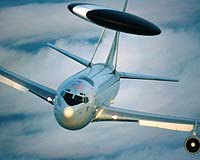 eing has completed a major mission-system upgrade for the NATO Airborne Warning and Control System (AWACS) fleet under the $1.32 billion Mid-Term Modernisation Programme.
Modification of the 17th and final AWACS aircraft was completed on schedule Nov. 3 by the European Aeronautic Defence and Space Company (EADS), as an industry partner and subcontractor to Boeing.
Boeing also delivered two NATO AWACS mission simulators it had modified into the Mid-Term configuration.
"Achieving this milestone represents the culmination of a true international effort by many talented people from across North America and Europe, including the NATO Airborne Early Warning and Control Programme Management Agency, Force Command, the NATO E-3A Component, the U.S Air Force and more than 15 key subcontractors from 12 nations," said Lee Strom, NATO AWACS programs manager for Boeing.
"This has been, and will continue to be, a prime example of how great companies and their customers can work together on a global scale to field a world-class product," Strom added. "NATO AWACS is now the premier airborne surveillance aircraft."
The enhancements provide a superior view of the battlespace by integrating data from various AWACS sensors and other sources, as well as an increase in the number of targets the system can manage at one time.
This highly capable mission system allows NATO AWACS aircraft to receive mission orders from remote locations and updates via satellite data links, and to electronically integrate this information.
The system offers increased interoperability with other AWACS platforms as well as with fighter aircraft, ground stations, ships and satellites.
The enhancements include:
+ New situation display consoles with flat-panel displays and user-friendly navigation
+ An open-architecture mission computing system, allowing cost-effective future upgrades to the hardware and software
+ Multisensor integration that improves the reliability and accuracy of target tracking and identification, and eases operator workload
+ Digital communications systems to improve crew access and use of radio links, including improved over-the-horizon communication via satellite
+ Broad-spectrum VHF radios that will support increased operations with Eastern European nations' air and ground forces
+ An improved friend-or-foe identification system compatible with emerging international air traffic control systems' requirements
+ Upgraded aircraft navigation that takes advantage of the latest Global Positioning System technology.
eing has completed a major mission-system upgrade for the NATO Airborne Warning and Control System (AWACS) fleet under the $1.32 billion Mid-Term Modernisation Programme.
Modification of the 17th and final AWACS aircraft was completed on schedule Nov. 3 by the European Aeronautic Defence and Space Company (EADS), as an industry partner and subcontractor to Boeing.
Boeing also delivered two NATO AWACS mission simulators it had modified into the Mid-Term configuration.
"Achieving this milestone represents the culmination of a true international effort by many talented people from across North America and Europe, including the NATO Airborne Early Warning and Control Programme Management Agency, Force Command, the NATO E-3A Component, the U.S Air Force and more than 15 key subcontractors from 12 nations," said Lee Strom, NATO AWACS programs manager for Boeing.
"This has been, and will continue to be, a prime example of how great companies and their customers can work together on a global scale to field a world-class product," Strom added. "NATO AWACS is now the premier airborne surveillance aircraft."
The enhancements provide a superior view of the battlespace by integrating data from various AWACS sensors and other sources, as well as an increase in the number of targets the system can manage at one time.
This highly capable mission system allows NATO AWACS aircraft to receive mission orders from remote locations and updates via satellite data links, and to electronically integrate this information.
The system offers increased interoperability with other AWACS platforms as well as with fighter aircraft, ground stations, ships and satellites.
The enhancements include:
+ New situation display consoles with flat-panel displays and user-friendly navigation
+ An open-architecture mission computing system, allowing cost-effective future upgrades to the hardware and software
+ Multisensor integration that improves the reliability and accuracy of target tracking and identification, and eases operator workload
+ Digital communications systems to improve crew access and use of radio links, including improved over-the-horizon communication via satellite
+ Broad-spectrum VHF radios that will support increased operations with Eastern European nations' air and ground forces
+ An improved friend-or-foe identification system compatible with emerging international air traffic control systems' requirements
+ Upgraded aircraft navigation that takes advantage of the latest Global Positioning System technology.
eing has completed a major mission-system upgrade for the NATO Airborne Warning and Control System (AWACS) fleet under the $1.32 billion Mid-Term Modernisation Programme.
Modification of the 17th and final AWACS aircraft was completed on schedule Nov. 3 by the European Aeronautic Defence and Space Company (EADS), as an industry partner and subcontractor to Boeing.
Boeing also delivered two NATO AWACS mission simulators it had modified into the Mid-Term configuration.
"Achieving this milestone represents the culmination of a true international effort by many talented people from across North America and Europe, including the NATO Airborne Early Warning and Control Programme Management Agency, Force Command, the NATO E-3A Component, the U.S Air Force and more than 15 key subcontractors from 12 nations," said Lee Strom, NATO AWACS programs manager for Boeing.
"This has been, and will continue to be, a prime example of how great companies and their customers can work together on a global scale to field a world-class product," Strom added. "NATO AWACS is now the premier airborne surveillance aircraft."
The enhancements provide a superior view of the battlespace by integrating data from various AWACS sensors and other sources, as well as an increase in the number of targets the system can manage at one time.
This highly capable mission system allows NATO AWACS aircraft to receive mission orders from remote locations and updates via satellite data links, and to electronically integrate this information.
The system offers increased interoperability with other AWACS platforms as well as with fighter aircraft, ground stations, ships and satellites.
The enhancements include:
+ New situation display consoles with flat-panel displays and user-friendly navigation
+ An open-architecture mission computing system, allowing cost-effective future upgrades to the hardware and software
+ Multisensor integration that improves the reliability and accuracy of target tracking and identification, and eases operator workload
+ Digital communications systems to improve crew access and use of radio links, including improved over-the-horizon communication via satellite
+ Broad-spectrum VHF radios that will support increased operations with Eastern European nations' air and ground forces
+ An improved friend-or-foe identification system compatible with emerging international air traffic control systems' requirements
+ Upgraded aircraft navigation that takes advantage of the latest Global Positioning System technology.
China Set To Buy Up Big Before The Cash Runs Out
China Set To Buy Up Big Before The Cash Runs Out
(NSI News Source I nfo) Hong Kong - December 4, 2008: Ukraine and China have been engaged in negotiations on the joint design of a large military transport aircraft, according to sources in Ukraine's Antonov Aircraft Co. The agreement was expected to be signed this month, with the aircraft project to begin soon afterward.
According to a source in the Ukrainian military industry, the basic design concept of the aircraft already has been finalized. The Chinese military transport aircraft will adopt different design concepts and technologies than the Antonov An-70 transport aircraft designed by the former Soviet republic of Ukraine and the Russian Federation, the source said, and will be powered by four jet engines. Additional technical details of the transport aircraft are to be finalized after the signing.
In recent years the People's Republic of China has greatly reinforced its strategic military ties with Ukraine in a variety of areas, but this is the two countries' first collaboration in developing a large aircraft. A source from the Russian aviation industry told United Press International that China did not ask for Russian assistance on this project, suggesting that China is shifting its design cooperation away from Russia and toward Ukraine. It also indicates that the new aircraft will be an upgrade of the Antonov An-70 air transport rather than a duplication of it.
China expressed keen interest in the Antonov An-70 air transport as early as the mid-1990s, when the aircraft was undergoing flight tests in Russia and Ukraine. The aircraft did not get off to an auspicious start, however. The first Antonov An-70 prototype was tested in Kiev, Ukraine, in December 1994, but the same plane crashed the following year. The second prototype was damaged in an accident at Omsk, Russia, in 2001.
In 2002 Russia and Ukraine agreed to each take a 50-percent stake in the project, and two more prototypes were manufactured. But by April 2006, following the Orange Revolution in Ukraine, Russia decided to withdraw from the project.
The Antonov An-70 air transport is still being tested. The Ukrainian air force appears to be the only buyer, having announced its intent to procure five of the An-70 aircraft. China's decision to design its own large military transport aircraft on the foundation of the Antonov An-70 technologies is apparently intended to take advantage of the extensive testing the aircraft already has undergone, to save research and development time.
The Antonov company source has confirmed the Chinese military transport aircraft will not be fitted with the Antonov An-70's D-27 engine, though it did not disclose what type of engine will be used. The D-27 engine has an output thrust power of 14,000 horsepower, maximum payload of 47 tons and a flight range of 4,050 miles with a payload of 20 tons.
China recently imported 240 D-30 KP-2 engines from Russia to use in upgrading its own, home-produced H-6K bombers. It is unlikely that this engine would be used for the military transport plane, however. Russia is already replacing some of the D-30 KP-2 engines on its Ilyushin Il-76 air-lifter with upgraded D-30 KP-3 or PS-90 engines. The D-30 KP-2 does not meet Europe's latest noise control standards, so the Ilyushin Il-76 military air transport powered by these engines are not allowed to land at European airports.
Why China still can't get its Russian Il-76 air transports
nfo) Hong Kong - December 4, 2008: Ukraine and China have been engaged in negotiations on the joint design of a large military transport aircraft, according to sources in Ukraine's Antonov Aircraft Co. The agreement was expected to be signed this month, with the aircraft project to begin soon afterward.
According to a source in the Ukrainian military industry, the basic design concept of the aircraft already has been finalized. The Chinese military transport aircraft will adopt different design concepts and technologies than the Antonov An-70 transport aircraft designed by the former Soviet republic of Ukraine and the Russian Federation, the source said, and will be powered by four jet engines. Additional technical details of the transport aircraft are to be finalized after the signing.
In recent years the People's Republic of China has greatly reinforced its strategic military ties with Ukraine in a variety of areas, but this is the two countries' first collaboration in developing a large aircraft. A source from the Russian aviation industry told United Press International that China did not ask for Russian assistance on this project, suggesting that China is shifting its design cooperation away from Russia and toward Ukraine. It also indicates that the new aircraft will be an upgrade of the Antonov An-70 air transport rather than a duplication of it.
China expressed keen interest in the Antonov An-70 air transport as early as the mid-1990s, when the aircraft was undergoing flight tests in Russia and Ukraine. The aircraft did not get off to an auspicious start, however. The first Antonov An-70 prototype was tested in Kiev, Ukraine, in December 1994, but the same plane crashed the following year. The second prototype was damaged in an accident at Omsk, Russia, in 2001.
In 2002 Russia and Ukraine agreed to each take a 50-percent stake in the project, and two more prototypes were manufactured. But by April 2006, following the Orange Revolution in Ukraine, Russia decided to withdraw from the project.
The Antonov An-70 air transport is still being tested. The Ukrainian air force appears to be the only buyer, having announced its intent to procure five of the An-70 aircraft. China's decision to design its own large military transport aircraft on the foundation of the Antonov An-70 technologies is apparently intended to take advantage of the extensive testing the aircraft already has undergone, to save research and development time.
The Antonov company source has confirmed the Chinese military transport aircraft will not be fitted with the Antonov An-70's D-27 engine, though it did not disclose what type of engine will be used. The D-27 engine has an output thrust power of 14,000 horsepower, maximum payload of 47 tons and a flight range of 4,050 miles with a payload of 20 tons.
China recently imported 240 D-30 KP-2 engines from Russia to use in upgrading its own, home-produced H-6K bombers. It is unlikely that this engine would be used for the military transport plane, however. Russia is already replacing some of the D-30 KP-2 engines on its Ilyushin Il-76 air-lifter with upgraded D-30 KP-3 or PS-90 engines. The D-30 KP-2 does not meet Europe's latest noise control standards, so the Ilyushin Il-76 military air transport powered by these engines are not allowed to land at European airports.
Why China still can't get its Russian Il-76 air transports
nfo) Hong Kong - December 4, 2008: Ukraine and China have been engaged in negotiations on the joint design of a large military transport aircraft, according to sources in Ukraine's Antonov Aircraft Co. The agreement was expected to be signed this month, with the aircraft project to begin soon afterward.
According to a source in the Ukrainian military industry, the basic design concept of the aircraft already has been finalized. The Chinese military transport aircraft will adopt different design concepts and technologies than the Antonov An-70 transport aircraft designed by the former Soviet republic of Ukraine and the Russian Federation, the source said, and will be powered by four jet engines. Additional technical details of the transport aircraft are to be finalized after the signing.
In recent years the People's Republic of China has greatly reinforced its strategic military ties with Ukraine in a variety of areas, but this is the two countries' first collaboration in developing a large aircraft. A source from the Russian aviation industry told United Press International that China did not ask for Russian assistance on this project, suggesting that China is shifting its design cooperation away from Russia and toward Ukraine. It also indicates that the new aircraft will be an upgrade of the Antonov An-70 air transport rather than a duplication of it.
China expressed keen interest in the Antonov An-70 air transport as early as the mid-1990s, when the aircraft was undergoing flight tests in Russia and Ukraine. The aircraft did not get off to an auspicious start, however. The first Antonov An-70 prototype was tested in Kiev, Ukraine, in December 1994, but the same plane crashed the following year. The second prototype was damaged in an accident at Omsk, Russia, in 2001.
In 2002 Russia and Ukraine agreed to each take a 50-percent stake in the project, and two more prototypes were manufactured. But by April 2006, following the Orange Revolution in Ukraine, Russia decided to withdraw from the project.
The Antonov An-70 air transport is still being tested. The Ukrainian air force appears to be the only buyer, having announced its intent to procure five of the An-70 aircraft. China's decision to design its own large military transport aircraft on the foundation of the Antonov An-70 technologies is apparently intended to take advantage of the extensive testing the aircraft already has undergone, to save research and development time.
The Antonov company source has confirmed the Chinese military transport aircraft will not be fitted with the Antonov An-70's D-27 engine, though it did not disclose what type of engine will be used. The D-27 engine has an output thrust power of 14,000 horsepower, maximum payload of 47 tons and a flight range of 4,050 miles with a payload of 20 tons.
China recently imported 240 D-30 KP-2 engines from Russia to use in upgrading its own, home-produced H-6K bombers. It is unlikely that this engine would be used for the military transport plane, however. Russia is already replacing some of the D-30 KP-2 engines on its Ilyushin Il-76 air-lifter with upgraded D-30 KP-3 or PS-90 engines. The D-30 KP-2 does not meet Europe's latest noise control standards, so the Ilyushin Il-76 military air transport powered by these engines are not allowed to land at European airports.
Why China still can't get its Russian Il-76 air transportsThe dispute over a deal involving China's import of 38 Russian aircraft -- 30 Il-76 transport aircraft and eight Il-78 air-to-air refueling tankers -- has not been completely resolved. The Russian side insists the price of the aircraft, agreed on in a 2005 deal, is no longer viable.
The Ilyushin Il-76 military air transport is still the mainstay export platform for the Russian Federation. Hence the Kremlin has not agreed to transfer its production technology for the large aircraft to the People's Republic of China, nor have the two sides initiated negotiations on this particular issue, according to a source from the Russian aviation industry. It is because of this that China has turned its attention to Ukraine to try to purchase the Antonov An-70 air transport instead.
Alexander Mikheev, vice president of Rosoboronexport, Russia's official defense industry exporter, told United Press International in a recent interview at a British air show that China still intended to pursue the negotiations on the Ilyushin Il-76 military air transport and on the Ilyushin Il-78 air-to-air refueling aircraft, and that the contract for both these purchases was still in effect.
"We demanded to re-discuss the price of the aircraft," said Mikheev. He denied that a price had already been agreed upon, however. "We are only demanding that the new price should be in line with the international standard," he said.
Regarding the timeline of resuming production and assembling the aircraft, he stressed that Russia had already allocated funds to build a new factory at Ulyanovsk, and the production of the Ilyushin Il-76 transport aircraft would begin in 2011.
China does not have much experience in the design and production of large transport aircraft, nor are its current projects in this area proceeding smoothly. An example is the Y8F-600 medium-sized military transport plane, for which the Antonov company in Ukraine agreed in 2002 to provide design assistance.
Even though reports from China claim the plane already has been tested, a source from the Ukrainian aviation industry told UPI that its maiden flight has been put off repeatedly and has yet to take place.
According to the original design, the Y8F-600 is powered by four PW150B turboprop engines produced by Pratt & Whitney Canada, with British R408 propellers. Test engines have been delivered to China from Canada, purportedly for use in civilian aircraft.
Yet because of pressure from the United States to restrict exports of military technology to China, it is questionable whether Canada ultimately will allow the export of enough Pratt & Whitney engines to meet China's production needs. Under this circumstance, China will have no choice but to use Russian or Ukrainian engines in its military transport aircraft.
Subscribe to:
Posts (Atom)