and NATO are in talks with the central Asian nation of Tajikistan about supply routes of non-military equipment to Afghanistan, the country's foreign minister said Wednesday. "Talks are ongoing with the United States and NATO," Tajik Foreign Minister Khamrokhon Zafiri said at a press conference.
"Tajikistan has colossal possibilities, there are five or six bridges on the Tajik-Afghan border over the Panj River for the transport of non-military cargoes," he added. No agreements have yet been signed, but European countries and the United States have offered proposals and foreign officials are to visit Tajikistan soon to conclude the talks, Zafiri said.
Additional Info: Related News
NATO Supplies Get New Route Into Afghanistan
(NSI News Source Info) January 21, 2009:The US Commander in Afghanistan, General David Petraeus, says an agreement has been reached for new overland transport routes into Afghanistan through countries other than Pakistan.
Western troops in Afghanistan had been seeking different ways of getting supplies because convoys were coming under regular attack.
General Petraeus said agreements have been reached for additional logistical routes to Afghanistan through the north.
They were concluded through central Asian states and also Russia, he said.
Currently, most of the NATO supplies are transported overland through Pakistan.
But support for the NATO war effort in Afghanistan is unpopular and supply trucks have increasingly been attacked by local Taliban militants.
Wednesday, January 21, 2009
Tajikistan, US Discuss Afghanistan Supply Route: FM / NATO Supplies Get New Route Into Afghanistan / Russia Will Allow NATO Supplies Through......
Tajikistan, US Discuss Afghanistan Supply Route: FM / NATO Supplies Get New Route Into Afghanistan / Russia Will Allow NATO Supplies Through Afghanistan - Report / NATO Needs To: Close Pakistani Border (Taliban Reinforecement) & Shut Down Opium Trade (Taliban Revenue) - Analyze
(NSI News Source Info) DUSHANBE - January 21, 2009: The United States and NATO are in talks with the central Asian nation of Tajikistan about supply routes of non-military equipment to Afghanistan, the country's foreign minister said Wednesday. "Talks are ongoing with the United States and NATO," Tajik Foreign Minister Khamrokhon Zafiri said at a press conference.
"Tajikistan has colossal possibilities, there are five or six bridges on the Tajik-Afghan border over the Panj River for the transport of non-military cargoes," he added. No agreements have yet been signed, but European countries and the United States have offered proposals and foreign officials are to visit Tajikistan soon to conclude the talks, Zafiri said.
Additional Info: Related News
NATO Supplies Get New Route Into Afghanistan
(NSI News Source Info) January 21, 2009:The US Commander in Afghanistan, General David Petraeus, says an agreement has been reached for new overland transport routes into Afghanistan through countries other than Pakistan.
Western troops in Afghanistan had been seeking different ways of getting supplies because convoys were coming under regular attack.
General Petraeus said agreements have been reached for additional logistical routes to Afghanistan through the north.
They were concluded through central Asian states and also Russia, he said.
Currently, most of the NATO supplies are transported overland through Pakistan.
But support for the NATO war effort in Afghanistan is unpopular and supply trucks have increasingly been attacked by local Taliban militants.
and NATO are in talks with the central Asian nation of Tajikistan about supply routes of non-military equipment to Afghanistan, the country's foreign minister said Wednesday. "Talks are ongoing with the United States and NATO," Tajik Foreign Minister Khamrokhon Zafiri said at a press conference.
"Tajikistan has colossal possibilities, there are five or six bridges on the Tajik-Afghan border over the Panj River for the transport of non-military cargoes," he added. No agreements have yet been signed, but European countries and the United States have offered proposals and foreign officials are to visit Tajikistan soon to conclude the talks, Zafiri said.
Additional Info: Related News
NATO Supplies Get New Route Into Afghanistan
(NSI News Source Info) January 21, 2009:The US Commander in Afghanistan, General David Petraeus, says an agreement has been reached for new overland transport routes into Afghanistan through countries other than Pakistan.
Western troops in Afghanistan had been seeking different ways of getting supplies because convoys were coming under regular attack.
General Petraeus said agreements have been reached for additional logistical routes to Afghanistan through the north.
They were concluded through central Asian states and also Russia, he said.
Currently, most of the NATO supplies are transported overland through Pakistan.
But support for the NATO war effort in Afghanistan is unpopular and supply trucks have increasingly been attacked by local Taliban militants.

China First Reveals Defense Expenditure Figures Of Past 30 Years / White Paper: China's Defense Expenditure Kept At A "Reasonable And Appropriate...."
China First Reveals Defense Expenditure Figures Of Past 30 Years / White Paper: China's Defense Expenditure Kept At A "Reasonable And Appropriate Level" / Full Text: China's National Defense In 2008
(NSI News Source Info) BEIJING - January 21, 2009: China revealed its  defense expenditure figures over the past 30 years for the first time in a white paper here Tuesday, considered an effort to win further international trust through increased transparency.
"Comparing the figures in the past three decades, people will have a clear picture that the country maintained a balance between military expenditure and national economic strength," said Wen Bing, a researcher of Beijing-based Academy of Military Sciences (AMS).
Since 1986, the percentage ratio between China's defense expenditure and gross domestic product (GDP) had never exceeded 2 percent, according to the figures released by the white paper on China's National Defense in 2008, issued by the Information Office of the State Council. This ratio had dropped in 19 years out of the past three decades.
In 2007, the same ratio of the United States was 4.5 percent. It was 2.7 in Britain and 2.57 in Russia.
In addition, the percentage ratio between the defense expenditure and the central government expenditure had remained below 10 percent since 1985, except 1992.
This ratio also decreased in 19 years out of the past three decades.
"Although the exact number of expense expenditure rose in the past 30 years, it has taken up an appropriate part of the whole expenditure," Wen said.
The military expense rose from 16.78 billion yuan (2.43 billion U.S. dollar at the current exchange rate) in 1978 to 355.49 billion yuan (51.52 billion dollars) in 2007.
"I believe through these figures the world will have a better understanding on China's defense policy," Wen said.
In the white paper, the country clearly stated that it will stick to a defensive national defense policy.
There are several other figures that were released by the white paper for the first time.
One of them was that the militia members total shrank to 8 million now from 10 million in 2006.
The white paper also first introduced the framework of China's border police force. It was made up of 30 provincial police units,110 city-level units, 310 county-level units, 20 marine units, 207land border checkpoints and 1,691 township-level stations.
"The white paper introduced to the rest of the world China's perspective of national defense development. This has showed its sincerity to improve mutual trust and reduce concerns of the international society," said Chen Zhou, another AMS researcher.
In a TV live broadcast, Chinese defence ministry spokesman Sr. Col. Hu Changming introduces a white paper on China's National Defense in 2008 at a press conference in Beijing, Jan. 20, 2009. The white paper was issued by the Information Office of the State Council Tuesday.
China's National Defense in 2008
Information Office of the State Council of the People's Republic of China
January 2009, Beijing
Contents
Preface
I. The Security Situation
II. National Defense Policy
III. Reform and Development of the PLA
IV. The Army
V. The Navy
VI. The Air Force
VII. The Second Artillery Force
VIII. The People's Armed Police Force
IX. National Defense Reserve Buildup
X. The Armed Forces and the People
XI. Science, Technology and Industry for National De-fense
XII. Defense Expenditure
XIII. International Security Cooperation
XIV. Arms Control and Disarmament
Appendix I Major International Exchanges of the Chinese Military (2007-2008)
Appendix II Joint Exercises and Training with Foreign Armed Forces (2007-2008)
Appendix III China's Participation in UN Peacekeeping Operations
Appendix IV Imports and Exports of Seven Major Types of Conventional Arms of the PRC (2007)
Appendix V Defense Expenditure of the PRC (1978-2007)
Appendix VI Major Military Regulations Issued in 2007 and 2008
[1] [2] [3] [4] [5] [6] [7] [8] [9] [10][11] [12] [13] [14] [15] (Click the numbers accordingly)
defense expenditure figures over the past 30 years for the first time in a white paper here Tuesday, considered an effort to win further international trust through increased transparency.
"Comparing the figures in the past three decades, people will have a clear picture that the country maintained a balance between military expenditure and national economic strength," said Wen Bing, a researcher of Beijing-based Academy of Military Sciences (AMS).
Since 1986, the percentage ratio between China's defense expenditure and gross domestic product (GDP) had never exceeded 2 percent, according to the figures released by the white paper on China's National Defense in 2008, issued by the Information Office of the State Council. This ratio had dropped in 19 years out of the past three decades.
In 2007, the same ratio of the United States was 4.5 percent. It was 2.7 in Britain and 2.57 in Russia.
In addition, the percentage ratio between the defense expenditure and the central government expenditure had remained below 10 percent since 1985, except 1992.
This ratio also decreased in 19 years out of the past three decades.
"Although the exact number of expense expenditure rose in the past 30 years, it has taken up an appropriate part of the whole expenditure," Wen said.
The military expense rose from 16.78 billion yuan (2.43 billion U.S. dollar at the current exchange rate) in 1978 to 355.49 billion yuan (51.52 billion dollars) in 2007.
"I believe through these figures the world will have a better understanding on China's defense policy," Wen said.
In the white paper, the country clearly stated that it will stick to a defensive national defense policy.
There are several other figures that were released by the white paper for the first time.
One of them was that the militia members total shrank to 8 million now from 10 million in 2006.
The white paper also first introduced the framework of China's border police force. It was made up of 30 provincial police units,110 city-level units, 310 county-level units, 20 marine units, 207land border checkpoints and 1,691 township-level stations.
"The white paper introduced to the rest of the world China's perspective of national defense development. This has showed its sincerity to improve mutual trust and reduce concerns of the international society," said Chen Zhou, another AMS researcher.
Additional: Related Info
Full Text: China's National Defense In 2008
(NSI News Source Info) BEIJING - January 21, 2009: The Information Office of China's State Council on Tuesday issued a white paper titled "China's National Defense in 2008". Following is the full text of the document: 
Eurocopter Warns Of Falling Orders In 2009 / Eurocopter Seeks U.S. Partners for Projects
Eurocopter Warns Of Falling Orders In 2009 / Eurocopter Seeks U.S. Partners for Projects
(NSI News Source Info) Paris - January 21, 2009: Eurocopter is looking for American partners on a proposed European heavy-lift helicopter and its bid for the U.S. Army's Armed Reconnaissance Helicopter (ARH), CEO Lutz Bertling said Jan. 20.
The European helicopter maker, an EADS subsidiary, is in early talks with Boeing and Sikorsky as potential partners for a Future Transport Helicopter, he told a New Year's press conference here.
France and Germany support the large helicopter project, which is one of the top priorities of the European Defence Agency's head, Alexander Weis, Bertling said.
"There is some trans-Atlantic work to be done," he said, with the possibility of common standardization between American and European programs. Eurocopter is in contact with American original equipment manufacturers, excluding Bell, to explore the potential for a "joint business opportunity," he said.
The talks were at a preliminary stage, consisting of design discussions, and were being held with Boeing and Sikorsky, said Philippe Harache, Eurocopter executive vice president for customer relations.
Eurocopter also is looking for an American partner to supply military mission systems for the new tender for the ARH program, Bertling said. Eurocopter would supply the airframe to EADS North America, which would act as the prime contractor.  Eurocopter has responded to the U.S. government's request for industry views with the single-engine EC145 and a double-engined aircraft for the ARH competition. A twin-engined product better matched the requirement, Bertling said. There were, however, logistical benefits of choosing the EC145,which has been delivered to the U.S. Army under the LUH 72 program and is under evaluation by the U.S. Navy, he said.
In India, Eurocopter is bidding for a requirement for 197 Army attack helicopters and a reconnaissance and surveillance aircraft. Eurocopter won the tender for 197 units in 2007, but the government reset the competition after an appeal from Bell. The European company also hopes to sell its NH90 to meet the Indian Navy's need for shipborne helicopters.
In Japan, Eurocopter is campaigning to sell about 100 NH90s to the Army, Navy and Air Force, Harache said. A recent order of EC135s by the Navy marked the first buy of non-American helicopters by the Japanese armed forces, he said.
The NH90 program is "margin- and cash-positive," Bertling said. The program is on a fixed and firm contract, and the first deliveries must absorb cost overruns incurred by the lateness of the aircraft, he said. That meant profitability on the NH90 was lower than predicted, he said. No extra provisions were taken on the NH90 in 2008.
Eurocopter flew an unpiloted, fully autonomous EC155 last year as part of a classified UAV project for the French Ministry of Defense, Bertling said.
The company is preparing to support the French Army's deployment of the Tiger combat helicopter in Afghanistan in the second quarter of the year, Bertling said.
Eurocopter increased its 2008 operating profit over the previous year's 211 million euros ($279.8 million). Bertling declined to give the amount but said he was "satisfied" by the increase.
Annual sales rose 7.5 percent to 4.5 billion euros from 4.17 billion in 2007, and deliveries rose 20 percent to 588 units from 488.
New orders fell to 4.9 billion euros after the record 6.6 billion booked in the previous year. The order backlog was worth 14 billion euros, or 1,550 units, with 71 percent signed with military or government clients, reducing the risk of cancellations, he said.
Some 18 percent of the backlog, however, faces cancellations in view of the economic crisis. Among the leading indicators the company tracks is the second-hand luxury yacht market for market intelligence on sales of VIP helicopters. Sales of VIP aircraft make up about 20 percent to 25 percent of orders, Harache said.
Eurocopter expects to sell about 450 helicopters this year. That figure includes the 22 and 50 NH90s ordered in December, respectively, by France and Brazil, worth 380 million and 1.8 billion euros, Bertling said.
The company will manage cash carefully, with a view to selectively helping customers finance their purchases. Eurocopter will boost research and development spending by 20 percent this year, despite the economic climate, Bertling said.
Eurocopter has responded to the U.S. government's request for industry views with the single-engine EC145 and a double-engined aircraft for the ARH competition. A twin-engined product better matched the requirement, Bertling said. There were, however, logistical benefits of choosing the EC145,which has been delivered to the U.S. Army under the LUH 72 program and is under evaluation by the U.S. Navy, he said.
In India, Eurocopter is bidding for a requirement for 197 Army attack helicopters and a reconnaissance and surveillance aircraft. Eurocopter won the tender for 197 units in 2007, but the government reset the competition after an appeal from Bell. The European company also hopes to sell its NH90 to meet the Indian Navy's need for shipborne helicopters.
In Japan, Eurocopter is campaigning to sell about 100 NH90s to the Army, Navy and Air Force, Harache said. A recent order of EC135s by the Navy marked the first buy of non-American helicopters by the Japanese armed forces, he said.
The NH90 program is "margin- and cash-positive," Bertling said. The program is on a fixed and firm contract, and the first deliveries must absorb cost overruns incurred by the lateness of the aircraft, he said. That meant profitability on the NH90 was lower than predicted, he said. No extra provisions were taken on the NH90 in 2008.
Eurocopter flew an unpiloted, fully autonomous EC155 last year as part of a classified UAV project for the French Ministry of Defense, Bertling said.
The company is preparing to support the French Army's deployment of the Tiger combat helicopter in Afghanistan in the second quarter of the year, Bertling said.
Eurocopter increased its 2008 operating profit over the previous year's 211 million euros ($279.8 million). Bertling declined to give the amount but said he was "satisfied" by the increase.
Annual sales rose 7.5 percent to 4.5 billion euros from 4.17 billion in 2007, and deliveries rose 20 percent to 588 units from 488.
New orders fell to 4.9 billion euros after the record 6.6 billion booked in the previous year. The order backlog was worth 14 billion euros, or 1,550 units, with 71 percent signed with military or government clients, reducing the risk of cancellations, he said.
Some 18 percent of the backlog, however, faces cancellations in view of the economic crisis. Among the leading indicators the company tracks is the second-hand luxury yacht market for market intelligence on sales of VIP helicopters. Sales of VIP aircraft make up about 20 percent to 25 percent of orders, Harache said.
Eurocopter expects to sell about 450 helicopters this year. That figure includes the 22 and 50 NH90s ordered in December, respectively, by France and Brazil, worth 380 million and 1.8 billion euros, Bertling said.
The company will manage cash carefully, with a view to selectively helping customers finance their purchases. Eurocopter will boost research and development spending by 20 percent this year, despite the economic climate, Bertling said.
India Test Fires BrahMos Cruise Missile From Pokhran / India Tests Land-Attack BrahMos Missile
India Test Fires BrahMos Cruise Missile From Pokhran / India Tests Land-Attack BrahMos Missile
(NSI News Source Info) NEW DELHI - January 21, 2009: India test-fired its land-attack version of the BrahMos supersonic cruise missile on Jan. 20, in the Rajasthan desert bordering Pakistan,  Defence Ministry officials here said. The nuclear-capable missile, which travels at Mach 2.8, has a range of 293 kilometers.
(Photo/Image: Indian Army BrahMos missiles are seen during the Army Day parade in New Delhi on January 15. Courtesy: Prakash Singh / AFP)
The land-attack BrahMos will give Indian firepower a quantitative jump once the missile has been inducted into Army service in the next one to two years, an Indian Army official said. The missile can be fired within two minutes, compared with the short-range Prithvi missile, which takes about 10 to 15 minutes to launch, the official said.
The land-attack version of the BrahMos uses thermal sensors for quick capability, the Army official said. The service plans to induct three batteries, each with four road-mobile autonomous launchers on 12-wheel-drive Tata vehicles to use for precision strike.
The Jan. 20 test was the fifth for the land-attack version of the BrahMos, jointly developed by India and Russia. The supersonic anti-ship BrahMos cruise missile was already inducted into the Indian Navy's arsenal, and the air version is in the last phase of flight trials. It eventually will be fitted on the Air Force's Sukhoi multirole aircraft.
The Army already has the Prithvi missile, with a range of 250 kilometers; the Agni-I missile, with a 700-kilometer range; and the 2,000-kilometer-range Agni-II missile.
Defence Ministry officials here said. The nuclear-capable missile, which travels at Mach 2.8, has a range of 293 kilometers.
(Photo/Image: Indian Army BrahMos missiles are seen during the Army Day parade in New Delhi on January 15. Courtesy: Prakash Singh / AFP)
The land-attack BrahMos will give Indian firepower a quantitative jump once the missile has been inducted into Army service in the next one to two years, an Indian Army official said. The missile can be fired within two minutes, compared with the short-range Prithvi missile, which takes about 10 to 15 minutes to launch, the official said.
The land-attack version of the BrahMos uses thermal sensors for quick capability, the Army official said. The service plans to induct three batteries, each with four road-mobile autonomous launchers on 12-wheel-drive Tata vehicles to use for precision strike.
The Jan. 20 test was the fifth for the land-attack version of the BrahMos, jointly developed by India and Russia. The supersonic anti-ship BrahMos cruise missile was already inducted into the Indian Navy's arsenal, and the air version is in the last phase of flight trials. It eventually will be fitted on the Air Force's Sukhoi multirole aircraft.
The Army already has the Prithvi missile, with a range of 250 kilometers; the Agni-I missile, with a 700-kilometer range; and the 2,000-kilometer-range Agni-II missile.
China Calls For Closer Defence Ties / China Calls on Obama to Strengthen Military Ties / US Urged To Repair Military Ties, Stop Selling Weapons....
China Calls For Closer Defence Ties / China Calls on Obama to Strengthen Military Ties / US Urged To Repair Military Ties, Stop Selling Weapons To Taiwan
(NSI News Source Info) BEIJING - January 21, 2009: China called for stronger  military ties with the U.S. on Jan. 20, just hours before Barack Obama was to take power in Washington.
Beijing said there were currently "difficulties" in military relations between the two nations and urged the U.S. to remove obstacles to an improved relationship.
"In this new period, we hope that both China and the US could make joint efforts to create favorable conditions and improve and promote military-to-military relations," Ministry of Defense spokesman Col. Hu Changming told reporters.
"We call on the U.S. to remove the obstacles to the growth of military relations between the two countries and to create favourable conditions for the healthy growth of military relations."
Hu did not specify the nature of these obstacles, but China has repeatedly demanded that the U.S. cuts its military links with Taiwan.
Last month, China's defense minister called on the U.S. to drop a planned weapons sale to Taiwan, saying it threatened Sino-U.S. defense cooperation.
The Pentagon notified Congress in October that it planned to sell $6.5 billion of military hardware to Taiwan, Beijing's longtime diplomatic rival.
"China-U.S. military relations in the past 30 years show that only when the two sides have taken full account of each others' core interests and concerns could the two sides enjoy firm political basis for military-to-military relations," Hu said Tuesday.
military ties with the U.S. on Jan. 20, just hours before Barack Obama was to take power in Washington.
Beijing said there were currently "difficulties" in military relations between the two nations and urged the U.S. to remove obstacles to an improved relationship.
"In this new period, we hope that both China and the US could make joint efforts to create favorable conditions and improve and promote military-to-military relations," Ministry of Defense spokesman Col. Hu Changming told reporters.
"We call on the U.S. to remove the obstacles to the growth of military relations between the two countries and to create favourable conditions for the healthy growth of military relations."
Hu did not specify the nature of these obstacles, but China has repeatedly demanded that the U.S. cuts its military links with Taiwan.
Last month, China's defense minister called on the U.S. to drop a planned weapons sale to Taiwan, saying it threatened Sino-U.S. defense cooperation.
The Pentagon notified Congress in October that it planned to sell $6.5 billion of military hardware to Taiwan, Beijing's longtime diplomatic rival.
"China-U.S. military relations in the past 30 years show that only when the two sides have taken full account of each others' core interests and concerns could the two sides enjoy firm political basis for military-to-military relations," Hu said Tuesday.
Additional Info: Related Topic
US Urged To Repair Military Ties, Stop Selling Weapons To Taiwan
(NSI News Source Info) January 21, 2009: China Tuesday urged the US to take concrete steps to put bilateral military ties back on track after relations were derailed because of Pentagon's arms sales to Taiwan last year.
The Barack Obama administration should clear the way for improved military ties, a spokesman for the Ministry of National Defense said yesterday.
Announcing the publication of the sixth defense white paper since 1998, Hu Changming told a news briefing: "The US president-elect Obama will take office in a few hours and current US Defense Secretary Robert Gates will keep his job ... At present, when bilateral military ties face difficulties, we urge the US Defense Department to remove obstacles and take action to create favorable conditions for the healthy development of ties."
"Only when both countries respect each other's core interests can we consolidate the political base of our military relations," he said. 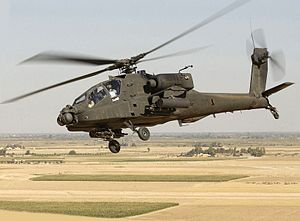 China suspended high-level military contact with the US in October in protest against Pentagon's $6.5-billion arms sales to Taiwan, which included 30 Apache attack helicopters and 330 Patriot missiles.
It was the largest arms sale to Taiwan since China and the US signed the August 17 Communiqu in 1982, in which the US agreed to gradually reduce sale of weapons to the island.
Last month, though, Obama said Sino-US military exchanges should continue. He said he even wanted to "resume laboratory-to-laboratory exchanges that were terminated in the 1990s".
US Navy Admiral Timothy Keating, who commands forces in Asia and the Pacific, said last month that he hoped the two countries would resume military contacts after China sent three of its navy ships to tackle pirates off Somali waters.
The defense white paper says China's security environment "continues to improve" with cross-Straits relations having "taken a significantly positive turn". But it criticizes US arms sales to the island, saying it is "seriously harming Sino-US relations, as well as peace and stability across the Taiwan Straits".
China is worried over the US' increased "strategic attention to and input in the Asia-Pacific region", the paper says.
The country is committed to peaceful development, the paper says. Despite the increase in military spending, China's per capita expenditure is much less than that of the US, Britain, France or Russia.
China suspended high-level military contact with the US in October in protest against Pentagon's $6.5-billion arms sales to Taiwan, which included 30 Apache attack helicopters and 330 Patriot missiles.
It was the largest arms sale to Taiwan since China and the US signed the August 17 Communiqu in 1982, in which the US agreed to gradually reduce sale of weapons to the island.
Last month, though, Obama said Sino-US military exchanges should continue. He said he even wanted to "resume laboratory-to-laboratory exchanges that were terminated in the 1990s".
US Navy Admiral Timothy Keating, who commands forces in Asia and the Pacific, said last month that he hoped the two countries would resume military contacts after China sent three of its navy ships to tackle pirates off Somali waters.
The defense white paper says China's security environment "continues to improve" with cross-Straits relations having "taken a significantly positive turn". But it criticizes US arms sales to the island, saying it is "seriously harming Sino-US relations, as well as peace and stability across the Taiwan Straits".
China is worried over the US' increased "strategic attention to and input in the Asia-Pacific region", the paper says.
The country is committed to peaceful development, the paper says. Despite the increase in military spending, China's per capita expenditure is much less than that of the US, Britain, France or Russia.Tuesday, January 20, 2009
Farewell To President Bush, God Bless The USA
George W. Bush As The 43rd President Of The United States Of America....Job Well Done, Considering the Challenges - President Bush Carried Out His Duties With Calm, Honesty, And The Best Intentions
Why His Critics Are Wrong
(NSI News Source Info) January 20, 2009: When George W. Bush was governor of the state of Texas, he quickly gained marked popularity among constituents. He wasn't long into his first term before many began to hope he would have presidential aspirations. Little did they know, he already had.
When he was re-elected to his second term in November 1998, he became the first governor in Texas history to be elected to consecutive four-year terms. Of course his being elected to the Presidency of the United States of America was a victory for American conservatives, but it was also an indication that many wanted someone in the White House who cared about the issues that would make America better: socially and economically.
America was very fortunate that President Bush was the Commander in Chief in September 2001. Terrorists like the evil ones that attacked America on September 11 count on there being someone in charge who will fold to accommodate them, who will sympathize with their ridiculous messages and who will appease them in the false hope that they will leave American people alone. President Bush was not that person, and they hated it.
President Bush greets President-elect Barack Obama on the North Portico of the White House, January 20, 2009.
President George W Bush.
It's fair to state that President Bush has faced challenges that few who served have. When President Bush took office in 2001, he inherited a recession. Then there were the exposure and prosecution of corporate greed and corruption by Enron, WorldCom, and others. And then there was the largest attack ever on America, by al Qaeda on 9/11, which was followed by a well thought out and swift response.
This wonderful man with good sense of humor has been the leader of the free world for almost 8 years now and during that time President Bush has accomplished many achievements.
Standing Firm
At a time when almost all the world’s leaders were going crazy and ratifying the Kyoto Protocol, President Bush stood firm and made the correct decision…he did not ratify Kyoto. What President Bush realised was climate change was a natural process and had nothing to do with CO2 emissions. Bush understood that any targets in reducing CO2 emissions would have no effect on the climate and would only serve to harm businesses.
World Security
His Presidency saw a rise in terrorism by al-Qaeda and many countries around the world had a problem with dealing with terrorists. President Bush kindly offered to deal with the terrorists for them. He rounded them up and placed them in a detention centre called Guantanamo Bay. This of course made the world a much safer place.
Iraq
Saddam Hussein, former dictator of Iraq, failed to comply with 11 UN Resolutions so President Bush had no choice but to liberate the Iraqi people from a brutal, evil man and rid Iraq of terrorist groups. Iraq was not an overnight success but President Bush has decided to stay the course until the job is done and not cut and run like some of our so-called allies have done.I consider President Bush to be one of the greatest Presidents of all time. He stood firm against the climate nutters; he made the world a safer place; he liberated the Iraqi people; he pointed out to the world, the axis of evil; and of course he had many more achievements, too many to put in a small blog article.
France May Develop Short-Range SAM With India / France Hopes To Develop SR-SAM With India
France May Develop Short-Range SAM With India / France Hopes To Develop SR-SAM With India
(NSI News Source Info) January 20, 2009: France wants to develop a new short-range surface-to-air missile (SR-SAM) in cooperation with India. Negotiations are nearing conclusion, according to Jean-David Levitte, Diplomatic Adviser to French President Nicolas Sarkozy.  Trishul is the name of a short range surface-to-air missile developed by India as a part of the Integrated Guided Missile Development Program. It has a range of 9 km and is fitted with a 5.5 kg warhead. Designed to be used against low-level (sea skimming) targets at short range, the system has been developed to defend naval vessels against missiles and also as a short range surface to air missile on land. Guidance consists of three different guiding beams, with the guidance handed over progressively to a narrower beam as the missile approaches the target. According to reports, the range of the missile is 12 km and is fitted with a 15 kg warhead. The weight of the missile is 130 kg. The length of the missile is 3.1 m. Development costs of the missile touched almost $70 million to the taxpayers.India had Officially shut down Trishul Missile project on February 27,2008.
This new system may be the Maitri, which may incorporate technology from India's Trishul SAM and MBDA's MICA. India' state-run Defense Research and Development Organization (DRDO) released a global RFP for co-development of SR-SAM system.
Levitte said the process to secure a foreign partner is underway. India recently announced orders for the Akash, another indigenously designed missile, and the Israeli-built SPYDER.
Austrian Army Orders 150 IVECO Light Multirole Vehicles / Italy's IVECO-Defence Vehicle Division (DVD) To Supply 150 Light Multirole Vehicles.....
Austrian Army Orders 150 IVECO Light Multirole Vehicles / Italy's IVECO-Defence Vehicle Division (DVD) To Supply 150 Light Multirole Vehicles (LMVs) To Austrian Army
(NSI News Source Info) WIEN - January 20, 2009: On January 14th, 2009, Defence Minister Mag. Norbert Darabos announced that on December 29th, 2009 the Austrian Ministry of Defence and IVECO Defence Vehicles signed a contract for the delivery of 150 Light Multirole Vehicles (LMV) in 7 different configurations and related logistics support.
By a specific request of the customer, all the vehicles are equipped with a ELBIT weapon station. During the press conference, Defence Minister Mag. Norbert Darabos underlined that award of contract had been made following a competitive procurement, according to the principle of the best bidder. 
The Light Multirole Vehicle (LMV) is a completely new type of 4x4 on / off-road tactical vehicle.
The development of the Light Multirole Vehicle (LMV) illustrates IVECO DVD's outstanding ability to undertake rapid vehicle development programmes and to meet a range of threat levels. This completely new type of 4x4 on/off road tactical vehicle combines the roles of peacekeeping with peacemaking and follows the unique principles of “Dual Role” technology developed by IVECO. Under this concept vehicles are capable of operating with either varying levels of protection or in an unprotected state depending on the assessed threat. Protection is added without changing the external appearance of the vehicle, or affecting its automotive performance. From the outset, LMV was designed to incorporate high tactical mobility with high maximum road speed and optimal off-road and cross-country performance. It has high protection levels against anti tank and anti personnel mines with an emphasis on crew protection rather than vehicle integrity. The inherent stealthy design ensures low probability of detection from optical, thermal imaging or radar sensors. Already selected for front line duties by British, Italian and Belgian forces and with a confirmed order book already in excess of 3,000 vehicles, LMV is without question the light tactical vehicle of choice for the 21st century.
It was not the better-priced vehicle to be selected, but selection was made according to the best cost-performance ratio. IVECO DV was better-performing and better-priced – also declared Mag. Norbert Darabos.
IVECO’s Sales & Marketing Director, Flavio Marchesoni, stated: “This contract rewards our commitment to meet customers’ requirements through a programme of continuous development and innovation. In particular, the LMV offered to the Austrian Army incorporates the latest technology and enhancements to performance and protection”.
The Light Multirole Vehicle
Designed to offer high tactical mobility together with high maximum road speed and optimal off-road and cross-country performance, the LMV has high protection levels against anti tank and anti personnel mines with an emphasis on crew protection rather than vehicle integrity.
High reliability, ease of maintenance and low through life costs were key considerations during the design of LMV. Built in and external diagnostics allow timely identification of impending malfunctions, allowing preventive maintenance to be undertaken, whilst the facility to collect functional data allows effective whole fleet management.
The use of Commercial off the Shelf main assemblies such as the gearbox and engine ensure that performance and reliability have been proven over many millions of road miles in demanding environmental conditions.
Key-features of the LMV:
-- On and off road mobility
-- Crew comfort and safety
-- Vehicle versatility
-- High protection against mines and ballistic weapons
-- Suitable for numerous weapon system installations
Some figures on the LMV:
--Production output in 2008: 950 units
--The LMV was selected for front line duties by:
* Italy: 1260 units
* UK: 401 units
* Spain: 120 units
* Norway: 60 units
* Belgium: 440 units
* Croatia: 10 units
* Czech Republic: 19 units
* Austria: 150 units
--Facts about the LMV:
List of attacks performed against the LMV since the beginning of operations in Afghanistan. On each occasion, the vehicle proved to play a decisive role in saving the life of the crew:
* October 18th 2008,
* September 19th 2008,
* September, 7th 2008,
* September, 3rd 2008,
* July, 10th 2008,
* February, 23rd 2008,
* September 2007,
* March 2007
Brazil Exports Naval Ship To Namibia / Brazil Will Supply Namibian Navy With A Patrol Ship And Two Patrol Boats - Report
Brazil Exports Naval Ship To Namibia / Brazil Will Supply Namibian Navy With A Patrol Ship And Two Patrol Boats - Report
(NSI News Source Info) BRASILIA - January 20, 2009: As a result of the tightening of relations between the governments of Brazil and Namibia, an agreement was signed in June 2004 for the supply of a patrol ship and two patrol boats to the navy of this African country.
The patrol ship, christened “Brendan Simbwaye” and armed with cannons and machine guns, is 46.5 meters long, can reach a maximum speed of 27 knots, and will be used to patrol and monitor Namibia’s coastline.
In 2009 handed patrol vessel "Brendan Simbwaye" commissioned by the Navy Emgepron Namibia equal to the hull of the class NPA Grajaú. This is the first ship to be built by a private yard in Brazil to sell a vessel of war to a friend of Brazil.
The project was managed by EMGEPRON, a public company tied to the Brazilian Navy, which guaranteed the ship’s quality as well as the armament installation and will provide logistic support to the Namibian navy.
For the construction of the vessels, the government of Namibia selected Indústria Naval do Ceará - INACE, based in Fortaleza, which had acquired the necessary know-how and technology by building Grajau-class patrol boats for the Brazilian Navy. 
Since its founding the Brazilian Navy is the customer site. Between years 1996 to 2000 the INAC set another milestone in the construction of belonaves in Brazil with the construction of patrol vessels "Guanabara" and "Guarujá" Class Grajaú. The Brazilian Navy has a fleet of 12 vessels built under the same project and INAC was the only national private yard to deliver the vessels on time. The other boats were built in a German yard (six boats) and the other four were completed by the Navy Arsenal in Rio de Janeiro. In 2009 handed patrol vessel "Brendan Simbwaye" commissioned by the Navy Emgepron Namibia equal to the hull of the class NPA Grajaú. This is the first ship to be built by a private yard in Brazil to sell a vessel of war to a friend of Brazil.
This successful initiative, in addition to generating employment, developing production as well as naval technologies, also opens new perspectives for the export of naval ships, and will thus contribute to the expansion of the country’s defence industry.
The patrol boat “Brendan Simbwaye” will be commissioned into the Namibian Navy on January 16, 2009, and a ceremony will be held at the INACE shipyard in the presence of the authorities including Governor of the state of Cearà, the Defence Ministers of Brazil and Namibia, the Brazilian Minister of Development, Industry and Foreign Trade; the commanders of the Brazilian and Namibian navies; and the Prefect of Fortaleza.
General characteristics:
-- displacement: 197 tonnes empty, 217 tonnes loaded;
-- Length: 46.5 meters, beam 7.5 meters and draught 2.3 meters;
-- propulsion: 2 MTU 16V 396 TB94 diesel engines rated at 2,740 bhp each, coupled to two shafts with fixed-pitch, three-bladed propellers.
-- fuel: 23 tonnes.
-- maximum speed: 26.5 knots; cruise speed: 22 knots.
-- range: 2,200 nautical miles at 12 knots (10 days).
Russia Delivers Third Su-30 To Indonesia / The Third Su-30MK2 For Indonesian Air Force
Russia Delivers Third Su-30 To Indonesia / The Third Su-30MK2 For Indonesian Air Force
(NSI News Source Info) January 20, 2009: JSC “Komsomolsk-on-Amur Aircraft Production Association named after Yury Gagarin” (KNAAPO) delivered the third Su-30MK2 fighter to Indonesia under the contract dated 23.07.2008 for the delivery of six aircraft - three Su-30MK2 and three Su-27SKM – to the Indonesian Air Force. 
The Sukhoi Su-30MK2 is a more advanced modification that includes maritime strike capability. Current operators are the People's Liberation Army Air Force, the People's Liberation Army Naval Air Force, the Venezuelan Air Force, and the Indonesian Air Force (TNI AU).
They plan to reassemble and fly out the newly delivered aircraft before January 22nd. In last December two Su-30MK2 fighters were delivered to the Air Force of Indonesia. The Su-27SKMs are planned for delivery in 2009-2010.
Together with four early-bought Russian fighters the new ones are to form an air squadron [based] in Makasar.
Indonesia bought four fighters – two Su-30MK2 and two Su-27SKM – in 2003. The first flight tests of the new fighters were held on the 6th of January at “Hasanuddyn” airbase on Sulawesi. The official ceremony of the Russian fighters delivery to the Indonesian Air Force is scheduled until the end of January in Makasar.
Subscribe to:
Posts (Atom)