Tuesday, July 08, 2008

Pakistan Army & Pervez Musharraf

Pakistan denies Musharraf, army sent centrifuges to North Korea July 8, 2008: Pakistan's top nuclear authority Saturday rejected claims by disgraced atomic scientist Abdul Qadeer Khan that the army and President Pervez Musharraf sent centrifuges to North Korea in 2000. Lieutenant General Khalid Kidwai, head of the Strategic Planning Division (SPD), told a select group of reporters there was "enough evidence" about the proliferation network that Khan had run from 1987. Kidwai reiterated that there had been no involvement by the army, Musharraf, SPD or the Inter Services Intelligence (ISI) spy agency in the transfer of centrifuges to North Korea. The briefing followed media interviews with Khan in which he made the claim which Kidwai said was damaging the national interest. "Technically, yes it happened in his (Musharraf) tenure, but giving an impression that he or the army was aware or supervised it is wrong," Kidwai said. "I would like to categorically say it is absolutely wrong, false." He said they had evidence about Khan's network which was dismantled more than four years ago and "we can produce it in camera at any level--- court, parliamentary committee, tribunal or any group of people." Kidwai said a dozen centrifuges -- used for enriching uranium -- were sent to North Korea by Khan's network in 2000 and one was sent several years earlier. He said the government got suspicious about Khan's activities around the same time which finally led to his termination as head of the country's main nuclear research laboratory in 2001. Khan was pardoned by Musharraf in 2004 after making a televised statement admitting to passing nuclear secrets to Iran, North Korea and Libya but has not been allowed out in public. However, after Musharraf's allies lost general elections in February, Khan retracted his confession and said that it was forced. The new government has recently relaxed restrictions on Khan, including allowing him to meet friends at a scientific institute and take phone calls, although he remains effectively confined to his house.

Toyota Motor - News

Toyota To Equip Prius With Solar Panels Tokyo July 08, 2008: Japan's Toyota Motor plans to add solar panels to its popular Prius hybrid early next year to power the vehicle's air conditioning, a newspaper report said Monday. As part of a complete design makeover, the Prius will be fitted with rooftop solar panels on its high-end models, the Nikkei economic daily said without naming sources. If it happens, Toyota, in a close race with General Motors for the title of the world's top automaker, would be the first major carmaker to use a solar power generation system on a mass-produced vehicle. Toyota rolled out the Prius in 1997 as the first mass production petrol-electric hybrid. It was redesigned in 2003 and a third-generation Prius is widely expected to come soon. Toyota declined to confirm the Nikkei report. "We cannot comment on our product planning," a company spokesman said. The Nikkei said the solar panels on the roof would supply part of the power needed for the vehicle's air conditioning. The carmaker plans to produce some 450,000 Priuses at home in 2009, up 60 percent from 2007, the Nikkei said.

The Human Brain

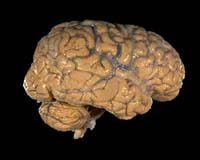
New Map IDs The Core Of The Human Brain (NSI News Source Info) July 8, 2008: An international team of researchers has created the first complete high-resolution map of how millions of neural fibers in the human cerebral cortex -- the outer layer of the brain responsible for higher level thinking -- connect and communicate. Their groundbreaking work identified a single network core, or hub, that may be key to the workings of both hemispheres of the brain. The work by the researchers from Indiana University, University of Lausanne, Switzerland, Ecole Polytechnique Federale de Lausanne, Switzerland, and Harvard Medical School marks a major step in understanding the most complicated and mysterious organ in the human body. It not only provides a comprehensive map of brain connections (the brain "connectome"), but also describes a novel application of a non-invasive technique that can be used by other scientists to continue mapping the trillions of neural connections in the brain at even greater resolution, which is becoming a new field of science termed "connectomics." "This is one of the first steps necessary for building large-scale computational models of the human brain to help us understand processes that are difficult to observe, such as disease states and recovery processes to injuries," said Olaf Sporns, co-author of the study and neuroscientist at Indiana University. The findings appear in the journal PLoS Biology. Co-authors include Patric Hagmann and Reto Meuli, University Hospital Center and University of Lausanne; Leila Cammoun and Xavier Gigandet, Ecole Polytechnique Federale de Lausanne; Van J. Wedeen, Massachusetts General Hospital and Harvard Medical Center; and Christopher J. Honey, IU. Until now, scientists have mostly used functional magnetic resonance imaging (fMRI) technology to measure brain activity -- locating which parts of the brain become active during perception or cognition -- but there has been little understanding of the role of the underlying anatomy in generating this activity. What is known of neural fiber connections and pathways has largely been learned from animal studies, and so far, no complete map of brain connections in the human brain exists. In this new study, a team of neuroimaging researchers led by Hagmann used state-of-the-art diffusion MRI technology, which is a non-invasive scanning technique that estimates fiber connection trajectories based on gradient maps of the diffusion of water molecules through brain tissue. A highly sensitive variant of the method, called diffusion spectrum imaging (DSI), can depict the orientation of multiple fibers that cross a single location. The study applies this technique to the entire human cortex, resulting in maps of millions of neural fibers running throughout this highly furrowed part of the brain. Sporns then carried out a computational analysis trying to identify regions of the brain that played a more central role in the connectivity, serving as hubs in the cortical network. Surprisingly, these analyses revealed a single highly and densely connected structural core in the brain of all participants. "We found that the core, the most central part of the brain, is in the medial posterior portion of the cortex, and it straddles both hemispheres," Sporns said. "This wasn't known before. Researchers have been interested in this part of the brain for other reasons. For example, when you're at rest, this area uses up a lot of metabolic energy, but until now it hasn't been clear why." The researchers then asked whether the structural connections of the brain in fact shape its dynamic activity, Sporns said. The study examined the brains of five human participants who were imaged using both fMRI and DSI techniques to compare how closely the brain activity observed in the fMRI mapped to the underlying fiber networks. "It turns out they're quite closely related," Sporns said. "We can measure a significant correlation between brain anatomy and brain dynamics. This means that if we know how the brain is connected we can predict what the brain will do." Sporns said he and Hagmann plan to look at more brains soon, to map brain connectivity as brains develop and age, and as they change in the course of disease and dysfunction.

Beijing's pollution problems

Beijing 'failing pollution test' July 08, 2008 Officials say the city's air will be clean enough for the Olympics Just a month before the start of the Beijing Olympics, the city is still failing to meet international air quality standards, the BBC has found. When Beijing bid for the Olympics in 2001, it said its air would meet World Health Organization (WHO) standards. The BBC put this to the test using a hand-held detector to test for airborne particles known as PM10. We found that the city's air failed to meet the WHO's air quality guidelines for PM10 on six days out of seven. These particles are caused by traffic, construction work and factory emissions. They are responsible for much of this city's pollution. On one of these days, the pollution reading was seven times over the WHO's air quality guideline. By comparison, recent readings done in London - the site of the 2012 Games - all fall within the WHO's guidelines. Beijing insists that there is still time to get things right. Later this month it is imposing a series of emergency air-quality measures which will take cars off the streets and shut down building sites. One official has told the BBC that he is confident that Beijing will still fulfil its clean air promise. But this city does not have all that much time left.

India - China News

Indian Prime Minister meets Chinese President Hu Jintao Press Trust of India Sapporo (Japan), July 8, 2008 China today condemned the suicide bombing on the Indian embassy in Afghanistan in which 41 people, including two Indian diplomats and two ITBP personnel, were killed. " summit. Militants rammed an explosives-laden car into the heavily fortified Indian embassy's gates in Kabul yesterday, killing at least 41 people, including Defence Attache Brigadier R D Mehta and Counsellor Venkateswara Rao. Hu also thanked the government and people of India for its help in relief and reconstruction in the Sichuan province of China which had suffered a massive earthquake recently. He recalled that India had given USD five million for assistance. The prime minister reiterated India's profound condolences and sympathy for those affected in the earthquake and said he had no doubt that the Chinese people had the capability to overcome the impact of the disaster. In this measure, he said, India had been privileged to offer small help. He also expressed India's deep admiration for the way the Chinese handled the earthquake. Meanwhile, there is no firm assurance from China to help India get the IAEA approval.

India Sells Helicopters to Ecuador

India Sells Helicopters to Ecuador New Delhi, July 08, 2008: India's state-run Hindustan Aeronautics Ltd. signed a $51 million deal to sell seven high-tech Dhruv light helicopters to Autoridad Ecuatoriana de Aviacion. The Indian Defense Ministry officials said the accord stipulates a 15 to 24 month delivery, allowing Dhruv helicopters enter a market so far exclusive to US, Russian and European technology. PTI news agency reminded of India's loss two years ago of a sale of the same technology to Chile, who at the last minute agreed with a US contender.

UK MoD Unveils New Protected Vehicles

UK MoD Unveils New Protected Vehicles London, UK Jul 07, 2008....In addition to the 150 RIDGBACK vehicles on order, the MoD is purchasing more than 85 new VIKING and JACKAL protected vehicles for troops in Afghanistan and has unveiled two new vehicle types, RIDGBACK and PANTHER, Baroness Taylor has said. Fourteen extra VIKING - tracked, amphibious vehicles, which are capable of swimming in deep water while fully laden with Marines and equipment - have been ordered from BAE Systems in a pound14M contract. In addition, the awesome firepower of the Army's all terrain JACKAL received a boost with the news that a further 72 have been ordered from Babcock Marine. The JACKAL is already demonstrating its worth in Afghanistan with its ability to tackle the harsh terrain at speeds of 80mph due to its adjustable suspension system. Making the announcement at DVD, Baroness Taylor also unveiled the Army's new RIDGBACK urban patrol vehicle, little brother to the hugely popular Mastiff which has already proved its worth in Iraq and Afghanistan. The MoD has bought 150 of the vehicles which will undergo an integration programme that will see additional protection, weapons, communications systems and specialist electronic counter-measures equipment added to turn the Cougar 4x4s into RIDGBACK. Minister for Defence Equipment and Support, Baroness Taylor said: "Getting the right equipment to the Armed Forces is my priority. I am always looking for the newest technology to address the ever-changing threats, and offer the greatest protection, mobility and firepower while giving our Commanders the choice of vehicles they need to carry out the tasks they face. "I am pleased to unveil the new RIDGBACK protected patrol vehicle, brother to the hugely popular Mastiff, and announce we have ordered a further 72 JACKAL and 14 more VIKING combat vehicles to support our operations and maintain the strength of our Armed Forces. "Together with industry we are turning around new technology and upgrades to existing kit under the UOR scheme, delivering core equipment projects like PANTHER and ensuring our forces are well-equipped and battle ready. JACKAL is a very good example of how we procure kit quickly under Urgent Operational Requirement procedures. The prototype was on display here last year at DVD - now it is on operations proving its worth in Afghanistan." Also on full display at DVD was the new command and liaison vehicle, PANTHER. With its ability to operate in all weathers, day and night using thermal imaging equipment that "sees" in the dark PANTHER will be a valuable addition to the Army's vehicle stock. The vehicles are protected against a range of threats and the majority are fitted with a sophisticated weapon system that allows the user to operate the machine guns with a camera and joystick from inside the vehicle Chief of Defence Materiel and the head of MoD DE and S General Sir Kevin O'Donoghue said at the show: "This event is an excellent example of how we work closely with industry and the Armed Forces to deliver and support the equipment the front line needs. The variety of vehicles available to UK forces on operations gives commanders the ability to choose the best suited vehicle for the terrain, the threat and the agility required for an operations" "Support to operations is an essential part of our business and involves more than just armoured vehicles. Other examples of the support we provide include increased capability for our medical teams and improvements to clothing and food on operations." RIDGBACK is just one of a whole range of protected vehicles being used on operations including MASTIFF, VIKING, BULLDOG, WARRIOR, VECTOR, and SNATCH. The variety of vehicles available to UK forces on operations gives commanders the ability to choose the best suited vehicle for the terrain, the threat and the agility required for an operation. The total number of new protected vehicles we are delivering to support operations in Afghanistan and Iraq now stands at almost 600.

Australia Sees Successful Upgrades To FA-18 Hornet Capability

Australia Sees Successful Upgrades To FA-18 Hornet Capability
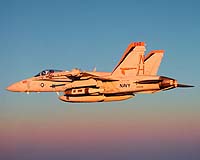
Australia (SPX) Jul 07, 2008 Minister for Defence, the Hon Joel Fitzgibbon MP has announced that Australia's air capability has been further enhanced by the successful trialling of a new radar warning receiver and acceptance by Air Force of the Joint Direct Attack Munition (JDAM) 'Smart Bomb'. The first production configured F/A-18 Hornet fitted with a new Radar Warning Receiver has successfully flown at RAAF Williamtown, only 18 months after the decision to acquire the equipment. As part of the Hornet upgrade program, Australia's fleet of F/A-18 aircraft are being fitted with upgraded Radar Warning Receivers, countermeasures systems and radar jamming systems. Earlier this year the Royal Australian Air Force accepted the Operational and Technical Airworthiness of the JDAM 'smart-bomb' on F/A-18A/B fighter aircraft. The JDAM 'smart-bomb' provides RAAF F/A-18A/B fighters with a state-of-the-art weapon capability, allowing them to accurately employ air-to-ground weapons during day or night and in all weather conditions through the use of Global Positioning System (GPS) technology. "These upgrades to the F/A-18 Hornet will provide the Royal Australian Air Force with leading-edge technology, ensuring the Hornet's continued ability to operate as Australia's frontline fighter aircraft," Mr Fitzgibbon said. "The upgrade to the Hornet's Radar Warning Receiver is a significant achievement for the Defence Materiel Organisation as it has only been 18 months since the Raytheon ALR-67(V)3 Radar Warning Receiver was approved as part of the Hornet's Electronic Warfare Self Protection upgrade." During the 18 months since approval, the project acquired the Radar Warning Systems, completed the design, integration and testing required to install and operate the new system on the Hornet. The project is within budget and on-track to deliver the complete electronic warfare self protection upgrade to the entire Hornet fleet by late 2012. "Given the complexity of the project, the ability to deliver within schedule and budget has been a big success for the Defence Materiel Organisation," Mr Fitzgibbon said.

Monday, July 07, 2008

G8 urged to act over oil prices

G8 urged to act over oil prices July 07, 2008 President Bush has blamed surging oil prices for slow US growth Japan and the US have pledged to call for "swift action" on surging oil and food prices at next week's G8 summit. Japan's Prime Minister Yasuo Fukuda said action was needed as the problems were "having a negative impact on the world economy". Leaders of the two countries made the vow during talks ahead of the Group of Eight meeting in Hokkaido, Japan. Record oil prices and rising food prices have been prompting concerns about global inflation. Surging fuel prices have also prompted protests across the world, with the latest demonstrations breaking out in Malaysia. Economic worries US president George Bush also blamed oil prices for the US economy "not growing as robustly as we would like". "We have got a problem when it comes to reliance upon foreign sources of oil. For seven years I've been trying to get the Congress to explore for oil domestically," he said. Meanwhile, President Bush is also expected to push leaders at the three-day summit to tackle the global food crisis by boosting shipments of food, fertilisers and seeds to afflicted countries and to reduce barriers to bio-engineered crops. However, Japanese press reports have suggested the solution the G8 may put forward could be to create world stockpiles of food. Other issues set to dominate the summit's agenda will be climate change, and other problems ranging from North Korea's nuclear programmes to aid for Africa. "I'm concerned about people going hungry," said President Bush. "There's too much suffering in the continent of Africa. Now is the time for the comfortable nations to step up and do something about it." The G8 consists of Britain, Canada, France, Germany, Italy, Japan, Russia and the United States. Fifteen other nations, including Brazil and China, will be attending the talks.

Saturday, July 05, 2008

China's new turboprop rolls off production line.

China's new turboprop rolls off production line.
July 05, 2008 The MA600 is scheduled to begin trials in September. Up to 30 a year could be made according to market demand. China has unveiled a more advanced home-made turboprop aeroplane, moving a step closer to its ambitious goal of becoming one of the world's major propeller plane providers, state press said. The 60-seat "Modern Ark 600" (MA600), comparable to versions from Canada's Bombardier and France's ATR, was launched on Sunday, with deliveries to customers expected to start next year, the Xinhua news agency reported. The new aircraft is lighter than the first and only model of the MA series now on the market, the 50-60 seat MA60, which has received 122 orders since 2005, mainly from African and Southeast Asian countries, it said. Producer China Aviation Industry Corp. I (AVIC I) has already started developing the 70-seat MA700 as it seeks to break into markets in developed countries, it added. The company has set a target for the MA series of 40 percent of the world's turboprop aircraft market in 2018, previous reports said. The MA600 is scheduled to begin trials in September. Up to 30 a year could be made according to market demand, they said. The MA700 is expected to be available on the market in five years, according to Xinhua. Demand for more energy efficient propeller aircraft, commonly used on short and medium-haul flights, is expected to rise amid high global oil prices, as large jets are wasteful and more costly for regional routes, Xinhua said. In the next 20 years, the world will need 1,900 turboprop planes, or around 35 percent of the demand for regional aircraft, according to joint research by Bombardier and the Aviation Industry Development Research Centre of China.