Zimbabwe's annual inflation is 2.2 million percent
18 Jul, 08: A Zimbabwean policeman stands guard in Harare a few moments President Mugabe arrives to open a "People's shop", where cheap food is sold, on Wednesday. Annual inflation is now 2.2m%.
Zimbabwe's annual inflation is 2.2 million percent

 Family celebrates double degrees
July 18, 2008 - England: A mother and daughter with strong Indian connections have both graduated with the same degree from the same English university.
Amrat Bhogal, 43, and Gurpreet, 21, from the English city of Birmingham, each completed a three-year BSc optometry course at Aston University.
Mrs Bhogal told the BBC that she was inspired to take the degree in part because of her Indian heritage.
She said she inherited her work ethic from her parents in Punjab state.
"I am proud that my family came from India, proud to be a woman and proud to be Asian," Mrs Bhogal said after receiving her degree.
"Although my parents came to live in England from Punjab in 1947, they instilled in me the discipline to work hard which they themselves had learnt in India."
Mrs Bhogal said that she was also inspired to take the degree by her husband, Jaswant, whose mother still lives in the state of Uttar Pradesh.
She said that will now work as an optician with her husband at their shop in Birmingham while her daughter has a job with another optician nearby.
Her daughter said that during the course she and her mother sat next to each other in lectures and had lunch together.
"My mum and I are like sisters, rather than mother and daughter, so I didn't feel uncomfortable about us taking the same course together," Gupreet said.
Mrs Bhogal said that she and Gurpreet did not plan to enrol on the same course together at the same time - "it just happened like that".
She said her daughter had been a great friend to her throughout the course in the true Indian and Asian tradition of valuing family members.
"We've always had a great relationship and, although I gave her the space I thought she needed, the support we gave each other throughout the three years was invaluable."
Family celebrates double degrees
July 18, 2008 - England: A mother and daughter with strong Indian connections have both graduated with the same degree from the same English university.
Amrat Bhogal, 43, and Gurpreet, 21, from the English city of Birmingham, each completed a three-year BSc optometry course at Aston University.
Mrs Bhogal told the BBC that she was inspired to take the degree in part because of her Indian heritage.
She said she inherited her work ethic from her parents in Punjab state.
"I am proud that my family came from India, proud to be a woman and proud to be Asian," Mrs Bhogal said after receiving her degree.
"Although my parents came to live in England from Punjab in 1947, they instilled in me the discipline to work hard which they themselves had learnt in India."
Mrs Bhogal said that she was also inspired to take the degree by her husband, Jaswant, whose mother still lives in the state of Uttar Pradesh.
She said that will now work as an optician with her husband at their shop in Birmingham while her daughter has a job with another optician nearby.
Her daughter said that during the course she and her mother sat next to each other in lectures and had lunch together.
"My mum and I are like sisters, rather than mother and daughter, so I didn't feel uncomfortable about us taking the same course together," Gupreet said.
Mrs Bhogal said that she and Gurpreet did not plan to enrol on the same course together at the same time - "it just happened like that".
She said her daughter had been a great friend to her throughout the course in the true Indian and Asian tradition of valuing family members.
"We've always had a great relationship and, although I gave her the space I thought she needed, the support we gave each other throughout the three years was invaluable."
 India to discuss nuclear security
 When the Buddhas of Bamiyan were carved out of the mountainside, the Roman Empire still held sway.
July 18, 2008: They towered over a rich valley in what is now central Afghanistan, where caravans of traders would stop and rest on the Silk Road as they transported goods between east and west.
For centuries the two huge statues stood guard over Bamiyan.
But in 2001, just months before they were forced from power, the Taleban dynamited what they considered un-Islamic representations of the human form.
Today all that remains are the recesses where they stood, and the labyrinth of fragile caves surrounding them.
Iconic art
Today there isn't even a paved road connecting the valley to Kabul, but yet inside the caves are a reminder of Bamiyan's past wealth and glory and a new claim to fame that could put the province back on the map.
Inside those caves the steep, narrow steps are crumbling, there are cracks in the mud tunnels carved into the mountainside, and still visible high in the echoing chambers are pieces of Buddhist iconic art which are now thought to be the oldest oil paintings in the world.
Only a few fragments of the ancient paintings remain
Japanese, European and American scientists restoring the cave murals dating back to around 650AD, discovered oil was used in the paint.
Yoko Taniguchi, one of the Japanese experts working on the caves, told reporters this is the earliest known use of this technique in the history of art.
She said it was previously thought the technique originated in Europe during the Renaissance, eight centuries later.
But wandering through the Buddhist temples carved out of the rock, there is little left of the murals destroyed in the last 30 years of war after surviving for centuries.
A tourist guidebook to Afghanistan written in the 1960s and 70s by Nancy Dupree, a famous traveller who dedicated much of her life to the country, gave an account of the artwork as it was then.
Fragments
"The rest of the hall is elaborately decorated in a varied palette of burnt sienna, green, lapis lazuli blue, and yellow ochre depicting flowers, trees, stylised floral sprays, cornucopias and figures of kneeling worshipers," she wrote.
"A series of Buddhas dressed in sombre-hued maroon robes and framed with aureoles against an azure background walk on lotus pads set among flowers."
Most paintings have heads and hands missing
There's little evidence of this today apart from a few scraps of colour and detail here and there, but there are isolated caves higher up the mountain, impossible to get to without a rope, where some of the best examples still survive.
A combination of the vibration from artillery shells, the Taleban chiselling away the depictions of faces and hands, and looting put paid to most of the paintings.
But there are enough fragments left to give a hint of what it must have been like.
The views from the caves looking out over the valley are stunning and there is another twist to the story of the Buddhas of Bamiyan.
A Buddhist pilgrim wrote around the time the paintings were finished in the mid seventh century of the amazing statues - but he described three.
According to his account, the third reclining Buddha was a 1,000 feet long and lay on the valley floor.
It would be remarkable if it was buried beneath the river sediment and two teams of archaeologists, one from France another from Japan, are in a race to find it.
It sounds like an Indiana Jones film, but there have been many interesting archaeological discoveries in Bamiyan and this beautiful valley may not yet have revealed all its secrets.
When the Buddhas of Bamiyan were carved out of the mountainside, the Roman Empire still held sway.
July 18, 2008: They towered over a rich valley in what is now central Afghanistan, where caravans of traders would stop and rest on the Silk Road as they transported goods between east and west.
For centuries the two huge statues stood guard over Bamiyan.
But in 2001, just months before they were forced from power, the Taleban dynamited what they considered un-Islamic representations of the human form.
Today all that remains are the recesses where they stood, and the labyrinth of fragile caves surrounding them.
Iconic art
Today there isn't even a paved road connecting the valley to Kabul, but yet inside the caves are a reminder of Bamiyan's past wealth and glory and a new claim to fame that could put the province back on the map.
Inside those caves the steep, narrow steps are crumbling, there are cracks in the mud tunnels carved into the mountainside, and still visible high in the echoing chambers are pieces of Buddhist iconic art which are now thought to be the oldest oil paintings in the world.
Only a few fragments of the ancient paintings remain
Japanese, European and American scientists restoring the cave murals dating back to around 650AD, discovered oil was used in the paint.
Yoko Taniguchi, one of the Japanese experts working on the caves, told reporters this is the earliest known use of this technique in the history of art.
She said it was previously thought the technique originated in Europe during the Renaissance, eight centuries later.
But wandering through the Buddhist temples carved out of the rock, there is little left of the murals destroyed in the last 30 years of war after surviving for centuries.
A tourist guidebook to Afghanistan written in the 1960s and 70s by Nancy Dupree, a famous traveller who dedicated much of her life to the country, gave an account of the artwork as it was then.
Fragments
"The rest of the hall is elaborately decorated in a varied palette of burnt sienna, green, lapis lazuli blue, and yellow ochre depicting flowers, trees, stylised floral sprays, cornucopias and figures of kneeling worshipers," she wrote.
"A series of Buddhas dressed in sombre-hued maroon robes and framed with aureoles against an azure background walk on lotus pads set among flowers."
Most paintings have heads and hands missing
There's little evidence of this today apart from a few scraps of colour and detail here and there, but there are isolated caves higher up the mountain, impossible to get to without a rope, where some of the best examples still survive.
A combination of the vibration from artillery shells, the Taleban chiselling away the depictions of faces and hands, and looting put paid to most of the paintings.
But there are enough fragments left to give a hint of what it must have been like.
The views from the caves looking out over the valley are stunning and there is another twist to the story of the Buddhas of Bamiyan.
A Buddhist pilgrim wrote around the time the paintings were finished in the mid seventh century of the amazing statues - but he described three.
According to his account, the third reclining Buddha was a 1,000 feet long and lay on the valley floor.
It would be remarkable if it was buried beneath the river sediment and two teams of archaeologists, one from France another from Japan, are in a race to find it.
It sounds like an Indiana Jones film, but there have been many interesting archaeological discoveries in Bamiyan and this beautiful valley may not yet have revealed all its secrets.
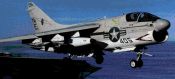 Brazil Launches Plan to Buy New Jet Fighters
MINE PROTECTION KMW has developed a mine protection system for the Leopard 2, following a concept definition by an international working group from Germany, Switzerland, Netherlands, Sweden and Norway, under the lead of the German procurement agency BWB. An order placed in September 2003 involves the modification of 15 Leopard 2A6 tanks for the German Army and ten Leopard 2A5 (Strv 122) for Sweden. The first mine-protected tank was delivered in July 2004. "KMW has developed a mine protection system for the Leopard 2." The kit consists of add-on armour elements including a new plate under the tank floor, new vision systems and restowage arrangements for ammunition. Trials in February 2004 demonstrated that, with the new armour package, Leopard 2 tank crews could survive the detonation of an anti-tank mine under the tank without suffering any injuries. LEOPARD 2 CONSTRUCTION The hull is in three sections: 1) the driving compartment at the front, 2) the fighting section in the centre, and 3) the engine at the rear of the vehicle. The driver's compartment is equipped with three observation periscopes. Space to the left of the driver is provided for ammunition stowage. A camera with a 65° horizontal and vertical field of view positioned at the rear of the vehicle and a television monitor provide a reversing aid for the driver. The turret is located in the centre of the vehicle. There is an improvement programme which provides third-generation composite armour, and the additional reinforcement to the turret frontal and lateral armour with externally mounted add-on armour modules. In the event of weapon penetration through the armour, the spall liner reduces the number of fragments and narrows the fragment cone. The spall liner also provides noise and thermal insulation. The reinforcement provides protection against multiple strike, kinetic energy rounds and shaped charges. FIRE CONTROL The commander's station has an independent periscope, a PERI-R 17 A2 from Rheinmetall Defence Electronics (formerly STN Atlas Elektronik) and Zeiss Optronik GmbH. The PERI-R 17 A2 is a stabilised panoramic periscope sight for day / night observation and target identification, and it provides an all round view with a traverse of 360°. The thermal image from the commander's periscope is displayed on a monitor. The PERI-R17 A2 can also be used for weapon firing as it is slaved into the tank's fire control system. The image from the gunner's thermal sight can also be transmitted to the commander's PERI-R17 periscope so the commander can switch the gunner's video image to the commander's monitor. This enables the commander and the gunner to have access to the same field of view of the combat range. "The Leopard 2A6 includes a longer L55 gun, an auxiliary engine, improved mine protection and an air-conditioning system." The gunner's station is equipped with an Rheinmetall Defence Electronics EMES 15 dual magnification stabilised primary sight. The primary sight has an integrated laser rangefinder and a Zeiss Optronik thermal sight, model WBG-X, which are both linked to the tank's fire control computer. The thermal sight uses standard US Army common modules, with 120 element cadmium mercury telluride, CdHgTe (also known as CMT) infra-red detector array operating in the 8 to 14 micron waveband. The infra-red detector unit is cooled with a Stirling closed-cycle engine. The sight is fitted with a CE628 laser rangefinder from Zeiss Optronik. The laser is a Neodinium Yttrium Aluminium Garnet, (Nd:YAG) solid state laser. The rangefinder can provide up to three range values in four seconds. The range data is transmitted to the fire control computer and is used to calculate the firing algorithms. Also, because the laser rangefinder is integrated into the gunner's primary sight, the gunner can read the digital range measurement directly. The maximum range of the laser rangefinder is less than 10,000m with accuracy to within 20m. The command and fire control procedure known as first echo selection is used for laser rangefinding for anti-helicopter operations. The principal weapon uses electronic firing to reduce reaction times.
LEOPARD 2 MAIN ARMAMENT A new smoothbore gun, the 120mm L55 Gun, has been developed by Rheinmetall Waffe Munition GmbH of Ratingen, Germany to replace the shorter 120mm L44 smoothbore tankgun on the Leopard 2. The extension of the barrel length from calibre length 44 to calibre length 55 results in a greater portion of the available energy in the barrel being converted into projectile velocity increasing the range and armour penetration. The L55 smoothbore gun, equipped with a thermal sleeve, a fume extractor and a muzzle reference system, is compatible with current 120mm ammunition and new high penetration ammunition. As a result of tactical requirements Rheinmetall Waffe Munition GmbH developed the improved kinetic energy ammunition known as LKE 2 DM53. With the DM53 round the L55 gun can fire to a range of 5,000m. The effect of the kinetic energy projectile on an enemy target is achieved by 1) the penetrator length and projectile mass and the impact velocity and 2) the interaction between the projectile and the target. "The Leopard 2 is equipped with a land navigation system from LITEF of Bonn." The penetrator material is heavy tungsten powder in a monoblock structure. The improved kinetic energy ammunition has higher muzzle energy and recoil forces. Especially when using the new DM 53 KE round, the L55 enables an approx. 30% increase in performance compared with conventional systems. For example a muzzle velocity can be achieved in excess of 1,750m/s. NAVIGATION SYSTEMS The Leopard 2 is equipped with a land navigation system from the company LITEF of Bonn, Germany which is a subsidiary of Northrop Grumman (formerly Litton) of USA. The hybrid navigation system consists of a Global Positioning System (GPS) and an inertial navigation system. LEOPARD 2 SUPPORT SYSTEMS A programme has been put in place to replace the H-WNA improved hydraulic system with E-WNA which is an electrical weapon follow-up system. The replacement with the E-WNA provides the following advantages: 1) the turret has no pressurised hydraulic fluid, 2) lower noise level and lower power consumption and heat generation, 3) improved reliability and lower maintenance and service requirements, 4) saving in operating costs and 5) good long term storage properties. The crew compartment is equipped with a fire and explosion detection and suppression system which has been licensed by the company Deugra Ges. fur Brandschutzsysteme of Ratingen, Germany from the UK company Kidde-Graviner of Slough, Berkshire. A fireproof bulkhead separates the fighting compartment from the engine compartment at the rear of the vehicle. MAIN BATTLE TANK ENGINE The engine is the MTU MB 873 diesel engine, providing 1,100kW (1,500shp), with a Renk HSWL 354 gear and break system. An enhanced version of the EuroPowerPack, with a 1,210kW (1,650shp) MTU MT883 engine, has been trialled on the Leopard 2.


 |