 Russia shuts down consulate in Georgia
(NSI News Source Info) MOSCOW - September 3, 2008: The consular department at Russia's embassy in Georgia will shut down on Wednesday following Tbilisi's formal announcement that it is to cut diplomatic ties with Russia, the embassy's press attache said.
"The Russian Embassy's consular service is halting its operations as of today in accordance with the Georgian government's decision to sever diplomatic ties with Russia," Alexander Savinov said.
Savinov said visa applications that had already been submitted would be considered as usual.
Georgia officially announced that it was cutting diplomatic relations with Russia on Tuesday.
Savinov also said it was still being discussed when exactly Russian embassy staff would leave Tbilisi, saying that, "As yet there is no firm date."
Georgia's move to cut ties was a response to Russia's recognition on August 26 of South Ossetia and Abkhazia as independent states. The decision to recognize them came after an attack by Georgia on breakaway South Ossetia on August 8 and alleged preparations for an attack on Abkhazia. Moscow subsequently launched an operation to "force Georgia to peace." The operation was concluded on August 12.
Both South Ossetia and Abkhazia broke away from Tbilisi in the early 1990s, and most of their citizens were granted Russian citizenship in the early 2000s.
Russia's foreign minister said Moscow could review the issue of visits by Georgians to Russia now that diplomatic ties have been severed, saying that in the current situation leaving things as they were "would be hard to understand," Sergei Lavrov said.
He also said that Georgia's move to cut diplomatic ties would take a heavy toll on the great many Georgians living and working in Russia
Russia shuts down consulate in Georgia
(NSI News Source Info) MOSCOW - September 3, 2008: The consular department at Russia's embassy in Georgia will shut down on Wednesday following Tbilisi's formal announcement that it is to cut diplomatic ties with Russia, the embassy's press attache said.
"The Russian Embassy's consular service is halting its operations as of today in accordance with the Georgian government's decision to sever diplomatic ties with Russia," Alexander Savinov said.
Savinov said visa applications that had already been submitted would be considered as usual.
Georgia officially announced that it was cutting diplomatic relations with Russia on Tuesday.
Savinov also said it was still being discussed when exactly Russian embassy staff would leave Tbilisi, saying that, "As yet there is no firm date."
Georgia's move to cut ties was a response to Russia's recognition on August 26 of South Ossetia and Abkhazia as independent states. The decision to recognize them came after an attack by Georgia on breakaway South Ossetia on August 8 and alleged preparations for an attack on Abkhazia. Moscow subsequently launched an operation to "force Georgia to peace." The operation was concluded on August 12.
Both South Ossetia and Abkhazia broke away from Tbilisi in the early 1990s, and most of their citizens were granted Russian citizenship in the early 2000s.
Russia's foreign minister said Moscow could review the issue of visits by Georgians to Russia now that diplomatic ties have been severed, saying that in the current situation leaving things as they were "would be hard to understand," Sergei Lavrov said.
He also said that Georgia's move to cut diplomatic ties would take a heavy toll on the great many Georgians living and working in Russia
Wednesday, September 03, 2008
Russia shuts down consulate in Georgia
Russia shuts down consulate in Georgia
(NSI News Source Info) MOSCOW - September 3, 2008: The consular department at Russia's embassy in Georgia will shut down on Wednesday following Tbilisi's formal announcement that it is to cut diplomatic ties with Russia, the embassy's press attache said.
"The Russian Embassy's consular service is halting its operations as of today in accordance with the Georgian government's decision to sever diplomatic ties with Russia," Alexander Savinov said.
Savinov said visa applications that had already been submitted would be considered as usual.
Georgia officially announced that it was cutting diplomatic relations with Russia on Tuesday.
Savinov also said it was still being discussed when exactly Russian embassy staff would leave Tbilisi, saying that, "As yet there is no firm date."
Georgia's move to cut ties was a response to Russia's recognition on August 26 of South Ossetia and Abkhazia as independent states. The decision to recognize them came after an attack by Georgia on breakaway South Ossetia on August 8 and alleged preparations for an attack on Abkhazia. Moscow subsequently launched an operation to "force Georgia to peace." The operation was concluded on August 12.
Both South Ossetia and Abkhazia broke away from Tbilisi in the early 1990s, and most of their citizens were granted Russian citizenship in the early 2000s.
Russia's foreign minister said Moscow could review the issue of visits by Georgians to Russia now that diplomatic ties have been severed, saying that in the current situation leaving things as they were "would be hard to understand," Sergei Lavrov said.
He also said that Georgia's move to cut diplomatic ties would take a heavy toll on the great many Georgians living and working in Russia

Russia 'ready to rebuild ties with U.S.' despite Georgia support
 Russia 'ready to rebuild ties with U.S.' despite Georgia support
(NSI News Source Info) SOCHI - September 3, 2008: Russia's president has said the country is ready to repair damaged relations with the United States despite Washington's support for the regime in Georgia.
The United States has strongly criticized Russia for its role in the recent Georgia conflict and its recognition of the country's breakaway regions, and has pledged support for the Georgian leadership, which Russia has ceased to acknowledge.
Dmitry Medvedev told news channel Euronews on Tuesday that tensions in relations with the U.S. "are the consequence of not entirely reasonable policies on the part of the U.S. toward Georgia."
He said the U.S., which has provided substantial military and political support to Georgian President Mikheil Saakashvili, has given him carte blanche to act as he chooses.
"The result of this is evident... There is now a certain annoyance in the U.S. that this virtual 'Free Georgia' project didn't succeed. The leader went bankrupt, the regime is close to crisis, and the situation is tense."
That the sooner the U.S. resolves this problem, the better for Russian-U.S. relations, he said.
"We are ready for them to be restored in the best possible way, we are ready for fully functioning relations with the U.S.," he said.
Russia 'ready to rebuild ties with U.S.' despite Georgia support
(NSI News Source Info) SOCHI - September 3, 2008: Russia's president has said the country is ready to repair damaged relations with the United States despite Washington's support for the regime in Georgia.
The United States has strongly criticized Russia for its role in the recent Georgia conflict and its recognition of the country's breakaway regions, and has pledged support for the Georgian leadership, which Russia has ceased to acknowledge.
Dmitry Medvedev told news channel Euronews on Tuesday that tensions in relations with the U.S. "are the consequence of not entirely reasonable policies on the part of the U.S. toward Georgia."
He said the U.S., which has provided substantial military and political support to Georgian President Mikheil Saakashvili, has given him carte blanche to act as he chooses.
"The result of this is evident... There is now a certain annoyance in the U.S. that this virtual 'Free Georgia' project didn't succeed. The leader went bankrupt, the regime is close to crisis, and the situation is tense."
That the sooner the U.S. resolves this problem, the better for Russian-U.S. relations, he said.
"We are ready for them to be restored in the best possible way, we are ready for fully functioning relations with the U.S.," he said.
Medvedev assures Europe its gas supplies are safe
 Medvedev assures Europe its gas supplies are safe
(NSI News Source Info) SOCHI - September 3, 2008: Russia will meet all its commitments to supply natural gas to European Union member states, President Dmitry Medvedev said in an interview with the news channel Euronews.
"We will of course fully meet our obligations as a major supplier of oil and gas to Europe," Medvedev told the channel on Tuesday, a day after the EU postponed talks on a new partnership deal with Russia, demanding that the country pull all remaining troops out of Georgia.
EU leaders, who met for an emergency summit in Brussels on Monday, stopped short of taking tough measures against Russia, despite calls from Britain and former Eastern Bloc states. The prospect of sanctions against Moscow had sparked fears in Europe of retaliatory measures from Russia, which meets over 40% of the EU's gas needs.
Medvedev said the dispute with the EU was partly due to a misunderstanding.
"Unfortunately, the EU did not fully understand what motivated the Russian Federation to make decisions on repelling the Georgian aggression and recognizing South Ossetia and Abkhazia as countries," he said.
On the same day, Medvedev told Italian RAI television that Russia did not fear expulsion from the Group of Eight leading industrialized nations.
"The G8 would be practically unable to function without Russia, because it can make decisions only if they reflect the opinion of main global economies and leading global political players. This is why we do not fear being expelled."
Russia officially recognized South Ossetia and Abkhazia on August 26, saying the move was needed to protect the regions following Georgia's attack on South Ossetia.
The EU leaders on Monday pledged to strengthen economic and political ties with Georgia, and condemned Russia's decision to recognize South Ossetia and Abkhazia.
Medvedev assures Europe its gas supplies are safe
(NSI News Source Info) SOCHI - September 3, 2008: Russia will meet all its commitments to supply natural gas to European Union member states, President Dmitry Medvedev said in an interview with the news channel Euronews.
"We will of course fully meet our obligations as a major supplier of oil and gas to Europe," Medvedev told the channel on Tuesday, a day after the EU postponed talks on a new partnership deal with Russia, demanding that the country pull all remaining troops out of Georgia.
EU leaders, who met for an emergency summit in Brussels on Monday, stopped short of taking tough measures against Russia, despite calls from Britain and former Eastern Bloc states. The prospect of sanctions against Moscow had sparked fears in Europe of retaliatory measures from Russia, which meets over 40% of the EU's gas needs.
Medvedev said the dispute with the EU was partly due to a misunderstanding.
"Unfortunately, the EU did not fully understand what motivated the Russian Federation to make decisions on repelling the Georgian aggression and recognizing South Ossetia and Abkhazia as countries," he said.
On the same day, Medvedev told Italian RAI television that Russia did not fear expulsion from the Group of Eight leading industrialized nations.
"The G8 would be practically unable to function without Russia, because it can make decisions only if they reflect the opinion of main global economies and leading global political players. This is why we do not fear being expelled."
Russia officially recognized South Ossetia and Abkhazia on August 26, saying the move was needed to protect the regions following Georgia's attack on South Ossetia.
The EU leaders on Monday pledged to strengthen economic and political ties with Georgia, and condemned Russia's decision to recognize South Ossetia and Abkhazia.
Malaysia sends troops to protect ships in Gulf of Aden: report
 Malaysia sends troops to protect ships in Gulf of Aden: report
(NSI News Source Info) KUALA LUMPUR - September 3, 2008: Malaysia has sent crack troops and navy ships to the Gulf of Aden after two of its vessels were seized by pirates last month, according to reports on Wednesday. The comments by deputy premier Najib Razak come after the country's shipping giant MISC Berhad said on Tuesday it had barred its vessels from the area, where two of its tankers were hijacked by armed pirates in August. The area has seen a spate of attacks in recent weeks, with eight ships taken by pirates since the end of July. "Our primary concern is the safety of our sailors," Najib was quoted as saying by the Star newspaper. Malaysia's armed forces chief said the military had sent two warships to the Gulf of Aden last Saturday to monitor the situation, the Star reported. Najib told the paper that negotiations between the pirates and representatives from MISC had not progressed much, with troops and naval vessels sent to protect another four of MISC's ships in the area. The Bunga Melati 5 with 41 crew -- 36 Malaysians and five from the Philippines -- was seized last Friday off the coast of Yemen carrying 30,000 metric tonnes of petrochemicals. Ten days earlier, the palm oil tanker Bunga Melati Dua, with 39 crew on board, was hijacked off the coast of Somalia. MISC said late Tuesday it had finally been able to regain radio contact with the Bunga Melati 5.Malaysia's foreign ministry has set up a special unit to monitor the situation while appealing to authorities in both Yemen and Somalia to ensure the crew's release, state news agency Bernama reported.It said the pirates had reportedly demanded a ransom of three million dollars for the return of the two ships and crew.
Malaysia sends troops to protect ships in Gulf of Aden: report
(NSI News Source Info) KUALA LUMPUR - September 3, 2008: Malaysia has sent crack troops and navy ships to the Gulf of Aden after two of its vessels were seized by pirates last month, according to reports on Wednesday. The comments by deputy premier Najib Razak come after the country's shipping giant MISC Berhad said on Tuesday it had barred its vessels from the area, where two of its tankers were hijacked by armed pirates in August. The area has seen a spate of attacks in recent weeks, with eight ships taken by pirates since the end of July. "Our primary concern is the safety of our sailors," Najib was quoted as saying by the Star newspaper. Malaysia's armed forces chief said the military had sent two warships to the Gulf of Aden last Saturday to monitor the situation, the Star reported. Najib told the paper that negotiations between the pirates and representatives from MISC had not progressed much, with troops and naval vessels sent to protect another four of MISC's ships in the area. The Bunga Melati 5 with 41 crew -- 36 Malaysians and five from the Philippines -- was seized last Friday off the coast of Yemen carrying 30,000 metric tonnes of petrochemicals. Ten days earlier, the palm oil tanker Bunga Melati Dua, with 39 crew on board, was hijacked off the coast of Somalia. MISC said late Tuesday it had finally been able to regain radio contact with the Bunga Melati 5.Malaysia's foreign ministry has set up a special unit to monitor the situation while appealing to authorities in both Yemen and Somalia to ensure the crew's release, state news agency Bernama reported.It said the pirates had reportedly demanded a ransom of three million dollars for the return of the two ships and crew.
Pakistan: US gunship helicopters attack South Waziristan - 15 dead
 Pakistan: US gunship helicopters attack South Waziristan - 15 dead
(NSI News Source Info) WANA - September 3, 2008: At least 15 people, including women and children, were killed in South Waziristan on Wednesday in an attack a security official and a witness said was carried out by US forces from Afghanistan. The attack involving helicopters took place in the village of Angor Adda in the South Waziristan region, they said.Pakistani military spokesmen, and US military spokesmen in Afghanistan, were not immediately available for comment. The United States says al Qaeda and Taliban militants are based in sanctuaries in northwest Pakistan's ethnic Pashtun tribal areas on the Afghan border. There were differing accounts of the pre-dawn attack on Wednesday with some people saying it was carried out by helicopter gunships while others spoke of an attack by ground troops as well." Troops came in helicopters and carried out action in three houses at around 3 a.m. (2100 GMT)," said Gul Nawaz, a shopkeeper in the village. Security and government officials put the death toll at 15 but residents of the village said it could be as high as 17. US-operated pilotless drone aircraft have launched attacks in Pakistani border regions several times this year, killing dozens of militants, but US ground troops have not been known to cross into Pakistan to fight militants.
Pakistan: US gunship helicopters attack South Waziristan - 15 dead
(NSI News Source Info) WANA - September 3, 2008: At least 15 people, including women and children, were killed in South Waziristan on Wednesday in an attack a security official and a witness said was carried out by US forces from Afghanistan. The attack involving helicopters took place in the village of Angor Adda in the South Waziristan region, they said.Pakistani military spokesmen, and US military spokesmen in Afghanistan, were not immediately available for comment. The United States says al Qaeda and Taliban militants are based in sanctuaries in northwest Pakistan's ethnic Pashtun tribal areas on the Afghan border. There were differing accounts of the pre-dawn attack on Wednesday with some people saying it was carried out by helicopter gunships while others spoke of an attack by ground troops as well." Troops came in helicopters and carried out action in three houses at around 3 a.m. (2100 GMT)," said Gul Nawaz, a shopkeeper in the village. Security and government officials put the death toll at 15 but residents of the village said it could be as high as 17. US-operated pilotless drone aircraft have launched attacks in Pakistani border regions several times this year, killing dozens of militants, but US ground troops have not been known to cross into Pakistan to fight militants.
Tuesday, September 02, 2008
China is becoming a big oil consumer
 China is becoming a big oil consumer
(NSI News Source Info) September 2, 2008: Chinese oil consumption (most of it imported) continues to rise, to 7.4 million barrels a day (global demand is over 80 million barrels a day, the U.S. accounts for a quarter of that). The government controls fuel prices, and raised them over the Summer. This did not reduce demand as much as expected. Oil use has largely kept pace with annual increases in economic activity (10 percent a year for nearly two decades), and that has been a major factor in the world price of oil more than tripling in the last decade. But this has made China more dependent on sea routes to the Persian Gulf and Africa (where China gets most of its oil). Thus the growing interest in expanding the size of the fleet. China is no longer a self-sufficient "continental" power, as it had been for thousands of years. Now China is dependent on international trade to keep its economy going.
As the U.S. has cracked down on terrorists using the international banking system. In response, the terrorists have sought out countries that would allow their banks to deal with terrorists, and are immune to pressure from the United States. Chinese banks have thus become the favorite of international terrorist organizations, at least those that do not operate in China, or are hostile to China.
China is becoming a big oil consumer
(NSI News Source Info) September 2, 2008: Chinese oil consumption (most of it imported) continues to rise, to 7.4 million barrels a day (global demand is over 80 million barrels a day, the U.S. accounts for a quarter of that). The government controls fuel prices, and raised them over the Summer. This did not reduce demand as much as expected. Oil use has largely kept pace with annual increases in economic activity (10 percent a year for nearly two decades), and that has been a major factor in the world price of oil more than tripling in the last decade. But this has made China more dependent on sea routes to the Persian Gulf and Africa (where China gets most of its oil). Thus the growing interest in expanding the size of the fleet. China is no longer a self-sufficient "continental" power, as it had been for thousands of years. Now China is dependent on international trade to keep its economy going.
As the U.S. has cracked down on terrorists using the international banking system. In response, the terrorists have sought out countries that would allow their banks to deal with terrorists, and are immune to pressure from the United States. Chinese banks have thus become the favorite of international terrorist organizations, at least those that do not operate in China, or are hostile to China.
U.S. Air Force developed LJDAM
U.S. Air Force developed LJDAM
(NSI News Source Info) September 2, 2008: The U.S. Air Force has, after three years of development, introduced the LJDAM (Laser Joint Direct Attack Munition). The main difference between JDAM and LJDAM is the sensor unit. There are now two sensors, one for GPS guidance, and a laser seeker sensor, turning the JDAM into the LJDAM. The aircraft dropping the bomb can now use its laser designator to track a moving target, and the LFDAM bomb hits it. A LJDAM can hit a vehicle moving at over 60 kilometers an hour. LJDAM was supposed to enter service last year, but there were several small reliability problems that had to be fixed.
 The main reason for developing LJDAM was to give the air force an inexpensive weapon that can be used against enemy vehicles. Most specifically, against Iraqi terrorists who are discovered planting a roadside bomb, and then jump into their pickup truck and speed away. The smallest LJDAM, one using a 500 pound bomb, costs about $40,000. A 670 pound laser guided Maverick missile costs $150,000. Britain developed a version of the laser guided, 106 pound Hellfire (called Brimstone) that can be launched from "fast movers" (jet fighters), that costs about half as much as Maverick. The U.S. never adopted Brimstone. Hellfire size weapons are the preferred way to destroy fleeing enemy vehicles. That's because only a few pounds of explosives are involved, limiting the casualties to any nearby civilians. U.S. helicopters and UAVs carry Hellfire. A 500 pound bomb contains about a hundred times as much explosives (280 pounds) as a Hellfire.
 The main reason for developing LJDAM was to give the air force an inexpensive weapon that can be used against enemy vehicles. Most specifically, against Iraqi terrorists who are discovered planting a roadside bomb, and then jump into their pickup truck and speed away. The smallest LJDAM, one using a 500 pound bomb, costs about $40,000. A 670 pound laser guided Maverick missile costs $150,000. Britain developed a version of the laser guided, 106 pound Hellfire (called Brimstone) that can be launched from "fast movers" (jet fighters), that costs about half as much as Maverick. The U.S. never adopted Brimstone. Hellfire size weapons are the preferred way to destroy fleeing enemy vehicles. That's because only a few pounds of explosives are involved, limiting the casualties to any nearby civilians. U.S. helicopters and UAVs carry Hellfire. A 500 pound bomb contains about a hundred times as much explosives (280 pounds) as a Hellfire.
North Korean 007 uncovered
 North Korean 007 uncovered
(NSI News Source Info) September 2, 2008: For decades, South Korea believed that North Korea would try to sneak spies into South Korea by having agents pretend to be refugees. But none of these agents was never caught, until now. A 35 year old North Korean woman, Jong Hwa Won was recently arrested after being observed by South Korean intelligence for three years. The South Koreans were hoping Won would lead them to other North Korean spies, but she appeared to be operating alone.
Won was a professional, and was sent to northern China a decade ago to help the Chinese identify North Korean refugees (who were then sent back to North Korea, where they were punished, and sometimes killed.) Won had a secondary mission, to arrange the kidnapping of South Korean businessmen, and transporting them to North Korea (for what purpose is unknown, apparently even Won did not know). The kidnapping mission was cancelled before it could be carried out, and Won was ordered to get into South Korea as a refugee from the north. She did this in 2001 by the simple expedient of marrying a South Korean man doing business in China. As soon as Won got to South Korea, she divorced her husband, and offered her services to the South Korean army as a lecturer on conditions in North Korea. Won is apparently quite convincing in whatever she does, and she was soon going around to South Korea military bases lecturing on the evils of communism.
Won's main mission South Korea was to locate high ranking North Korean defectors living in the south, and kill them. She was never able to make much progress in that area. She was able to collect a lot of low level intel on the South Korean military. She did this by getting friendly with South Korean officers and used sexual relationships to get obtain classified information, especially anything on high level North Korean defectors. This is apparently how she was found out, but at least one officer, a captain nine years younger than Won, continued passing along classified info even after he figured out she was a North Korean spy.
Won would travel to China to pass information to North Korean intelligence officials, who would carry it back to North Korea. As far as the South Korean can tell, she never got anyone into bed who had access to really useful stuff.
There are over 14,000 North Korean refugees living in South Korea, and they number arriving each week has gone from 30 to nearly a 100 in the last five years. Many more are getting out of North Korea, but it's difficult to get from China to South Korea. This is usually done by travelling across China to a Southeast Asian nation, like Thailand, and asking for political asylum there. That usually results in the South Korean government stepping in and transporting the North Korean refugees to South Korea. China does not want to encourage North Koreans to sneak into China, by making it easy to get to South Korea from China.
There are believed to be at over 300,000 North Korean refugees in northern China, all of them there illegally. A survey of these revealed that 40 percent of them had never encountered any foreign food aid, and that nearly all of them left North Korea because of food shortages.
U.S. Marines with new SMAW II
U.S. Marines with new SMAW II
(NSI News Source Info) September 2, 2008: The U.S. Marine Corps is getting a new and improved SMAW II, to replace the current SMAW rocket launcher. The marines found the LAW and AT/4 warheads (2.2 and four pounds, respectively) often too small, and bought the Israeli B300 (renamed SMAW, for Shoulder-Launched Multipurpose Assault Weapon) in the mid-1980s. This is a 17 pound launcher that costs $14,000, but is not disposable, and each launcher can fire hundreds of 14 or 15 pound rockets, up to 500 meters, before it wears out or gets broken in action. The warhead is about twice the size of the AT/4s. The marines particularly liked the thermobaric (fuel-air explosive) rocket for the SMAW. These proved very useful during the 2004 battle of Fallujah. Thermobaric warheads, when detonating in a room, first disperse a combustible mist, which is then ignited, producing an enormous explosion, that often destroys small buildings, and kills everyone in the room, and adjacent rooms and hallways.
 The SMAW II launcher will weigh 11 pounds and the rockets will be more accurate, more reliable, more destructive and have a range of 600 meters. SMAW II won't be ready for service for at least three years. While SMAW I was developed by Israelis, SMAW II is being developed by a Norwegian firm.
 The SMAW II launcher will weigh 11 pounds and the rockets will be more accurate, more reliable, more destructive and have a range of 600 meters. SMAW II won't be ready for service for at least three years. While SMAW I was developed by Israelis, SMAW II is being developed by a Norwegian firm.
ITT Receives Full-Fielding Recommendation For It's FRCS
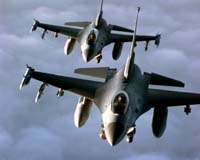 ITT Receives Full-Fielding Recommendation For It's FRCS
(NSI News Source Info) Brighton UK - September 2, 2008: ITT has announced it has completed successful testing, and has been granted a full-fielding recommendation, for its Field Replaceable Connector System (FRCS) from the U.S. Air Force (USAF). The FRCS is a jam-resistant weapon interface connector for use on F-16 MIL-STD-1760 weapons.
The connector system was developed to mate with W.L. Gore and Associates' high performance umbilical assembly for the USAF F-16 fleet.
Together, the jam-resistant weapon interface connector and the umbilical assembly offer low and consistent ejection loads. Umbilical assembly life has been demonstrated and certified in an excess of 100 ejected releases.
The new 'push to fit' design does not require any modification to the mating weapon or aircraft, allowing legacy interfaces and bespoke weapon test equipment to be retained. ITT's FRCS overcomes weapon separation issues seen by traditional connector systems.
"ITT has been working closely with W.L. Gore and Associates for a number of years to develop low-risk technical solutions," said Paul Hills, managing director of ITT's Integrated Structures division.
"By drawing on the complementary expertise of both companies, we have strengthened our position in the increasingly complex and expanding stores interface market."
ITT Receives Full-Fielding Recommendation For It's FRCS
(NSI News Source Info) Brighton UK - September 2, 2008: ITT has announced it has completed successful testing, and has been granted a full-fielding recommendation, for its Field Replaceable Connector System (FRCS) from the U.S. Air Force (USAF). The FRCS is a jam-resistant weapon interface connector for use on F-16 MIL-STD-1760 weapons.
The connector system was developed to mate with W.L. Gore and Associates' high performance umbilical assembly for the USAF F-16 fleet.
Together, the jam-resistant weapon interface connector and the umbilical assembly offer low and consistent ejection loads. Umbilical assembly life has been demonstrated and certified in an excess of 100 ejected releases.
The new 'push to fit' design does not require any modification to the mating weapon or aircraft, allowing legacy interfaces and bespoke weapon test equipment to be retained. ITT's FRCS overcomes weapon separation issues seen by traditional connector systems.
"ITT has been working closely with W.L. Gore and Associates for a number of years to develop low-risk technical solutions," said Paul Hills, managing director of ITT's Integrated Structures division.
"By drawing on the complementary expertise of both companies, we have strengthened our position in the increasingly complex and expanding stores interface market."
Subscribe to:
Posts (Atom)












