U.S. Coast Guard Chooses New Patrol Boat (NSI News Source Info) October 1, 2008: The $88 million contract announced Sept. 26 is for the design and construction of the first Sentinel-class patrol boat. (Coast Guard)
The winner: Bollinger Shipyards, with a proven design from Dutch shipbuilder and ship designer Damen.
"It's imperative that we get this program under way," Adm. Thad Allen, commandant of the Coast Guard, told reporters gathered Sept. 29 at service headquarters in Washington.
The $88 million contract announced Sept. 26 is for the design and construction of the first Sentinel-class patrol boat.
The firm fixed-price contract includes six option periods which, if exercised, would add up to 34 new cutters at an ultimate price of $1.5 billion. The average unit price of the new ships, once the program kicks into production, should be $45 million to $50 million, said Rear Adm. Gary Blore, the Coast Guard's top acquisition official.
The service has a need for 58 new Fast Response Cutters (FRC) to replace the aging 110-foot Island class cutters that have reached the end of their service lives. The FRC is the smallest of three new cutter types envisioned under the Deepwater program to upgrade the Coast Guard's ships, aircraft and systems.
The first of the largest new ships, the National Security Cutter, entered service in August, while construction of the medium-sized cutters has yet to begin. For budget reasons the service had wanted to put off buying new FRC patrol boats for some years and as a stopgap measure rebuild the Island class to become 123-footers, but the conversions failed and the modernization program was halted at eight ships.
Coast Guard engineers also balked at Northrop Grumman's proposal to build a new class of patrol boats using composite construction techniques, and in the spring of 2007 the service announced it was "taking back" management of the patrol boat program to produce an "FRC-B" alternative to the original plan. The FRC-B would come from an existing patrol boat design, and the service began a worldwide search for an acceptable ship.
"This marks a new era in how we do acquisitions," Allen declared of the service's effort to eliminate middlemen. "This is a cradle-to-grave Coast Guard program."
Earlier this year, the service winnowed down proposals from six shipbuilders to a final list of three, from which "Bollinger had by far the best proposal," Blore said.
Citing federal regulations, the service would not reveal what companies submitted competing proposals, but industry sources said the other two finalists were General Dynamics Bath Iron Works and Marinette Marine.
The choice of Bollinger continues a long-standing relationship between the Louisiana shipbuilder and the Coast Guard.
"We're very pleased," Bollinger CEO officer Donald "Boysie" Bollinger told Defense News on Sept. 30. "We have built every patrol boat they own."
While Bollinger also carried out the failed 123-foot conversions, Bollinger said the new contract showed the service still had faith in the shipbuilder.
"We searched all the patrol boats around the world and came up with that design as best fitting the Coast Guard requirements," Bollinger said.
Bollinger said the shipyard would deliver a new cutter every eight weeks starting with the fifth hull.
The Sentinels will be built at the company's shipyard in Lockport, La., Bollinger said - the same yard that built the 110-footers in the 1980s and now is finishing up the last of 73 87-footers for the Coast Guard and Navy.
Bollinger also had planned to build its Littoral Combat Ships (LCS) at Lockport if the Navy awards prime contractor Lockheed Martin enough new LCS contracts. While that hasn't yet happened, Bollinger said the new Coast Guard contract means the company now will build the LCS at its shipyard in Amelia, La., west of Lockport and closer to the Gulf of Mexico.
Features of the New Ships
The 153-and-a-half foot-long Sentinels are based on the Damen 4708 design for the South African Coast Guard's three Lilian Ngoyi-class patrol boats. Those ships were built at Cape Town and entered service in 2004 and 2005.
Similar craft include Jamaica's three Cornwall-class and three Leonard C. Banfield-class patrol boats for Barbados, all built in Damen's Gorinchem shipyard in the Netherlands, and Britain's four Seeker-class patrol vessels for the Revenue and Customs Maritime Branch.
The Sentinel design, Blore said, features a pilot house with 360-degree all-around visibility set near-amidships to minimize motion. The craft will be fitted with active fin stabilizers and a bow thruster, and Bollinger added a stern ramp with the same 12-degree angle found on the 87-footers. The ramp can accommodate rigid hull inflatable boats (RHIBs) up to 7.9 meters in length, but Blore noted the choice of an RHIB for the craft has yet to be made.
The Damen design's controllable-pitch propellers were changed to fixed-pitch on the U.S. version, eliminating some complexity and saving weight without giving up much maneuverability.
Coast Guard officials liked the large mess area, able to hold the vessel's entire 22-person crew at the same time, as well as the cozy berthing arrangements, where the largest berthing space has 4 bunks.
The Sentinels will be armed by an automatic, stabilized, remotely operated 25mm chain gun mounted far forward and four crew-served .50-caliber machine guns. The craft will be powered by two 20-cylinder, 4,300 kilowatt MTU diesel engines providing a top speed of 28 knots - better than the 23.8-knot-speed of the South African patrol boats, but short, Blore noted, of the 30-knot requirement the Coast Guard had wanted.
Only one other requirement isn't met by the Sentinels - they don't have the limited chemical-biological-radiological protection of the original Fast Response Cutter requirement, Blore said.
The ships will be able to stay at sea for at least five days and be underway for 2,500 hours per year.
Coast Guard officials have not yet traveled to South Africa to see the 4708 parent craft for themselves, but said that with the contract award they "probably" would talk with the South African Coast Guard about the ships' concept of operations, and visit Damen to discuss potential design modifications.
Having chosen a new patrol boat, Coast Guard officials are eager to see the new ship in action. The service will be evaluating the design once it enters service, and could re-compete the remainder of the total of 58 new patrol boats that are needed.
"We may look at a different patrol boat a few years from now if it doesn't meet all our criteria," Blore added.
U.S. Coast Guard Chooses New Patrol Boat (NSI News Source Info) October 1, 2008: The $88 million contract announced Sept. 26 is for the design and construction of the first Sentinel-class patrol boat. (Coast Guard)
The winner: Bollinger Shipyards, with a proven design from Dutch shipbuilder and ship designer Damen.
"It's imperative that we get this program under way," Adm. Thad Allen, commandant of the Coast Guard, told reporters gathered Sept. 29 at service headquarters in Washington.
The $88 million contract announced Sept. 26 is for the design and construction of the first Sentinel-class patrol boat.
The firm fixed-price contract includes six option periods which, if exercised, would add up to 34 new cutters at an ultimate price of $1.5 billion. The average unit price of the new ships, once the program kicks into production, should be $45 million to $50 million, said Rear Adm. Gary Blore, the Coast Guard's top acquisition official.
The service has a need for 58 new Fast Response Cutters (FRC) to replace the aging 110-foot Island class cutters that have reached the end of their service lives. The FRC is the smallest of three new cutter types envisioned under the Deepwater program to upgrade the Coast Guard's ships, aircraft and systems.
The first of the largest new ships, the National Security Cutter, entered service in August, while construction of the medium-sized cutters has yet to begin. For budget reasons the service had wanted to put off buying new FRC patrol boats for some years and as a stopgap measure rebuild the Island class to become 123-footers, but the conversions failed and the modernization program was halted at eight ships.
Coast Guard engineers also balked at Northrop Grumman's proposal to build a new class of patrol boats using composite construction techniques, and in the spring of 2007 the service announced it was "taking back" management of the patrol boat program to produce an "FRC-B" alternative to the original plan. The FRC-B would come from an existing patrol boat design, and the service began a worldwide search for an acceptable ship.
"This marks a new era in how we do acquisitions," Allen declared of the service's effort to eliminate middlemen. "This is a cradle-to-grave Coast Guard program."
Earlier this year, the service winnowed down proposals from six shipbuilders to a final list of three, from which "Bollinger had by far the best proposal," Blore said.
Citing federal regulations, the service would not reveal what companies submitted competing proposals, but industry sources said the other two finalists were General Dynamics Bath Iron Works and Marinette Marine.
The choice of Bollinger continues a long-standing relationship between the Louisiana shipbuilder and the Coast Guard.
"We're very pleased," Bollinger CEO officer Donald "Boysie" Bollinger told Defense News on Sept. 30. "We have built every patrol boat they own."
While Bollinger also carried out the failed 123-foot conversions, Bollinger said the new contract showed the service still had faith in the shipbuilder.
"We searched all the patrol boats around the world and came up with that design as best fitting the Coast Guard requirements," Bollinger said.
Bollinger said the shipyard would deliver a new cutter every eight weeks starting with the fifth hull.
The Sentinels will be built at the company's shipyard in Lockport, La., Bollinger said - the same yard that built the 110-footers in the 1980s and now is finishing up the last of 73 87-footers for the Coast Guard and Navy.
Bollinger also had planned to build its Littoral Combat Ships (LCS) at Lockport if the Navy awards prime contractor Lockheed Martin enough new LCS contracts. While that hasn't yet happened, Bollinger said the new Coast Guard contract means the company now will build the LCS at its shipyard in Amelia, La., west of Lockport and closer to the Gulf of Mexico.
Features of the New Ships
The 153-and-a-half foot-long Sentinels are based on the Damen 4708 design for the South African Coast Guard's three Lilian Ngoyi-class patrol boats. Those ships were built at Cape Town and entered service in 2004 and 2005.
Similar craft include Jamaica's three Cornwall-class and three Leonard C. Banfield-class patrol boats for Barbados, all built in Damen's Gorinchem shipyard in the Netherlands, and Britain's four Seeker-class patrol vessels for the Revenue and Customs Maritime Branch.
The Sentinel design, Blore said, features a pilot house with 360-degree all-around visibility set near-amidships to minimize motion. The craft will be fitted with active fin stabilizers and a bow thruster, and Bollinger added a stern ramp with the same 12-degree angle found on the 87-footers. The ramp can accommodate rigid hull inflatable boats (RHIBs) up to 7.9 meters in length, but Blore noted the choice of an RHIB for the craft has yet to be made.
The Damen design's controllable-pitch propellers were changed to fixed-pitch on the U.S. version, eliminating some complexity and saving weight without giving up much maneuverability.
Coast Guard officials liked the large mess area, able to hold the vessel's entire 22-person crew at the same time, as well as the cozy berthing arrangements, where the largest berthing space has 4 bunks.
The Sentinels will be armed by an automatic, stabilized, remotely operated 25mm chain gun mounted far forward and four crew-served .50-caliber machine guns. The craft will be powered by two 20-cylinder, 4,300 kilowatt MTU diesel engines providing a top speed of 28 knots - better than the 23.8-knot-speed of the South African patrol boats, but short, Blore noted, of the 30-knot requirement the Coast Guard had wanted.
Only one other requirement isn't met by the Sentinels - they don't have the limited chemical-biological-radiological protection of the original Fast Response Cutter requirement, Blore said.
The ships will be able to stay at sea for at least five days and be underway for 2,500 hours per year.
Coast Guard officials have not yet traveled to South Africa to see the 4708 parent craft for themselves, but said that with the contract award they "probably" would talk with the South African Coast Guard about the ships' concept of operations, and visit Damen to discuss potential design modifications.
Having chosen a new patrol boat, Coast Guard officials are eager to see the new ship in action. The service will be evaluating the design once it enters service, and could re-compete the remainder of the total of 58 new patrol boats that are needed.
"We may look at a different patrol boat a few years from now if it doesn't meet all our criteria," Blore added.
Wednesday, October 01, 2008
U.S. Coast Guard Chooses New Patrol Boat
U.S. Coast Guard Chooses New Patrol Boat (NSI News Source Info) October 1, 2008: The $88 million contract announced Sept. 26 is for the design and construction of the first Sentinel-class patrol boat. (Coast Guard)
The winner: Bollinger Shipyards, with a proven design from Dutch shipbuilder and ship designer Damen.
"It's imperative that we get this program under way," Adm. Thad Allen, commandant of the Coast Guard, told reporters gathered Sept. 29 at service headquarters in Washington.
The $88 million contract announced Sept. 26 is for the design and construction of the first Sentinel-class patrol boat.
The firm fixed-price contract includes six option periods which, if exercised, would add up to 34 new cutters at an ultimate price of $1.5 billion. The average unit price of the new ships, once the program kicks into production, should be $45 million to $50 million, said Rear Adm. Gary Blore, the Coast Guard's top acquisition official.
The service has a need for 58 new Fast Response Cutters (FRC) to replace the aging 110-foot Island class cutters that have reached the end of their service lives. The FRC is the smallest of three new cutter types envisioned under the Deepwater program to upgrade the Coast Guard's ships, aircraft and systems.
The first of the largest new ships, the National Security Cutter, entered service in August, while construction of the medium-sized cutters has yet to begin. For budget reasons the service had wanted to put off buying new FRC patrol boats for some years and as a stopgap measure rebuild the Island class to become 123-footers, but the conversions failed and the modernization program was halted at eight ships.
Coast Guard engineers also balked at Northrop Grumman's proposal to build a new class of patrol boats using composite construction techniques, and in the spring of 2007 the service announced it was "taking back" management of the patrol boat program to produce an "FRC-B" alternative to the original plan. The FRC-B would come from an existing patrol boat design, and the service began a worldwide search for an acceptable ship.
"This marks a new era in how we do acquisitions," Allen declared of the service's effort to eliminate middlemen. "This is a cradle-to-grave Coast Guard program."
Earlier this year, the service winnowed down proposals from six shipbuilders to a final list of three, from which "Bollinger had by far the best proposal," Blore said.
Citing federal regulations, the service would not reveal what companies submitted competing proposals, but industry sources said the other two finalists were General Dynamics Bath Iron Works and Marinette Marine.
The choice of Bollinger continues a long-standing relationship between the Louisiana shipbuilder and the Coast Guard.
"We're very pleased," Bollinger CEO officer Donald "Boysie" Bollinger told Defense News on Sept. 30. "We have built every patrol boat they own."
While Bollinger also carried out the failed 123-foot conversions, Bollinger said the new contract showed the service still had faith in the shipbuilder.
"We searched all the patrol boats around the world and came up with that design as best fitting the Coast Guard requirements," Bollinger said.
Bollinger said the shipyard would deliver a new cutter every eight weeks starting with the fifth hull.
The Sentinels will be built at the company's shipyard in Lockport, La., Bollinger said - the same yard that built the 110-footers in the 1980s and now is finishing up the last of 73 87-footers for the Coast Guard and Navy.
Bollinger also had planned to build its Littoral Combat Ships (LCS) at Lockport if the Navy awards prime contractor Lockheed Martin enough new LCS contracts. While that hasn't yet happened, Bollinger said the new Coast Guard contract means the company now will build the LCS at its shipyard in Amelia, La., west of Lockport and closer to the Gulf of Mexico.
Features of the New Ships
The 153-and-a-half foot-long Sentinels are based on the Damen 4708 design for the South African Coast Guard's three Lilian Ngoyi-class patrol boats. Those ships were built at Cape Town and entered service in 2004 and 2005.
Similar craft include Jamaica's three Cornwall-class and three Leonard C. Banfield-class patrol boats for Barbados, all built in Damen's Gorinchem shipyard in the Netherlands, and Britain's four Seeker-class patrol vessels for the Revenue and Customs Maritime Branch.
The Sentinel design, Blore said, features a pilot house with 360-degree all-around visibility set near-amidships to minimize motion. The craft will be fitted with active fin stabilizers and a bow thruster, and Bollinger added a stern ramp with the same 12-degree angle found on the 87-footers. The ramp can accommodate rigid hull inflatable boats (RHIBs) up to 7.9 meters in length, but Blore noted the choice of an RHIB for the craft has yet to be made.
The Damen design's controllable-pitch propellers were changed to fixed-pitch on the U.S. version, eliminating some complexity and saving weight without giving up much maneuverability.
Coast Guard officials liked the large mess area, able to hold the vessel's entire 22-person crew at the same time, as well as the cozy berthing arrangements, where the largest berthing space has 4 bunks.
The Sentinels will be armed by an automatic, stabilized, remotely operated 25mm chain gun mounted far forward and four crew-served .50-caliber machine guns. The craft will be powered by two 20-cylinder, 4,300 kilowatt MTU diesel engines providing a top speed of 28 knots - better than the 23.8-knot-speed of the South African patrol boats, but short, Blore noted, of the 30-knot requirement the Coast Guard had wanted.
Only one other requirement isn't met by the Sentinels - they don't have the limited chemical-biological-radiological protection of the original Fast Response Cutter requirement, Blore said.
The ships will be able to stay at sea for at least five days and be underway for 2,500 hours per year.
Coast Guard officials have not yet traveled to South Africa to see the 4708 parent craft for themselves, but said that with the contract award they "probably" would talk with the South African Coast Guard about the ships' concept of operations, and visit Damen to discuss potential design modifications.
Having chosen a new patrol boat, Coast Guard officials are eager to see the new ship in action. The service will be evaluating the design once it enters service, and could re-compete the remainder of the total of 58 new patrol boats that are needed.
"We may look at a different patrol boat a few years from now if it doesn't meet all our criteria," Blore added.

DTN News: India Details Role of Special Forces
DTN News: India Details Role of Special Forces
(NSI News Source Info) NEW DELHI, India - October 1, 2008: India's Special Forces doctrine, released Sept. 30, details the dominant role special forces units are expected to play for all three services in future wars.
Adm. Sureesh Mehta, chairman, Chief of Staff Committee, and chief of the Naval Staff, formally released the "Joint Doctrine for Special Forces Operations" at a function here.
 "All future wars or conflicts will demand the Special Forces to play an increasingly dominant role at all levels of war, be it strategic, operational or tactical. Therefore, the bringing out of this Special Forces doctrine has been most timely and apt," said the official release of the Indian Defence Ministry.
India's special forces will be trained to fight behind enemy lines and be instrumental in the Rapid Action Force formation enabling the Navy to fight littoral warfare.
The Indian Rapid Action forces, some of whom are being trained by Israel at unknown locations, will be armed with advanced weaponry and integrated through C4I systems.
"The doctrine emphasizes the need for providing timely, wholesome and accurate intelligence, fire support by attack helicopters, naval gunfire, artillery, precision-guided munitions and rockets for the successful conduct of special operations," the Defence Ministry release said. "The doctrine also highlights the importance of various aspects of joint training to achieve greater cohesion and the understanding necessary for conducting joint special operations."
"All future wars or conflicts will demand the Special Forces to play an increasingly dominant role at all levels of war, be it strategic, operational or tactical. Therefore, the bringing out of this Special Forces doctrine has been most timely and apt," said the official release of the Indian Defence Ministry.
India's special forces will be trained to fight behind enemy lines and be instrumental in the Rapid Action Force formation enabling the Navy to fight littoral warfare.
The Indian Rapid Action forces, some of whom are being trained by Israel at unknown locations, will be armed with advanced weaponry and integrated through C4I systems.
"The doctrine emphasizes the need for providing timely, wholesome and accurate intelligence, fire support by attack helicopters, naval gunfire, artillery, precision-guided munitions and rockets for the successful conduct of special operations," the Defence Ministry release said. "The doctrine also highlights the importance of various aspects of joint training to achieve greater cohesion and the understanding necessary for conducting joint special operations."
"All future wars or conflicts will demand the Special Forces to play an increasingly dominant role at all levels of war, be it strategic, operational or tactical. Therefore, the bringing out of this Special Forces doctrine has been most timely and apt," said the official release of the Indian Defence Ministry.
India's special forces will be trained to fight behind enemy lines and be instrumental in the Rapid Action Force formation enabling the Navy to fight littoral warfare.
The Indian Rapid Action forces, some of whom are being trained by Israel at unknown locations, will be armed with advanced weaponry and integrated through C4I systems.
"The doctrine emphasizes the need for providing timely, wholesome and accurate intelligence, fire support by attack helicopters, naval gunfire, artillery, precision-guided munitions and rockets for the successful conduct of special operations," the Defence Ministry release said. "The doctrine also highlights the importance of various aspects of joint training to achieve greater cohesion and the understanding necessary for conducting joint special operations."
Alenia to Supply 18 Planes to Afghanistan
Alenia to Supply 18 Planes to Afghanistan
(NSI News Source Info) ROME - October 1, 2008: Alenia Aeronautica has won a $287 million (200 million-euro) contract to supply 18 transport planes to the Afghan armed forces through the U.S. air force, the Italian group Finmeccanica said Sept. 30.
Alenia Aeronautica, a subsidiary of Finmeccanica, signed the contract with the U.S. Air Force, the group said.
 Alenia Aeronautica G-222
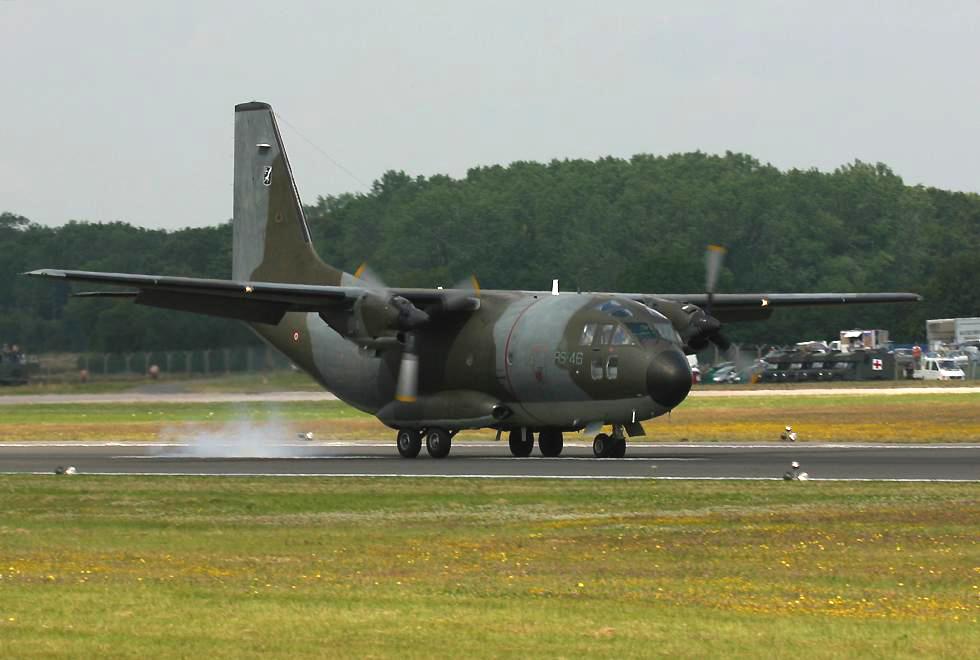 Alenia Aeronautica G-222
The G-222 planes, which were used by the Italian army until 2005, will be refitted and bought by the U.S. Air Force before being supplied to its Afghan counterpart, Finmeccanica said in a statement.
The planes, which can transport up to 10 tons of freight or take 36 people at a time for medical evacuation, are set to be supplied between 2009 and 2011, the group said.
Some 2,400 Italian soldiers are in Afghanistan with the NATO-led International Security Assistance Force (ISAF).
Pakistan Navy Accepts Hamza Submarine
Pakistan Navy Accepts Hamza Submarine
(NSI News Source Info) PARIS - October 1, 2008: The Pakistan Navy has completed customer acceptance of the Hamza diesel-electric submarine, an Agosta B-class boat equipped with a Mesma air-independent propulsion (AIP) system, French naval company DCNS said Sept. 30.
Integration of the Mesma AIP module in the Hamza was a world first, DCNS said in a statement.
 Agosta B-class submarine
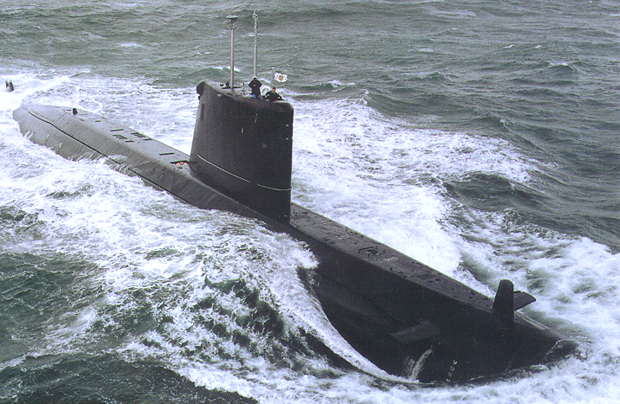 Agosta B-class submarine
"Following intensive sea trials, the customer formally declared that PNS Hamza met its acceptance criteria," DCNS said.
An AIP system generates electricity without a snorkel, thus decreasing risk of detection as snorkeling requires running at the surface.
DCNS hopes to sell further submarines to Pakistan, a company executive said. The Pakistan Navy is understood to have recommended submarines from HDW of Germany.
Pakistan Naval Dockyard, Karachi, built the Hamza submarine under a technology-transfer deal with DCNS. Two more Mesma modules are being built for retrofit on the sister boats PNS Khalid and PNS Saad.
The Pakistan Navy, PN Dockyard, Karachi Shipyard and Engineering Works (KSEW) and DCNS cooperated on the Mesma program.
DCNS has also sold six Scorpene diesel-electric submarines with MBDA Exocet anti-ship missiles. India will build the Scorpene under license at local yards.
U.S. Army in S. Korea Gets Up-Armored Humvees
U.S. Army in S. Korea Gets Up-Armored Humvees
(NSI News Source Info) SEOUL - October 1, 2008: The 2nd Infantry Division of U.S Forces Korea (USFK) has received up-to-date up-armored tactical Humvees to replace its aging fleet of Humvees deployed in the mid- to late-1980s, USFK officials said Sept. 30.
Sixty-one up-armored Humvees, whose per-unit price is some $119,000, were delivered to 2nd ID units stationed north of here last week, the first of approximately 170 that will be distributed to U.S. troops in South Korea in coming weeks, they said.
 M1151A1 HMMVV
 M1151A1 HMMVV
Two types of up-armored Humvees, the M1151A1 HMMVV and the M1165A1, are being delivered to the USFK, mostly 2nd ID units, said Dave Palmer, chief of the USFK public affairs office.
USFK requested the vehicles about four years ago to replace Humvees shipped to the Middle East, but their arrival was delayed because new Humvees had been going to troops in Iraq and Afghanistan, the Stars and Stripes reported in March.
Army Gen. B.B. Bell, a former USFK commander, told a congressional committee March 11 that he was concerned about his command's lack of up-armored vehicles and had asked the Army to speed up their delivery.
Bell also reportedly requested the Army supply his command with Mine Resistant Ambush Protected vehicles designed to survive improvised explosive device attacks and ambushes.
"Given the experience that we've had in Afghanistan and Iraq and knowing the special operating force capability in North Korea, I want all of my wheeled vehicles to be up-armored on the peninsula, and that has not taken place yet," Bell said.
"If you walked among the 2nd Infantry Division right now, you'd see a very ready division without up-armored vehicles," said the general, who retired from the military in June. "So that piece, given what we've seen in Iraq and that vulnerability, does concern me."
The USFK plans to bring its up-armored vehicle stock to 14 percent of its total requirement, according to officials.
Currently, about 2 percent of the USFK's tactical ground force wheeled vehicles are up-armored, in addition to fully armored tanks and Bradley fighting vehicles. About 1 percent of USFK's prepositioned vehicles and equipment are up-armored, it said.
DTN News: Russia Confident MiG Will Win Battle For Indian Air Force's Tender
DTN News: Russia Confident MiG Will Win Battle For Indian Air Force's Tender
(NSI News Source Info) NEW DELHI - October 1, 2008: United Aircraft Corporation chief Alexey Fedorov has said that he expected the MiG-35 to win the multi-billion tender for multi-role combat aircraft on the strength of Russia’s record of transferring technology. The Mikoyan MiG-35 is a further development of the MiG-29M/M2 and MiG-29K/KUB technology. Classified as a 4.5 generation fighter aircraft, the only existing prototype is the third modification of the existing MiG-29M2 airframe which previously served as MiG-29M2 model demonstrator. The MiG-35 is now classed as a medium-weight aircraft because its maximum take-off weight has increased by 30 percent which exceeds its previous criteria of classification.
The Mikoyan MiG-35 is a further development of the MiG-29M/M2 and MiG-29K/KUB technology. Classified as a 4.5 generation fighter aircraft, the only existing prototype is the third modification of the existing MiG-29M2 airframe which previously served as MiG-29M2 model demonstrator. The MiG-35 is now classed as a medium-weight aircraft because its maximum take-off weight has increased by 30 percent which exceeds its previous criteria of classification.
Admitting that competition was very tough since the crème de la crème of the aviation industry was participating in the Indian Air Force’s tender for 126 fighter aircraft estimated at over $10 billions, Mr. Fedorov said, “We may win because of the long-term advantage of transferring know-how to India.”
Heading the UAC — a conglomerate of major Russian aviation companies, including Sukhoi, Illyushin, Tupolov and Irkut — Mr. Fedorov pointed out that Russia had in the past transferred technology of military fighters such as MiG-21, MiG-27 and Sukhoi-30 MKI. “I am sure no one would be able to transfer such intellectual know-how as Russia. Besides, another advantageous factor is that the adaptability of MiG-35 to all maintenance centres in the territory of India can be much easier,” he told journalists here.
Tuesday, September 30, 2008
Russia, Kazakhstan to conduct joint war games on Oct. 3
 Russia, Kazakhstan to conduct joint war games on Oct. 3
(NSI News Source Info) ASTANA - October 1, 2008: Troops from Russia and Kazakhstan will conduct joint maneuvers near the Kazakh city of Almaty on October 3, the Central Asian country's Defense Ministry said on Tuesday.
The drills, named Aldaspan-2008, will include command-and-staff exercises and tactical maneuvers. They will engage Kazakh staff officers and airmobile troops, as well as Russian Air Force officers and aircraft, and a special-purpose group of the General Staff.
The two countries, both members of the Collective Security Treaty Organization (CSTO), are set to conduct joint naval anti-terrorism exercises in the Caspian Sea in 2009.
The CSTO is a security grouping also comprising Armenia, Belarus, Kyrgyzstan, Uzbekistan and Tajikistan.
Russia has recently been strengthening military ties with Eurasian allies amid growing tensions over NATO expansion and U.S. missile shield plans for Central Europe.
Russia, Kazakhstan to conduct joint war games on Oct. 3
(NSI News Source Info) ASTANA - October 1, 2008: Troops from Russia and Kazakhstan will conduct joint maneuvers near the Kazakh city of Almaty on October 3, the Central Asian country's Defense Ministry said on Tuesday.
The drills, named Aldaspan-2008, will include command-and-staff exercises and tactical maneuvers. They will engage Kazakh staff officers and airmobile troops, as well as Russian Air Force officers and aircraft, and a special-purpose group of the General Staff.
The two countries, both members of the Collective Security Treaty Organization (CSTO), are set to conduct joint naval anti-terrorism exercises in the Caspian Sea in 2009.
The CSTO is a security grouping also comprising Armenia, Belarus, Kyrgyzstan, Uzbekistan and Tajikistan.
Russia has recently been strengthening military ties with Eurasian allies amid growing tensions over NATO expansion and U.S. missile shield plans for Central Europe.
Russia plans to raise defense expenditure by 50% in 3 years
 Russia plans to raise defense expenditure by 50% in 3 years
(NSI News Source Info) MOSCOW - October 1, 2008: Russia is planning to increase its spending on defense by 50% in the next three years, a senior MP said Tuesday.
Russia's defense budget is believed to be less than a tenth of the United States', but the country's military expenditure has been steadily growing in the past few years.
"According to a draft federal budget for 2009-2011, expenditure on national defense will increase in 2009 by 25.7% from 1.02 trillion rubles ($40 billion) to 1.28 trillion rubles ($51.3 billion) and would account for 14% of total budget spending," said Viktor Zavarzin, chairman of the Defense Committee in Russia's lower house of parliament.
He also said that by 2011 the total defense expenditures would increase by 45.6% compared with 2008.
A large portion of additional expenditures would go toward raising salaries and improving the living conditions of military personnel, he added.
Russia is soon to adopt a new military doctrine that aims to transform the Armed Forces into a mobile and effective military force. Their structures will be "optimized" through the use of combined arms units performing similar tasks.
President Dmitry Medvedev said last week that Russia would make the modernization of its nuclear deterrent and Armed Forces a priority in the decade up to 2020.
"We must ensure air superiority, precision strikes at land and sea targets, and timely deployment of troops," Medvedev said. "We are planning to launch large-scale production of warships, primarily, nuclear submarines with cruise missiles and multi-purpose attack submarines."
Russia's Defense Ministry earlier said it would spend around 1 trillion rubles ($40 billion) of federal budget funds in 2008, 20% more than in 2007, and that in 2008-10 military spending would account for 15.5-16% of total federal budget spending.
Russia plans to raise defense expenditure by 50% in 3 years
(NSI News Source Info) MOSCOW - October 1, 2008: Russia is planning to increase its spending on defense by 50% in the next three years, a senior MP said Tuesday.
Russia's defense budget is believed to be less than a tenth of the United States', but the country's military expenditure has been steadily growing in the past few years.
"According to a draft federal budget for 2009-2011, expenditure on national defense will increase in 2009 by 25.7% from 1.02 trillion rubles ($40 billion) to 1.28 trillion rubles ($51.3 billion) and would account for 14% of total budget spending," said Viktor Zavarzin, chairman of the Defense Committee in Russia's lower house of parliament.
He also said that by 2011 the total defense expenditures would increase by 45.6% compared with 2008.
A large portion of additional expenditures would go toward raising salaries and improving the living conditions of military personnel, he added.
Russia is soon to adopt a new military doctrine that aims to transform the Armed Forces into a mobile and effective military force. Their structures will be "optimized" through the use of combined arms units performing similar tasks.
President Dmitry Medvedev said last week that Russia would make the modernization of its nuclear deterrent and Armed Forces a priority in the decade up to 2020.
"We must ensure air superiority, precision strikes at land and sea targets, and timely deployment of troops," Medvedev said. "We are planning to launch large-scale production of warships, primarily, nuclear submarines with cruise missiles and multi-purpose attack submarines."
Russia's Defense Ministry earlier said it would spend around 1 trillion rubles ($40 billion) of federal budget funds in 2008, 20% more than in 2007, and that in 2008-10 military spending would account for 15.5-16% of total federal budget spending.
Russian warship visits naval base near Kyoto
 Russian warship visits naval base near Kyoto
(NSI News Source Info) MOSCOW - October 1, 2008: A Russian warship from the Pacific Fleet has made a port call at the Maizuru naval base in Japan's Kyoto Prefecture, a Navy spokesman said on Tuesday.
Maizuru hosts a key district headquarters for Japan's Maritime Self-Defense Force.
"Today, the Admiral Panteleyev large ASW ship accompanied by a rescue tugboat arrived at the Maizuru port on an unofficial visit," Capt. 1st Rank Igor Dygalo told RIA Novosti.
The visit is part of the Pacific Fleet's agenda of annual activities in international waters.
"The Russian vessels will participate in joint exercises with Japan's Maritime Self-Defense Force and practice coordinated maneuvering and communications," Dygalo said.
The Admiral Panteleyev is an Udaloy-class destroyer that serves as an anti-submarine warfare platform fitted with a variety of ASW weapons and limited surface-to-air defense capabilities.
The unofficial visit of the Russian ships to Japan will last until October 3, the spokesman said.
Russian warship visits naval base near Kyoto
(NSI News Source Info) MOSCOW - October 1, 2008: A Russian warship from the Pacific Fleet has made a port call at the Maizuru naval base in Japan's Kyoto Prefecture, a Navy spokesman said on Tuesday.
Maizuru hosts a key district headquarters for Japan's Maritime Self-Defense Force.
"Today, the Admiral Panteleyev large ASW ship accompanied by a rescue tugboat arrived at the Maizuru port on an unofficial visit," Capt. 1st Rank Igor Dygalo told RIA Novosti.
The visit is part of the Pacific Fleet's agenda of annual activities in international waters.
"The Russian vessels will participate in joint exercises with Japan's Maritime Self-Defense Force and practice coordinated maneuvering and communications," Dygalo said.
The Admiral Panteleyev is an Udaloy-class destroyer that serves as an anti-submarine warfare platform fitted with a variety of ASW weapons and limited surface-to-air defense capabilities.
The unofficial visit of the Russian ships to Japan will last until October 3, the spokesman said.
Israel Asks To Buy F-35s: Pentagon
 Israel Asks To Buy F-35s: Pentagon
(NSI News Source Info) WASHINGTON - October 1, 2008: Israel has asked to buy up to 75 F-35 Joint Strike Fighters in a deal worth as much as $15.2 billion if all options are exercised, the Pentagon said Sept. 30.
The Defense Security Cooperation Agency said the sale initially would be for 25 fighters designed for conventional take off and landing.
But Israel would have the option of buying another 50 of the aircraft, either designed for conventional take off and landing or for short take off and vertical landing, the agency said.
"The total value, if all options are exercised, could be as high as 15.2 billion dollars," it said in a statement.
The F-35 is a stealthy new multi-role fighter built by Lockheed Martin that is intended to replace the F-16.
Israeli officials have said they plan to buy 100 fighters over the next decade.
It was unclear how soon delivery of the aircraft might begin.
The DSCA disclosed the proposed sale in a notification to Congress, which has 30 days to raise any objections to the sale. A deal would then have to be concluded with the Israelis.
"It is vital to the U.S. national interest to assist Israel to develop and maintain a strong and ready self-defense capability. This proposed sale is consistent with those objectives," the DSCA said.
"Israel needs these aircraft to augment its present operational inventory and to enhance its air-to-air and air-to-ground self-defense capability," it said.
Israel Asks To Buy F-35s: Pentagon
(NSI News Source Info) WASHINGTON - October 1, 2008: Israel has asked to buy up to 75 F-35 Joint Strike Fighters in a deal worth as much as $15.2 billion if all options are exercised, the Pentagon said Sept. 30.
The Defense Security Cooperation Agency said the sale initially would be for 25 fighters designed for conventional take off and landing.
But Israel would have the option of buying another 50 of the aircraft, either designed for conventional take off and landing or for short take off and vertical landing, the agency said.
"The total value, if all options are exercised, could be as high as 15.2 billion dollars," it said in a statement.
The F-35 is a stealthy new multi-role fighter built by Lockheed Martin that is intended to replace the F-16.
Israeli officials have said they plan to buy 100 fighters over the next decade.
It was unclear how soon delivery of the aircraft might begin.
The DSCA disclosed the proposed sale in a notification to Congress, which has 30 days to raise any objections to the sale. A deal would then have to be concluded with the Israelis.
"It is vital to the U.S. national interest to assist Israel to develop and maintain a strong and ready self-defense capability. This proposed sale is consistent with those objectives," the DSCA said.
"Israel needs these aircraft to augment its present operational inventory and to enhance its air-to-air and air-to-ground self-defense capability," it said.
Subscribe to:
Posts (Atom)