(NSI News Source Info) WASHINGTON - October 8, 2008: The Boeing Company [NYSE: BA] today announced a new rotorcraft program, the AH-6 light attack/reconnaissance helicopter.
Designed on a combat-proven platform with a heritage of successful service with Special Operations, the AH-6 is designed to meet the current requirements of international military customers while maintaining flexibility for future growth.
"Boeing has been approached by several potential customers seeking light attack and reconnaissance capabilities in a flexible rotorcraft platform," Dave Palm, director of Boeing Rotorcraft Business Development, said today at the Association of the United States Army's annual convention in Washington, D.C. "We believe this system is a perfect fit for those customers seeking long endurance, proven performance and 2,000-pound payload within an affordable helicopter."
The AH-6 features an Electro-Optical/Infrared forward-looking sight system as well as a mount for weapons that have been qualified on the aircraft, including Hellfire missiles, the M260 seven-shot rocket pod, a machine gun and a mini-gun integrated with a sensor system. A communications package allows the AH-6 to connect to other aircraft and to ground stations.
Boeing will produce the AH-6 at its Rotorcraft Systems facility in Mesa, Ariz., and will draw on that organization's existing secure supply base to ensure on-time, on-cost delivery.
Tuesday, October 07, 2008
Russia asks EU to monitor its troop pullout from Georgia
India to launch first Moon mission on Oct. 22
Monday, October 06, 2008
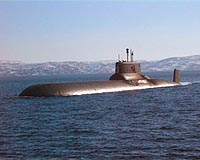
Outside View: Russia's sub fleet plans
India, Russia Cooperating re: “Fifth-Generation Fighter”
(NSI News Source Info) October 7, 2008: Russia’s SU-27/30 Flanker family fighters were invented in the 1980s and 1990s, and attempted to incorporate the lessons from America’s “teen series” fighters (F-14, F-15, F-16, F/A-18) into their designs. They were successful, and India’s Air Force may now be flying the world’s second best air superiority fighter in the SU-30MKI. Meanwhile, the USA is creating “5th generation” fighters like the F-22A Raptor that offer full stealth, supermaneuverability, an advanced AESA radar, huge computing power that creates a single “sensor fusion” picture from the plane’s array of embedded sensors and datalinks, and the ability to “supercruise” above Mach 1 instead of just making short supersonic dashes. To a lesser extent, there’s also the cheaper F-35 Lightning II, with some stealth, a smaller AESA radar, sensor fusion, and even more sensors embedded around the aircraft.
MiG 1.44 MFI
SU-30 MKIs
Russia’s MiG 1.44 (if indeed it was a real project?) and/or “I-21” type aircraft were an attempt to keep up, but lack of funds suspended both efforts. The obvious solution is a foreign partner, but Europe had limited funds and its own 4+ generation projects in the Rafale and Eurofighter. India has a longstanding Russian defense relationship, and from their point of view a joint development agreement is one way to restrict Russian cooperation with China along similar lines. See Vijiander K Thakur’s “Understanding IAF interest in the MiG fifth generation fighter” for more on the proposal to cooperate with MiG.
Even so, India’s procurement history is full of dead-ends and “almost weres” – which is why reaction to past announcements has been very muted here. An cooperation memo has now been signed – but almost a year later, it is not yet a firm agreement, even as Russia prepares to flight test its PAK-FA/T-50 design in 2009. Then, too, the Fifth Generation Fighter Aircraft (FGFA) project has a non-trivial set of obstacles to overcome, in order to see production versions for India.
US Army Testing Lightweight .50-Caliber: Lethality At Half The Weight
(NSI News Source Info) FO
RT BELVOIR, Va. - October 7, 2008: As Soldiers training for combat look to lighten their load, they can look forward to the Lightweight .50-Caliber Machine Gun. The LW50, an addition to the Army's arsenal of machine guns at one-half the weight of the M2 .50-Caliber Machine Gun and with 60 percent less recoil, does not require the setting of headspace and timing.
The LW50 provides Soldiers with the punch of a .50-caliber machine gun in the footprint of a 7.62mm weapon system, allowing them to bring .50 caliber lethality to the fight in situations where using a light to medium machine gun is the only available option. The LW50 is still in the early stages of system design and development and officials at the Program Executive Office Soldier at Fort Belvoir said they expect the weapon to be fielded in 2011.
They said a limited two-part Early User Assessment for the weapon was conducted with Special Operations Command personnel in March and May. The LW50, a technological spinout from the 25mm XM307 Advanced Crew Served Weapon program, is capable of firing all current .50-caliber ammunition in the inventory, including the standard M33 ball; the M8 armor-piercing incendiary; the M903 saboted light armor penetrator; and the MK211 multipurpose round that combines armor-piercing, explosive, and incendiary effects.
"A major benefit of the LW50 is the weight and recoil savings and no requirement to adjust the headspace and timing," said Shailesh Parmar, a product director for Product Manager Crew Served Weapons in the office of Project Manager Soldier Weapons.
"The LW50 is expected to weigh less than 65 pounds, including tripod and traversing and elevation mechanism, compared with the M2 system's weight of 128 pounds, a savings of 63 pounds or more," said Parmar.
He also noted that the LW50 can be set up faster than an M2 because it does not need ballast to weigh down the tripod due to less recoil. The LW50's greatly reduced recoil enables Soldiers to use weapon-magnified optics and maintain sight picture of the target, which was unthinkable and potentially painful with the M2. "Lower recoil also means less dispersion of rounds and better accuracy," Parmar said. "That, in turn, makes it easier to qualify with the LW50, allows Soldiers to use rounds more economically, and reduces the logistical burden." Staff Sgt.
James Tyus of the 1st Battalion, 82nd Field Artillery was quick to notice the improvements while training on the weapon at Fort Hood, Texas.
"It absorbs more recoil now. Given that, it makes the weapon more accurate. I like it for its accuracy," Tyus said. The LW50's weight savings, reduced recoil, and increased accuracy allow for its use in places that were not feasible for an M2, such as in light infantry operations.
Once the LW50 is deployed, all vehicles that mount the M2 will be able to mount the new system. Tests have been successfully conducted mounting the system to the Stryker Combat Vehicle and the Common Remotely Operated Weapon Station.
Other benefits of the LW50 include safety and training applications. The LW50 eliminates the need for the operator to adjust the headspace and timing and for any special maintenance tools, reducing the amount of training required. The current LW50 has 131 parts, compared with 244 for the M2.
"It's a very unique weapon. You don't have to worry about timing," said Pvt. Michael Zinns with 1-82 Field Artillery, who, like Tyus, was introduced to the LW50 at Fort Hood. The teardown, too, "is actually a lot easier, and the barrels are much more easily interchangeable," Zinns said. The Army recently issued a requirement for a lightweight .50 caliber machine gun. Furthermore, Special Operations Command (SOCOM) is developing lightweight vehicles that will need armament. SOCOM recognizes that a lightweight, low-recoil weapon suitable for these vehicles could see expanded use within dismounted units.
The LW50 has the potential to satisfy those three needs in one package. According to the current program cycle, the LW50 could be fielded at the end of FY11.
Light units, such as the 82nd Airborne Division, the 101st Airborne Division (Air Assault), 10th Mountain Division, 25th Infantry Division, and SOCOM forces, are expected to benefit most from the new weapon.
"I think that's what a lot of us look for, a lighter weapon," said Tyus. "I'm really excited about it." Seeing what PEO-Soldier is bringing to bear in the Global War on Terrorism "inspires and sustains our young Soldiers" as they prepare to deploy to Operation Iraqi Freedom and Operation Enduring Freedom, said Command Sgt. Maj. Neil Ciotola of III Corps, Fort Hood, Texas.
"Many of our first-term troopers and even our veterans who have one tour can look at that and go: 'That's what's waiting for me.' "
United Kingdom – RC-135V/W Rivet Joint Aircraft
(NSI News Source Info) WASHINGTON - October 7, 2008: The Defense Security Cooperation Agency notified Congress today of a possible Foreign Military Sale to the United Kingdom to convert three United States Air Force KC-135R aircraft into RC-135V/W Rivet Joint aircraft, as well as associated equipment and services.
RC-135V/W Rivet Joint
The total value, if all options are exercised, could be as high as $1.068 billion. The Government of the United Kingdom has requested a possible sale to convert three United States Air Force KC-135R aircraft into RC-135V/W Rivet Joint aircraft, three APX-119 Identification Friend or Foe Systems, three LN-100GT Inertial Reference Units, five Joint Tactical Information Distribution System terminals, 18 ARC-210 Radios, and 28 ARC-210 Radio control heads, modification kits, integration and installation, Ground Distributed Processing Station, Modular Processing System, Airborne Capability Extension System, mission trainer, tools and test equipment, spare and repair parts, publications, personnel training and training equipment, support equipment, U.S. government and contractor representative technical and logistics personnel services, and other related elements of logistics support. The estimated cost is $1.068 billion. The United Kingdom is a major political and economic power in NATO and a key democratic partner of the U.S. in ensuring peace and stability in this region and around the world. The United Kingdom requests this capability to provide for the defense of its deployed troops, regional security, and interoperability with the United States. This program will ensure the United Kingdom can effectively operate in hazardous areas and enhance the United Kingdom’s interoperability with U.S. forces. The United Kingdom is a staunch supporter of the U.S. in Iraq and Afghanistan and in the Global War on Terror. The United Kingdom’s troops are deployed in support of Iraqi Freedom and Enduring Freedom, where U.S. assets currently provide this proposed capability. By acquiring this capability, the United Kingdom will be able to provide the same level of protection for its own forces and those of the United States. The proposed sale of this equipment and support will not affect the basic military balance in the region. The United Kingdom will have no difficulty absorbing these aircraft into its armed forces. The principal contractor will be L3 Communications of Greenville, Texas. There are no known offset agreements proposed in connection with this potential sale. Implementation of this proposed sale will not require the assignment of any additional U.S. Government or contractor representatives to the United Kingdom. There will be no adverse impact on U.S. defense readiness as a result of this proposed sale. This notice of a potential sale is required by law; it does not mean that the sale has been concluded.
Russia says 'certain forces' in Georgia provoking conflict
Russia denies knowledge of Middle East missile supplies
(NSI News Source Info) MOSCOW - October 7, 2008: The Russian arms export monopoly has no information about reported Russian surface-to-air missile deliveries to the Middle East, Rosoboronexport said on Monday.
"The company has no knowledge about plans to deliver Russian SAM S-300 missile systems to Syria and Iran," a company spokesman said.
Reports of the alleged supplies came as Israeli Interim Prime Minister Ehud Olmert was set to discuss bilateral ties with Russia and regional security, including Russian arms supplies to the Middle East, during a visit to Moscow that started on Monday.
Israel's Defense Ministry has been worried by reports of Russian plans to supply guided missile systems to Iran, the Israeli media said, citing high-ranking sources in Jerusalem.
Olmert will stress to Moscow that any such deal would destroy the strategic military balance in the Middle East, the Haaretz newspaper said on Sunday.
Russia to sell over 400 armored vehicles to Greece
(NSI News Source Info) MOSCOW - October 7, 2008: Russia and Greece are drafting an intergovernmental agreement and a contract for the supply of 420 BMP-3M infantry fighting vehicles, a spokesman for Russia's arms export monopoly, said on Monday.
The Rosoboronexport spokesman said that in early 2008 the Greek Defense Ministry had made an official request for the delivery of the armored vehicles from Russia, the second-largest arms exporter in the world.
"Preparations for signing a corresponding intergovernmental agreement and contract are currently underway," he said.
He also said that the BMP-3M will be showcased at the Defendory International 2008 arms show due to take place in Athens, Greece, from October 7-11.
The BMP-3M is one of the most heavily armed infantry fighting vehicles in service. It has been exported to nearly a dozen countries with the United Arab Emirates having around 600 operational vehicles in service.
Russia exports arms to about 80 countries. Among the key buyers of Russian-made weaponry are China, India, Algeria, Venezuela, Iran, Malaysia, and Serbia. The country has doubled its annual arms exports since 2000 to $7 billion last year.
The U.S., which is the world's top arms exporter, has repeatedly imposed sanctions on Rosoboronexport and other Russian companies, including over the sale of TOR-M1 air defense systems to Iran, despite the fact that the deals were in line with international agreements.
Subscribe to:
Posts (Atom)