 Greece And Turkey Still At Guard
(NSI News Source Info) November 8, 2008: Since the end of the Cold War, Greece has shifted its military orientation away from the north (and former Cold War opponents Bulgaria and Russia), and towards the east. The major military objective now is preparation for a war with fellow NATO member Turkey, a war Greece has little chance of winning. The Aegean sea region, and Cyprus, supplies a number of potential conflicts between Turkey and Greece. Despite this, the two nations have been slowly developing a warmer relationship. But the underlying dispute goes back nearly a thousand years.
As part of the festering feud, Greece has been improving its air force (which is equipped, like the Turkish air force, largely with U.S. built F-16 fighters) and navy. The two countries share a 206 kilometer land border, which is fortified and manned by army units on both sides.
Turkey is much less concerned about a war with Greece, partly because there are still preoccupied with Kurdish separatist rebels in eastern Turkey, and partly because the Turks still consider themselves more formidable fighters than the Greeks. While tensions have been reduced over the last decade, the Greek and Turkish air forces still aggressively patrol the naval border, some of it disputed, in the Aegean. This produces regular opportunities for armed incidents, and escalation.
Greece And Turkey Still At Guard
(NSI News Source Info) November 8, 2008: Since the end of the Cold War, Greece has shifted its military orientation away from the north (and former Cold War opponents Bulgaria and Russia), and towards the east. The major military objective now is preparation for a war with fellow NATO member Turkey, a war Greece has little chance of winning. The Aegean sea region, and Cyprus, supplies a number of potential conflicts between Turkey and Greece. Despite this, the two nations have been slowly developing a warmer relationship. But the underlying dispute goes back nearly a thousand years.
As part of the festering feud, Greece has been improving its air force (which is equipped, like the Turkish air force, largely with U.S. built F-16 fighters) and navy. The two countries share a 206 kilometer land border, which is fortified and manned by army units on both sides.
Turkey is much less concerned about a war with Greece, partly because there are still preoccupied with Kurdish separatist rebels in eastern Turkey, and partly because the Turks still consider themselves more formidable fighters than the Greeks. While tensions have been reduced over the last decade, the Greek and Turkish air forces still aggressively patrol the naval border, some of it disputed, in the Aegean. This produces regular opportunities for armed incidents, and escalation.
Saturday, November 08, 2008
Greece And Turkey Still At Guard
Greece And Turkey Still At Guard
(NSI News Source Info) November 8, 2008: Since the end of the Cold War, Greece has shifted its military orientation away from the north (and former Cold War opponents Bulgaria and Russia), and towards the east. The major military objective now is preparation for a war with fellow NATO member Turkey, a war Greece has little chance of winning. The Aegean sea region, and Cyprus, supplies a number of potential conflicts between Turkey and Greece. Despite this, the two nations have been slowly developing a warmer relationship. But the underlying dispute goes back nearly a thousand years.
As part of the festering feud, Greece has been improving its air force (which is equipped, like the Turkish air force, largely with U.S. built F-16 fighters) and navy. The two countries share a 206 kilometer land border, which is fortified and manned by army units on both sides.
Turkey is much less concerned about a war with Greece, partly because there are still preoccupied with Kurdish separatist rebels in eastern Turkey, and partly because the Turks still consider themselves more formidable fighters than the Greeks. While tensions have been reduced over the last decade, the Greek and Turkish air forces still aggressively patrol the naval border, some of it disputed, in the Aegean. This produces regular opportunities for armed incidents, and escalation.

China Aims IRBMs At India
 China Aims IRBMs At India
(NSI News Source Info) November 8, 2008: Apparently in response to recent Indian tests of longer range missiles, China has moved over a dozen of its DF-21 IRBMs to Yunnan Province (which borders Myanmar, and puts most of eastern and northern India within range). The DF-21 has a range of 1800 kilometers and a 300 kiloton warhead. China has over fifty of them. Previously, most DF-21s were aimed at Russia and Japan.
China Aims IRBMs At India
(NSI News Source Info) November 8, 2008: Apparently in response to recent Indian tests of longer range missiles, China has moved over a dozen of its DF-21 IRBMs to Yunnan Province (which borders Myanmar, and puts most of eastern and northern India within range). The DF-21 has a range of 1800 kilometers and a 300 kiloton warhead. China has over fifty of them. Previously, most DF-21s were aimed at Russia and Japan.
Nigeria suspends multi-billion-dollar Chinese rail project
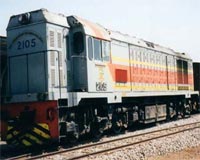 Nigeria suspends multi-billion-dollar Chinese rail project
(NSI News Source Info) Lagos - November 8, 2008: Nigeria has suspended a controversial 8.3 billion-dollar (6.5-billion-euro) contract awarded to a Chinese firm to upgrade its decrepit railway system, officials said Thursday.
A senior Nigerian presidency official confirmed the contract awarded to the China Civil Engineering Construction Corporation (CCECC) in 2006 had been suspended so the government could carry out a comprehensive review.
The government informed the company of the fact in an October 3 letter, CCECC representative Chin Hong Bing told a parliamentary committee.
While the government had only paid a small fraction, or 250 million dollars, of the project's cost, Bing said his firm had made some progress on the 1,315-kilometre (817 miles) Lagos-Kano double track standard gauge, which is the first phase of the 25-year-long modernisation project.
The media has criticised the Chinese firm for the slow pace of work at the site. The government of former president Olusegun Obasanjo, which signed the deal, has also been accused of inflating its costs.
Once Nigeria's pride, its railways, like much of the rest of the country's infrastructure, have slowly crumbled into disrepair.
Nigeria has a network of 3,505 kilometres (2,178 miles) of narrow-gauge single track lines, covering nine of the country's 36 states. Most of its 200 locomotives however, broke down long ago.
The only passenger service still operating in the country takes two hours to link central Lagos, the commercial capital, with Ijoko, a small commuter town less than 30 kilometres (20 miles) away.
Eritrea says Somalia peace efforts 'doomed to fail'
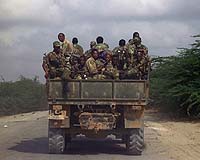 Eritrea says Somalia peace efforts 'doomed to fail'
(NSI News Source Info) Nairobi - November 8, 2008: Eritrea said Tuesday that regional and UN efforts to restore stability in Somalia are doomed to fail and urged foreigners to let Somalis resolve their problems. Eritrea's government stressed "the solution to the problems in Somalia can only be ensured through the determination, choice, and participation of the entire people of Somalia," the foreign ministry said in a statement.
Asmara is "also certain that the conspiracies that are being weaved by Washington, with the servitude of the regime in Ethiopia, and facilitation of IGAD, is doomed to fail," the statement said.
Last week, an Inter-Governmental Authority on Development (IGAD) summit urged fueding Somali President Abdullahi Yusuf Ahmed and Prime Minister Nur Hassan Hussein to reconcile and form a new government in a bid to end nearly two decades of bloodletting.
Eritrea also rubbished recent deals reached between the Somali transitional government and its main Islamist-dominated political opposition group to end fighting and pave the way for Ethiopian troops to pull out of the country.
The deals, reached on October 26 at UN-mediated talks in Djibouti, violate "the territorial integrity of Somalia," and are "dangerous and conspiratorial engagements."
Ethiopian troops entered Somalia in late 2006 and helped oust Islamist militants who had taken control of much of the country.
Since then, the insurgents have waged a guerrilla war, saying they would only meet the government for peace talks after Ethiopian troops pull out of the country.
The UN and US have accused Eritrea of aiding Somali rebels, a claim rejected by Asmara.
Somalia has lacked an effective government since the 1991 ouster of president Mohamed Siad Barre touched off a bloody power struggle that has defied numerous attempts to restore stability.
Founded in 1986, IGAD has six active members: Ethiopia, Djibouti, Kenya, Somalia, Sudan and Uganda. Eritrea's membership was suspended in 2007 and has rejected several invitations to rejoin the group.
Pirates seize ship near Somalia with 8 Russians in crew
 Pirates seize ship near Somalia with 8 Russians in crew
(NSI News Source Info) MOSCOW - November 8, 2008: Pirates off the coast of Somalia seized a Danish cargo ship with eight Russians among its 13 crewmembers, the Sovfracht Maritime Bulletin reported on Saturday.
The web site said the dry-cargo ship was registered in the Bahamas and in addition to the Russians had four Estonians and a Georgian aboard.
Pirates are increasingly active in the waters off Somalia, where more than 60 ships have been attacked so far this year resulting in the seizure of around 30 vessels. The east African nation has no effective government and no navy to police its coastline.
The Russian frigate Neustrashimy (Fearless) joined international patrols in the waters off the Somali coast last month as part of attempts to crack down on the piracy.
Pirates seize ship near Somalia with 8 Russians in crew
(NSI News Source Info) MOSCOW - November 8, 2008: Pirates off the coast of Somalia seized a Danish cargo ship with eight Russians among its 13 crewmembers, the Sovfracht Maritime Bulletin reported on Saturday.
The web site said the dry-cargo ship was registered in the Bahamas and in addition to the Russians had four Estonians and a Georgian aboard.
Pirates are increasingly active in the waters off Somalia, where more than 60 ships have been attacked so far this year resulting in the seizure of around 30 vessels. The east African nation has no effective government and no navy to police its coastline.
The Russian frigate Neustrashimy (Fearless) joined international patrols in the waters off the Somali coast last month as part of attempts to crack down on the piracy.
Iraq ready to keep order when U.S. troops pull out - minister
 Iraq ready to keep order when U.S. troops pull out - minister
(NSI News Source Info) BAGHDAD - November 8, 2008: The Iraqi army is capable of ensuring security in the country if the United States withdraws its troops from Iraq, the country's defense minister said on Saturday.
"In the event of U.S. troops pulling out of Iraq, the army is ready to take responsibility for providing security in the country," Abd al-Qadir said in an interview with RIA Novosti.
He said that the fact that "the Americans have handed over control of most of Iraq's provinces to Iraq's security forces" proves that the army is capable of maintaining order in the country.
The United States and Iraq are currently working on a strategic agreement, which would set conditions for future U.S. military presence and troop withdrawals.
The agreement, which has been under negotiation for most of this year, would replace the UN mandate and must be ratified by the Iraqi parliament.
The deal between Baghdad and Washington was to have been signed in July, but was delayed mainly due to the lack of agreement on a deadline for the troop withdrawal and the controversial issue of immunity from prosecution for U.S. troops and foreign contractors.
The agreement will allow U.S. forces to remain in Iraq beyond the end of this year, when a UN Security Council mandate is due to expire. There are currently 146,000 U.S. troops deployed in Iraq.
Iraq ready to keep order when U.S. troops pull out - minister
(NSI News Source Info) BAGHDAD - November 8, 2008: The Iraqi army is capable of ensuring security in the country if the United States withdraws its troops from Iraq, the country's defense minister said on Saturday.
"In the event of U.S. troops pulling out of Iraq, the army is ready to take responsibility for providing security in the country," Abd al-Qadir said in an interview with RIA Novosti.
He said that the fact that "the Americans have handed over control of most of Iraq's provinces to Iraq's security forces" proves that the army is capable of maintaining order in the country.
The United States and Iraq are currently working on a strategic agreement, which would set conditions for future U.S. military presence and troop withdrawals.
The agreement, which has been under negotiation for most of this year, would replace the UN mandate and must be ratified by the Iraqi parliament.
The deal between Baghdad and Washington was to have been signed in July, but was delayed mainly due to the lack of agreement on a deadline for the troop withdrawal and the controversial issue of immunity from prosecution for U.S. troops and foreign contractors.
The agreement will allow U.S. forces to remain in Iraq beyond the end of this year, when a UN Security Council mandate is due to expire. There are currently 146,000 U.S. troops deployed in Iraq.
India's Chandrayaan-1 probe enters lunar orbit
 India's Chandrayaan-1 probe enters lunar orbit
(NSI News Source Info) NEW DELHI - November 8, 2008: An Indian lunar probe entered into orbit around the Moon on Saturday at the start of a two-year remote sensing mission, the Indian Space Research Organization said.
Chandrayaan-1, meaning "Moon Craft" in ancient Sanskrit, was launched on an Indian-built PSLV-C11 rocket on October 22.
The organization said in a statement that all systems of the unmanned spacecraft were functioning normally after entering lunar orbit.
"In the coming days, the height of Chandrayaan-1 spacecraft's orbit around the moon will be carefully reduced in steps to achieve a final polar orbit of about 100 km height from the moon's surface," the organization said in a statement posted on its website.
"Following this, the Moon Impact Probe (MIP) of the spacecraft will be released to hit the lunar surface. Later, the other scientific instruments will be turned on sequentially leading to the normal phase of the mission," it said.
India's first lunar mission signifies the country's breakthrough into the club of space powers, making it the third Asian country after Japan and China to reach the Moon.
The 1,304-kg spacecraft is equipped with 10 scientific instruments to study the Moon from a 100-km orbit, and one probe that will slam into the lunar surface hoping to uncover signs of Helium 3, an isotope that may fuel energy generation from nuclear fusion in the future.
Five of the instruments were built in India, while the other six were the result of cooperation with Europe and the United States.
The remote-sensing satellite will create a detailed three-dimensional map of the Moon's surface and investigate its chemical composition. The primary goal is the discovery of water, along with magnesium, aluminum, silicon and titanium, and the radioactive elements radon, uranium and thorium.
India's Chandrayaan-1 probe enters lunar orbit
(NSI News Source Info) NEW DELHI - November 8, 2008: An Indian lunar probe entered into orbit around the Moon on Saturday at the start of a two-year remote sensing mission, the Indian Space Research Organization said.
Chandrayaan-1, meaning "Moon Craft" in ancient Sanskrit, was launched on an Indian-built PSLV-C11 rocket on October 22.
The organization said in a statement that all systems of the unmanned spacecraft were functioning normally after entering lunar orbit.
"In the coming days, the height of Chandrayaan-1 spacecraft's orbit around the moon will be carefully reduced in steps to achieve a final polar orbit of about 100 km height from the moon's surface," the organization said in a statement posted on its website.
"Following this, the Moon Impact Probe (MIP) of the spacecraft will be released to hit the lunar surface. Later, the other scientific instruments will be turned on sequentially leading to the normal phase of the mission," it said.
India's first lunar mission signifies the country's breakthrough into the club of space powers, making it the third Asian country after Japan and China to reach the Moon.
The 1,304-kg spacecraft is equipped with 10 scientific instruments to study the Moon from a 100-km orbit, and one probe that will slam into the lunar surface hoping to uncover signs of Helium 3, an isotope that may fuel energy generation from nuclear fusion in the future.
Five of the instruments were built in India, while the other six were the result of cooperation with Europe and the United States.
The remote-sensing satellite will create a detailed three-dimensional map of the Moon's surface and investigate its chemical composition. The primary goal is the discovery of water, along with magnesium, aluminum, silicon and titanium, and the radioactive elements radon, uranium and thorium.
Navistar to Deliver 822 Lighter MRAP in Afghanistan
Navistar to Deliver 822 Lighter MRAP in Afghanistan
(NSI News Source Info) WARRENVILLE, Ill. - November 8, 2008: Navistar Defense, LLC will deliver on its contract for 822 International MaxxPro Dash Mine Resistant Ambush Protected (MRAP) vehicles one month ahead of schedule to aid urgent needs in Afghanistan. Originally scheduled to be completed by the end of February 2009, the company has leveraged its extensive relationships with its supply base to provide the government with an even more aggressive delivery schedule. The company is now committed to delivering all units by the end of January.
 MaxxPro Dash Mine Resistant Ambush Protected (MRAP) vehicles
Navistar has worked around the clock since receipt of this award and on Tuesday delivered 70 units – two weeks in advance of its already aggressive delivery schedule. “Navistar is prepared to rapidly provide the U.S. and its allies with MRAP vehicles at a time when hostilities call for more troops in Afghanistan,” said Archie Massicotte, president, Navistar Defense. “The Navistar team is going after an aggressive delivery commitment and we will be successful due to our partnering with the supply base. We are driven to provide our fighting men and women with the equipment they need as soon as possible.” The MaxxPro Dash, a lighter, more mobile Mine Resistant Ambush Protected (MRAP) variant was designed especially for the rugged terrain in Afghanistan. The Dash maintains the survivability system used on all MaxxPro MRAP variants while also allowing for greater mobility. A smaller turning radius and higher torque-to-weight ratio are among the improvements to its mobility. MaxxPro Dash is also capable of accommodating additional up-armoring. Supportability and maintainability are maximized with a high-degree of commonality of parts among all MaxxPro variants. The MaxxPro Dash is the sixth variant in 18 months from Navistar’s MaxxPro MRAP vehicle platform. Since the initial contract in May 2007, Navistar has won more than $3 billion in contracts to produce a total of 6,044 MaxxPro vehicles. Navistar Defense is an affiliate of Navistar International Corporation, a holding company whose subsidiaries and affiliates produce International brand commercial and military vehicles, MaxxForce brand diesel engines, IC brand school and commercial buses, and Workhorse brand chassis for motor homes and step vans.
MaxxPro Dash Mine Resistant Ambush Protected (MRAP) vehicles
Navistar has worked around the clock since receipt of this award and on Tuesday delivered 70 units – two weeks in advance of its already aggressive delivery schedule. “Navistar is prepared to rapidly provide the U.S. and its allies with MRAP vehicles at a time when hostilities call for more troops in Afghanistan,” said Archie Massicotte, president, Navistar Defense. “The Navistar team is going after an aggressive delivery commitment and we will be successful due to our partnering with the supply base. We are driven to provide our fighting men and women with the equipment they need as soon as possible.” The MaxxPro Dash, a lighter, more mobile Mine Resistant Ambush Protected (MRAP) variant was designed especially for the rugged terrain in Afghanistan. The Dash maintains the survivability system used on all MaxxPro MRAP variants while also allowing for greater mobility. A smaller turning radius and higher torque-to-weight ratio are among the improvements to its mobility. MaxxPro Dash is also capable of accommodating additional up-armoring. Supportability and maintainability are maximized with a high-degree of commonality of parts among all MaxxPro variants. The MaxxPro Dash is the sixth variant in 18 months from Navistar’s MaxxPro MRAP vehicle platform. Since the initial contract in May 2007, Navistar has won more than $3 billion in contracts to produce a total of 6,044 MaxxPro vehicles. Navistar Defense is an affiliate of Navistar International Corporation, a holding company whose subsidiaries and affiliates produce International brand commercial and military vehicles, MaxxForce brand diesel engines, IC brand school and commercial buses, and Workhorse brand chassis for motor homes and step vans.
 MaxxPro Dash Mine Resistant Ambush Protected (MRAP) vehicles
 India: Antony Asks HAL to Keep Pace with Changing Times
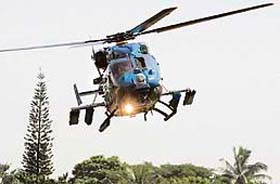 India: Antony Asks HAL to Keep Pace with Changing Times
(NSI News Source Info) November 8, 2008: Defence Minister Shri A K Antony has asked defence PSU Hindustan Aeronautics Limited (HAL) to be more competitive and modernize with the changing times. Addressing the meeting of the Consultative Committee attached to his Ministry held in New Delhi today, the Minister expressed the hope that with vast experience behind it, there is no doubt that the company will rise to the occasion in meeting the future needs of the services. Giving an overview of the company, the Minister said HAL is a Navratna Company which is supporting the Defence Forces through its indigenous and licence production programmes. Shri Antony said the company has proposed development of Light Utility Helicopter and Medium Lift Helicopter to complete the full range of helicopters. The Minister informed the Members that with a view to increase focus on Rotary Wing Aircraft, a separate division is being created in the company which will be headed by a Managing Director. Members of Parliament appreciated the achievements and role of the company in country's defence aviation sector. However, some of them expressed apprehension about the poor finishing of ALH Dhruv and suggested an improvement in this. While one member was of the opinion that company should go for diversification, another member suggested that instead of going for diversification the company should stick to its main role of providing hardware to country's armed forces, especially the Air Force. A member suggested that company should go for more indigenisation. There was a suggestion from one member that HAL should strengthen its helicopter training school keeping in view the future needs of helicopter pilots in the country. Earlier, Shri Ashok Baweja, CMD HAL gave a detailed presentation about the company. He informed the members that company's sales during the current financial year are likely to the tune of Rs. 10250 crores, [compared to] Rs. 8625 crores during 2007-08. He said during the last financial year company exported items worth Rs. 341 crore. Shri Baweja informed the members that indigenous content in sales has gone up from 73.5 percent in 2005-06 to 76 percent in 2007-08. Giving details of the major programmes being undertaken by the company the CMD said the Intermediate Jet Trainer (IJT) programme is progressing well and its two prototypes have done 396 flights so far. He said AL551 engine from Russia is likely to be integrated in IJT this month and its initial operation clearance is likely to be obtained by the end of next year. Talking about Light Combat Helicopter (LCH), Shri Baweja informed that manufacture of prototype is underway and its first flight is likely to take place in March next year. The Members of Parliament who attended today’s meeting included Shri Naveen Jindal, Shri MA Kharabela Swain, Smt Jayaben B Thakkar, Shri Sanjay Dhotre, Shri Shankhlal Majhi, Shri M Shivanna, Shri Braja Kishore Tripathi and Shri Madhu Goud Yaskhi from Lok Sabha and Shri Syed Azees Pasha, Shri Vinay Katiiyar, Shri Dharam Pal Sabharwal, Shri PR Rajan from Rajya Sabha.
India: Antony Asks HAL to Keep Pace with Changing Times
(NSI News Source Info) November 8, 2008: Defence Minister Shri A K Antony has asked defence PSU Hindustan Aeronautics Limited (HAL) to be more competitive and modernize with the changing times. Addressing the meeting of the Consultative Committee attached to his Ministry held in New Delhi today, the Minister expressed the hope that with vast experience behind it, there is no doubt that the company will rise to the occasion in meeting the future needs of the services. Giving an overview of the company, the Minister said HAL is a Navratna Company which is supporting the Defence Forces through its indigenous and licence production programmes. Shri Antony said the company has proposed development of Light Utility Helicopter and Medium Lift Helicopter to complete the full range of helicopters. The Minister informed the Members that with a view to increase focus on Rotary Wing Aircraft, a separate division is being created in the company which will be headed by a Managing Director. Members of Parliament appreciated the achievements and role of the company in country's defence aviation sector. However, some of them expressed apprehension about the poor finishing of ALH Dhruv and suggested an improvement in this. While one member was of the opinion that company should go for diversification, another member suggested that instead of going for diversification the company should stick to its main role of providing hardware to country's armed forces, especially the Air Force. A member suggested that company should go for more indigenisation. There was a suggestion from one member that HAL should strengthen its helicopter training school keeping in view the future needs of helicopter pilots in the country. Earlier, Shri Ashok Baweja, CMD HAL gave a detailed presentation about the company. He informed the members that company's sales during the current financial year are likely to the tune of Rs. 10250 crores, [compared to] Rs. 8625 crores during 2007-08. He said during the last financial year company exported items worth Rs. 341 crore. Shri Baweja informed the members that indigenous content in sales has gone up from 73.5 percent in 2005-06 to 76 percent in 2007-08. Giving details of the major programmes being undertaken by the company the CMD said the Intermediate Jet Trainer (IJT) programme is progressing well and its two prototypes have done 396 flights so far. He said AL551 engine from Russia is likely to be integrated in IJT this month and its initial operation clearance is likely to be obtained by the end of next year. Talking about Light Combat Helicopter (LCH), Shri Baweja informed that manufacture of prototype is underway and its first flight is likely to take place in March next year. The Members of Parliament who attended today’s meeting included Shri Naveen Jindal, Shri MA Kharabela Swain, Smt Jayaben B Thakkar, Shri Sanjay Dhotre, Shri Shankhlal Majhi, Shri M Shivanna, Shri Braja Kishore Tripathi and Shri Madhu Goud Yaskhi from Lok Sabha and Shri Syed Azees Pasha, Shri Vinay Katiiyar, Shri Dharam Pal Sabharwal, Shri PR Rajan from Rajya Sabha.
U.S. Lawmakers: Spend F-22 Money Now
 U.S. Lawmakers: Spend F-22 Money Now
(NSI News Source Info) November 8, 2008: In September, Congress budgeted $523 million so the U.S. Air Force could continue buying parts and supplies for the next batch of F-22 stealth fighters. But the spending provision included a restriction: The Air Force could spend no more than $140 million until the next president decides whether to keep buying F-22s or end the program.
Now lawmakers are fuming because instead of spending $140 million, the Defense Department has spent nothing.
In a letter to Defense Secretary Robert Gates, four senior members of the House Armed Services Committee said: Spend the money.
By not spending it, the Pentagon could kill the F-22, said Reps. Ike Skelton, Duncan Hunter, Neil Abercrombie and James Saxton.
"The obligation of $140 million for advance procurement of 20 F-22A aircraft is a prudent and necessary action to sustain F-22A production activities," the quartet wrote.
If the money is not spent and the production line is shut down, it will cost an additional $500 million to restart, which "would effectively preclude the procurement" of additional F-22s, they said.
A Pentagon spokeswoman said the Defense Department is "committed" to keeping F-22 production alive so that the next administration can decide whether to continue or end the program.
But the Pentagon's solution may be to ask Congress to include funding for four F-22s in the next war-funding emergency supplemental spending bill.
A spokeswoman for Skelton, who is chairman of the House Armed Services Committee, said as of Nov. 7 the four lawmakers had received no reply from Gates. Hunter, the committee's senior Republican, and Saxton, the top Republican on the air and land forces subcommittee, are retiring next month. Abercrombie, chairman of the air and land forces subcommittee, will be back to battle for F-22s next year.
The Air Force has ordered 183 F-22s, and would like to buy at least 381. But at $160 million apiece, the planes are enormously expensive. Gates has opposed buying more, and has pointed out to Congress that F-22s have not been used in the wars in Iraq or Afghanistan and are not expected to be used in the type of conflicts the U.S. is most likely to fight.
The planes are popular in Congress, however, because building them creates an estimated 40,000 jobs.
U.S. Lawmakers: Spend F-22 Money Now
(NSI News Source Info) November 8, 2008: In September, Congress budgeted $523 million so the U.S. Air Force could continue buying parts and supplies for the next batch of F-22 stealth fighters. But the spending provision included a restriction: The Air Force could spend no more than $140 million until the next president decides whether to keep buying F-22s or end the program.
Now lawmakers are fuming because instead of spending $140 million, the Defense Department has spent nothing.
In a letter to Defense Secretary Robert Gates, four senior members of the House Armed Services Committee said: Spend the money.
By not spending it, the Pentagon could kill the F-22, said Reps. Ike Skelton, Duncan Hunter, Neil Abercrombie and James Saxton.
"The obligation of $140 million for advance procurement of 20 F-22A aircraft is a prudent and necessary action to sustain F-22A production activities," the quartet wrote.
If the money is not spent and the production line is shut down, it will cost an additional $500 million to restart, which "would effectively preclude the procurement" of additional F-22s, they said.
A Pentagon spokeswoman said the Defense Department is "committed" to keeping F-22 production alive so that the next administration can decide whether to continue or end the program.
But the Pentagon's solution may be to ask Congress to include funding for four F-22s in the next war-funding emergency supplemental spending bill.
A spokeswoman for Skelton, who is chairman of the House Armed Services Committee, said as of Nov. 7 the four lawmakers had received no reply from Gates. Hunter, the committee's senior Republican, and Saxton, the top Republican on the air and land forces subcommittee, are retiring next month. Abercrombie, chairman of the air and land forces subcommittee, will be back to battle for F-22s next year.
The Air Force has ordered 183 F-22s, and would like to buy at least 381. But at $160 million apiece, the planes are enormously expensive. Gates has opposed buying more, and has pointed out to Congress that F-22s have not been used in the wars in Iraq or Afghanistan and are not expected to be used in the type of conflicts the U.S. is most likely to fight.
The planes are popular in Congress, however, because building them creates an estimated 40,000 jobs.
Subscribe to:
Posts (Atom)












