 Nkunda warns Africa as fears grow of wider war
(NSI News Source Info) November 11, 2008: GOMA, Congo: Congolese rebel chief Laurent Nkunda said on Monday he would fight African peacekeeping troops if they attacked him, as concerns grew that east Congo’s conflict could suck in neighbouring armies. Leaders from Africa’s southern and Great Lakes regions have offered to send troops to try to help pacify east Democratic Republic of Congo, where fighting between Nkunda’s Tutsi rebels and the army has uprooted hundreds of thousands of people. Aid agencies in Congo’s North Kivu province are struggling to provide shelter, food and medical care for more than 200,000 refugees around the provincial capital Goma, but say tens of thousands more are cut off in the bush. They warn of the risk of cholera and measles epidemics in the camps. African and Western governments are worried the recent upsurge in fighting in North Kivu, which borders Rwanda and Uganda, risks drawing in Congo’s neighbours as occurred during a previous 1998-2003 war. That war involved six African armies and the conflict and its aftermath killed several million people. Countries of the Southern African Development Community(SADC) said after a regional summit in South Africa on Sunday the group would send military advisers to help the government of Congolese President Joseph Kabila. SADC would send a peacekeeping force to east Congo “if and when necessary”, its executive secretary Tomaz Salamao said. Nkunda, whose Tutsi fighters are battling Congo government soldiers (FARDC) and their Rwandan Hutu rebel (FDLR) and Mai-Maimilitia allies, said he would welcome African peacekeepers if they came as an impartial force to stabilise North Kivu. But, speaking to Reuters by telephone from eastern Congo, he added: “If they come in and fight alongside the FARDC and the FDLR ... they will share the same shame as the DRC government.”. “If SADC engages like this, they will have made a mistake... I am ready to fight them,” Nkunda said. Some military experts expressed doubts about how quickly a SADC security force could be dispatched to east Congo and how effective it would be against Nkunda’s battle-hardened guerrilla army of 4,000, and against other marauding armed factions. “This is good rhetoric, but I’m not sure it will happen,” said Henri Boshoff, a military analyst for the Institute for Security Studies in Johannesburg, told Reuters. The United Nations, which already has its largest peacekeeping force in the world, 17,000 strong, in Congo, is seeking up to 3,000 extra troops to reinforce its operations there. It says its existing force is thinly stretched across a country the size of Western Europe where armed groups abound. It was not immediately clear whether the proposed African peacekeepers would operate under the UN mandate or separately. The North Kivu conflict traces its origins back to Rwanda’s 1994 genocide of Tutsis by Hutus which helped trigger the 1998-2003 Congo war. Kinshasa accuses Rwanda of backing Nkunda, who says he is defending Congolese Tutsis from attacks by FDLR Rwandan Hutu rebels he says fight with the Congolese army. Rwanda, which has twice invaded Congo before, officially to fight Hutu rebels there, denies this and in turn accuses the Congolese government of not acting to disarm the Hutu rebels. Analysts say to avert the risk of a wider regional war, world and regional powers need to exert firm pressure on both Congo and Rwanda to demobilise the rival rebel groups. “The international community has already invested billions of dollars to build and maintain peace in the Congo. To not invest hugely in diplomatic terms right now would risk it all,” Francois Grignon and Fabienne Hara, Africa programme director and vice president of International Crisis Group, wrote recently. African Great Lakes leaders, including Rwandan President Paul Kagame, called at a summit in Nairobi on Friday for a ceasefire and a political settlement in North Kivu, but said they could also send peacekeepers if required. Commenting on SADC’s offer of troops, Rwandan Foreign Minister Rosemary Museminali said: “There should be a ceasefire and a political solution.” European foreign ministers meeting in Brussels on Monday also called for a political settlement. Congo’s government has asked neighbour Angola, which backed it during the 1998-2003 war, for help. The appearance in North Kivu of Portuguese-speaking soldiers on the government side has fuelled speculation Angola may have already sent troops. But Angola’s Foreign Ministry denied this.
Nkunda warns Africa as fears grow of wider war
(NSI News Source Info) November 11, 2008: GOMA, Congo: Congolese rebel chief Laurent Nkunda said on Monday he would fight African peacekeeping troops if they attacked him, as concerns grew that east Congo’s conflict could suck in neighbouring armies. Leaders from Africa’s southern and Great Lakes regions have offered to send troops to try to help pacify east Democratic Republic of Congo, where fighting between Nkunda’s Tutsi rebels and the army has uprooted hundreds of thousands of people. Aid agencies in Congo’s North Kivu province are struggling to provide shelter, food and medical care for more than 200,000 refugees around the provincial capital Goma, but say tens of thousands more are cut off in the bush. They warn of the risk of cholera and measles epidemics in the camps. African and Western governments are worried the recent upsurge in fighting in North Kivu, which borders Rwanda and Uganda, risks drawing in Congo’s neighbours as occurred during a previous 1998-2003 war. That war involved six African armies and the conflict and its aftermath killed several million people. Countries of the Southern African Development Community(SADC) said after a regional summit in South Africa on Sunday the group would send military advisers to help the government of Congolese President Joseph Kabila. SADC would send a peacekeeping force to east Congo “if and when necessary”, its executive secretary Tomaz Salamao said. Nkunda, whose Tutsi fighters are battling Congo government soldiers (FARDC) and their Rwandan Hutu rebel (FDLR) and Mai-Maimilitia allies, said he would welcome African peacekeepers if they came as an impartial force to stabilise North Kivu. But, speaking to Reuters by telephone from eastern Congo, he added: “If they come in and fight alongside the FARDC and the FDLR ... they will share the same shame as the DRC government.”. “If SADC engages like this, they will have made a mistake... I am ready to fight them,” Nkunda said. Some military experts expressed doubts about how quickly a SADC security force could be dispatched to east Congo and how effective it would be against Nkunda’s battle-hardened guerrilla army of 4,000, and against other marauding armed factions. “This is good rhetoric, but I’m not sure it will happen,” said Henri Boshoff, a military analyst for the Institute for Security Studies in Johannesburg, told Reuters. The United Nations, which already has its largest peacekeeping force in the world, 17,000 strong, in Congo, is seeking up to 3,000 extra troops to reinforce its operations there. It says its existing force is thinly stretched across a country the size of Western Europe where armed groups abound. It was not immediately clear whether the proposed African peacekeepers would operate under the UN mandate or separately. The North Kivu conflict traces its origins back to Rwanda’s 1994 genocide of Tutsis by Hutus which helped trigger the 1998-2003 Congo war. Kinshasa accuses Rwanda of backing Nkunda, who says he is defending Congolese Tutsis from attacks by FDLR Rwandan Hutu rebels he says fight with the Congolese army. Rwanda, which has twice invaded Congo before, officially to fight Hutu rebels there, denies this and in turn accuses the Congolese government of not acting to disarm the Hutu rebels. Analysts say to avert the risk of a wider regional war, world and regional powers need to exert firm pressure on both Congo and Rwanda to demobilise the rival rebel groups. “The international community has already invested billions of dollars to build and maintain peace in the Congo. To not invest hugely in diplomatic terms right now would risk it all,” Francois Grignon and Fabienne Hara, Africa programme director and vice president of International Crisis Group, wrote recently. African Great Lakes leaders, including Rwandan President Paul Kagame, called at a summit in Nairobi on Friday for a ceasefire and a political settlement in North Kivu, but said they could also send peacekeepers if required. Commenting on SADC’s offer of troops, Rwandan Foreign Minister Rosemary Museminali said: “There should be a ceasefire and a political solution.” European foreign ministers meeting in Brussels on Monday also called for a political settlement. Congo’s government has asked neighbour Angola, which backed it during the 1998-2003 war, for help. The appearance in North Kivu of Portuguese-speaking soldiers on the government side has fuelled speculation Angola may have already sent troops. But Angola’s Foreign Ministry denied this.
Tuesday, November 11, 2008
Nkunda warns Africa as fears grow of wider war
Nkunda warns Africa as fears grow of wider war
(NSI News Source Info) November 11, 2008: GOMA, Congo: Congolese rebel chief Laurent Nkunda said on Monday he would fight African peacekeeping troops if they attacked him, as concerns grew that east Congo’s conflict could suck in neighbouring armies. Leaders from Africa’s southern and Great Lakes regions have offered to send troops to try to help pacify east Democratic Republic of Congo, where fighting between Nkunda’s Tutsi rebels and the army has uprooted hundreds of thousands of people. Aid agencies in Congo’s North Kivu province are struggling to provide shelter, food and medical care for more than 200,000 refugees around the provincial capital Goma, but say tens of thousands more are cut off in the bush. They warn of the risk of cholera and measles epidemics in the camps. African and Western governments are worried the recent upsurge in fighting in North Kivu, which borders Rwanda and Uganda, risks drawing in Congo’s neighbours as occurred during a previous 1998-2003 war. That war involved six African armies and the conflict and its aftermath killed several million people. Countries of the Southern African Development Community(SADC) said after a regional summit in South Africa on Sunday the group would send military advisers to help the government of Congolese President Joseph Kabila. SADC would send a peacekeeping force to east Congo “if and when necessary”, its executive secretary Tomaz Salamao said. Nkunda, whose Tutsi fighters are battling Congo government soldiers (FARDC) and their Rwandan Hutu rebel (FDLR) and Mai-Maimilitia allies, said he would welcome African peacekeepers if they came as an impartial force to stabilise North Kivu. But, speaking to Reuters by telephone from eastern Congo, he added: “If they come in and fight alongside the FARDC and the FDLR ... they will share the same shame as the DRC government.”. “If SADC engages like this, they will have made a mistake... I am ready to fight them,” Nkunda said. Some military experts expressed doubts about how quickly a SADC security force could be dispatched to east Congo and how effective it would be against Nkunda’s battle-hardened guerrilla army of 4,000, and against other marauding armed factions. “This is good rhetoric, but I’m not sure it will happen,” said Henri Boshoff, a military analyst for the Institute for Security Studies in Johannesburg, told Reuters. The United Nations, which already has its largest peacekeeping force in the world, 17,000 strong, in Congo, is seeking up to 3,000 extra troops to reinforce its operations there. It says its existing force is thinly stretched across a country the size of Western Europe where armed groups abound. It was not immediately clear whether the proposed African peacekeepers would operate under the UN mandate or separately. The North Kivu conflict traces its origins back to Rwanda’s 1994 genocide of Tutsis by Hutus which helped trigger the 1998-2003 Congo war. Kinshasa accuses Rwanda of backing Nkunda, who says he is defending Congolese Tutsis from attacks by FDLR Rwandan Hutu rebels he says fight with the Congolese army. Rwanda, which has twice invaded Congo before, officially to fight Hutu rebels there, denies this and in turn accuses the Congolese government of not acting to disarm the Hutu rebels. Analysts say to avert the risk of a wider regional war, world and regional powers need to exert firm pressure on both Congo and Rwanda to demobilise the rival rebel groups. “The international community has already invested billions of dollars to build and maintain peace in the Congo. To not invest hugely in diplomatic terms right now would risk it all,” Francois Grignon and Fabienne Hara, Africa programme director and vice president of International Crisis Group, wrote recently. African Great Lakes leaders, including Rwandan President Paul Kagame, called at a summit in Nairobi on Friday for a ceasefire and a political settlement in North Kivu, but said they could also send peacekeepers if required. Commenting on SADC’s offer of troops, Rwandan Foreign Minister Rosemary Museminali said: “There should be a ceasefire and a political solution.” European foreign ministers meeting in Brussels on Monday also called for a political settlement. Congo’s government has asked neighbour Angola, which backed it during the 1998-2003 war, for help. The appearance in North Kivu of Portuguese-speaking soldiers on the government side has fuelled speculation Angola may have already sent troops. But Angola’s Foreign Ministry denied this.

U.S. building bases in Afghanistan to aid drones
U.S. building bases in Afghanistan to aid drones
(NSI News Source Info) WASHINGTON — November 11, 2008: The Pentagon is building a series of air bases in eastern Afghanistan as part of its massive expansion of a system that uses drone aircraft to spy on and attack Taliban insurgents, according to interviews and documents.
 A crew checks an MQ-9 Reaper before it takes off for a mission in Afghanistan
In Afghanistan, harsh winters and a lack of airstrips near the fighting can hinder drone flights. It can take as long as three hours for a drone to reach battlefields, particularly in the rugged mountain area near the border with Pakistan. That area has seen some of the toughest fighting for U.S. troops. By contrast, it can take as little as 10 minutes for a drone to reach hot spots in Baghdad because the Iraqi capital has more air bases, said Dyke Weatherington, deputy director of the Pentagon's unmanned aerial systems task force.
"What the (Pentagon) is trying to do is go in and develop bases closer to those areas that we know we're going to have a sustained presence after a long period of time," Weatherington said. "In fact, recently we set up a couple of additional bases closer to the Pakistan border that cut down those transit times."
Col. Greg Julian, a military spokesman in Afghanistan, said in an e-mail that the military is adding more bases to accommodate drones and additional troops.
The military is developing drones with better deicing systems to help deal with the Afghan winters, he said.
Defense Secretary Robert Gates has made the expansion of intelligence, surveillance and reconnaissance capability a top priority at the Pentagon. The ability to covertly monitor insurgents' movement and communication in Iraq and Afghanistan has helped the military kill top terrorists and detect roadside bombs.
"There's an insatiable demand" for information that can help U.S. forces target insurgents before they can strike, said Dakota Wood, a military analyst at the Center for Strategic and Budgetary Assessments.
Marine Corps Maj. Gen. Mastin Robeson, who leads the Marines' special operations command, said prompt, accurate intelligence is key to defeating insurgents. The information provided to his Marines in Afghanistan has been "terrific, but there's never enough," Robeson said. "We absolutely can use more."
Much of the budget for intelligence collection is secret, but some figures are not classified. Last year, the Pentagon received authority from Congress to shift $1.3 billion in its budget to pay for more drones and the systems needed to fly them. It will shift at least $750 million this year. In addition, it will spend more than $3 billion to buy and develop new unmanned systems this year, Weatherington said.
The Pentagon has also bought more piloted planes, outfitted with cameras and other sensors, to survey the battlefield.
The use of drones, which supply 95% of the full-motion video images commanders use to watch insurgent activity, has skyrocketed in recent years. As recently as 2005, drones flew 100,000 hours, most of it in support of troops in combat in Iraq and Afghanistan. In 2008, the number of hours in flight increased to nearly 400,000.
Since last year, the military has added more than 600 unmanned aircraft, ranging from small hand-launched spy planes to missile- and bomb-carrying Reapers. The military has about 6,000 such aircraft, up from 167 drones at the beginning of the war in 2001.
Air Force surveillance flights in Iraq and Afghanistan have increased substantially.
In Iraq in September, the Air Force flew 862 surveillance sorties compared with 506 in September 2007.
In Afghanistan, the Air Force flew 462 surveillance flights in September compared with 248 a year earlier.
A crew checks an MQ-9 Reaper before it takes off for a mission in Afghanistan
In Afghanistan, harsh winters and a lack of airstrips near the fighting can hinder drone flights. It can take as long as three hours for a drone to reach battlefields, particularly in the rugged mountain area near the border with Pakistan. That area has seen some of the toughest fighting for U.S. troops. By contrast, it can take as little as 10 minutes for a drone to reach hot spots in Baghdad because the Iraqi capital has more air bases, said Dyke Weatherington, deputy director of the Pentagon's unmanned aerial systems task force.
"What the (Pentagon) is trying to do is go in and develop bases closer to those areas that we know we're going to have a sustained presence after a long period of time," Weatherington said. "In fact, recently we set up a couple of additional bases closer to the Pakistan border that cut down those transit times."
Col. Greg Julian, a military spokesman in Afghanistan, said in an e-mail that the military is adding more bases to accommodate drones and additional troops.
The military is developing drones with better deicing systems to help deal with the Afghan winters, he said.
Defense Secretary Robert Gates has made the expansion of intelligence, surveillance and reconnaissance capability a top priority at the Pentagon. The ability to covertly monitor insurgents' movement and communication in Iraq and Afghanistan has helped the military kill top terrorists and detect roadside bombs.
"There's an insatiable demand" for information that can help U.S. forces target insurgents before they can strike, said Dakota Wood, a military analyst at the Center for Strategic and Budgetary Assessments.
Marine Corps Maj. Gen. Mastin Robeson, who leads the Marines' special operations command, said prompt, accurate intelligence is key to defeating insurgents. The information provided to his Marines in Afghanistan has been "terrific, but there's never enough," Robeson said. "We absolutely can use more."
Much of the budget for intelligence collection is secret, but some figures are not classified. Last year, the Pentagon received authority from Congress to shift $1.3 billion in its budget to pay for more drones and the systems needed to fly them. It will shift at least $750 million this year. In addition, it will spend more than $3 billion to buy and develop new unmanned systems this year, Weatherington said.
The Pentagon has also bought more piloted planes, outfitted with cameras and other sensors, to survey the battlefield.
The use of drones, which supply 95% of the full-motion video images commanders use to watch insurgent activity, has skyrocketed in recent years. As recently as 2005, drones flew 100,000 hours, most of it in support of troops in combat in Iraq and Afghanistan. In 2008, the number of hours in flight increased to nearly 400,000.
Since last year, the military has added more than 600 unmanned aircraft, ranging from small hand-launched spy planes to missile- and bomb-carrying Reapers. The military has about 6,000 such aircraft, up from 167 drones at the beginning of the war in 2001.
Air Force surveillance flights in Iraq and Afghanistan have increased substantially.
In Iraq in September, the Air Force flew 862 surveillance sorties compared with 506 in September 2007.
In Afghanistan, the Air Force flew 462 surveillance flights in September compared with 248 a year earlier.
 A crew checks an MQ-9 Reaper before it takes off for a mission in Afghanistan
Chinese military vessel Zhenghe makes first visit to Thailand
Chinese military vessel Zhenghe makes first visit to Thailand
(NSI News Source Info) BANGKOK - November 11, 2008: Chinese navy ship (CNS) Zhenghe entered the Bangkok Port on Monday morning, starting its four-day official visit to the capital of Thailand.
 Chinese navy ship (CNS) Zhenghe arrives at the Bangkok Port, Thailand, Nov. 10, 2008. CNS Zhenghe entered the Bangkok Port on Monday morning starting its four-day official visit to the Thai capital. CNS Zhenghe was put into service in 1987 and had visited the United States, Thailand, Bangladesh, Pakistan, India and Russia
 Chinese navy ship (CNS) Zhenghe arrives at the Bangkok Port, Thailand, Nov. 10, 2008. CNS Zhenghe entered the Bangkok Port on Monday morning starting its four-day official visit to the Thai capital. CNS Zhenghe was put into service in 1987 and had visited the United States, Thailand, Bangladesh, Pakistan, India and Russia
Secret Order Lets U.S. Raid Al Qaeda
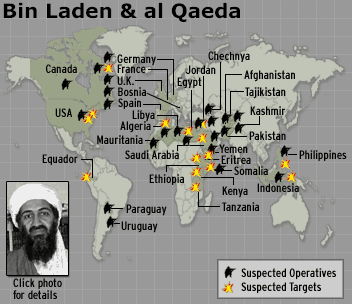 Secret Order Lets U.S. Raid Al Qaeda
(NSI News Source Info) WASHINGTON — November 11, 2008: The United States military since 2004 has used broad, secret authority to carry out nearly a dozen previously undisclosed attacks against Al Qaeda and other militants in Syria, Pakistan and elsewhere, according to senior American officials.
These military raids, typically carried out by Special Operations forces, were authorized by a classified order that Defense Secretary Donald H. Rumsfeld signed in the spring of 2004 with the approval of President Bush, the officials said. The secret order gave the military new authority to attack the Qaeda terrorist network anywhere in the world, and a more sweeping mandate to conduct operations in countries not at war with the United States.
In 2006, for example, a Navy Seal team raided a suspected militants’ compound in the Bajaur region of Pakistan, according to a former top official of the Central Intelligence Agency. Officials watched the entire mission — captured by the video camera of a remotely piloted Predator aircraft — in real time in the C.I.A.’s Counterterrorist Center at the agency’s headquarters in Virginia 7,000 miles away.
Some of the military missions have been conducted in close coordination with the C.I.A., according to senior American officials, who said that in others, like the Special Operations raid in Syria on Oct. 26 of this year, the military commandos acted in support of C.I.A.-directed operations.
But as many as a dozen additional operations have been canceled in the past four years, often to the dismay of military commanders, senior military officials said. They said senior administration officials had decided in these cases that the missions were too risky, were too diplomatically explosive or relied on insufficient evidence.
More than a half-dozen officials, including current and former military and intelligence officials as well as senior Bush administration policy makers, described details of the 2004 military order on the condition of anonymity because of its politically delicate nature. Spokesmen for the White House, the Defense Department and the military declined to comment.
Apart from the 2006 raid into Pakistan, the American officials refused to describe in detail what they said had been nearly a dozen previously undisclosed attacks, except to say they had been carried out in Syria, Pakistan and other countries. They made clear that there had been no raids into Iran using that authority, but they suggested that American forces had carried out reconnaissance missions in Iran using other classified directives.
According to a senior administration official, the new authority was spelled out in a classified document called “Al Qaeda Network Exord,” or execute order, that streamlined the approval process for the military to act outside officially declared war zones. Where in the past the Pentagon needed to get approval for missions on a case-by-case basis, which could take days when there were only hours to act, the new order specified a way for Pentagon planners to get the green light for a mission far more quickly, the official said.
It also allowed senior officials to think through how the United States would respond if a mission went badly. “If that helicopter goes down in Syria en route to a target,” a former senior military official said, “the American response would not have to be worked out on the fly.”
The 2004 order was a step in the evolution of how the American government sought to kill or capture Qaeda terrorists around the world. It was issued after the Bush administration had already granted America’s intelligence agencies sweeping power to secretly detain and interrogate terrorism suspects in overseas prisons and to conduct warrantless eavesdropping on telephone and electronic communications.
Shortly after the Sept. 11 attacks, Mr. Bush issued a classified order authorizing the C.I.A. to kill or capture Qaeda militants around the globe. By 2003, American intelligence agencies and the military had developed a much deeper understanding of Al Qaeda’s extensive global network, and Mr. Rumsfeld pressed hard to unleash the military’s vast firepower against militants outside the combat zones of Iraq and Afghanistan.
The 2004 order identifies 15 to 20 countries, including Syria, Pakistan, Yemen, Saudi Arabia and several other Persian Gulf states, where Qaeda militants were believed to be operating or to have sought sanctuary, a senior administration official said.
Secret Order Lets U.S. Raid Al Qaeda
(NSI News Source Info) WASHINGTON — November 11, 2008: The United States military since 2004 has used broad, secret authority to carry out nearly a dozen previously undisclosed attacks against Al Qaeda and other militants in Syria, Pakistan and elsewhere, according to senior American officials.
These military raids, typically carried out by Special Operations forces, were authorized by a classified order that Defense Secretary Donald H. Rumsfeld signed in the spring of 2004 with the approval of President Bush, the officials said. The secret order gave the military new authority to attack the Qaeda terrorist network anywhere in the world, and a more sweeping mandate to conduct operations in countries not at war with the United States.
In 2006, for example, a Navy Seal team raided a suspected militants’ compound in the Bajaur region of Pakistan, according to a former top official of the Central Intelligence Agency. Officials watched the entire mission — captured by the video camera of a remotely piloted Predator aircraft — in real time in the C.I.A.’s Counterterrorist Center at the agency’s headquarters in Virginia 7,000 miles away.
Some of the military missions have been conducted in close coordination with the C.I.A., according to senior American officials, who said that in others, like the Special Operations raid in Syria on Oct. 26 of this year, the military commandos acted in support of C.I.A.-directed operations.
But as many as a dozen additional operations have been canceled in the past four years, often to the dismay of military commanders, senior military officials said. They said senior administration officials had decided in these cases that the missions were too risky, were too diplomatically explosive or relied on insufficient evidence.
More than a half-dozen officials, including current and former military and intelligence officials as well as senior Bush administration policy makers, described details of the 2004 military order on the condition of anonymity because of its politically delicate nature. Spokesmen for the White House, the Defense Department and the military declined to comment.
Apart from the 2006 raid into Pakistan, the American officials refused to describe in detail what they said had been nearly a dozen previously undisclosed attacks, except to say they had been carried out in Syria, Pakistan and other countries. They made clear that there had been no raids into Iran using that authority, but they suggested that American forces had carried out reconnaissance missions in Iran using other classified directives.
According to a senior administration official, the new authority was spelled out in a classified document called “Al Qaeda Network Exord,” or execute order, that streamlined the approval process for the military to act outside officially declared war zones. Where in the past the Pentagon needed to get approval for missions on a case-by-case basis, which could take days when there were only hours to act, the new order specified a way for Pentagon planners to get the green light for a mission far more quickly, the official said.
It also allowed senior officials to think through how the United States would respond if a mission went badly. “If that helicopter goes down in Syria en route to a target,” a former senior military official said, “the American response would not have to be worked out on the fly.”
The 2004 order was a step in the evolution of how the American government sought to kill or capture Qaeda terrorists around the world. It was issued after the Bush administration had already granted America’s intelligence agencies sweeping power to secretly detain and interrogate terrorism suspects in overseas prisons and to conduct warrantless eavesdropping on telephone and electronic communications.
Shortly after the Sept. 11 attacks, Mr. Bush issued a classified order authorizing the C.I.A. to kill or capture Qaeda militants around the globe. By 2003, American intelligence agencies and the military had developed a much deeper understanding of Al Qaeda’s extensive global network, and Mr. Rumsfeld pressed hard to unleash the military’s vast firepower against militants outside the combat zones of Iraq and Afghanistan.
The 2004 order identifies 15 to 20 countries, including Syria, Pakistan, Yemen, Saudi Arabia and several other Persian Gulf states, where Qaeda militants were believed to be operating or to have sought sanctuary, a senior administration official said.
Even with the order, each specific mission requires high-level government approval. Targets in Somalia, for instance, need at least the approval of the defense secretary, the administration official said, while targets in a handful of countries, including Pakistan and Syria, require presidential approval.
The Pentagon has exercised its authority frequently, dispatching commandos to countries including Pakistan and Somalia. Details of a few of these strikes have previously been reported.
For example, shortly after Ethiopian troops crossed into Somalia in late 2006 to dislodge an Islamist regime in Mogadishu, the Pentagon’s Joint Special Operations Command quietly sent operatives and AC-130 gunships to an airstrip near the Ethiopian town of Dire Dawa. From there, members of a classified unit called Task Force 88 crossed repeatedly into Somalia to hunt senior members of a Qaeda cell believed to be responsible for the 1998 American Embassy bombings in Kenya and Tanzania.
At the time, American officials said Special Operations troops were operating under a classified directive authorizing the military to kill or capture Qaeda operatives if failure to act quickly would mean the United States had lost a “fleeting opportunity” to neutralize the enemy.
Occasionally, the officials said, Special Operations troops would land in Somalia to assess the strikes’ results. On Jan. 7, 2007, an AC-130 struck an isolated fishing village near the Kenyan border, and within hours, American commandos and Ethiopian troops were examining the rubble to determine whether any Qaeda operatives had been killed.
But even with the new authority, proposed Pentagon missions were sometimes scrubbed because of bad intelligence or bureaucratic entanglements, senior administration officials said.
The details of one of those aborted operations, in early 2005, were reported by The New York Times last June. In that case, an operation to send a team of the Navy Seals and the Army Rangers into Pakistan to capture Ayman al-Zawahri, Osama bin Laden’s top deputy, was aborted at the last minute.
Mr. Zawahri was believed by intelligence officials to be attending a meeting in Bajaur, in Pakistan’s tribal areas, and the Pentagon’s Joint Special Operations Command hastily put together a plan to capture him. There were strong disagreements inside the Pentagon and the C.I.A. about the quality of the intelligence, however, and some in the military expressed concern that the mission was unnecessarily risky.
Porter J. Goss, the C.I.A. director at the time, urged the military to carry out the mission, and some in the C.I.A. even wanted to execute it without informing Ryan C. Crocker, then the American ambassador to Pakistan. Mr. Rumsfeld ultimately refused to authorize the mission.
Former military and intelligence officials said that Lt. Gen. Stanley A. McChrystal, who recently completed his tour as head of the Joint Special Operations Command, had pressed for years to win approval for commando missions into Pakistan. But the missions were frequently rejected because officials in Washington determined that the risks to American troops and the alliance with Pakistan were too great.
Capt. John Kirby, a spokesman for General McChrystal, who is now director of the military’s Joint Staff, declined to comment.
The recent raid into Syria was not the first time that Special Operations forces had operated in that country, according to a senior military official and an outside adviser to the Pentagon.
Since the Iraq war began, the official and the outside adviser said, Special Operations forces have several times made cross-border raids aimed at militants and infrastructure aiding the flow of foreign fighters into Iraq.
The raid in late October, however, was much more noticeable than the previous raids, military officials said, which helps explain why it drew a sharp protest from the Syrian government.
Negotiations to hammer out the 2004 order took place over nearly a year and involved wrangling between the Pentagon and the C.I.A. and the State Department about the military’s proper role around the world, several administration officials said.
American officials said there had been debate over whether to include Iran in the 2004 order, but ultimately Iran was set aside, possibly to be dealt with under a separate authorization.
Senior officials of the State Department and the C.I.A. voiced fears that military commandos would encroach on their turf, conducting operations that historically the C.I.A. had carried out, and running missions without an ambassador’s knowledge or approval.
Mr. Rumsfeld had pushed in the years after the Sept. 11 attacks to expand the mission of Special Operations troops to include intelligence gathering and counterterrorism operations in countries where American commandos had not operated before.
Bush administration officials have shown a determination to operate under an expansive definition of self-defense that provides a legal rationale for strikes on militant targets in sovereign nations without those countries’ consent.
Several officials said the negotiations over the 2004 order resulted in closer coordination among the Pentagon, the State Department and the C.I.A., and set a very high standard for the quality of intelligence necessary to gain approval for an attack.
The 2004 order also provided a foundation for the orders that Mr. Bush approved in July allowing the military to conduct raids into the Pakistani tribal areas, including the Sept. 3 operation by Special Operations forces that killed about 20 militants, American officials said.
Administration officials said that Mr. Bush’s approval had paved the way for Defense Secretary Robert M. Gates to sign an order — separate from the 2004 order — that specifically directed the military to plan a series of operations, in cooperation with the C.I.A., on the Qaeda network and other militant groups linked to it in Pakistan.
Unlike the 2004 order, in which Special Operations commanders nominated targets for approval by senior government officials, the order in July was more of a top-down approach, directing the military to work with the C.I.A. to find targets in the tribal areas, administration officials said. They said each target still needed to be approved by the group of Mr. Bush’s top national security and foreign policy advisers, called the Principals Committee.
China Stimulus Plan Fuels Hopes for New Investment
 China Stimulus Plan Fuels Hopes for New Investment
(NSI News Source Info) BEIJING (AP) - November 11, 2008: China's $586 billion stimulus package is its ''biggest contribution to the world,'' Premier Wen Jiabao said Monday, as hopes rose that heavy spending on construction and other projects would help support global growth by fueling demand for imported machinery and raw materials.
The massive Chinese spending plan -- the largest ever undertaken by the communist leadership -- was motivated by growing alarm at an unexpectedly sharp downturn in the country's fast-growing economy that raised the threat of job losses and social unrest.
Sunday's announcement staked out a bold position as President Hu Jintao prepares for next weekend's meeting in Washington of leaders of 20 major economies to discuss a response to the global financial crisis.
Wen, the country's top economic official, said the plan is meant to boost investment and consumer spending, maintain export growth and promote corporate competitiveness and financial reform.
''We must implement the measures to ensure a fast and stable economic development,'' Wen told a meeting of government leaders, according to a report on state television. ''They are not only the needs of the development of ourselves, but also our biggest contribution to the world.''
The plan calls for higher spending through 2010 on airports, highways and other infrastructure, more aid to the poor and farmers, and tax cuts for exporters. That could boost demand for iron ore from Australia and Brazil, factory and construction equipment from the United States and Europe, and industrial components from throughout Asia.
''Faster growth in China will be better for its neighbors. For every country in the region, it's either their top trading partner or is on the way to becoming the top,'' said Tim Condon, Asia regional economist for the Dutch bank ING.
On a global scale, ''countries that supply capital equipment look like they will be the front-line beneficiaries of this package,'' he said.
Asian stock markets surged Monday on news of the plan, but world markets were mixed later in the day. Wall Street erased an early rally as enthusiasm for the Chinese package gave way to anxiety about how U.S. companies will survive a severe pullback in spending.
China's economic growth slowed to 9 percent in the last quarter, down from last year's stunning 11.9 percent and its lowest level in five years. Export orders have fallen sharply as global demand weakens, leading to layoffs and factory closures.
Analysts have slashed forecasts of next year's economic growth but said Monday that with the new stimulus it should be at least 8 percent.
China's announcement came as economic officials from the Group of 20 leading economies, which includes major wealthy and developing nations, called Sunday for increased government spending to boost the troubled global economy.
The United States has allocated $168 billion this year for tax rebates to individuals and tax breaks for businesses, in addition to the $700 billion to bail out troubled financial institutions.
Unlike China's plan, it includes no spending on capital projects, though President-elect Barack Obama has supported an additional $50 billion stimulus package for infrastructure projects such as roads and bridges, intended to create jobs. House Speaker Nancy Pelosi urged Congress last week to approve a stimulus bill before the end of the year.
Meeting in Brazil, G20 finance ministers and central bank governors said emerging economies deserve a prominent role in talks to overhaul the world financial system.
Hu plans to press that demand in Washington at the leaders' meeting on Saturday, a Chinese government spokesman said last week.
Still, Beijing's announcement appears to exaggerate the size of its plan by including projects already under way, such as reconstruction from the devastating May earthquake in China's southwest, said Sheridan Chan, an economist for Moody's Economy.com.
''The exaggeration highlights the government's desperation to revive sentiment, which is perhaps the key factor to sustaining growth amid global turmoil,'' Chan said.
Beijing's stimulus package represents another drastic step away from lending curbs and other anti-inflation measures it imposed over the past three years, but has been rolling back since mid-2008 as growth slowed.
Wholesale inflation eased in October, which gives authorities more leeway to stimulate the economy without igniting new price rises, according to data reported Monday. The government said producer prices rose 6.6 percent in October from a year earlier, down from August's 12-year high of 10.1 percent.
China switched its official goal in mid-2008 from a single focus on fighting inflation to a dual target of ensuring fast economic growth while also containing price rises. It has cut interest rates three times in recent weeks and lifted limits on how much each Chinese bank can lend.
The new stimulus plan depends heavily on getting the country's companies to invest, economists said.
Beijing might supply as little as one-quarter of the announced spending, or $145 billion, with the rest coming from state companies, bank lending or bond sales by local authorities, said Ting Lu, a Merrill Lynch economist.
That might require regulators to ease lending and investment curbs, said UBS Securities economist Tao Wang.
''With this strong signal that comes from this package that the government will put its own money on the line, that could bring about matching bank lending and promote corporate investment,'' Wang said.
China Stimulus Plan Fuels Hopes for New Investment
(NSI News Source Info) BEIJING (AP) - November 11, 2008: China's $586 billion stimulus package is its ''biggest contribution to the world,'' Premier Wen Jiabao said Monday, as hopes rose that heavy spending on construction and other projects would help support global growth by fueling demand for imported machinery and raw materials.
The massive Chinese spending plan -- the largest ever undertaken by the communist leadership -- was motivated by growing alarm at an unexpectedly sharp downturn in the country's fast-growing economy that raised the threat of job losses and social unrest.
Sunday's announcement staked out a bold position as President Hu Jintao prepares for next weekend's meeting in Washington of leaders of 20 major economies to discuss a response to the global financial crisis.
Wen, the country's top economic official, said the plan is meant to boost investment and consumer spending, maintain export growth and promote corporate competitiveness and financial reform.
''We must implement the measures to ensure a fast and stable economic development,'' Wen told a meeting of government leaders, according to a report on state television. ''They are not only the needs of the development of ourselves, but also our biggest contribution to the world.''
The plan calls for higher spending through 2010 on airports, highways and other infrastructure, more aid to the poor and farmers, and tax cuts for exporters. That could boost demand for iron ore from Australia and Brazil, factory and construction equipment from the United States and Europe, and industrial components from throughout Asia.
''Faster growth in China will be better for its neighbors. For every country in the region, it's either their top trading partner or is on the way to becoming the top,'' said Tim Condon, Asia regional economist for the Dutch bank ING.
On a global scale, ''countries that supply capital equipment look like they will be the front-line beneficiaries of this package,'' he said.
Asian stock markets surged Monday on news of the plan, but world markets were mixed later in the day. Wall Street erased an early rally as enthusiasm for the Chinese package gave way to anxiety about how U.S. companies will survive a severe pullback in spending.
China's economic growth slowed to 9 percent in the last quarter, down from last year's stunning 11.9 percent and its lowest level in five years. Export orders have fallen sharply as global demand weakens, leading to layoffs and factory closures.
Analysts have slashed forecasts of next year's economic growth but said Monday that with the new stimulus it should be at least 8 percent.
China's announcement came as economic officials from the Group of 20 leading economies, which includes major wealthy and developing nations, called Sunday for increased government spending to boost the troubled global economy.
The United States has allocated $168 billion this year for tax rebates to individuals and tax breaks for businesses, in addition to the $700 billion to bail out troubled financial institutions.
Unlike China's plan, it includes no spending on capital projects, though President-elect Barack Obama has supported an additional $50 billion stimulus package for infrastructure projects such as roads and bridges, intended to create jobs. House Speaker Nancy Pelosi urged Congress last week to approve a stimulus bill before the end of the year.
Meeting in Brazil, G20 finance ministers and central bank governors said emerging economies deserve a prominent role in talks to overhaul the world financial system.
Hu plans to press that demand in Washington at the leaders' meeting on Saturday, a Chinese government spokesman said last week.
Still, Beijing's announcement appears to exaggerate the size of its plan by including projects already under way, such as reconstruction from the devastating May earthquake in China's southwest, said Sheridan Chan, an economist for Moody's Economy.com.
''The exaggeration highlights the government's desperation to revive sentiment, which is perhaps the key factor to sustaining growth amid global turmoil,'' Chan said.
Beijing's stimulus package represents another drastic step away from lending curbs and other anti-inflation measures it imposed over the past three years, but has been rolling back since mid-2008 as growth slowed.
Wholesale inflation eased in October, which gives authorities more leeway to stimulate the economy without igniting new price rises, according to data reported Monday. The government said producer prices rose 6.6 percent in October from a year earlier, down from August's 12-year high of 10.1 percent.
China switched its official goal in mid-2008 from a single focus on fighting inflation to a dual target of ensuring fast economic growth while also containing price rises. It has cut interest rates three times in recent weeks and lifted limits on how much each Chinese bank can lend.
The new stimulus plan depends heavily on getting the country's companies to invest, economists said.
Beijing might supply as little as one-quarter of the announced spending, or $145 billion, with the rest coming from state companies, bank lending or bond sales by local authorities, said Ting Lu, a Merrill Lynch economist.
That might require regulators to ease lending and investment curbs, said UBS Securities economist Tao Wang.
''With this strong signal that comes from this package that the government will put its own money on the line, that could bring about matching bank lending and promote corporate investment,'' Wang said.
Myanmar exits disputed waters, troops alert-Bangladesh
 Myanmar exits disputed waters, troops alert-Bangladesh
(NSI News Source Info) DHAKA - November 11, 2008: Bangladesh kept troops on high alert along its border with Myanmar on Monday, while pulling back naval ships from the Bay of Bengal after Yangon stopped exploring for gas and oil in disputed waters, officials said.
Myanmar exits disputed waters, troops alert-Bangladesh
(NSI News Source Info) DHAKA - November 11, 2008: Bangladesh kept troops on high alert along its border with Myanmar on Monday, while pulling back naval ships from the Bay of Bengal after Yangon stopped exploring for gas and oil in disputed waters, officials said.
Myanmar started the exploration early this month, despite protests by Bangladesh, in a stretch of sea both countries claim.
Bangladesh deployed naval ships to the area, reinforced troops along the 320 km (200 mile) border it shares with Myanmar, and sent a high-powered diplomatic team to Yangon to discuss the issue.
The team, headed by Foreign Secretary Touhid Hossain, returned to Dhaka on Sunday, and said Myanmar had stopped exploration in the disputed waters and removed equipment.
"Myanmar has completely withdrawn equipment and ships from our water territory," Touhid told reporters.
Foreign Affairs Adviser (minister) to Bangladesh's interim government, Iftekhar Ahmed Chowdhury, earlier said a Korean company Myanmar had engaged to explore oil and gas for it had suspended its work and started withdrawing.
However, Myanmar's official media presented this as a technical move and said the South Korean company undertaking the exploration work had simply moved to another block after a successful seismic survey.
Security officials said Myanmar also built up army troops at strategic points on its side of the 320 km (200 miles) border, partly demarcated by the Naf river and shared by the two countries.
Both countries have also reinforced paramilitary border guards, officials and local villagers said.
Major-General Shakil Ahmed, chief of the Bangladesh Rifles border force (BDR) visited his troops at areas bordering Myanmar on Monday.
He asked his soldiers to keep on high alert but hoped the situation would not escalate into a military confrontation.
The BDR earlier advised people in border villages to leave their homes if the situation warranted.
Besides paramilitary guards, both sides have moved in army units, but deployed them five km (three miles) away from the border lines, to abide by international military convention.
The dispute would be a focal point of discussion when technical delegations from both sides meet in Dhaka on Nov. 16 and 17 to talk demarcation of their maritime boundary, officials said.
The two countries have been discussing this for years but without reaching an agreement. (Additional reporting by by Mohammad Nurul Islam in COX'S BAZAR; Editing by Anis Ahmed and Jerry Norton)
Turkey’s TAI Opens Composites Factory To Make Parts For F-35
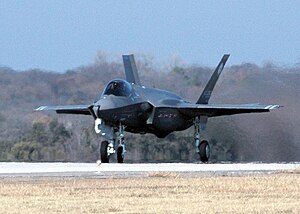 Turkey’s TAI Opens Composites Factory To Make Parts For F-35
(NSI News Source Info) November 11, 2008: Turkish Aerospace Industries, Inc. (TAI) today opened a new Advanced Composites Manufacturing Facility (ACMF) in Ankara, Turkey to support its role as a major subcontractor to Northrop Grumman Corporation on the U.S.-led F-35 Lightning II Joint Strike Fighter program. The 72,000 square foot ACMF, which represents a major upgrade of TAI’s existing composites manufacturing facilities, will enable the company to produce critical composite structures and subassemblies for the F-35’s center fuselage, one of the aircraft’s most complicated assemblies. It also positions TAI to fulfill its commitment to produce up to 400 center fuselages for the F-35 program. TAI laid the foundation for the new facility in June 2007. The Advanced Composites Manufacturing Facility was officially opened today during a ceremony attended by many military and civilian dignitaries. “The opening of this new facility is a major first step by TAI in demonstrating Turkey’s commitment to the success of the F-35 Joint Strike Fighter program,” said TAI Chairman Mr. Atalay Efeer. “We’re already using the facility’s advanced technology machinery to produce key composite subassemblies for Northrop Grumman. Beyond our extensive experience in composite and metal bonding technology, this new investment will help TAI to level up in the aerospace sector.” In February 2007, TAI and Northrop Grumman ISS International signed a Letter of Intent authorizing TAI to be a second source supplier of center fuselages for the F-35 Lightning II aircraft. Northrop Grumman, a principal subcontractor to F-35 prime contractor Lockheed Martin, is responsible for producing the center fuselage for all three F-35 variants. TAI’s new ACMF, which has an expected service life of more than 25 years, will provide the following capabilities: --Composite and metal bonding techniques using advanced technology. --High precision advanced technology composites part production, high level digital integration between design and production. --Fiber placement techniques with precision automatic machining for sophisticated structures. --High standard production and quality applications required for 5th generation fighter aircraft. (ends)
Turkish F-35 Supplier to Northrop Grumman Opens New Composites Factory
EL SEGUNDO, California --- Turkish Aerospace Industries, Inc. (TAI), Ankara, Turkey, a major international supplier to Northrop Grumman Corporation on the F-35 Lightning II program, today opened a new facility dedicated to producing composite subassemblies for the new international, multi-role fighter. The opening of the 74 thousand square foot facility represents TAI's latest progress towards becoming a second source producer of F-35 center fuselages for Northrop Grumman. Under a Letter of Intent signed with Northrop Grumman in Feb. 2007, TAI plans to produce and assemble at least 400 center fuselages beginning in the low rate initial production (LRIP) phases of the program. "This composites facility represents a significant investment by Turkish Aerospace Industries in the long-term success and affordability of the F-35 Joint Strike Fighter program," said Mark A. Tucker, vice president of tactical systems and F-35 program manager for Northrop Grumman's Integrated Systems sector, who spoke at TAI's opening ceremony. "It will give the company a state-of-the-art capability to fabricate high-precision composite parts." Northrop Grumman, a principal and founding member of the Lockheed Martin-led F-35 Lightning II team, is responsible for the design and production of center fuselages for all three variants of F-35 aircraft: conventional take-off and landing; short take-off, vertical landing; and carrier-compatible. The F-35 Lightning II program expects to build more than 3,000 aircraft. "TAI's investments in designing and constructing this new factory reflect the international spirit of collaboration that's helping the F-35 industry team successfully produce, deliver and sustain the world's most advanced multi-role combat aircraft," said Tom Burbage, executive vice president and general manager, F-35 program integration for the Lockheed Martin Aeronautics Company. "This new facility adds momentum to the program's transition from the system development and demonstration phase to the production phase." The opening of the new facility follows an authorization by Northrop Grumman in Dec. 2007 for TAI to begin fabricating F-35 composite subassemblies. Those subassemblies will be used in center fuselages assembled by Northrop Grumman during LRIP-1 at its F-35 assembly facility in Palmdale, Calif. As a member of the F-35 global industry team, Northrop Grumman plays a critical role in the development and production of the weapons system. The company's main areas of involvement include: producing and integrating the aircraft's center fuselage; producing the radar and other key avionics including electro-optical and communications subsystems; developing mission systems and mission-planning software; developing pilot and maintenance training system courseware; and developing logistic support hardware and software. Northrop Grumman Corporation is a global defense and technology company whose 120,000 employees provide innovative systems, products, and solutions in information and services, electronics, aerospace and shipbuilding to government and commercial customers worldwide.
Turkey’s TAI Opens Composites Factory To Make Parts For F-35
(NSI News Source Info) November 11, 2008: Turkish Aerospace Industries, Inc. (TAI) today opened a new Advanced Composites Manufacturing Facility (ACMF) in Ankara, Turkey to support its role as a major subcontractor to Northrop Grumman Corporation on the U.S.-led F-35 Lightning II Joint Strike Fighter program. The 72,000 square foot ACMF, which represents a major upgrade of TAI’s existing composites manufacturing facilities, will enable the company to produce critical composite structures and subassemblies for the F-35’s center fuselage, one of the aircraft’s most complicated assemblies. It also positions TAI to fulfill its commitment to produce up to 400 center fuselages for the F-35 program. TAI laid the foundation for the new facility in June 2007. The Advanced Composites Manufacturing Facility was officially opened today during a ceremony attended by many military and civilian dignitaries. “The opening of this new facility is a major first step by TAI in demonstrating Turkey’s commitment to the success of the F-35 Joint Strike Fighter program,” said TAI Chairman Mr. Atalay Efeer. “We’re already using the facility’s advanced technology machinery to produce key composite subassemblies for Northrop Grumman. Beyond our extensive experience in composite and metal bonding technology, this new investment will help TAI to level up in the aerospace sector.” In February 2007, TAI and Northrop Grumman ISS International signed a Letter of Intent authorizing TAI to be a second source supplier of center fuselages for the F-35 Lightning II aircraft. Northrop Grumman, a principal subcontractor to F-35 prime contractor Lockheed Martin, is responsible for producing the center fuselage for all three F-35 variants. TAI’s new ACMF, which has an expected service life of more than 25 years, will provide the following capabilities: --Composite and metal bonding techniques using advanced technology. --High precision advanced technology composites part production, high level digital integration between design and production. --Fiber placement techniques with precision automatic machining for sophisticated structures. --High standard production and quality applications required for 5th generation fighter aircraft. (ends)
Turkish F-35 Supplier to Northrop Grumman Opens New Composites Factory
EL SEGUNDO, California --- Turkish Aerospace Industries, Inc. (TAI), Ankara, Turkey, a major international supplier to Northrop Grumman Corporation on the F-35 Lightning II program, today opened a new facility dedicated to producing composite subassemblies for the new international, multi-role fighter. The opening of the 74 thousand square foot facility represents TAI's latest progress towards becoming a second source producer of F-35 center fuselages for Northrop Grumman. Under a Letter of Intent signed with Northrop Grumman in Feb. 2007, TAI plans to produce and assemble at least 400 center fuselages beginning in the low rate initial production (LRIP) phases of the program. "This composites facility represents a significant investment by Turkish Aerospace Industries in the long-term success and affordability of the F-35 Joint Strike Fighter program," said Mark A. Tucker, vice president of tactical systems and F-35 program manager for Northrop Grumman's Integrated Systems sector, who spoke at TAI's opening ceremony. "It will give the company a state-of-the-art capability to fabricate high-precision composite parts." Northrop Grumman, a principal and founding member of the Lockheed Martin-led F-35 Lightning II team, is responsible for the design and production of center fuselages for all three variants of F-35 aircraft: conventional take-off and landing; short take-off, vertical landing; and carrier-compatible. The F-35 Lightning II program expects to build more than 3,000 aircraft. "TAI's investments in designing and constructing this new factory reflect the international spirit of collaboration that's helping the F-35 industry team successfully produce, deliver and sustain the world's most advanced multi-role combat aircraft," said Tom Burbage, executive vice president and general manager, F-35 program integration for the Lockheed Martin Aeronautics Company. "This new facility adds momentum to the program's transition from the system development and demonstration phase to the production phase." The opening of the new facility follows an authorization by Northrop Grumman in Dec. 2007 for TAI to begin fabricating F-35 composite subassemblies. Those subassemblies will be used in center fuselages assembled by Northrop Grumman during LRIP-1 at its F-35 assembly facility in Palmdale, Calif. As a member of the F-35 global industry team, Northrop Grumman plays a critical role in the development and production of the weapons system. The company's main areas of involvement include: producing and integrating the aircraft's center fuselage; producing the radar and other key avionics including electro-optical and communications subsystems; developing mission systems and mission-planning software; developing pilot and maintenance training system courseware; and developing logistic support hardware and software. Northrop Grumman Corporation is a global defense and technology company whose 120,000 employees provide innovative systems, products, and solutions in information and services, electronics, aerospace and shipbuilding to government and commercial customers worldwide.
BPM-97 4x4 Wheeled Armored Personnel Carrier
BPM-97 4x4 Wheeled Armored Personnel Carrier
(NSI News Source Info) November 11, 2008: The BPM-97 (Boyevaya Pogranichnaya Machina for Battle Vehicle of the Borderguard) or Выстрел (Vystrel) is the Russian military designation for the KAMAZ 43269 Vestrel 4x4 Wheeled armoured vehicle. It is still in the prototype phase and only two being produced were fitted with several different turrets like the one of the BTR-80A. The vehicle is based on the Kamaz 4326 and as the name suggests was designed for the Russian Border Guards. The latest model has bulletproof side windows and no gun turret. It has been ordered by Kazakhstan and by the MVD Internal Troops and EMERCOM.
 BPM-97
 BPM-97
Boeing, Uzbekistan Airways Announce Order of Four 767s
Boeing, Uzbekistan Airways Announce Order of Four 767s
(NSI News Source Info) SEATTLE, November 11, 2008: Boeing and Uzbekistan Airways have finalized an order for four 767-300ER (Extended Range) airplanes. The order is valued at $597 million at list prices. Including today's announcement, Uzbekistan Airways has now ordered six Boeing jetliners (two previously ordered 787-8s and the four 767-300ERs).
 "We are eager to strengthen our Boeing fleet with 767s to continue competing successfully and meet continued demand for air travel in our region," said Valeri Tyan, general director of Uzbekistan Airways. "Today's order is yet another step forward in our strong relationship with Boeing. We look forward to operating the 787 and benefiting from its advanced performance features. Until then, the 767-300ER is the economical and logical choice to fulfill our interim capacity targets and our growth plans."
Uzbekistan Airways, based in Tashkent, is Uzbekistan's national airline. In addition to the airplanes ordered, the airline operates six Boeing 757-200s and five 767-300ERs.
"Boeing and Uzbekistan Airways have a very special relationship, based on long-standing mutual knowledge and trust," said Craig Jones , Boeing Commercial Airplanes vice president of Sales for Russia & Central Asia. "These 767 models provide excellent efficiency, reliability and outstanding passenger comfort for Uzbekistan Airways' international routes."
The 767-300ER is one of three passenger models in the 767 family, which includes the 767-200ER and 767-400ER, and is the baseline for the 767-300ER freighter. The 767-300ER seats up to 350 passengers and flies up to 5,975 nautical miles (11,065 kilometers). Boeing has orders for more than 1,000 767s, including 562 767-300ERs.
"We are eager to strengthen our Boeing fleet with 767s to continue competing successfully and meet continued demand for air travel in our region," said Valeri Tyan, general director of Uzbekistan Airways. "Today's order is yet another step forward in our strong relationship with Boeing. We look forward to operating the 787 and benefiting from its advanced performance features. Until then, the 767-300ER is the economical and logical choice to fulfill our interim capacity targets and our growth plans."
Uzbekistan Airways, based in Tashkent, is Uzbekistan's national airline. In addition to the airplanes ordered, the airline operates six Boeing 757-200s and five 767-300ERs.
"Boeing and Uzbekistan Airways have a very special relationship, based on long-standing mutual knowledge and trust," said Craig Jones , Boeing Commercial Airplanes vice president of Sales for Russia & Central Asia. "These 767 models provide excellent efficiency, reliability and outstanding passenger comfort for Uzbekistan Airways' international routes."
The 767-300ER is one of three passenger models in the 767 family, which includes the 767-200ER and 767-400ER, and is the baseline for the 767-300ER freighter. The 767-300ER seats up to 350 passengers and flies up to 5,975 nautical miles (11,065 kilometers). Boeing has orders for more than 1,000 767s, including 562 767-300ERs.
 "We are eager to strengthen our Boeing fleet with 767s to continue competing successfully and meet continued demand for air travel in our region," said Valeri Tyan, general director of Uzbekistan Airways. "Today's order is yet another step forward in our strong relationship with Boeing. We look forward to operating the 787 and benefiting from its advanced performance features. Until then, the 767-300ER is the economical and logical choice to fulfill our interim capacity targets and our growth plans."
Uzbekistan Airways, based in Tashkent, is Uzbekistan's national airline. In addition to the airplanes ordered, the airline operates six Boeing 757-200s and five 767-300ERs.
"Boeing and Uzbekistan Airways have a very special relationship, based on long-standing mutual knowledge and trust," said Craig Jones , Boeing Commercial Airplanes vice president of Sales for Russia & Central Asia. "These 767 models provide excellent efficiency, reliability and outstanding passenger comfort for Uzbekistan Airways' international routes."
The 767-300ER is one of three passenger models in the 767 family, which includes the 767-200ER and 767-400ER, and is the baseline for the 767-300ER freighter. The 767-300ER seats up to 350 passengers and flies up to 5,975 nautical miles (11,065 kilometers). Boeing has orders for more than 1,000 767s, including 562 767-300ERs.
"We are eager to strengthen our Boeing fleet with 767s to continue competing successfully and meet continued demand for air travel in our region," said Valeri Tyan, general director of Uzbekistan Airways. "Today's order is yet another step forward in our strong relationship with Boeing. We look forward to operating the 787 and benefiting from its advanced performance features. Until then, the 767-300ER is the economical and logical choice to fulfill our interim capacity targets and our growth plans."
Uzbekistan Airways, based in Tashkent, is Uzbekistan's national airline. In addition to the airplanes ordered, the airline operates six Boeing 757-200s and five 767-300ERs.
"Boeing and Uzbekistan Airways have a very special relationship, based on long-standing mutual knowledge and trust," said Craig Jones , Boeing Commercial Airplanes vice president of Sales for Russia & Central Asia. "These 767 models provide excellent efficiency, reliability and outstanding passenger comfort for Uzbekistan Airways' international routes."
The 767-300ER is one of three passenger models in the 767 family, which includes the 767-200ER and 767-400ER, and is the baseline for the 767-300ER freighter. The 767-300ER seats up to 350 passengers and flies up to 5,975 nautical miles (11,065 kilometers). Boeing has orders for more than 1,000 767s, including 562 767-300ERs.
Kalashnikov turns 89, a 'happy man' for creating AK-47
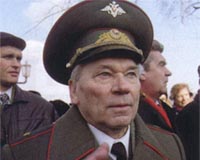 Kalashnikov turns 89, a 'happy man' for creating AK-47
(NSI News Source Info) Moscow - November 11, 2008: Legendary former Russian general Mikhail Kalashnikov, who celebrated his 89th birthday on Monday, said he was a "truly happy man" for having created the iconic assault rifle bearing his name.
"I think I am a truly happy man. I created a weapon for the defence of my country and it continues to serve this cause and develop," Kalashnikov was quoted as saying by the Ria Novosti news agency.
While the Kalashnikov rifle has become the weapon of choice by dozens of armies and guerrillas around the world, the World War II veteran has barely profited financially from the AK-47.
Born in a Siberian village on November 10, 1919, Kalashnikov had a tragic childhood during which his father was deported under Stalin in 1930.
Wounded during combat in 1941, Kalashnikov started working on his rifle in 1947, driven to design by Soviet defeats in the early years of World War II at the hands of far better armed German soldiers.
The Kalashnikov quickly became prized for its sturdy reliability in difficult field conditions.
Kalashnikov turns 89, a 'happy man' for creating AK-47
(NSI News Source Info) Moscow - November 11, 2008: Legendary former Russian general Mikhail Kalashnikov, who celebrated his 89th birthday on Monday, said he was a "truly happy man" for having created the iconic assault rifle bearing his name.
"I think I am a truly happy man. I created a weapon for the defence of my country and it continues to serve this cause and develop," Kalashnikov was quoted as saying by the Ria Novosti news agency.
While the Kalashnikov rifle has become the weapon of choice by dozens of armies and guerrillas around the world, the World War II veteran has barely profited financially from the AK-47.
Born in a Siberian village on November 10, 1919, Kalashnikov had a tragic childhood during which his father was deported under Stalin in 1930.
Wounded during combat in 1941, Kalashnikov started working on his rifle in 1947, driven to design by Soviet defeats in the early years of World War II at the hands of far better armed German soldiers.
The Kalashnikov quickly became prized for its sturdy reliability in difficult field conditions.
Subscribe to:
Posts (Atom)












