 Chinese Official Asserts Right To Carrier: Report
(NSI News Source Info) LONDON - November 17, 2008: A top Chinese military official asserted his country's right to build an aircraft carrier in a British newspaper interview Nov. 17, without commenting directly on whether it had decided to do so.
Maj. Gen. Qian Lihua, director of the Foreign Affairs Office at the Chinese Ministry of National Defense, told the Financial Times that if China did build a carrier, it would only be used for offshore defense.
"Navies of great powers with more than 10 aircraft carrier battle groups with strategic military objectives have a different purpose from countries with only one or two carriers used for offshore defense," he said, apparently in reference to the United States which has 11, according to the FT.
"Even if one day we have an aircraft carrier, unlike another country we will not use it to pursue global deployment or global reach."
The interview comes amid widespread speculation inside and outside China that Beijing is planning to acquire an aircraft carrier.
Earlier this year, the head of the U.S. Pacific Command, Adm. Timothy Keating, was reported to have said that Chinese military leaders were intensely interested in such an acquisition.
In March 2007, a Beijing-backed Hong Kong newspaper reported that China could have its first aircraft carrier by 2010.
This would likely trigger serious fears, especially in the United States, about China's global ambitions. The FT notes Qian's remarks were unlikely to address concerns over how it would affect a conflict involving Taiwan.
But the Chinese official noted that on a wider scale, it was "unreasonable" for Western countries to continue to call on Beijing for peacekeeping missions but at the same time maintain curbs on arms exports imposed in 1989.
"U.S. and EU countries on one hand ask us to send more troops to peacekeeping operations overseas, while on the other, they still have such arms sales embargoes on China. I think that is quite unreasonable," Qian said.
Chinese Official Asserts Right To Carrier: Report
(NSI News Source Info) LONDON - November 17, 2008: A top Chinese military official asserted his country's right to build an aircraft carrier in a British newspaper interview Nov. 17, without commenting directly on whether it had decided to do so.
Maj. Gen. Qian Lihua, director of the Foreign Affairs Office at the Chinese Ministry of National Defense, told the Financial Times that if China did build a carrier, it would only be used for offshore defense.
"Navies of great powers with more than 10 aircraft carrier battle groups with strategic military objectives have a different purpose from countries with only one or two carriers used for offshore defense," he said, apparently in reference to the United States which has 11, according to the FT.
"Even if one day we have an aircraft carrier, unlike another country we will not use it to pursue global deployment or global reach."
The interview comes amid widespread speculation inside and outside China that Beijing is planning to acquire an aircraft carrier.
Earlier this year, the head of the U.S. Pacific Command, Adm. Timothy Keating, was reported to have said that Chinese military leaders were intensely interested in such an acquisition.
In March 2007, a Beijing-backed Hong Kong newspaper reported that China could have its first aircraft carrier by 2010.
This would likely trigger serious fears, especially in the United States, about China's global ambitions. The FT notes Qian's remarks were unlikely to address concerns over how it would affect a conflict involving Taiwan.
But the Chinese official noted that on a wider scale, it was "unreasonable" for Western countries to continue to call on Beijing for peacekeeping missions but at the same time maintain curbs on arms exports imposed in 1989.
"U.S. and EU countries on one hand ask us to send more troops to peacekeeping operations overseas, while on the other, they still have such arms sales embargoes on China. I think that is quite unreasonable," Qian said.
Monday, November 17, 2008
Chinese Official Asserts Right To Carrier: Report
Chinese Official Asserts Right To Carrier: Report
(NSI News Source Info) LONDON - November 17, 2008: A top Chinese military official asserted his country's right to build an aircraft carrier in a British newspaper interview Nov. 17, without commenting directly on whether it had decided to do so.
Maj. Gen. Qian Lihua, director of the Foreign Affairs Office at the Chinese Ministry of National Defense, told the Financial Times that if China did build a carrier, it would only be used for offshore defense.
"Navies of great powers with more than 10 aircraft carrier battle groups with strategic military objectives have a different purpose from countries with only one or two carriers used for offshore defense," he said, apparently in reference to the United States which has 11, according to the FT.
"Even if one day we have an aircraft carrier, unlike another country we will not use it to pursue global deployment or global reach."
The interview comes amid widespread speculation inside and outside China that Beijing is planning to acquire an aircraft carrier.
Earlier this year, the head of the U.S. Pacific Command, Adm. Timothy Keating, was reported to have said that Chinese military leaders were intensely interested in such an acquisition.
In March 2007, a Beijing-backed Hong Kong newspaper reported that China could have its first aircraft carrier by 2010.
This would likely trigger serious fears, especially in the United States, about China's global ambitions. The FT notes Qian's remarks were unlikely to address concerns over how it would affect a conflict involving Taiwan.
But the Chinese official noted that on a wider scale, it was "unreasonable" for Western countries to continue to call on Beijing for peacekeeping missions but at the same time maintain curbs on arms exports imposed in 1989.
"U.S. and EU countries on one hand ask us to send more troops to peacekeeping operations overseas, while on the other, they still have such arms sales embargoes on China. I think that is quite unreasonable," Qian said.

Zardari seeks From US to provide the predator technology to Pakistan
 Zardari seeks From US to provide the predator technology to Pakistan
(NSI News Source Info) November 17, 2008: Washington: Pakistan President Asif Ali Zardari has reportedly urged Washington to provide the predator technology to Pakistan instead to enhance its ability to fight terrorism.
Zardari made this demand while expressing his disapproval of the US’ drone attacks on Pakistani areas along the Afghan border, reported the Daily Times.
He also voiced hope that the incoming Barack Obama administration would recognise Pakistan’s key anti-terror role as well as understand the fact that his country has been a victim of terrorism as well.
“We think we need a new dialogue, and we’re hoping that the new US government will understand that Pakistan has done more than they recognise and was a victim of the same insurgency the US was fighting,” the paper quoted him as saying.
Zardari seeks From US to provide the predator technology to Pakistan
(NSI News Source Info) November 17, 2008: Washington: Pakistan President Asif Ali Zardari has reportedly urged Washington to provide the predator technology to Pakistan instead to enhance its ability to fight terrorism.
Zardari made this demand while expressing his disapproval of the US’ drone attacks on Pakistani areas along the Afghan border, reported the Daily Times.
He also voiced hope that the incoming Barack Obama administration would recognise Pakistan’s key anti-terror role as well as understand the fact that his country has been a victim of terrorism as well.
“We think we need a new dialogue, and we’re hoping that the new US government will understand that Pakistan has done more than they recognise and was a victim of the same insurgency the US was fighting,” the paper quoted him as saying.
North Korea Remains Calm And Stable As Kim Wastes Away
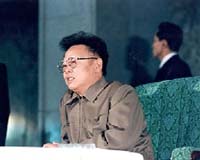 North Korea Remains Calm And Stable As Kim Wastes Away
(NSI News Source Info) November 17, 2008: The global media have been discussing the health of North Korean leader Kim Jong Il since September, after he failed to show up at several important official events, including celebrations of the 60th anniversary of the Democratic People's Republic of Korea. This sparked rumors of illness and a possible stroke.
In reality, nobody, except several top North Korean officials, knows anything about the health of Kim Jong Il. However, alarmist rumors and allegations concerning his bad health and imminent death imply that a bloody power struggle might erupt between the Workers' Party of North Korea and the army or inside the Kim Jong Il clan.
The authors of these rumors are also discussing North Korea's complete collapse. They believe China might decide to deploy troops in the country, that the United States would retaliate, and that another Korean war would flare up.
Despite these rumors -- actively circulated by the Western media -- one thing is certain: The North Korean sociopolitical situation remains absolutely calm and stable.
Indeed, the possible appointment of a new North Korean leader in the foreseeable future will not cause a nationwide collapse or any other major upheavals.
The outside world knows nothing about Kim Jong Il's possible successor and is forced to speculate whether he will be replaced by one of his sons, his daughter or his wife.
Many analysts are talking about collective leadership but are divided on its lineup. Some believe that the new government will be dominated by generals in line with the recent "army-priority" policies. Still others think that the Workers' Party of North Korea is reinstating its leading role and that the country would be run by a party-controlled collective leadership.
It appears that power in North Korea will change hands in line with a preliminary scenario. Although we do not know its contents, this scenario obviously exists. Consequently, all changes will be calm, with the North Korean government retaining control over the situation.
Domestic policy and foreign policy continuity will be preserved. The new North Korean leadership will steer toward gradual and extremely cautious market-oriented reforms and will search for ways of completely normalizing relations with the United States and Japan.
This theory is supported by Barack Obama's victory in the latest U.S. presidential elections. Pyongyang hastened to state its readiness to mend relations with Washington, if the latter reciprocated. Obama has also voiced his intention to negotiate with the North Korean leader after he is inaugurated.
Consequently, there is no reason to worry about possible destabilization on the Korean Peninsula, rising tensions and a hypothetical regional armed conflict.
In this connection, all the concerned parties must display tact and restraint while commenting on Kim Jong Il's health and discussing future relations with new North Korean leadership.
Any negative scenarios would be caused by external, rather than North Korean, developments. For instance, relations between the Republic of Korea and Pyongyang could continue to worsen, because the administration of South Korean President Lee Myung-bak has revised the heritage of his two predecessors and the entire North Korean policy.
Any manifestations of hysteria in connection with possible North Korean changes and the drafting of hostile contingency plans on this basis can seriously complicate relations with Pyongyang from the very outset and force it to implement tougher domestic and foreign policy measures.
Washington and Seoul are now actively discussing various military-political scenarios under the Concept of Operations Plan 5029 for dealing with the possible collapse of the North Korean regime.
Pyongyang is becoming more concerned and distrustful in the context of U.S.-South Korean attempts to convert this document into Operations Plan 5029.
South Korean analysts close to national government agencies are calling on Seoul to take advantage of possible North Korean problems caused by a hypothetical reshuffle in high places and to facilitate Korean reunification in line with the South's terms.
In the last few months South Korean non-governmental organizations have been using balloons to drop propaganda leaflets over North Korea beyond the demilitarized zone. Such actions are also aimed at changing the Pyongyang regime.
After Seoul ignored repeated North Korean warnings, Pyongyang decided to close the land border starting Dec. 10. This will inevitably impair the steadily dwindling inter-Korean cooperation.
Some analysts are saying with reason that Seoul, which is stating its desire to salvage and expand bilateral cooperation, nonetheless has diametrically opposite plans.
Such actions could induce Pyongyang to implement tough defensive measures and would spell negative prospects for reformist plans being implemented since 2002.
However, Pyongyang would continue to gradually modernize its socioeconomic system if other countries display a tranquil and friendly attitude.
Late North Korean leader backed nuke-free world: report
Declassified Chinese papers reveal North Korea's late founding leader Kim Il-Sung expressed his desire for denuclearisation just months before backing China's atomic ambitions, a report said Sunday. Yonhap news agency, citing a Chinese dossier from Beijing's national archives, said Kim's wish to rid the world of nuclear weapons was set out in a letter to then Chinese Premier Zhou Enlai in 1964. But in correspondence the following year, Kim congratulated China on its successful atomic tests and advocated Beijing's nuclear development as a defensive measure against US nuclear threats, Yonhap said.
"Eternal President" Kim Il-Sung, who died in 1994, is the father of Kim Jong-Il, the current leader of the communist state, a self-declared nuclear power since a 2006 atomic test. In a declassified letter dated October 30, 1964, Kim senior told Zhou that North Korea favoured banning and destroying all nuclear weapons. "The Democratic People's Republic of Korea (North Korea) has consistently maintained that nuclear weapons should be completely banned and nuclear weapons should be thoroughly destroyed," Kim said in the letter, according to Yonhap.
"The Korean people will stand shoulder to shoulder with the peace-loving people of the whole world for the realisation of the complete ban and thorough destruction of nuclear weapons." However, Kim Il-Sung wrote on May 17, 1965 to then Chinese leader Mao Zedong following Beijing's second successful nuclear test: "China's achievements will play a big role in coping with nuclear threats from the imperialist US and protecting the peace of the people of socialist countries." The letters were included in diplomatic documents declassified by the Chinese Foreign Ministry, Yonhap said. A Chinese foreign ministry statement said the time needed to process an application to see the documents was 20 working days.
Gadhafi Goes Shopping In Old Eastern Bloc
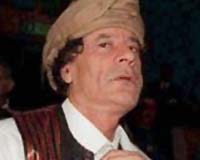 Gadhafi Goes Shopping In Old Eastern Bloc
(NSI News Source Info) Moscow - November 17, 2008: Russia is unlikely to get what it wants from Libya.
Before Libyan leader Col. Moammar Gadhafi came to the Russian capital, Moscow, on a state visit last week, analysts thought he would sign military contracts worth between $2 billion and $4.5 billion with Russia. However, while the Kremlin staff was busy searching for a place to build a Bedouin tent for Gadhafi, the "son of the desert" was thinking about his bargaining tactic in the former Soviet republics of Russia, Belarus and Ukraine.
Russians view the three countries as fraternal, but Gadhafi sees them as the "Slavic bazaar" where he can induce them to compete against each other.
The colonel's itinerary was carefully plotted, from Russia to Belarus and to Ukraine, because in Moscow the Libyan leader saw the full range of Russian military items for sale, such as the Kamov Ka-52 Alligator helicopter, the Sukhoi Su-35 multirole fighter, the T-90 Main Battle Tank and the latest version of Russia's advanced S-300 anti-aircraft and anti-ballistic-missile air defense system.
Even the Russian army lacks most of these novel systems, which definitely are not cheap. Russia has other cheaper, simpler arms for sale. It inherited them from the Soviet Union, just as Belarus and Ukraine did.
I was a military translator in Libya in the mid-1980s, and I know the Libyan army had Soviet arms made in the 1960s and early 1970s. They proved highly effective during war games, as well as in wars. Gadhafi was fighting a war in Chad at that time, which Libya did not advertise.
Belarusian President Alexander Lukashenko and Ukrainian President Viktor Yushchenko offered Gadhafi Soviet-made weapons.
Two factors -- the price and the buyer's feeling about the seller -- are crucial at a bazaar where sellers offer similar goods. Gadhafi is an experienced politician who has held power for close to 40 years, and he has a personality comparable to those of Russian politician Vladimir Zhirinovsky and Belarusian President Lukashenko.
It is therefore not surprising that during their visit to Minsk the leaders of Russia and Belarus spoke about their countries' similar positions and the need to build a multipolar world. Gadhafi recalled that it was Belarus that "extended a hand of friendship" to Libya when international sanctions were imposed on it.
Gadhafi first met with Lukashenko in 2000, when the Belarusian president was in Libya on an official visit during which the two leaders created the groundwork for bilateral relations. Gadhafi told Lukashenko on that occasion that he was always welcome in Libya, and the Belarusian leader promised to come to Tripoli again.
Gadhafi Goes Shopping In Old Eastern Bloc
(NSI News Source Info) Moscow - November 17, 2008: Russia is unlikely to get what it wants from Libya.
Before Libyan leader Col. Moammar Gadhafi came to the Russian capital, Moscow, on a state visit last week, analysts thought he would sign military contracts worth between $2 billion and $4.5 billion with Russia. However, while the Kremlin staff was busy searching for a place to build a Bedouin tent for Gadhafi, the "son of the desert" was thinking about his bargaining tactic in the former Soviet republics of Russia, Belarus and Ukraine.
Russians view the three countries as fraternal, but Gadhafi sees them as the "Slavic bazaar" where he can induce them to compete against each other.
The colonel's itinerary was carefully plotted, from Russia to Belarus and to Ukraine, because in Moscow the Libyan leader saw the full range of Russian military items for sale, such as the Kamov Ka-52 Alligator helicopter, the Sukhoi Su-35 multirole fighter, the T-90 Main Battle Tank and the latest version of Russia's advanced S-300 anti-aircraft and anti-ballistic-missile air defense system.
Even the Russian army lacks most of these novel systems, which definitely are not cheap. Russia has other cheaper, simpler arms for sale. It inherited them from the Soviet Union, just as Belarus and Ukraine did.
I was a military translator in Libya in the mid-1980s, and I know the Libyan army had Soviet arms made in the 1960s and early 1970s. They proved highly effective during war games, as well as in wars. Gadhafi was fighting a war in Chad at that time, which Libya did not advertise.
Belarusian President Alexander Lukashenko and Ukrainian President Viktor Yushchenko offered Gadhafi Soviet-made weapons.
Two factors -- the price and the buyer's feeling about the seller -- are crucial at a bazaar where sellers offer similar goods. Gadhafi is an experienced politician who has held power for close to 40 years, and he has a personality comparable to those of Russian politician Vladimir Zhirinovsky and Belarusian President Lukashenko.
It is therefore not surprising that during their visit to Minsk the leaders of Russia and Belarus spoke about their countries' similar positions and the need to build a multipolar world. Gadhafi recalled that it was Belarus that "extended a hand of friendship" to Libya when international sanctions were imposed on it.
Gadhafi first met with Lukashenko in 2000, when the Belarusian president was in Libya on an official visit during which the two leaders created the groundwork for bilateral relations. Gadhafi told Lukashenko on that occasion that he was always welcome in Libya, and the Belarusian leader promised to come to Tripoli again.
New Russian armored vehicles in action
New Russian armored vehicles in action
(NSI News Source Info) November 17, 2008: Special demonstration drills with live firing took place at the Kubinka military training ground near Moscow. Journalists could see new Russian armored vehicles, including T-90 tanks, BMP-3 armored personnel carriers and a special Terminator tank support combat vehicle (BMPT) in action.
 BMPT Tank Support Combat Vehicle
 BMPT Tank Support Combat Vehicle
Chavez says Russia to build nuclear reactor in Venezuela
 Chavez says Russia to build nuclear reactor in Venezuela
(NSI News Source Info) MOSCOW - November 17, 2008: Russia will help Venezuela build its first nuclear reactor in the northwestern province of Zulia, President Hugo Chavez said on Sunday.
Chavez had announced on Friday that Venezuela was in talks with Russia on nuclear energy cooperation, and the issue is likely to be discussed during Russian President Dmitry Medvedev's visit later this month.
"A nuclear reactor, to produce energy for peaceful purposes, will soon be built in Estado Zulia and named in honor of the Venezuelan scientist of the last century Humberto Fernandez Moran," Chavez told supporters in Maracaibo, the capital of Zulia state.
"Brazil has several nuclear reactors, as does Argentina. We will also have our own reactor," the president said.
Medvedev's trip to Venezuela on November 26 will be the first visit by a Russian president.
Russian nuclear power plant constructer Atomstroyexport, established in 1998, has completed or is working on reactors in Iran, Bulgaria, Hungary, the Czech Republic, Slovakia, China and India.
Chavez says Russia to build nuclear reactor in Venezuela
(NSI News Source Info) MOSCOW - November 17, 2008: Russia will help Venezuela build its first nuclear reactor in the northwestern province of Zulia, President Hugo Chavez said on Sunday.
Chavez had announced on Friday that Venezuela was in talks with Russia on nuclear energy cooperation, and the issue is likely to be discussed during Russian President Dmitry Medvedev's visit later this month.
"A nuclear reactor, to produce energy for peaceful purposes, will soon be built in Estado Zulia and named in honor of the Venezuelan scientist of the last century Humberto Fernandez Moran," Chavez told supporters in Maracaibo, the capital of Zulia state.
"Brazil has several nuclear reactors, as does Argentina. We will also have our own reactor," the president said.
Medvedev's trip to Venezuela on November 26 will be the first visit by a Russian president.
Russian nuclear power plant constructer Atomstroyexport, established in 1998, has completed or is working on reactors in Iran, Bulgaria, Hungary, the Czech Republic, Slovakia, China and India.
Indian Air Force to Setup First Sukhoi Squadron in Punjab by 2011
 Indian Air Force to Setup First Sukhoi Squadron in Punjab by 2011
(NSI News Source Info) November 17, 2008: In a move to provide teeth to its Air Force fleet along the Indo-Pak border, India will deploy two of its air superiority Sukhoi fighter squadrons in Halwara air base in Punjab by 2011. The Indian Air Force's (IAF) sword-arm Western Air Command (WAC) has drawn up a two-year plan and is preparing to host the Sukhoi squadrons at the Halwara fighter base near Ludhiana."We will get the first of the Su-30 squadrons to be based under the WAC by 2011 at the Halwara air base," WAC chief Air Marshal Pranab Kumar Barbora said. The IAF has already started the work to develop the infrastructure for deploying the squadrons with the most potent fighter aircraft in its fleet at the air base, which currently hosts the MiG-23 BN squadrons."We have started developing infrastructure for the Su-30 MKIs' deployment there. Work on the runway and other facilities has started and its going to be fully prepared for the aircraft in the next two years," Barbora said here. The two Su-30 MKI squadrons would be deployed at Halwara simultaneously once the MiG-23s are phased out early next year.These would be the first Su-30 MKI squadrons under the WAC, the largest of IAF's five operational commands in terms of area.
Indian Air Force to Setup First Sukhoi Squadron in Punjab by 2011
(NSI News Source Info) November 17, 2008: In a move to provide teeth to its Air Force fleet along the Indo-Pak border, India will deploy two of its air superiority Sukhoi fighter squadrons in Halwara air base in Punjab by 2011. The Indian Air Force's (IAF) sword-arm Western Air Command (WAC) has drawn up a two-year plan and is preparing to host the Sukhoi squadrons at the Halwara fighter base near Ludhiana."We will get the first of the Su-30 squadrons to be based under the WAC by 2011 at the Halwara air base," WAC chief Air Marshal Pranab Kumar Barbora said. The IAF has already started the work to develop the infrastructure for deploying the squadrons with the most potent fighter aircraft in its fleet at the air base, which currently hosts the MiG-23 BN squadrons."We have started developing infrastructure for the Su-30 MKIs' deployment there. Work on the runway and other facilities has started and its going to be fully prepared for the aircraft in the next two years," Barbora said here. The two Su-30 MKI squadrons would be deployed at Halwara simultaneously once the MiG-23s are phased out early next year.These would be the first Su-30 MKI squadrons under the WAC, the largest of IAF's five operational commands in terms of area.
India to Test Laser Guide Missile System in Chandipur, Orissa
India to Test Laser Guide Missile System in Chandipur, Orissa
(NSI News Source Info) November 17, 2008: After registering significant success with conventional missile systems, India is all set to test its first laser-guided missile at the Interim Test Range, Balasore, Orissa. The missile, Sudarshan, is the latest weapon system developed indigenously to occupy the niche of a precision delivery mechanism. It can neutralise any target in a 800-1,000 km range with a zero margin of error.
 Developed by the Aeronautical Development Establishment, Bangalore, Sudarshan is a versatile missile that can be used by the army, navy and air force. It suits the requirements of the artillery for a long-distance strike weapon. The navy can also fire it from an onboard launcher."The first version will use a ground-based launcher. However, subsequent ones could be fired from a flying fighter or drone. This will enhance the range," a source told to this website's newspaper.Sudarshan will use a laser of a specific frequency bandwidth to locate the target. The laser creates a heat signature on the target. The missile recognizes the signature and homes in on it even if the target is moving, sources said. "The target can be spotlighted using laser beamed from a ship or air. The on board systems can light it up and the missile follows the reflected light to reach targets that need pinpoint accuracy," said the source.However, unlike the practice of giving continuous laser guidance to a missile using an aircraft or a handheld designator, Sudarshan’s instrumentation enables it to chase a target once the navigation systems lock in on it.The ADE is equipping the missile with global positioning system technology. Like all modern missiles, it will have a three-dimensional locking mechanism using latitude, longitude and elevation.The preliminary trials, the sources said, were satisfactory. A dummy target was lit up using a laser fired from a battle tank. The missile's navigation system picked up the light and eliminated the target. Sudarshan's final trials are expected to take place within three months.
 Developed by the Aeronautical Development Establishment, Bangalore, Sudarshan is a versatile missile that can be used by the army, navy and air force. It suits the requirements of the artillery for a long-distance strike weapon. The navy can also fire it from an onboard launcher."The first version will use a ground-based launcher. However, subsequent ones could be fired from a flying fighter or drone. This will enhance the range," a source told to this website's newspaper.Sudarshan will use a laser of a specific frequency bandwidth to locate the target. The laser creates a heat signature on the target. The missile recognizes the signature and homes in on it even if the target is moving, sources said. "The target can be spotlighted using laser beamed from a ship or air. The on board systems can light it up and the missile follows the reflected light to reach targets that need pinpoint accuracy," said the source.However, unlike the practice of giving continuous laser guidance to a missile using an aircraft or a handheld designator, Sudarshan’s instrumentation enables it to chase a target once the navigation systems lock in on it.The ADE is equipping the missile with global positioning system technology. Like all modern missiles, it will have a three-dimensional locking mechanism using latitude, longitude and elevation.The preliminary trials, the sources said, were satisfactory. A dummy target was lit up using a laser fired from a battle tank. The missile's navigation system picked up the light and eliminated the target. Sudarshan's final trials are expected to take place within three months.
Pakistan criticized on US$7.6 bil. IMF bailout
Pakistan criticized on US$7.6 bil. IMF bailout
(NSI News Source Info) ISLAMABAD, Pakistan - November 17, 2008: Analysts and opposition leaders warned Sunday that Pakistan’s decision to borrow US$7.6 billion from the International Monetary Fund to stabilize its economy at a time of rising militant violence could lead to a public backlash.
Pakistani leaders had hoped their nation’s front-line status in the fight against al-Qaida and Taliban militant would lead the international community to come to its rescue.
 Pakistan’s top finance official Shaukat Tareen speaks during a press conference in Karachi, Pakistan, Saturday, Nov. 15. Pakistan has agreed to borrow US$7.6 billion from the International Monetary Fund to avoid adding an economic crisis to its struggle against Islamic militants, Tareen said
However, with the global economy in turmoil, the government was forced to turn to the IMF after even close allies such as the United States, China and Saudi Arabia snubbed its requests for significant bilateral aid.
Opposition lawmakers fear the IMF will impose austerity measures that will hurt ordinary Pakistanis, two-thirds of whom live on US$2 dollar a day or less. But the IMF said the package included steps to protect the poor from cutbacks.
Ahsan Iqbal, a spokesman for the main opposition party, said the government should admit its economic plans had failed, Dawn, a respected English-language paper, reported Sunday.
“The government should immediately tell Parliament what strings are attached to the IMF package,” the newspaper quoted Iqbal as saying.
Like other observers, Iqbal said the government had damaged its image by expanding the Cabinet when austerity was needed, not to mention sending a reported 200 people along with President Asif Ali Zardari to Saudi Arabia on a recent aid-seeking mission.
Murtaza Mughal of Pakistan Economy Watch, a network of economists, said Sunday that the country should still seek other options to shore up its economy. Cumbersome IMF spending rules could further slow development and upset the public, he said.
“We should avoid this loan,” Mughal said. He suggested that Zardari and other Pakistani leaders set an example by bringing into Pakistan bank money they held in banks elsewhere.
Pakistan’s finance chief said Saturday that the IMF agreed to the bailout after endorsing plans to tackle the country’s huge budget and trade deficits. The loan will boost Pakistan’s foreign currency reserves, which have seen a rapid decline that raised the prospect of a run on the local currency and default on the country’s foreign debt.
“We have fulfilled our commitment that Pakistan will never default” on its debt, Shaukat Tareen, finance adviser to Pakistan’s prime minister, said at a news conference.
Pakistan is one of a number of countries including Hungary and Ukraine seeking IMF assistance in the wake of the global credit crunch.
However, nuclear-armed Pakistan’s strategic importance in the U.S.-led war on terror makes its financial and political stability of particular concern to the international community.
Pakistan’s northwest, especially its wild tribal belt, is used by al-Qaida and Taliban militants to stage attacks on U.S. and NATO troops across the border in Afghanistan.
The Muslim nation is currently pursuing military operations in the tribal areas, including one in the Bajur region said to have killed more than 1,600 people since August.
Pakistan’s economy, which enjoyed fast-paced growth under ex-President Pervez Musharraf, is threatened by gross imbalances caused by the soaring costs of imported oil and food.
Tareen said Pakistan would apply formally for the emergency loan this week and an IMF statement said its board would consider the matter shortly.
With Pakistan’s currency having fallen some 20 percent since March, Tareen said Pakistan was hoping to receive a substantial first tranche from the fund before the end of the month. He said the loan carries an interest rate of between 3.5 percent and 4.5 percent and that Pakistan would have five years to pay it back, starting in 2011 or 2012.
Pakistan’s top finance official Shaukat Tareen speaks during a press conference in Karachi, Pakistan, Saturday, Nov. 15. Pakistan has agreed to borrow US$7.6 billion from the International Monetary Fund to avoid adding an economic crisis to its struggle against Islamic militants, Tareen said
However, with the global economy in turmoil, the government was forced to turn to the IMF after even close allies such as the United States, China and Saudi Arabia snubbed its requests for significant bilateral aid.
Opposition lawmakers fear the IMF will impose austerity measures that will hurt ordinary Pakistanis, two-thirds of whom live on US$2 dollar a day or less. But the IMF said the package included steps to protect the poor from cutbacks.
Ahsan Iqbal, a spokesman for the main opposition party, said the government should admit its economic plans had failed, Dawn, a respected English-language paper, reported Sunday.
“The government should immediately tell Parliament what strings are attached to the IMF package,” the newspaper quoted Iqbal as saying.
Like other observers, Iqbal said the government had damaged its image by expanding the Cabinet when austerity was needed, not to mention sending a reported 200 people along with President Asif Ali Zardari to Saudi Arabia on a recent aid-seeking mission.
Murtaza Mughal of Pakistan Economy Watch, a network of economists, said Sunday that the country should still seek other options to shore up its economy. Cumbersome IMF spending rules could further slow development and upset the public, he said.
“We should avoid this loan,” Mughal said. He suggested that Zardari and other Pakistani leaders set an example by bringing into Pakistan bank money they held in banks elsewhere.
Pakistan’s finance chief said Saturday that the IMF agreed to the bailout after endorsing plans to tackle the country’s huge budget and trade deficits. The loan will boost Pakistan’s foreign currency reserves, which have seen a rapid decline that raised the prospect of a run on the local currency and default on the country’s foreign debt.
“We have fulfilled our commitment that Pakistan will never default” on its debt, Shaukat Tareen, finance adviser to Pakistan’s prime minister, said at a news conference.
Pakistan is one of a number of countries including Hungary and Ukraine seeking IMF assistance in the wake of the global credit crunch.
However, nuclear-armed Pakistan’s strategic importance in the U.S.-led war on terror makes its financial and political stability of particular concern to the international community.
Pakistan’s northwest, especially its wild tribal belt, is used by al-Qaida and Taliban militants to stage attacks on U.S. and NATO troops across the border in Afghanistan.
The Muslim nation is currently pursuing military operations in the tribal areas, including one in the Bajur region said to have killed more than 1,600 people since August.
Pakistan’s economy, which enjoyed fast-paced growth under ex-President Pervez Musharraf, is threatened by gross imbalances caused by the soaring costs of imported oil and food.
Tareen said Pakistan would apply formally for the emergency loan this week and an IMF statement said its board would consider the matter shortly.
With Pakistan’s currency having fallen some 20 percent since March, Tareen said Pakistan was hoping to receive a substantial first tranche from the fund before the end of the month. He said the loan carries an interest rate of between 3.5 percent and 4.5 percent and that Pakistan would have five years to pay it back, starting in 2011 or 2012.
 Pakistan’s top finance official Shaukat Tareen speaks during a press conference in Karachi, Pakistan, Saturday, Nov. 15. Pakistan has agreed to borrow US$7.6 billion from the International Monetary Fund to avoid adding an economic crisis to its struggle against Islamic militants, Tareen said
NATO chief says Ukraine “will become a member
 NATO chief says Ukraine “will become a member
(NSI News Source Info) November 17, 2008: With uncertainty still reigning over Georgia’s hopes to one day become a member of NATO, in the aftermath of its conflict with Russia, the alliance’s Secretary General Jaap de Hoop Scheffer re-stated the military group’s desire to see Ukraine join its ranks at a high-level conference being held in the Estonian capital, Tallinn, on November 13. In his opening speech, de Hoop Scheffer said the talks were taking place at a special moment in NATO-Ukraine relations.
“Let me remind you that at the Bucharest Summit earlier this year, NATO heads of state and government welcomed Ukraine’s Euro- Atlantic aspirations for membership in NATO and agreed that Ukraine will become a member of the alliance,” he said. At subsequent press conferences, de Hoop Scheffer told reporters: “The long-standing partnership with Ukraine is not diminishing one iota.” He was joined by Ukrainian Defence Minister Yuri Yekhanurov and US Defence Secretary Robert Gates in stinging criticism of Russia’s recent actions, including suspicions that it was attempting to meddle in the affairs of other nations.
“Ukraine must be free to choose its own path and its own future, free from outside interference, and free from outside pressure of any kind in any direction,” de Hoop Scheffer said. Yekhanurov said the regional security environment had changed. “The world has become less stable and less predictable. The serious developments in Georgia have dispelled the idea that war in Europe is impossible,” he said. “The major issue was what to do next - will we agree to play dangerous imperialistic games of the 19th and 20th centuries and return to spheres of influence or will we follow that basic principle that European democracies have a right to choose their own way to security?” he asked.
Yekhanurov admitted that further progress needed to be made in Ukraine before it could be accepted as a full NATO member and said his country was suffering from an “overdose of democracy” creating political instability. However, he laughed off a mass brawl in the Ukrainian parliament as “testimony to fighting spirit of Ukraine.”
Gates unleashed the strongest denunciation of Russian actions while urging Ukraine to show the sustained commitment needed to join the alliance. Gates said countries in Eastern Europe were on edge due to Russia’s incursion into Georgia. “Russia’s recent behaviour has been troubling. Within hours of the conclusion of the American election, President (Dmitry) Medvedev responded by threatening to place missiles in Kaliningrad - hardly the welcome a new American administration deserves.”
“Such provocative remarks are unnecessary and misguided,” Gates added. Such rhetoric was associated with a bygone era, Gates stated, before suggesting that the only real emerging threat on Russia’s periphery was Iran. “I don’t think the Iskander missile has the range to get there,” he said laconically. Gates was also less measured in his reaction to the question of Ukraine’s and Georgia’s NATO Membership Action Plans (MAPs) than de Hoop Scheffer had been. The American diplomat referred back to the Bucharest summit in April when the two countries were granted their MAPs. “In a way the application has already been signed and sealed at Bucharest,” Gates said. That contrasted with de Hoop Scheffer’s earlier statement that NATO foreign ministers will make their first assessment of MAP in December and that it was too early to say what the outcome would be.
Subscribe to:
Posts (Atom)












