Euro-MP questions whether EU able to ensure S.Ossetia security
(NSI News Source Info) BRUSSELS - November 17, 2008: A European MP from Latvia who visited South Ossetia and its capital on October 26, has questioned whether the EU is ready to ensure security in Tskhinvali.
Russia handed control of buffer zones adjacent to two Georgian breakaway republics, over to EU and OSCE monitoring missions in Georgia on October 8. The measures are part of international efforts to stabilize the region following Georgia's invasion of South Ossetia in August, which triggered a five-day conflict with Russia.
Tatyana Zhdanok said, following reports of gunfire from the Georgian side on Tskhinvali, that South Ossetia has no EU-manned checkpoints in South Ossetia.
South Ossetia's authorities confirmed that there had been a resumption in shooting on South Ossetia territory, as well as the abductions of local residents.
The EU mission is tasked with ensuring security along the border with Georgia's breakaway regions of Abkhazia and South Ossetia, who were recognized by Russia as independent states on August 26. Both Abkhazia and South Ossetia have refused to allow EU observers on their territory.
The Russian and French presidents, Dmitry Medvedev and Nicolas Sarkozy, agreed in September that Russia's full withdrawal from undisputed parts of Georgia must take place by October 10. EU monitoring teams were deployed in Georgia on October 1 in preparation for the handover.
Abkhazia and South Ossetia broke away from Georgia following the collapse of the Soviet Union in the early 1990s amid armed conflicts that claimed thousands of lives.
Monday, November 17, 2008
Euro-MP questions whether EU able to ensure S.Ossetia security
Euro-MP questions whether EU able to ensure S.Ossetia security
(NSI News Source Info) BRUSSELS - November 17, 2008: A European MP from Latvia who visited South Ossetia and its capital on October 26, has questioned whether the EU is ready to ensure security in Tskhinvali.
Russia handed control of buffer zones adjacent to two Georgian breakaway republics, over to EU and OSCE monitoring missions in Georgia on October 8. The measures are part of international efforts to stabilize the region following Georgia's invasion of South Ossetia in August, which triggered a five-day conflict with Russia.
Tatyana Zhdanok said, following reports of gunfire from the Georgian side on Tskhinvali, that South Ossetia has no EU-manned checkpoints in South Ossetia.
South Ossetia's authorities confirmed that there had been a resumption in shooting on South Ossetia territory, as well as the abductions of local residents.
The EU mission is tasked with ensuring security along the border with Georgia's breakaway regions of Abkhazia and South Ossetia, who were recognized by Russia as independent states on August 26. Both Abkhazia and South Ossetia have refused to allow EU observers on their territory.
The Russian and French presidents, Dmitry Medvedev and Nicolas Sarkozy, agreed in September that Russia's full withdrawal from undisputed parts of Georgia must take place by October 10. EU monitoring teams were deployed in Georgia on October 1 in preparation for the handover.
Abkhazia and South Ossetia broke away from Georgia following the collapse of the Soviet Union in the early 1990s amid armed conflicts that claimed thousands of lives.

Now Admiral Gorshkov., When Aircraft Carrier INS Vikramaditya?
 Now Admiral Gorshkovow., When Aircraft Carrier INS Vikramaditya?
(NSI News Source Info) November 17, 2008:
Admiral Gorshkov was a modified Kiev class aircraft carrier of the Russian Navy, originally named Baku. In 2004, she was sold to India for conversion into a STOBAR carrier to be named INS Vikramaditya.
Russia is risking its reputation as a reliable source of weapons, and related services, over a botched deal to refurbish an old Russian aircraft carrier (the Admiral Gorshkov) for the Indian Navy. The latest twist in this four year old saga has Russia threatening to give the Gorshkov back to the Russian Navy if the Indians don't, again, come up with more money. All this is a sad tale of bungling, corruption, greed and lost blueprints. Work on the Gorshkov is about half completed. The 44,000 ton Gorshkov, was supposed to be delivered this year, and renamed the INS Vikramaditya. But now delivery has been delayed until 2012. The Russians admitted that this project suffered from inept planning, shoddy workmanship, and poor management.
The original price for the refurbishment of the of the Gorshkov was $1.5 billion. Building a Gorshkov type carrier today would cost about $4 billion, and take eight years. Last year, the Russians admitted there were problems, and demanded another half billion dollars to make it all right. India went along with that. But this year the Russians raised the price again, and now want $3.5 billion for the job, and an additional four years. The Indians refuse to pay, and the Russians are playing hardball with one of their biggest arms export customers.
Given that India currently has $10 billion worth of Russian military items on order, and has been Russia's biggest, and most profitable customer for military equipment for decades, the Gorshkov is looking to be an error of gigantic proportions. The boss of Sevmash naval shipyard, when the Gorshkov deal was negotiated, has been fired and is under criminal investigation, on suspicion of financial mismanagement.
Naturally, the Indians were not happy, and at first insisted that the Russian government (which owns many of the entities involved) make good on the original deal. India sent its own team of technical experts to Russia, and their report apparently confirmed what the Russians reported, about shipyard officials low-balling the cost of the work needed. This is a common tactic for firms building weapons for their own country. It gets more complicated when you try to pull that sort of thing on a foreign customer. The Russian government initially offered to cover some of the overrun cost. But now they insist that India cover all the costs, or lose the ship entirely. There's no word on whether or not the Indians would get any of their money refunded.
The Admiral Gorshkov entered service in 1987, but was inactivated in 1996 (too expensive to operate on a post Cold War budget). India is building another carrier, from scratch, but that 37,000 ton vessel won't be ready until 2015. India's sole aircraft carrier, the 29,000 ton INS Viraat, is currently spending 16 months in a shipyard getting maintenance and upgrades, leaving India with no carrier capability. This was to have been avoided by the timely arrival (this year) of the refurbished Russian carrier. If that had happened, the INS Viraat would have been retired in 2012, after 53 years service (for Britain and India). But now the INS Viraat will get its engine and hull refurbished, and its electronics upgraded, and possibly serve for another decade.
Unless the Russians suddenly backtrack and offer to eat the overruns, this is not going to end well for anyone involved. Indian officials believe that they can persuade the Russians to make a deal that will be more acceptable.
Armored Vehicles Are A Essential Factor To Armies In The World
 Armored Vehicles Are A Essential Factor To Armies In The World
(NSI News Source Info) November 17, 2008: If you look at the history of armored vehicle design over the last 70 years, you'll note that victory tends to come to the side with the better crews, not the superior vehicle designs. For a long time, this played little role in the design of new armored vehicles. But now it is becoming a crucial factor.
We are living in a watershed era as far as armored vehicle design is concerned. The vehicles that entered service at the end (1991) of the Cold War are still with us. Little new is in the works. Older designs, especially wheeled armored vehicles, are coming back into fashion. The U.S. Army Stryker is a variant of the LAV vehicle the U.S. Marine Corps acquired two decades earlier. Europeans have been building and selling (worldwide) such vehicles since the end of World War II.
There is plenty of talk and speculation about radical new tank designs, but nothing has really been done. Part of the delay is financial. The end of the Cold War led to a sharp drop in military spending, especially the funding of armored vehicle design and development. Then there is the flood of new technologies, many of which have been difficult to combine into a convincing new vehicle design.
In short, the big tanks, and high tech infantry fighting vehicles of today are difficult to replace. The current vehicles get the job done, and proposed new designs offer high risk (of battlefield failure) and low probability of successfully replacing what is already available.
Meanwhile, we have a nagging problem with superior people always beating superior technology. There are many examples. Early in World War II, the Germans had inferior tanks, yet they won spectacular victories using better trained and led crews, in 1940 and 41. Then comes 1944, when the U.S. was fighting the Germans in France. There, superior American crews, using inferior tanks, defeated the German tanks.
In the 1956 and '67 Arab-Israeli wars, the Arabs had superior tanks, and more of them, but were quickly defeated by superior Israeli crews. At the very end of the Cold War, in Kuwait, the world saw what superior tanks, and crews, could do.
Thus the future of armored warfare would appear to depend more on crew, than vehicle, quality. Given the current lack of radical new tank designs, and budgets to move them through development, crew quality has become the new decisive weapon for armored forces.
Pakistan forces given ‘licence to kill’ to protect NATO supplies
Pakistan forces given ‘licence to kill’ to protect NATO supplies
(NSI News Source Info) Peshawar - November 17, 2008: Pakistan government is learnt to have given a shoot-to-kill order for those trying to disrupt the NATO supplies to Afghanistan. The order comes in the wake of recent incidents whereby insurgents hijacked as many 15 trucks loaded with supplies for NATO and American forces in Afghanistan, though they were later recovered.
 Troops of Pakistan paramilitary forces escort trucks carrying supplies for NATO and U.S. forces to neighboring Afghanistan through Pakistan's tribal area of Khyber Pass near Peshawar Monday, Nov. 17, 2008. Pakistan reopened the supply route critical to NATO and U.S. troops battling the Taliban
The vehicles will henceforth be escorted by security officials to help them pass through Khyber Agency in a convoy, the Daily Times quoted a senior Pakistan government official as saying.
The Peshawar-Torkham road, one of the routes linking Pakistan and Afghanistan, is expected to be reopened today for moving NATO supplies to Western forces in Afghanistan, said sources in Pakistan government.
According to the paper, hundreds of trailers and containers had been stranded on the route, which was closed last week after Taliban hijacked more than a dozen trucks carrying NATO supplies on the road through the Khyber Pass. Political Agent Tariq Hayat said a “Quick Response Force” had been formed to guard the Afghanistan-bound containers.
Although NATO supplies were formally suspended on Saturday, drivers said they had been denied entry into Khyber Agency since November 11. “We have been made to wait here for the last six days under no security cover,” said a driver on condition of anonymity. Sources said the Peshawar-Jamrud road was also closed for the vehicles carrying NATO supplies on the recommendations of the NWFP government.
According to NWFP police chief Malik Naveed Khan, there were three criminal gangs in Khyber with direct links to terrorist groups.
 Troops of Pakistan paramilitary forces escort trucks carrying supplies for NATO and U.S. forces to neighboring Afghanistan through Pakistan's tribal area of Khyber Pass near Peshawar Monday, Nov. 17, 2008. Pakistan reopened the supply route critical to NATO and U.S. troops battling the Taliban
Boeing to Add New Technology to US Air Force GPS IIF Ground Segment
 Boeing to Add New Technology to US Air Force GPS IIF Ground Segment
(NSI News Source Info) EL SEGUNDO, Calif. - November 17, 2008: Boeing announced today that it will add improved capabilities to its technology for the U.S. Air Force's Operational Control Segment (OCS) satellite ground-control system. The new technology will allow the system to operate the new Boeing-built Global Positioning System (GPS) IIF satellites in addition to the current on-orbit GPS fleet, and provide advanced encryption and data-protection capabilities. The first of 12 GPS IIF satellites is scheduled to launch in the third quarter of 2009.
"Boeing and the U.S. Air Force GPS Wing's seamless deployment of the OCS in September 2007 introduced the beginning of a new era of GPS operational capabilities to support our warfighters and civilian users around the world," said Air Force Col. David Madden. "This additional technology will help us enhance the performance of the new GPS IIF satellites and the current GPS constellation."
The OCS system, also known as the Architecture Evolution Plan, is a distributed-server-based system designed to improve operations, increase efficiency and provide a foundation for new capabilities.
"This is the first step in enabling the advancements that the GPS IIF satellite brings to the GPS constellation," said Craig Cooning, vice president and general manager of Boeing Space and Intelligence Systems. "The flexible design of the OCS system enables it to accommodate technology improvements as they become available."
Boeing Adjusts 747-8 Program Production and Delivery Schedule
 Boeing Adjusts 747-8 Program Production and Delivery Schedule
(NSI News Source Info) EVERETT, Wash. - November 17, 2008: Boeing on Nov. 14, announced an adjusted schedule for production and delivery of the 747-8 Freighter and Intercontinental airplanes.
The revised schedule is based on a production and flight-test plan developed in conjunction with the company's suppliers that provides additional time for addressing issues that have slowed the program's progress. Those issues include supply chain delays driven by design changes to the airplane, limited availability of engineering resources inside Boeing, and the recent Machinists' strike that halted production in the company's factories.
Delivery of the first 747-8 Freighter will move from late 2009 to the third quarter of 2010. The first 747-8 Intercontinental passenger jet delivery moves from late 2010 to the second quarter of 2011.
"Our entire team has worked hard to mitigate growing schedule risk on this program but have been unable to overcome the collective impact of work statement increases to the original design, a tight supply of engineering resources, and the recent Machinists' strike," said Boeing Commercial Airplanes President and CEO Scott Carson. "We are clearly disappointed in what this schedule change means for our customers, employees, suppliers and other stakeholders. However, it is the appropriate and prudent decision to ensure a successful program, and we are committed to working with our customers to mitigate any disruption it causes them."
The revised schedule is the result of a comprehensive assessment of the production system and flight-test plan that began in late August and concluded with the incorporation of the impact of the recent strike.
"The remaining work on the 747-8 program is well defined," said Ross R. Bogue, vice president and general manager -- 747 Program and Everett site. "This schedule adjustment provides the time we need to finish that work and bring both airplanes to market successfully for our customers."
The risk of a schedule adjustment on the program was previously identified and was provisioned for in Boeing's third quarter financial results. The company will provide updated financial guidance and a post-strike assessment of the schedule for all its commercial airplane programs at a later date.
A-10 Drops LJADAM for First Time
 A-10 Drops LJADAM for First Time
(NSI News Source Info) EGLIN AIR FORCE BASE, Fla. - November 17, 2008: The A-10 Thunderbolt II, nicknamed the Warthog and known for its close-air support superiority and the ability to carry large and varied ordnance, is now on its way to delivering a new capability to the warfighter.
A pilot from the 40th Flight Test Squadron at Eglin Air Force Base, Fla., with support from people with the 46th Test Wing, Boeing and a host of other units, flew a quick yet historic mission early in November. For the first time, a Guided Bomb Unit-54, the Laser Joint Direct Attack Munition, or LJDAM, was dropped from an A-10C.
"There is a strong need to destroy moving targets in the AOR," said Capt. Kirt Cassell, the lead A-10C flight test engineer. "The Laser JDAM has shown to be very effective at destroying moving targets on other (aircraft) and Air Combat Command (officials) wanted to bring that capability to the A-10C for an upcoming deployment."
Captain Cassell and team members from the 40th FTS began planning this test mission in early October. That's a short timeline for a test mission, according to Captain Cassell. Plus, the team was challenged with ensuring the LJDAM worked correctly. To do this, the plan was to drop the bomb on a GPS target and then lase the weapon to another target downrange.
"The test was very successful!" Captain Cassell said. "The weapon functioned properly and released successfully, impacting the target almost exactly where the laser spot was located. We were able to demonstrate that the GBU-54 can successfully be integrated and dropped from the A-10C."
Maj. Matthew Domsalla piloted the historic mission. He's been flying the A-10 for more than eight years and knows that this added capability will make the A-10C even more lethal and more valuable to warfighters needing some firepower assistance. "
The LJDAM provides the pilot the ability to update the targeting if the target moves while the weapon is in flight," he said.
The A-10C has already demonstrated tremendous capability in supporting the war on terrorism. According to Lt. Col. Evan Dertien, the 40th Flight Test Squadron commander, putting this bomb on the aircraft "will give the A-10 an outstanding precision targeting capability that will help the Air Force continue to provide precision engagement."
And while making Air Force history is a great feeling for the 40th team, Colonel Dertien says the rewards of a successful test are more far reaching.
"When the weapons are proven in combat and you get feedback from the deployed flying units that a capability worked as expected and made a difference in the fight, that's the big payoff," he said.
The next step for the A-10C and LJDAM is to undergo operational tests to develop tactics and techniques for employing the weapon. If those tests prove to go as well as the first, Eglin's test team may have their feedback as early as January. The goal is to have this new precision capability deployed to the area of operations by early 2009.
Chinese Official Asserts Right To Carrier: Report
 Chinese Official Asserts Right To Carrier: Report
(NSI News Source Info) LONDON - November 17, 2008: A top Chinese military official asserted his country's right to build an aircraft carrier in a British newspaper interview Nov. 17, without commenting directly on whether it had decided to do so.
Maj. Gen. Qian Lihua, director of the Foreign Affairs Office at the Chinese Ministry of National Defense, told the Financial Times that if China did build a carrier, it would only be used for offshore defense.
"Navies of great powers with more than 10 aircraft carrier battle groups with strategic military objectives have a different purpose from countries with only one or two carriers used for offshore defense," he said, apparently in reference to the United States which has 11, according to the FT.
"Even if one day we have an aircraft carrier, unlike another country we will not use it to pursue global deployment or global reach."
The interview comes amid widespread speculation inside and outside China that Beijing is planning to acquire an aircraft carrier.
Earlier this year, the head of the U.S. Pacific Command, Adm. Timothy Keating, was reported to have said that Chinese military leaders were intensely interested in such an acquisition.
In March 2007, a Beijing-backed Hong Kong newspaper reported that China could have its first aircraft carrier by 2010.
This would likely trigger serious fears, especially in the United States, about China's global ambitions. The FT notes Qian's remarks were unlikely to address concerns over how it would affect a conflict involving Taiwan.
But the Chinese official noted that on a wider scale, it was "unreasonable" for Western countries to continue to call on Beijing for peacekeeping missions but at the same time maintain curbs on arms exports imposed in 1989.
"U.S. and EU countries on one hand ask us to send more troops to peacekeeping operations overseas, while on the other, they still have such arms sales embargoes on China. I think that is quite unreasonable," Qian said.
Zardari seeks From US to provide the predator technology to Pakistan
 Zardari seeks From US to provide the predator technology to Pakistan
(NSI News Source Info) November 17, 2008: Washington: Pakistan President Asif Ali Zardari has reportedly urged Washington to provide the predator technology to Pakistan instead to enhance its ability to fight terrorism.
Zardari made this demand while expressing his disapproval of the US’ drone attacks on Pakistani areas along the Afghan border, reported the Daily Times.
He also voiced hope that the incoming Barack Obama administration would recognise Pakistan’s key anti-terror role as well as understand the fact that his country has been a victim of terrorism as well.
“We think we need a new dialogue, and we’re hoping that the new US government will understand that Pakistan has done more than they recognise and was a victim of the same insurgency the US was fighting,” the paper quoted him as saying.
North Korea Remains Calm And Stable As Kim Wastes Away
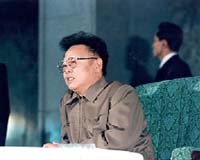 North Korea Remains Calm And Stable As Kim Wastes Away
(NSI News Source Info) November 17, 2008: The global media have been discussing the health of North Korean leader Kim Jong Il since September, after he failed to show up at several important official events, including celebrations of the 60th anniversary of the Democratic People's Republic of Korea. This sparked rumors of illness and a possible stroke.
In reality, nobody, except several top North Korean officials, knows anything about the health of Kim Jong Il. However, alarmist rumors and allegations concerning his bad health and imminent death imply that a bloody power struggle might erupt between the Workers' Party of North Korea and the army or inside the Kim Jong Il clan.
The authors of these rumors are also discussing North Korea's complete collapse. They believe China might decide to deploy troops in the country, that the United States would retaliate, and that another Korean war would flare up.
Despite these rumors -- actively circulated by the Western media -- one thing is certain: The North Korean sociopolitical situation remains absolutely calm and stable.
Indeed, the possible appointment of a new North Korean leader in the foreseeable future will not cause a nationwide collapse or any other major upheavals.
The outside world knows nothing about Kim Jong Il's possible successor and is forced to speculate whether he will be replaced by one of his sons, his daughter or his wife.
Many analysts are talking about collective leadership but are divided on its lineup. Some believe that the new government will be dominated by generals in line with the recent "army-priority" policies. Still others think that the Workers' Party of North Korea is reinstating its leading role and that the country would be run by a party-controlled collective leadership.
It appears that power in North Korea will change hands in line with a preliminary scenario. Although we do not know its contents, this scenario obviously exists. Consequently, all changes will be calm, with the North Korean government retaining control over the situation.
Domestic policy and foreign policy continuity will be preserved. The new North Korean leadership will steer toward gradual and extremely cautious market-oriented reforms and will search for ways of completely normalizing relations with the United States and Japan.
This theory is supported by Barack Obama's victory in the latest U.S. presidential elections. Pyongyang hastened to state its readiness to mend relations with Washington, if the latter reciprocated. Obama has also voiced his intention to negotiate with the North Korean leader after he is inaugurated.
Consequently, there is no reason to worry about possible destabilization on the Korean Peninsula, rising tensions and a hypothetical regional armed conflict.
In this connection, all the concerned parties must display tact and restraint while commenting on Kim Jong Il's health and discussing future relations with new North Korean leadership.
Any negative scenarios would be caused by external, rather than North Korean, developments. For instance, relations between the Republic of Korea and Pyongyang could continue to worsen, because the administration of South Korean President Lee Myung-bak has revised the heritage of his two predecessors and the entire North Korean policy.
Any manifestations of hysteria in connection with possible North Korean changes and the drafting of hostile contingency plans on this basis can seriously complicate relations with Pyongyang from the very outset and force it to implement tougher domestic and foreign policy measures.
Washington and Seoul are now actively discussing various military-political scenarios under the Concept of Operations Plan 5029 for dealing with the possible collapse of the North Korean regime.
Pyongyang is becoming more concerned and distrustful in the context of U.S.-South Korean attempts to convert this document into Operations Plan 5029.
South Korean analysts close to national government agencies are calling on Seoul to take advantage of possible North Korean problems caused by a hypothetical reshuffle in high places and to facilitate Korean reunification in line with the South's terms.
In the last few months South Korean non-governmental organizations have been using balloons to drop propaganda leaflets over North Korea beyond the demilitarized zone. Such actions are also aimed at changing the Pyongyang regime.
After Seoul ignored repeated North Korean warnings, Pyongyang decided to close the land border starting Dec. 10. This will inevitably impair the steadily dwindling inter-Korean cooperation.
Some analysts are saying with reason that Seoul, which is stating its desire to salvage and expand bilateral cooperation, nonetheless has diametrically opposite plans.
Such actions could induce Pyongyang to implement tough defensive measures and would spell negative prospects for reformist plans being implemented since 2002.
However, Pyongyang would continue to gradually modernize its socioeconomic system if other countries display a tranquil and friendly attitude.
Late North Korean leader backed nuke-free world: report
Declassified Chinese papers reveal North Korea's late founding leader Kim Il-Sung expressed his desire for denuclearisation just months before backing China's atomic ambitions, a report said Sunday. Yonhap news agency, citing a Chinese dossier from Beijing's national archives, said Kim's wish to rid the world of nuclear weapons was set out in a letter to then Chinese Premier Zhou Enlai in 1964. But in correspondence the following year, Kim congratulated China on its successful atomic tests and advocated Beijing's nuclear development as a defensive measure against US nuclear threats, Yonhap said.
"Eternal President" Kim Il-Sung, who died in 1994, is the father of Kim Jong-Il, the current leader of the communist state, a self-declared nuclear power since a 2006 atomic test. In a declassified letter dated October 30, 1964, Kim senior told Zhou that North Korea favoured banning and destroying all nuclear weapons. "The Democratic People's Republic of Korea (North Korea) has consistently maintained that nuclear weapons should be completely banned and nuclear weapons should be thoroughly destroyed," Kim said in the letter, according to Yonhap.
"The Korean people will stand shoulder to shoulder with the peace-loving people of the whole world for the realisation of the complete ban and thorough destruction of nuclear weapons." However, Kim Il-Sung wrote on May 17, 1965 to then Chinese leader Mao Zedong following Beijing's second successful nuclear test: "China's achievements will play a big role in coping with nuclear threats from the imperialist US and protecting the peace of the people of socialist countries." The letters were included in diplomatic documents declassified by the Chinese Foreign Ministry, Yonhap said. A Chinese foreign ministry statement said the time needed to process an application to see the documents was 20 working days.
Subscribe to:
Posts (Atom)