Saturday, July 05, 2008

China's new turboprop rolls off production line.

China's new turboprop rolls off production line.
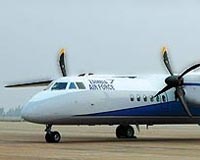
July 05, 2008 The MA600 is scheduled to begin trials in September. Up to 30 a year could be made according to market demand. China has unveiled a more advanced home-made turboprop aeroplane, moving a step closer to its ambitious goal of becoming one of the world's major propeller plane providers, state press said. The 60-seat "Modern Ark 600" (MA600), comparable to versions from Canada's Bombardier and France's ATR, was launched on Sunday, with deliveries to customers expected to start next year, the Xinhua news agency reported. The new aircraft is lighter than the first and only model of the MA series now on the market, the 50-60 seat MA60, which has received 122 orders since 2005, mainly from African and Southeast Asian countries, it said. Producer China Aviation Industry Corp. I (AVIC I) has already started developing the 70-seat MA700 as it seeks to break into markets in developed countries, it added. The company has set a target for the MA series of 40 percent of the world's turboprop aircraft market in 2018, previous reports said. The MA600 is scheduled to begin trials in September. Up to 30 a year could be made according to market demand, they said. The MA700 is expected to be available on the market in five years, according to Xinhua. Demand for more energy efficient propeller aircraft, commonly used on short and medium-haul flights, is expected to rise amid high global oil prices, as large jets are wasteful and more costly for regional routes, Xinhua said. In the next 20 years, the world will need 1,900 turboprop planes, or around 35 percent of the demand for regional aircraft, according to joint research by Bombardier and the Aviation Industry Development Research Centre of China.

Friday, July 04, 2008

Military 'agreed' nuclear export

Military 'agreed' nuclear export July 04, 2008: It was a North Korean plane, and the army had complete knowledge about it and the equipment AQ Khan Disgraced scientist AQ Khan has said that Pakistan transported nuclear material to North Korea with the full knowledge of the country's army. In media interviews, he said that the army supervised a flight of centrifuges to Pyongyang in 2000. At the time President Pervez Musharraf was head of the army. Dr Khan said that uranium enrichment equipment was sent in a North Korean plane loaded under the supervision of Pakistani security officials. 'Complete knowledge' The BBC's Barbara Plett, in Islamabad, says that Dr Khan's latest claims contradict a public confession he made in 2004 that he was solely responsible for exporting nuclear technology to Iran, North Korea and Libya. Our correspondent says that the comments are the most controversial accusation made by Dr Khan since he recently began defending himself in statements to the media. His comments are also at variance with the oft-stated line of the Pakistani government that neither it nor the army had any knowledge of the exports. AQ Khan has been at the forefront of developing Pakistan's nuclear capacity "It was a North Korean plane, and the army had complete knowledge about it and the equipment," Dr Khan said. Pakistan's newly elected government has relaxed restrictions on Mr Khan, who was put under house arrest in 2004 by the then military leader, President Musharraf. He is still detained but has begun speaking to the media by telephone. He said the army must have been aware of the centrifuges exports since it supervised all defence consignments and special flights. 'Extremely embarrassing' Our correspondent says that this is the closest he has come to accusing the army of involvement, although he stopped short of implicating the president, saying he did not know who specifically was responsible. The allegations are highly controversial, correspondents say, and could prove extremely embarrassing for the army. President Musharraf argues that only AQ Khan knew of the nuclear transfers So far there has been no response from the government or the army in relation to the allegations. The retired scientist has spoken increasingly to the media since a new government was elected in Pakistan earlier this year. When asked why he had taken sole responsibility for the nuclear scandal in 2004, Dr Khan said he had been persuaded that it was in the national interest. In return, he said, he had been promised complete freedom, but "those promises were not honoured". Dr Khan also said that he travelled to North Korea in 1999 with a Pakistani general to purchase shoulder-launched missiles. His wife this week went to the Islamabad High Court in a bid to end restrictions on her husband's movements. Dr Khan was pardoned by President Musharraf after admitting illegally transferring nuclear secrets to other countries including Libya, Iran and North Korea. But in recent weeks he has retracted his confession.

China to increase grain output

China to increase grain output July 04, 2008 Beijing: Meeting demand in China will be difficult if demand continues to grow China's cabinet has approved a plan to ensure grain production keeps pace with strong domestic demand and overcomes challenges such as climate change. China aims to reach and maintain annual grain output of 500 million tonnes by 2010, and to increase output to more than 540 million tonnes a year by 2020. Harsh weather and the development of arable land are hurting grain output. Despite this, the government said China would be self-sufficient in the future and could meet rising consumer demands. In order to achieve its goals, China has set out a "red line" defining 120 million hectares (296 million acres) of land as a necessary minimum to ensure at least 95% self-sufficiency in grain supply. Future challenges China has the world's largest population, with more than 1.3 billion people. As its economy grows, so do the demands and desires of its population, boosting demand for food, commodities and consumers goods. While the country's supply and demand are more or less equal at the moment, the Chinese government has forecast that meeting demand will be tight in future. Rapidly increasing urbanisation, a growing population and industrialisation across the country all pose major challenges to future grain production. Water shortages and extreme weather conditions such as the recent floods are also hampering food production. In a bid to further combat the problems, the government has also decided to increase farmer subsidies and ramp up China's grain reserve system. Food prices have almost doubled within the past three years and have led many countries to curtail exports in order to ensure enough stocks remain for domestic consumption. Higher prices have also led to widespread unrest across Asia and Northern Africa.

Helos For Jakarta Sets Future Tone For Arms Deals

Helos For Jakarta Sets Future Tone For Arms Deals
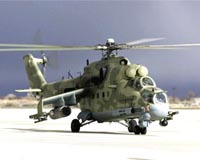
July 04, 2008 The delivery of six Russian Hind Mi-35 helicopters to Indonesia this month is neither a large arms deal nor an unprecedented one -- but it is still a highly significant event. For the deal is just a small part of a huge $1 billion plus arms deal that then-Russian President and current Prime Minister Vladimir Putin nailed down last year. Within that overall package, Russia is also buying three Sukhoi Su-27SKM and three Sukhoi Su-30MK2 aircraft. This too is not entirely unprecedented. The Indonesian armed forces are already operating two Sukhoi Su-27 SKs and two Sukhoi Su-30 MKs. The key reason for the deal is that Russia is virtually giving the arms away free. Indonesia does not even have to start paying for them for another 15 years, and it has been given exceptionally easy credit terms. With its soaring revenues from oil and gas exports, the Kremlin can certainly afford to be generous when it is buying major strategic influence and supplanting the United States in an arms market that has been an almost exclusively American preserve for more than four decades. However, the nature of Indonesia's unique security problems makes the nature of the Russian weapons offered to it exceptionally attractive. Indonesia is an enormous archipelago of 17,500 islands, of which 6,000 are inhabited. It therefore faces enormous challenges of cost effectively maintaining security over a sprawling area. Air and sea superiority over hostile navies and air forces is not the primary Indonesian concern. With its huge size and population of more than 212 million, even major nations like Japan and China treat it with respect. Therefore, Indonesia has no need for large fleets of expensive state-of-the-art combat aircraft with sophisticated electronics or costly high-tech surface warships. This means that buying relatively low tech but very cheap Sukhoi aircraft and Hind helicopters makes sense for Jakarta. It will not be as difficult to train up its armed forces engineers and mechanics to maintain these simpler aircraft and warships. Buying a Kilo-class submarine for Russia also makes sense to defense planners in Jakarta. The United States does not even make any diesel subs anyway. Germany, Sweden and France all do. And they are very good ones. But those major European nations have a tradition of getting angry about major human-rights violations, and with the security problems Indonesia faces, the armed forces and successive Indonesian governments have little taste for making the security of their strategic arms supplies dependent on the goodwill or moral disapproval of European democracies if they can avoid it. Therefore, buying four Project 636 class Kilo diesel-electric subs and two Lada-class ones from Russia was obviously an attractive option even if the terms of the deal weren't so remarkably good. Even as it is, the Kilos are formidable weapons systems, while being small and cheap to operate. They could carry anti-ship cruise missiles -- and Russia makes the world's best sea-to-land missiles with a range of more than 150 miles. Even these modest weapons systems, therefore, will give Indonesia an air and sea capability that only nations as far away as Japan, China, Australia and India could match or exceed. But if the deal is an ideal one for Indonesia, it offers far greater opportunities for Russia. The prospect of displacing U.S. influence after 40 years in the largest Muslim nation in the world, and one astride the sea transport routes from the Middle East oil producers to the great industrial nations of Northeast Asia, is obviously a huge prize for the Kremlin. But in addition, the success of the arms deal with Indonesia offers Moscow a model for buying friends and extending its global influence throughout the developing world. For most developing nations cannot afford the superb but highly expensive and high-tech aircraft and warships that the main U.S. defense contractors now produce. Nations such as Taiwan, South Korea, Japan, Israel, Australia and the major European states will still have to come to America for many, if not most of their strategic arms systems, especially in the fields of aircraft and ballistic missile defense. But the Russian model of offering cheap, far easier to maintain and much smaller aircraft and ships, especially diesel subs, with no strings attached for human-rights violations or international bad behavior, is bound to prove attractive to a lot of countries around the world including some, like Indonesia, that have long been U.S. allies.

India to get Russian nuclear submarine after 17 yr wait

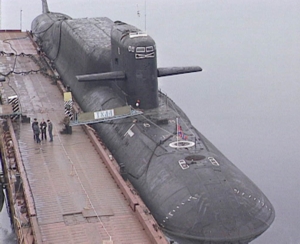
India to get Russian nuclear submarine after 17 yr wait Moscow, July 4: India will get its first Akula class Russian nuclear submarine in 2009, equipping its navy with the quietest and lethal underwater war machine after a gap of 17 years to enhance its blue water capabilities. Factory trials of the multi-role nuclear submarine, christened INS Chakra which India-will get on a 10-year-lease, commenced on June 11 at the Komsomolsk-on-Amur shipyard and will be followed by sea trials, Russian defence sources said, adding it will be delivered by September 2009. According to experts, Chakra would help India fill the void caused by the delays in the indigenous Advanced Technology Vessel project to build a nuclear powered, guided missile attack submarine. Three Indian naval crews for the nuclear submarine have already been trained at the specially set up training centre in Sosnovy Bor near St. Petersburg. This facility would also be used for training crews for the Indian nuclear submarines of ATV project currently in the advanced stages of development, sources said. Though they said that India has financed the completion of construction of submarine of project 971 "Shchuka B"(NATO codename Akula) under the USD 650 million deal signed in 2004 as part of the larger Gorshkov package, they did not reveal the cost of the lease of Chakra. Akula (Shark) is the quietest Russian attack submarine and Chakra has been christened after its predecessor leased by the Indian Navy in 1988 from the erstwhile USSR. In January 1988, ex-USSR had leased K-43 nuclear submarine of project 670 (NATO codename Charlie) which was with the Indian Navy as INS Chakra till March 1991, when under the intense US pressure beleaguered Soviet President Mikhail Gorbachev had refused to extend the lease.

Thursday, July 03, 2008

Bush to attend Olympic ceremony

Bush to attend Olympic ceremony July 03, 2008 Mr Bush had always planned to attend the Olympics, the White House said US President George W Bush will attend the opening ceremony of the Beijing Olympics, the White House says. Spokeswoman Dana Perino said Mr Bush will also visit South Korea and Thailand as part of the trip. Human rights groups and opposition politicians including presidential hopeful Barack Obama had urged Mr Bush to consider boycotting the ceremony. Beijing's rights record has come under intense scrutiny since Tibetan protests were suppressed in March. The army and police used force to quell the biggest demonstration in Tibetan communities for a generation. Beijing says rioters killed about 20 people in the unrest, but exiled Tibetan groups accuse security forces of killing scores of peaceful protesters. Several world leaders said they were considering boycotting the 8 August opening ceremony over Beijing's actions. While it was understood that Mr Bush would go to the Games, no firm plans for the opening had been announced. The president has always maintained that the Olympics are a sporting spectacle and should not be politicised. Mr Bush and his wife, Laura, will also meet Chinese President Hu Jintao as part of their visit to China, the White House said.

South Asian nations miss business opportunities worth $8 billion a year

South Asian nations miss business opportunities worth $8b a year Non-cooperation is the reason, says Saarc secretary general The South Asian nations miss business opportunities worth $8 billion a year because of non-cooperation, said Saarc Secretary General Dr Sheel Kant Sharma yesterday."A recent study said the opportunity cost of non-cooperation [among the South Asian nations] is $8 billion," Sharma said at a roundtable styled "Saarc: Short Window of Opportunity" organised by Bangladesh Enterprise Institute (BEI) at its auditorium in the capital.If "unofficial" businesses in the region could be checked, business opportunities worth three to four times the amount would have been created, he said.He, however, expressed optimism that the Saarc processes, which appear to be moving like a locomotive, are steady and will surely witness success.Terming the present situation in the Saarc region "unprecedented", he said, "On economic sides, these countries have good growth rates. Foreign exchange reserves are also good."He said, "Promising things are in our hand. These are now at the stage of implementation."Sharma, who became the Saarc secretary general on March 1 this year, described the South Asian Free Trade Agreement (Safta) and Saarc Development Fund as the successes of the forum of the eight countries in the region.A few more projects of the development fund will be initiated before the next summit in Colombo, he added.In his keynote address, Sharma said the priorities in the last summit were energy, water, food and climate change and work on these areas progressed on their own ways. "Colombo summit will be a time for our leaders to pronounce these issues," he said.A Saarc Food Bank has already been established for food security of South Asian nations and four countries have already ratified it, one will ratify it soon and the rest are also expected to follow, he said, adding, "When ratification by all the countries is done, it will start functioning."In terms of population, the Saarc is the biggest regional grouping and all the governments are heavily engaged in addressing problems of their nationalities, he said, adding that although these efforts are regional, they are implemented on national basis.Sharma observed that the Saarc Secretariat requires more skilled and expert manpower to strengthen it.Referring to the European Union (EU) and Association of South East Asian Nations (ASEAN), he said today all refer to these regional groupings, but these also took time to fly.Responding to a question, he said there is already visa exemption for people in a few categories for travelling the Saarc countries and the Saarc Secretariat is trying to increase the number of categories.In his welcome address, BEI President Farooq Sobhan said the Saarc should give top priority on the issue of climate change as experts fear millions of people will lose shelters and adequate food production remains a challenge.Emphasising the need for activating Safta, the former foreign secretary said the free trade agreement now in place between India and Sri Lanka could also be replicated in case of other Saarc countries.Saarc food security reserve is a crucial issue in the wake of food shortage and price hike, Sobhan said, adding that the Saarc could learn from the experiences of the EU and the ASEAN. He also suggested strengthening the Saarc Secretariat to make more initiatives.He called for more cooperation on labour migration and energy cooperation among the Saarc nations, saying these are the issues that can truly help develop the region and face challenges ahead.European Commission Head of Delegation Stefan Frowein, Indian High Commissioner in Dhaka Pinak Ranjan Chakravarty, diplomats from home and abroad and development experts were present at the roundtable.
Tata Motors plans to launch ACE in the United States

Tata Motors plans to launch ACE in the United States July 03, 2008 Indian Auto major Tata Motors has finally decided to make its debut in the United States. The company is planning to enter the US market with ACE and looking for a partnership with Chrysler for its US foray. The company is engaged in manufacture of commercial and passenger vehicles primarily in India. It offers passenger cars, multi-utility vehicles, and pick-ups; medium and heavy commercial vehicles, such as rigid trucks, tractor trailers, and tippers; commercial trucks; buses and defense related vehicles. The company is now planning to launch its mini truck named ACE in the United States and also planning to distribute and market other products in partnership the Chrysler. The company will be launching a newer version of the ACE in USA. Tata Motors is also expanding its product portfolio domestically. The company has been in the news for its 1-lakh small car. Tata’s major passenger cars include Tata Indica, Tata Safari, Tata Indigo and new Sumo. At 2:30 p.m. the stock was up by 8% at Rs. 755 on NSE. The stock touched an intraday high of Rs. 759 and an intraday low of Rs. 706.

Oil passes, settles above $145 for first time

Oil passes, settles above $145 for first time Thursday July 03, 2008 Oil surges to new highs above $145 a barrel; US pump prices at record near $4.10 a gallon NEW YORK (AP) -- Oil prices raced above $145 a barrel for the first time Thursday as traders added to their bets on the commodity ahead of the long holiday weekend. There was little good news for Americans hitting the road for the July Fourth holiday, as gas prices set their own record near $4.10 a gallon. Light, sweet crude for August delivery surged $1.72 to settle at a record $145.29 on the New York Mercantile Exchange. Earlier in the trading session, the last of the week, the contract rose to $145.85 a barrel, also a new high. The gains built on a record-shattering rally the previous day, and left prices 3.6 percent higher for the week. Crude has shot up by more than half just since the start of the year. Oil has set trading or closing records in each of the last six trading sessions. U.S. gas prices resumed their march higher as motorists looked ahead to the three-day break. The average retail price for regular gasoline jumped six-tenths of a penny to $4.098 a gallon, according to AAA, the Oil Prices Information Service and Wright Express. Thursday's surge in oil was propelled by a report of lower crude stockpiles in the United States, lingering concerns about conflict with Iran and comments by Saudi Arabia's oil minister suggesting his country would not boost production. Prices might have raced even higher Thursday were it not for a sharp gain by the dollar against the euro. The greenback strengthened considerably after the European Central Bank raised interest rates by a quarter point as expected but did not signal additional rate hikes that might further boost the 15-nation euro. "The strength in crude oil is amazing given the price of the euro," said James Cordier, president of Tampa, Fla.-based trading firms Liberty Trading Group and OptionSellers.com. A slumping dollar has been a key driver pushing oil prices up by half this year. Many investors buy commodities such as oil as a hedge against inflation when the greenback weakens, and a falling dollar makes oil less expensive to investors overseas. When the dollar strengthens, traders have less incentive to buy commodities. Oil prices are also rising because investors have been pumping more money into the commodity to compensate for what are perceived to be anemic returns elsewhere, analysts say. The major stock market indexes are all down by double digits since the start of the year. At the same time, recent saber-rattling in the Middle East has left the markets jittery. And many traders are concerned that there simply is not enough oil in the short term to quench rising global demand -- even without a conflict that could disrupt supplies. "There's a whole lot of thinking right now that prices haven't risen high enough to meet demand growth," Cordier said. Speaking Thursday in Madrid, Saudi Arabia's oil minister said the world's biggest oil exporter had no immediate plans to boost crude output because there was no need to do so. Ali Naimi said he was "concerned about the (price) level" and suggested Saudi Arabia is ready to raise production if the kingdom determines supply-and-demand fundamentals have changed. But for now, the minister told reporters, "all our buyers are satisfied and happy." Soaring fuel costs are squeezing cash-strapped drivers and inflating prices in the U.S., the world's leading oil consumer. Last Fourth of July, drivers were paying just $2.95 a gallon for gas -- about $1.15 less than today. The government issued more troubling economic news Thursday, reporting that U.S. employers cut payrolls by 62,000 in June, the sixth straight month of nationwide job losses. But because the jobs report was largely in line with what analysts expected, it "had little-to-no impact" on oil prices, said Addison Armstrong, director of market research at Tradition Energy. Traders were also keeping an eye on storms brewing offshore. A system developing near the Cape Verde Islands off the western coast of Africa was upgraded to become the second tropical storm of the hurricane season, although it was expected to turn northward and avoid the oil and natural gas platforms scattered throughout the Gulf of Mexico. "It's more of a psychological thing," Cordier said. "It reminds traders that hurricane season is ahead of us, not behind us." In other Nymex trading, heating oil futures rose 3.45 cents to settle at $4.106 a gallon, while gasoline futures added 2.16 cents to settle at $3.571 a gallon. Natural gas futures jumped 18.8 cents to settle at $13.584 per 1,000 cubic feet. In London, Brent crude futures rose to a trading record of $146.69 a barrel on the ICE Futures exchange before settling at $146.08, up $1.82.

Indian Navy to Expand Bluewater Capabilities

Indian Navy to Expand Bluewater Capabilities July 04, 2008 India is planning to expand the bluewater capabilities of the Navy with more indigenous built platforms, which can carry out underwater surveillance and anti-submarine warfare operations, minister of state for defence M M Pallam Raju said on Wednesday.Speaking at a function in Kochi after formally handing over the technology for the third generation ship sonar HUNSA NG to Bharat Electronics Limited, Raju said these sonars would be fitted on a range of Indian Navy warships including frigates, destroyers and corvettes, to be built in the Indian dockyards. It would also replace earlier sets progressively. Raju congratulated the scientists of the Naval Physical and Oceanographic Laboratory (NPOL), a Defence Research and Development Organisation institution located in Kochi, for developing and transferring the technology in the stipulated time.The total production of NPOL sonar would go up by another Rs 200 crore when the new sonars were produced, he said. Stressing the importance of naval research for a country like India, which has a 7,400 km long coastline and two island chains, Mr Raju said the Indian Ocean, once an ''ocean of peace,'' could become a hotbed of hostilities. There was increased movement of superpower submarines in the region and naval build-ups in the area, against which India had to be on an alert, the minister added.Besides protecting sea trade and communication lanes, ports and Indian assets abroad, the Navy also had to be equipped to check drug and human trafficking, terrorism and piracy, Mr Raju said. ''For India to be the dominant power in the area, it is important for us to equip the Navy with bluewater capability,'' he added. The minister noted that two of the NPOL's towed array systems were close to user evaluation. The Navy had also evinced interest in Low Frequency Dunking Sonar, being developed at NPOL, by funding the installation on the Advanced Light Helicopter.In the context of low intensity warfare, the NPOL's efforts in coastal surveillance systems also needed to be augmented, Mr Raju said. Stating that delay in delivery of goods and services had been a major point of criticism against the DRDO, the minister said the organisation needed to transfer technologies to its industrial partners effectively and efficiently. In this context, Raju praised the successful three-decade-old partnership between NPOL and BEL.Chief Controller Reasearch and Development , DRDO, Sivathanu Pillai said the sonar technology developed at NPOL was comparable to the best in the world and was ready for export to other countries. The tsunami warning system and the 'Sanjeevani' life detecting device were some of the other NPOL technologies with multi-faceted applications, he said. V V R Sastry, Chief Managing Director , BEL, said with global players entering the Rs 54,000 crore Indian defence market, the competition was heating up for the local defence-related industries.