 Saab Develops Royal Thai Air Defence
(NSI News Source Info) September 25, 2008: Saab has received an order worth 158 MTHB from the Royal Thai Air Force for development of the Royal Thai Air Force air defence command and control system. The system will be developed in close collaboration with the customer and adapted for the specific requirements of the Royal Thai Air Force. The system involves the latest technology within for example data fusion capabilities, and is developed to be intuitive and user-friendly. “The order is important for the continued development of Saab’s expertise in command and control systems for air defence”, says Peter Wimmerström, President of Saab Systems. The contract has been awarded in competition with the major command & control companies in the world and marks the continued cooperation between Saab and the Royal Thai Air Force.
Saab Develops Royal Thai Air Defence
(NSI News Source Info) September 25, 2008: Saab has received an order worth 158 MTHB from the Royal Thai Air Force for development of the Royal Thai Air Force air defence command and control system. The system will be developed in close collaboration with the customer and adapted for the specific requirements of the Royal Thai Air Force. The system involves the latest technology within for example data fusion capabilities, and is developed to be intuitive and user-friendly. “The order is important for the continued development of Saab’s expertise in command and control systems for air defence”, says Peter Wimmerström, President of Saab Systems. The contract has been awarded in competition with the major command & control companies in the world and marks the continued cooperation between Saab and the Royal Thai Air Force.
Wednesday, September 24, 2008
Saab Develops Royal Thai Air Defence
Saab Develops Royal Thai Air Defence
(NSI News Source Info) September 25, 2008: Saab has received an order worth 158 MTHB from the Royal Thai Air Force for development of the Royal Thai Air Force air defence command and control system. The system will be developed in close collaboration with the customer and adapted for the specific requirements of the Royal Thai Air Force. The system involves the latest technology within for example data fusion capabilities, and is developed to be intuitive and user-friendly. “The order is important for the continued development of Saab’s expertise in command and control systems for air defence”, says Peter Wimmerström, President of Saab Systems. The contract has been awarded in competition with the major command & control companies in the world and marks the continued cooperation between Saab and the Royal Thai Air Force.

US Army’s Future Combat Systems, fires its first 155mm round
US Army’s Future Combat Systems, fires its first 155mm round
(NSI News Source Info) September 25, 2008: The USA’s $160+ billion Future Combat Systems faced a mild restructuring in February 2007, and in July 2007, work began on Phase 1 spinouts to the active force.
In order to speed replacement of the M109 mobile howitzers, some members of Congress had been pushing to speed up fielding of the M1203 NLOS-C 155mm mobile howitzer as a replacement for the USA’s aging M109s, even if this meant breaking Future Combat Systems’ unitary acquisition model by making NLOS-C a separate program.  That didn’t happen, thanks in part to FCS critic Senator McCain’s [R-AZ] interesting intervention, but the message was clear.
That didn’t happen, thanks in part to FCS critic Senator McCain’s [R-AZ] interesting intervention, but the message was clear. The prototype of the Non-Line-Of-Sight Cannon, being developed as part of the US Army’s Future Combat Systems, fires its first 155mm round.
Unfortunately, even NLOS-C will break the C-130’s 20-ton cargo weight limit by a considerable margin (estimate: 27 tons, which works well in an Airbus A400M but not the C-130J Hercules). As such, FCS’ armored vehicle core is unlikely to ever deliver its most important touted benefit: deployability.
On the other hand, NLOS-C does offer new and fully modern mobile howitzers, an aim that has clear Congressional support. As such, the FCS program is making the NLOS-C the lead example for FCS’ tracked Manned Ground Vehicle (MGV) family.
This will be DID’s Spotlight article covering the NLOS-C sub-program, from its core platform and fit within Future Combat Systems, to its program and contracts, to additional research materials. The latest developments include the first firing of the NLOS-C while mounted on the MGV chassis.
Japan Tests PAC-3 at White Sands
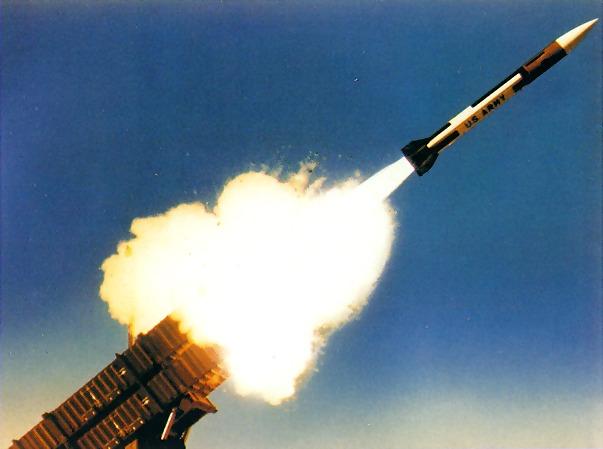 Japan Tests PAC-3 at White Sands
(NSI News Source Info) September 25, 2008: The Japanese Self Defense Forces test-fired a Patriot Advanced Capability – 3 (PAC-3) missile Sept. 17 at White Sands Missile Range, N.M., marking the first foreign PAC-3 test there, Lockheed officials said.
"The Japanese were well trained. The missile shot came off without any hitches and was extremely successful. We used a surrogate tactical ballistic missile for the test," said retired U.S. Army Lt. Gen. Dennis Cavin, Lockheed vice president of air and missile and defense. The Japanese "a robust Patriot system architecture and they are improving as we speak. The Japanese began fielding their own Patriot fire units more than 10 years ago."
Lockheed Martin sells Patriots via direct commercial sales with the Japanese government. Some production is subcontracted to Japan-based Mitsubishi Heavy Industry.
Similar to the Japanese, the German, Dutch and U.S. Armies are upgrading their PAC-2 missiles to the PAC-3 variant, which slams into its target.
"Hit-to-kill technology is the chosen technology that all U.S. air defense missile systems are going to," said Cavin, citing the Standard Missile-3 and Terminal High Altitude Air Defense. "A PAC-3 warhead must have body-to-body contact at a precise point to destroy the target. They only way you can achieve that is through speed and mass, and a hit-to-kill kinetic energy is much faster than one packed with explosives."
The hit-to-kill intercept technology for the PAC-3 evolved out of U.S. Army experiences with the use of early Patriot missiles in the Gulf War.
"What we learned from our experiences in Desert Storm is that we were not able to hit the warhead in all cases. We knew we had to improve that capability," said Cavin.
The PAC-3 system can track multiple targets, Cavin said.
"Radar feeds data into a fire solution computer. That computer picks an intercept point in space and then the missile turns on its own on-board seeker and acquires the target. It has an exceptionally fast on-board computer. As you are doing the final computations on-board the missile itself, your radar on the ground can look for other targets," he said.
Japan Tests PAC-3 at White Sands
(NSI News Source Info) September 25, 2008: The Japanese Self Defense Forces test-fired a Patriot Advanced Capability – 3 (PAC-3) missile Sept. 17 at White Sands Missile Range, N.M., marking the first foreign PAC-3 test there, Lockheed officials said.
"The Japanese were well trained. The missile shot came off without any hitches and was extremely successful. We used a surrogate tactical ballistic missile for the test," said retired U.S. Army Lt. Gen. Dennis Cavin, Lockheed vice president of air and missile and defense. The Japanese "a robust Patriot system architecture and they are improving as we speak. The Japanese began fielding their own Patriot fire units more than 10 years ago."
Lockheed Martin sells Patriots via direct commercial sales with the Japanese government. Some production is subcontracted to Japan-based Mitsubishi Heavy Industry.
Similar to the Japanese, the German, Dutch and U.S. Armies are upgrading their PAC-2 missiles to the PAC-3 variant, which slams into its target.
"Hit-to-kill technology is the chosen technology that all U.S. air defense missile systems are going to," said Cavin, citing the Standard Missile-3 and Terminal High Altitude Air Defense. "A PAC-3 warhead must have body-to-body contact at a precise point to destroy the target. They only way you can achieve that is through speed and mass, and a hit-to-kill kinetic energy is much faster than one packed with explosives."
The hit-to-kill intercept technology for the PAC-3 evolved out of U.S. Army experiences with the use of early Patriot missiles in the Gulf War.
"What we learned from our experiences in Desert Storm is that we were not able to hit the warhead in all cases. We knew we had to improve that capability," said Cavin.
The PAC-3 system can track multiple targets, Cavin said.
"Radar feeds data into a fire solution computer. That computer picks an intercept point in space and then the missile turns on its own on-board seeker and acquires the target. It has an exceptionally fast on-board computer. As you are doing the final computations on-board the missile itself, your radar on the ground can look for other targets," he said.
Roughead Pushes for Littoral Combat Ship
 Roughead Pushes for Littoral Combat Ship
(NSI News Source Info) September 25, 2008: The U.S. Navy's top officer maintained his support for the Littoral Combat Ship (LCS) program even as Congress appeared to be scuttling yet another of the long-delayed ships.
"I want to be able to build out the class as quickly as I can," Adm. Gary Roughead, the U.S. Navy's chief of naval operations (CNO), said Sept. 24. "I remain as committed as ever to LCS."
House and Senate appropriators agreed to rescind the money granted last year for a third LCS ship and switch the money to help pay for two more ships in the 2009 budget. The first LCS has been delivered to the Navy and the second ship is due next year, but no further littoral ships are on order.
"We just need to get that program going," Roughead said. "More ships is a good thing."
Roughead's comments came after a National Press Club breakfast in Washington hosted by Government Executive magazine. Responding to questions from moderators and an audience of about 200, Roughead voiced his support for the LCS program.
"I'm committed to those ships," he declared.
The CNO shed some light on his decision to ask permission to "truncate" the DDG 1000 advanced destroyer program from seven to three ships and continue to build DDG 51-class Aegis destroyers.
"DDG 1000 is a ship that had its genesis in the early 1990s," he said, "and I think all of us would agree the world has changed since the early 1990s. We've seen proliferation of threats that did not exist before."
The threats, Roughead said, include ballistic missiles - "I believe it will be a weapon of intimidation and blackmail" - and anti-ship missiles, particularly in the hands of groups such as Hezbollah, which fired such a weapon in July 2006 and hit an Israeli warship off Lebanon.
Anti-air capability also is a key factor in the DDG 1000 decision.
"Our ability to control the seas," he said, "really calls for us to go in and provide area air defense. And as I looked at DDG 1000, it did not give us that capability."
Roughead did not fault the destroyer program's management or shipbuilders Northrop Grumman or General Dynamics.
"The DDG 1000 program is a well-run program," he said.
In testimony to Congress in late July, Navy officials explained that the DDG 51 destroyers with the Aegis combat system were needed to combat the enemy missile threat, which the Navy sees as getting worse.
"There is proliferation that takes place from country to country," Roughead said. "There is little question in my mind the missiles Hezbollah is acquiring are coming out of Iran. Proliferation is the way of the future."
Asked if he was confident the Navy could defeat such missiles, Roughead said, "I'm very comfortable with our ability to provide the defense we need."
Roughead also discussed the increased military and naval capability of Russia, China and Iran. Russia in particular has been a recent concern, after its short mini-invasion of Georgia and dispatch of bomber aircraft and a naval squadron to visit Venezuela.
"What you're seeing ... is a navy getting its sea legs back and not operating just around the northern reaches of its country," he said.
Roughead, a former commander of the Pacific and Atlantic fleets, recalled meetings with Russian naval leaders in 2007.
"A year ago," he said, "it was clear to me the petroleum money was flowing, the Navy was getting going again, the leadership was looking back to the Soviet days as their heyday. The stirrings of wanting to be out and about were there. We're now seeing that. And I believe in coming years, you're going to see the Russian Navy out and about."
Of the Chinese - whose development of targetable anti-ship ballistic missiles is thought to be the immediate impetus of the DDG 1000 switch - he noted that country's growth in naval capability.
"The indications and alignment of their fleet structure and base structure is really beginning to put their Navy more in the traditional role ... that ensures the flow of commerce on the sea lanes - a Navy that has an ambition that wants to extend its operational reach and influence things," Roughead said. "They are viewing their Navy much the same way we do."
As to Iran's ability to challenge the U.S. Navy's presence in the Persian Gulf, Roughead noted the Iranians "see the gulf as their gulf, and they have put in place some naval capabilities that can be problematic. Do I have confidence in our ability to assure the flow [of oil] in the sea lanes? I do. I have confidence there."
Roughead also pointed to the increasing importance of Guam, one of the westernmost of U.S. territorial possessions.
"Guam will become important from a standpoint of providing a place from which to operate in the western Pacific," the CNO said. "We're looking at the design of [Apra] harbor and the ability to put a carrier in there from time to time - not to base a carrier there, but to stop in and recharge and get back out on the line again."
Roughead Pushes for Littoral Combat Ship
(NSI News Source Info) September 25, 2008: The U.S. Navy's top officer maintained his support for the Littoral Combat Ship (LCS) program even as Congress appeared to be scuttling yet another of the long-delayed ships.
"I want to be able to build out the class as quickly as I can," Adm. Gary Roughead, the U.S. Navy's chief of naval operations (CNO), said Sept. 24. "I remain as committed as ever to LCS."
House and Senate appropriators agreed to rescind the money granted last year for a third LCS ship and switch the money to help pay for two more ships in the 2009 budget. The first LCS has been delivered to the Navy and the second ship is due next year, but no further littoral ships are on order.
"We just need to get that program going," Roughead said. "More ships is a good thing."
Roughead's comments came after a National Press Club breakfast in Washington hosted by Government Executive magazine. Responding to questions from moderators and an audience of about 200, Roughead voiced his support for the LCS program.
"I'm committed to those ships," he declared.
The CNO shed some light on his decision to ask permission to "truncate" the DDG 1000 advanced destroyer program from seven to three ships and continue to build DDG 51-class Aegis destroyers.
"DDG 1000 is a ship that had its genesis in the early 1990s," he said, "and I think all of us would agree the world has changed since the early 1990s. We've seen proliferation of threats that did not exist before."
The threats, Roughead said, include ballistic missiles - "I believe it will be a weapon of intimidation and blackmail" - and anti-ship missiles, particularly in the hands of groups such as Hezbollah, which fired such a weapon in July 2006 and hit an Israeli warship off Lebanon.
Anti-air capability also is a key factor in the DDG 1000 decision.
"Our ability to control the seas," he said, "really calls for us to go in and provide area air defense. And as I looked at DDG 1000, it did not give us that capability."
Roughead did not fault the destroyer program's management or shipbuilders Northrop Grumman or General Dynamics.
"The DDG 1000 program is a well-run program," he said.
In testimony to Congress in late July, Navy officials explained that the DDG 51 destroyers with the Aegis combat system were needed to combat the enemy missile threat, which the Navy sees as getting worse.
"There is proliferation that takes place from country to country," Roughead said. "There is little question in my mind the missiles Hezbollah is acquiring are coming out of Iran. Proliferation is the way of the future."
Asked if he was confident the Navy could defeat such missiles, Roughead said, "I'm very comfortable with our ability to provide the defense we need."
Roughead also discussed the increased military and naval capability of Russia, China and Iran. Russia in particular has been a recent concern, after its short mini-invasion of Georgia and dispatch of bomber aircraft and a naval squadron to visit Venezuela.
"What you're seeing ... is a navy getting its sea legs back and not operating just around the northern reaches of its country," he said.
Roughead, a former commander of the Pacific and Atlantic fleets, recalled meetings with Russian naval leaders in 2007.
"A year ago," he said, "it was clear to me the petroleum money was flowing, the Navy was getting going again, the leadership was looking back to the Soviet days as their heyday. The stirrings of wanting to be out and about were there. We're now seeing that. And I believe in coming years, you're going to see the Russian Navy out and about."
Of the Chinese - whose development of targetable anti-ship ballistic missiles is thought to be the immediate impetus of the DDG 1000 switch - he noted that country's growth in naval capability.
"The indications and alignment of their fleet structure and base structure is really beginning to put their Navy more in the traditional role ... that ensures the flow of commerce on the sea lanes - a Navy that has an ambition that wants to extend its operational reach and influence things," Roughead said. "They are viewing their Navy much the same way we do."
As to Iran's ability to challenge the U.S. Navy's presence in the Persian Gulf, Roughead noted the Iranians "see the gulf as their gulf, and they have put in place some naval capabilities that can be problematic. Do I have confidence in our ability to assure the flow [of oil] in the sea lanes? I do. I have confidence there."
Roughead also pointed to the increasing importance of Guam, one of the westernmost of U.S. territorial possessions.
"Guam will become important from a standpoint of providing a place from which to operate in the western Pacific," the CNO said. "We're looking at the design of [Apra] harbor and the ability to put a carrier in there from time to time - not to base a carrier there, but to stop in and recharge and get back out on the line again."
BAE Systems Secures $742 Million U.S. Army Contract for Bradley Vehicles and Spare Parts
 BAE Systems Secures $742 Million U.S. Army Contract for Bradley Vehicles and Spare Parts
(NSI News Source Info) September 24, 2008: BAE Systems has been awarded a contract to remanufacture 300 additional Bradleys, bringing the total to over 550 vehicles. (US Army photo)YORK, Pa. --- BAE Systems, under a $742 million U.S. Army contract, will remanufacture more than 300 Bradley vehicles with additional armor to protect soldiers. The contract is an option to a previously awarded contract for work on 252 Bradley vehicles. The award brings the total value of BAE Systems’ 2008 Bradley remanufacturing contracts to $1.3 billion for 578 vehicles. Under this award, BAE Systems will remanufacture an additional 189 M2A3 vehicles, 115 M3A3 vehicles and 22 M3A3 Bradley Fire Support Team Vehicles in conjunction with the Red River Army Depot through a public private partnership. Initial disassembly and subsystem rebuild will be performed at the depot, with final disassembly and structural modifications completed by BAE Systems in Fayette County, Pennsylvania. Final assembly, integration and test will be conducted at the company’s facility in York, Pennsylvania. Bradley vehicles under this contract will be equipped with Improvised Explosive Device Armor, Bradley Urban Survivability Kits and several engineering changes designed to increase soldier survivability. In addition, 51 M2A2 vehicles will be converted to the M3A3 configuration. The company will also provide more than 200 different types of spare parts in varying quantities. “BAE Systems and Red River Army Depot are committed to upgrading and returning Bradley vehicles to combat ready status,” said Andy Hove, vice president of Combat Systems Programs for BAE Systems. “These vehicles will be equipped with the latest survivability enhancements to provide maximum protection to the soldiers in the field.” Work under the contract will begin immediately by the existing workforce, with deliveries ending in February 2011. The contract is managed by the Army’s TACOM Life Cycle Management Command. Bradley Combat Systems continue to provide outstanding survivability, mobility and lethality to U.S. soldiers in close-combat urban situations as well as in open-combat. The Bradley fulfills five critical mission roles – infantry fighting vehicle, cavalry fighting vehicle, fire support vehicle, battle command vehicle and engineer squad vehicle – for the Army's Heavy Brigade Combat Teams. BAE Systems is the premier global defense and aerospace company delivering a full range of products and services for air, land and naval forces, as well as advanced electronics, information technology solutions and customer support services. With approximately 100,000 employees worldwide, BAE Systems' sales exceeded £15.7 billion (US $31.4 billion) in 2007.
BAE Systems Secures $742 Million U.S. Army Contract for Bradley Vehicles and Spare Parts
(NSI News Source Info) September 24, 2008: BAE Systems has been awarded a contract to remanufacture 300 additional Bradleys, bringing the total to over 550 vehicles. (US Army photo)YORK, Pa. --- BAE Systems, under a $742 million U.S. Army contract, will remanufacture more than 300 Bradley vehicles with additional armor to protect soldiers. The contract is an option to a previously awarded contract for work on 252 Bradley vehicles. The award brings the total value of BAE Systems’ 2008 Bradley remanufacturing contracts to $1.3 billion for 578 vehicles. Under this award, BAE Systems will remanufacture an additional 189 M2A3 vehicles, 115 M3A3 vehicles and 22 M3A3 Bradley Fire Support Team Vehicles in conjunction with the Red River Army Depot through a public private partnership. Initial disassembly and subsystem rebuild will be performed at the depot, with final disassembly and structural modifications completed by BAE Systems in Fayette County, Pennsylvania. Final assembly, integration and test will be conducted at the company’s facility in York, Pennsylvania. Bradley vehicles under this contract will be equipped with Improvised Explosive Device Armor, Bradley Urban Survivability Kits and several engineering changes designed to increase soldier survivability. In addition, 51 M2A2 vehicles will be converted to the M3A3 configuration. The company will also provide more than 200 different types of spare parts in varying quantities. “BAE Systems and Red River Army Depot are committed to upgrading and returning Bradley vehicles to combat ready status,” said Andy Hove, vice president of Combat Systems Programs for BAE Systems. “These vehicles will be equipped with the latest survivability enhancements to provide maximum protection to the soldiers in the field.” Work under the contract will begin immediately by the existing workforce, with deliveries ending in February 2011. The contract is managed by the Army’s TACOM Life Cycle Management Command. Bradley Combat Systems continue to provide outstanding survivability, mobility and lethality to U.S. soldiers in close-combat urban situations as well as in open-combat. The Bradley fulfills five critical mission roles – infantry fighting vehicle, cavalry fighting vehicle, fire support vehicle, battle command vehicle and engineer squad vehicle – for the Army's Heavy Brigade Combat Teams. BAE Systems is the premier global defense and aerospace company delivering a full range of products and services for air, land and naval forces, as well as advanced electronics, information technology solutions and customer support services. With approximately 100,000 employees worldwide, BAE Systems' sales exceeded £15.7 billion (US $31.4 billion) in 2007.
Turkey Buys 80 Russian Anti-Tank Missile Systems
 Turkey Buys 80 Russian Anti-Tank Missile Systems
(NSI News Source Info) September 24, 2008: Russia will sell 80 Kornet E (NATO designation: AT-14) laser-guided anti-tank missile systems to Turkey in a $70 million deal that is Moscow's first arms sale to the NATO member in 11 years, according to a senior Russian defense industry source.
The Russian government arms export monopoly Rosoboronexport and Turkey's Secretariat of Defense Industries, SSM, signed the contract in late August, the official said Sept. 23.
All deliveries will be made in 2009, the official said.
Developed by the Tula-based Instrument Design Bureau KBP, Kornet E is a semi-automatic laser-guided missile that can hit targets out to 5,500 meters during the daytime and 3,000 meters at night. It can carry anti-tank or thermobaric warheads. Each 60-kilogram system consists of a launcher, thermal sight and a single missile container. It can be ready in three minutes.
In 1999, Tula KBP was slapped with sanctions by the United States for delivering Kornet Es to Syria. Israeli media had reported that Syria had leaked them to the Lebanon-based radical Hezbollah group, which used them against Israeli tanks during the August 2006 military conflict in Lebanon.
In January 2007, Turkey launched the competition to supply 80 medium-range anti-tank weapon systems, 800 missiles and related maintenance services.
Rosoboronexport beat out rival bidders Denel, Rafael and Raytheon.
Turkey Buys 80 Russian Anti-Tank Missile Systems
(NSI News Source Info) September 24, 2008: Russia will sell 80 Kornet E (NATO designation: AT-14) laser-guided anti-tank missile systems to Turkey in a $70 million deal that is Moscow's first arms sale to the NATO member in 11 years, according to a senior Russian defense industry source.
The Russian government arms export monopoly Rosoboronexport and Turkey's Secretariat of Defense Industries, SSM, signed the contract in late August, the official said Sept. 23.
All deliveries will be made in 2009, the official said.
Developed by the Tula-based Instrument Design Bureau KBP, Kornet E is a semi-automatic laser-guided missile that can hit targets out to 5,500 meters during the daytime and 3,000 meters at night. It can carry anti-tank or thermobaric warheads. Each 60-kilogram system consists of a launcher, thermal sight and a single missile container. It can be ready in three minutes.
In 1999, Tula KBP was slapped with sanctions by the United States for delivering Kornet Es to Syria. Israeli media had reported that Syria had leaked them to the Lebanon-based radical Hezbollah group, which used them against Israeli tanks during the August 2006 military conflict in Lebanon.
In January 2007, Turkey launched the competition to supply 80 medium-range anti-tank weapon systems, 800 missiles and related maintenance services.
Rosoboronexport beat out rival bidders Denel, Rafael and Raytheon.
China says spacecraft launch has no military goals
 China says spacecraft launch has no military goals
(NSI News Source Info) September 24, 2008: China's launch later this week of a manned spacecraft will be geared toward economic and scientific goals with no military implications, the Xinhua news agency quoted the launch center's director as saying on Tuesday.
The Shenzhou-7 spacecraft with three astronauts on board is set to lift off from the Jiuquan Satellite Launch Center in Gansu province, in the northwest of China, on September 25.
"China's space program is not pursuing any military goals but serves the country's scientific and economic development," the agency quoted Cui Jijun, commander-in-chief of the ground operation team, as saying.
One of the astronauts will make a spacewalk during the mission.
China, which has recently unveiled comprehensive space exploration plans, is only one of three countries in the world capable of independently launching manned spaceflights, along with the United States and Russia.
The country plans to build its own orbital space station and create a space laboratory before 2020.
In 2003 and 2005 the Shenzhou-5 and Shenzhou-6 spacecraft carried three Chinese astronauts into space.
China says spacecraft launch has no military goals
(NSI News Source Info) September 24, 2008: China's launch later this week of a manned spacecraft will be geared toward economic and scientific goals with no military implications, the Xinhua news agency quoted the launch center's director as saying on Tuesday.
The Shenzhou-7 spacecraft with three astronauts on board is set to lift off from the Jiuquan Satellite Launch Center in Gansu province, in the northwest of China, on September 25.
"China's space program is not pursuing any military goals but serves the country's scientific and economic development," the agency quoted Cui Jijun, commander-in-chief of the ground operation team, as saying.
One of the astronauts will make a spacewalk during the mission.
China, which has recently unveiled comprehensive space exploration plans, is only one of three countries in the world capable of independently launching manned spaceflights, along with the United States and Russia.
The country plans to build its own orbital space station and create a space laboratory before 2020.
In 2003 and 2005 the Shenzhou-5 and Shenzhou-6 spacecraft carried three Chinese astronauts into space.
Tuesday, September 23, 2008
INDIA-PAKISTAN: Al Qaeda Blows Itself Up
 INDIA-PAKISTAN: Al Qaeda Blows Itself Up
(NSI News Source Info) September 24, 2008: In the first three months of the year, 90 women were the victims of "honor killings" in Pakistan. Half of these occurred in the tribal territories, where only 20 percent of the population lives. Women are killed by their families for real or imagined acts (like dating or marrying the wrong guy) that offend family honor. While technically illegal, these murders are rarely prosecuted.
Opinion polls show public support for suicide bombing sharply falling throughout the Moslem world in the last five years. In Pakistan, support for such tactics has fallen from 28 percent to five percent in that time. But even five percent of the population provides millions of willing supporters for such attacks.
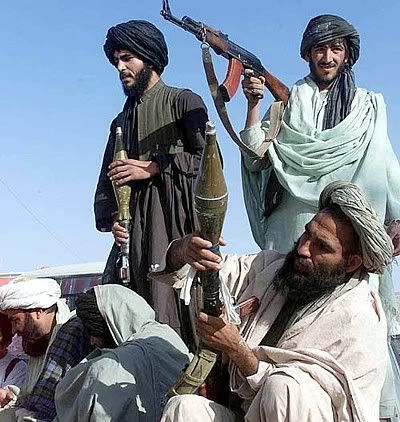
The fighting along the Afghan border in Pakistan continues, with the Taliban and al Qaeda taking heavy losses (over 400 are being killed a week). The fighting is concentrated in three places (Swat Valley, Bajaur and Waziristan) where the pro-Taliban tribes are located. The tribes cannot stand up to the army, and suicide and roadside bombs do not do enough damage to stop the troops. The government refuses to negotiate and is demanding surrender. Public opinion, even in the tribal areas, is turning against the Islamic radicals. Even the stories of U.S. commandos and UAV missile attacks inside Pakistan are not changing that trend.
September 22, 2008: Pushtun tribes along the Afghan border are unhappy with the army invasion to fight pro-Taliban and al Qaeda tribes. The pro-terrorist tribes are a minority, but most tribes want the army and the terrorists out. Some tribes are fighting both the terrorists and the army, and the government is trying to work out deals to get the anti-terrorist tribes to stop fighting the soldiers.
Gunmen kidnapped a senior Afghan diplomat in the Pakistani tribal region near the Khyber pass (the ancient invasion route from Central Asia into India.)
In eastern India, Maoist rebels are killing each other in yet another internal political dispute. There have been several deaths and over a dozen casualties so far. Police are being kept busy with increased Hindu radical attacks on Christians in Eastern India.
September 20, 2008: In Pakistan's capital, two truck bombs destroyed the well defended Marriott Hotel complex, killing 60 and wounding nearly 300. Most of the casualties were Pakistanis, even though the Marriott is favored by Western visitors. While al Qaeda realizes that bombing attacks that kill locals hurt their cause, they apparently believed they would kill many foreigners and government officials in this attack. That did not happen, as the government meeting was cancelled at the last minute, and only a handful of foreigners were killed. So the attack was seen as an attack on the Pakistanis people. This is the sort of thing which has destroyed Islamic radical movements in many nations (Algeria, Egypt, Iraq) over the last two decades. Once the people turn on the Islamic radicals, it becomes too difficult for the terrorists to operate, and most of them are killed, jailed or driven into exile. Al Qaeda is trying to resist this fate, but has so far failed.
On the Afghan border, thousands of Pushtun tribals have fled to Afghanistan, to escape the fighting between pro-Taliban tribesmen and the army.
September 19, 2008: In New Delhi, Indian police cornered five Islamic terrorist suspects in a Moslem neighborhood. Two of the terrorists were killed in a gun fight, but two escaped.
September 18, 2008: The fighting in Pakistan, along the Afghan border, has interrupted efforts to inoculate children against polio, and eliminate the disease forever. So far this year, there have been 55 cases of polio in the tribal region, versus 32 for all of last year and 39 in 2006.
September 17, 2008: Low level Islamic terrorism continues in Kashmir, where India has moved Su-30 fighters, to match the F-16s that Pakistan has now based just across the border. On Pakistan's Afghan border, American UAVs apparently fired four Hellfire missiles at terrorist targets. Also along the border, villagers tried to seize three suicide bombers, and two of the bombers detonated their explosives rather than be captured. The three were believed trying to take control of a school and hold the children hostage. Many of the tribal people along the border oppose the Taliban and al Qaeda, and those anti-terror attitudes are becoming more popular.
South Korea Comes Clean
 South Korea Comes Clean
(NSI News Source Info) September 24, 2008: South Korea has revealed that, although it has practically no Moslems, it has arrested 74 foreigners as terrorism suspects in the last five years. There were 19 separate investigations. Most of the suspects were Moslems from South Asia or Southeast Asia. Most were involved in collecting information on American military forces in South Korea, or planning terror attacks against non-Koreans. Some Arabs have been caught involved in criminal activities that were apparently to provide funds for terrorists. Most of the suspects were expelled and returned to their home countries, along with files on what the South Korea police had found. These men were usually arrested when they arrived in their home countries, and some of them were already known by counter-terrorism officials there.
South Korea was long believed to be free of Islamic terrorist activities. The recent revelations were intended to show that this was not the case, and that South Korea intelligence and police agencies were on top of the situation.
South Korea Comes Clean
(NSI News Source Info) September 24, 2008: South Korea has revealed that, although it has practically no Moslems, it has arrested 74 foreigners as terrorism suspects in the last five years. There were 19 separate investigations. Most of the suspects were Moslems from South Asia or Southeast Asia. Most were involved in collecting information on American military forces in South Korea, or planning terror attacks against non-Koreans. Some Arabs have been caught involved in criminal activities that were apparently to provide funds for terrorists. Most of the suspects were expelled and returned to their home countries, along with files on what the South Korea police had found. These men were usually arrested when they arrived in their home countries, and some of them were already known by counter-terrorism officials there.
South Korea was long believed to be free of Islamic terrorist activities. The recent revelations were intended to show that this was not the case, and that South Korea intelligence and police agencies were on top of the situation.
Monday, September 22, 2008
Pakistan, Afghanistan discuss joint border force
 Pakistan, Afghanistan discuss joint border force
(NSI News Source Info) WASHINGTON September 24, 2008: Pakistan and Afghanistan are discussing a possible joint force to combat militants on both sides of their border near Pakistan's tribal region, a senior Afghan official said on Monday.
Afghan Defense Minister Abdul Rahim Wardak told reporters that such a force would include US troops and address soaring insurgent violence that he said has stretched the capabilities of US, Nato and Afghan forces inside Afghanistan.
“We should have a combined joint task force of coalition, Afghans and Pakistanis to be able to operate on the both sides of the border,” Wardak said at the Pentagon during a visit to Washington to discuss a Kabul plan to nearly double the size of the Afghan army.
Navy Adm. Mike Mullen, chairman of the US Joint Chiefs of Staff, said he had not heard the details of Wardak's proposal but said any effort to improve security in the border area was welcome.
“I think anything that impacts better security on that border is a good thing,” he told reporters in Los Angeles.
“I am encouraged that a leader in Afghanistan has spoken out with this kind of idea,” he said. “As in all these things, the devil will be in the details.”
Wardak said the Afghan government had discussed the task force with Pakistani officials within the past several weeks.
“They say they're looking at it,” he said.
Speaking two days after a truck-bomb attack on Islamabad's Marriott hotel, Wardak said that given recent events in Pakistan, “everyone should realize we have a common threat, a common enemy and a common objective to achieve.”
He noted that insurgent violence in Afghanistan rose three-fold from 2005 to 2007 and said, “2008 is going to be the highest among all.”
Insurgency expansion
The core of the insurgency consists of 10,000 to 15,000 fighters in Afghanistan, he said, not including those who operated outside the country in areas such as Pakistan's Federally Administered Tribal Areas, on the Afghan border.
“Now I think they're operating geographically in more areas and more provinces than before, and I think they have stretched the capability of the combined forces of ISAF, the coalition and Afghans,” the defense minister said.
US commandos crossed the border into Pakistan on Sept. 3 to attack a suspected al Qaeda target.
“A terrorist does not recognize any boundaries,” Wardak said when asked about the raid. “We have to deal with the sanctuaries and the real hide-outs of the terrorists, wherever they are.”
Subscribe to:
Posts (Atom)












