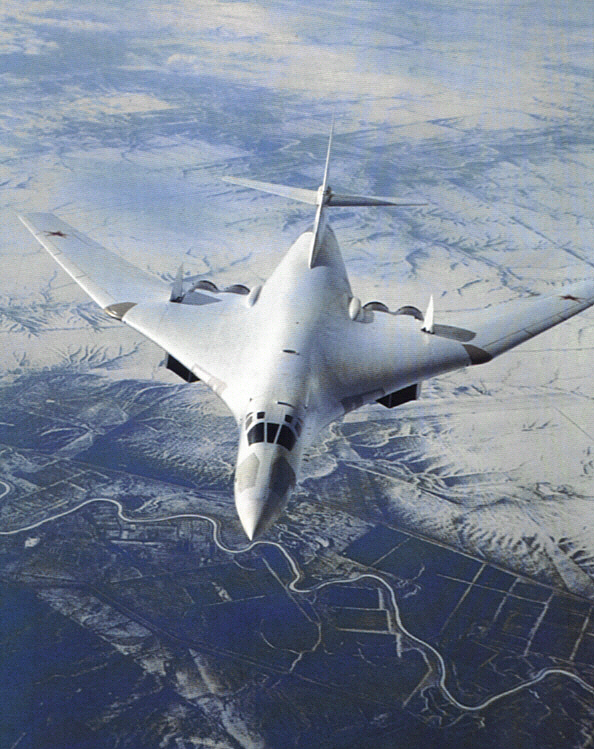
 Tupolev Tu-160 White Swans (NATO designation Blackjack)
Thursday, October 23, 2008
Russia Sends Out The Nuke Bombers For Week Long Exercises
Russia Sends Out The Nuke Bombers For Week Long Exercises
(NSI News Source Info) Washington - October 23, 2008: Russia's front-line long-range strategic nuclear bombers have carried out a new series of major weeklong exercises, the Russian air force announced last week.
 Tupolev Tu-160 White Swans (NATO designation Blackjack)
The operations were carried out within the framework of the Stability-2008 strategic command and staff exercises, from Oct. 6-12 under the command of three-star Col. Gen. Alexander Zelin, the commander in chief of the Russian air force. More than 30 bombers were involved, the RIA Novosti news agency reported.
"A total of 40 sorties have been flown with an aggregate of 300 flying hours clocked," according to Maj. Gen. Pavel Androsov, commander of Russian Long-Range Aviation Forces.
The Stability-2008 operations have been carried out all over the huge Russian federation and the former Soviet republic of Belarus to improve the strategic deployment of the Russian armed forces, including the nuclear triad of land-, submarine- and air-launched nuclear missiles. They began on Sept. 22 and were scheduled to conclude Tuesday, Oct. 21, the report said.
The Oct. 6-12 component of the exercise involved Tupolev Tu-160 White Swans (NATO designation Blackjack) and Tupolev Tu-95MS (NATO designation Bear-H). The aircraft operated carrying full combat payloads and, as planned, fired all of their standard-issue X-55 air-launched cruise missiles -- ALCMs. It was the first time cruise missiles had been live-fired from Russian bombers in major tactical exercises in nearly a quarter-century since 1984, during the last major flare-up of the Cold War between the United States and the Soviet Union.
Tupolev Tu-95MS Bears have a payload of six KH-55 (NATO designation AS-15 Kent) long-range cruise missiles, and the gigantic Tu-160s, with their 99,000-pound payload -- twice that of a U.S. B-2 Stealth bomber -- has a payload of 12 KH-55s, RIA Novosti said.
The Russian air force described the scale of the Oct. 6-Oct. 12 operations as unprecedented, RIA Novosti said. The maneuvers also included Tupolev Tu-22M3 Backfire strategic bombers, air superiority fighters, interceptors and aerial tankers, the report said.
RIA Novosti said the Russian air force was believed to currently be operating 16 Tu-160 Blackjack bombers, 40 Tu-95MS Bear bombers and 141 Tu-22M3 Backfire bombers.
In an earlier RIA Novosti report previously cited in these columns, the former Russian air force commander, four-star General of the Army Pyotr Deynekin said Tu-95 Bear bombers had carried out live-firing of all their cruise missiles only on one previous occasion in all their operational service, in 1984.
"Tu-160 bombers have never done this, because it is very expensive," the general said.
Aerojet wins Kill vehicle DACS contractAerojet, a GenCorp company, announced Oct. 13 it had won a contract for the Kill Vehicle -- KV -- Commonality Pathfinder Divert and Attitude Control System -- DACS -- from the U.S. Missile Defense Agency.
The Sacramento, Calif.-based Aerojet said its propulsion system could direct the KV through the firing of individual thrusters as the KV was heading to hit a ballistic missile or its warhead. The company will now construct and perform integration work on a test KV DACS. Then the DACS system and the reliability of its technical components, what the company calls "component technical maturity," will be checked out in a static hot-fire test before it is incorporated into a KV configuration and simulated flight test.
"Aerojet is proud to offer more than 20 years of hardware development, qualification and production under MDA programs," said Aerojet's Manager of Programs Warren Yasuhara. "Our experience results in high mission assurance and a low-cost approach for future applications."
Boeing wins new deal for more ATL testsBoeing announced Oct. 14 it had won a new $30 million U.S. Air Force contract to carry on with tests of the Advanced Tactical Laser.
The company said in a statement that it had signed a new Extended User Evaluation contract with the Air Force's Air Armament Center on Sept. 30 "to operate and maintain the ATL system, enabling the Air Force and other potential users to assess ATL's capabilities."
Boeing's ATL is a Lockheed Martin C-130H Hercules military transport aircraft that has been adapted to carry a high-energy chemical laser and beam control system. The ATL is to be subjected to a new program of ground and flight tests during the EUE process. Boeing described its new EUE contract as "a follow on" to the Advanced Concept Technology Demonstration contract that was awarded previously to Boeing to create and perform integration work on the ATL system.
"The Extended User Evaluation will expand the envelope of the Advanced Tactical Laser and further demonstrate how this ultra-precision engagement capability can significantly reduce collateral damage," said Scott Fancher, vice president and general manager of Boeing Missile Defense Systems. "ATL has the potential to perform a wide range of important missions for the war fighter."
"The Extended User Evaluation will give the war fighter the opportunity to conduct hands-on operation of ATL and determine how this transformational laser-gunship technology can be integrated into the battlefield," said Gary Fitzmire, vice president and program director of Boeing Directed Energy Systems.
The ATL system is designed to hit its designated targets with pinpoint accuracy, vastly reducing the dangers of collateral damage, especially in heavily populated urban environments.
Boeing's ATL industry team has L-3 Communications/Brashear, the company that constructed the laser turret, and HYTEC Inc., the firm that constructed some of the structural elements of the weapon system.
Tupolev Tu-160 White Swans (NATO designation Blackjack)
The operations were carried out within the framework of the Stability-2008 strategic command and staff exercises, from Oct. 6-12 under the command of three-star Col. Gen. Alexander Zelin, the commander in chief of the Russian air force. More than 30 bombers were involved, the RIA Novosti news agency reported.
"A total of 40 sorties have been flown with an aggregate of 300 flying hours clocked," according to Maj. Gen. Pavel Androsov, commander of Russian Long-Range Aviation Forces.
The Stability-2008 operations have been carried out all over the huge Russian federation and the former Soviet republic of Belarus to improve the strategic deployment of the Russian armed forces, including the nuclear triad of land-, submarine- and air-launched nuclear missiles. They began on Sept. 22 and were scheduled to conclude Tuesday, Oct. 21, the report said.
The Oct. 6-12 component of the exercise involved Tupolev Tu-160 White Swans (NATO designation Blackjack) and Tupolev Tu-95MS (NATO designation Bear-H). The aircraft operated carrying full combat payloads and, as planned, fired all of their standard-issue X-55 air-launched cruise missiles -- ALCMs. It was the first time cruise missiles had been live-fired from Russian bombers in major tactical exercises in nearly a quarter-century since 1984, during the last major flare-up of the Cold War between the United States and the Soviet Union.
Tupolev Tu-95MS Bears have a payload of six KH-55 (NATO designation AS-15 Kent) long-range cruise missiles, and the gigantic Tu-160s, with their 99,000-pound payload -- twice that of a U.S. B-2 Stealth bomber -- has a payload of 12 KH-55s, RIA Novosti said.
The Russian air force described the scale of the Oct. 6-Oct. 12 operations as unprecedented, RIA Novosti said. The maneuvers also included Tupolev Tu-22M3 Backfire strategic bombers, air superiority fighters, interceptors and aerial tankers, the report said.
RIA Novosti said the Russian air force was believed to currently be operating 16 Tu-160 Blackjack bombers, 40 Tu-95MS Bear bombers and 141 Tu-22M3 Backfire bombers.
In an earlier RIA Novosti report previously cited in these columns, the former Russian air force commander, four-star General of the Army Pyotr Deynekin said Tu-95 Bear bombers had carried out live-firing of all their cruise missiles only on one previous occasion in all their operational service, in 1984.
"Tu-160 bombers have never done this, because it is very expensive," the general said.
Aerojet wins Kill vehicle DACS contractAerojet, a GenCorp company, announced Oct. 13 it had won a contract for the Kill Vehicle -- KV -- Commonality Pathfinder Divert and Attitude Control System -- DACS -- from the U.S. Missile Defense Agency.
The Sacramento, Calif.-based Aerojet said its propulsion system could direct the KV through the firing of individual thrusters as the KV was heading to hit a ballistic missile or its warhead. The company will now construct and perform integration work on a test KV DACS. Then the DACS system and the reliability of its technical components, what the company calls "component technical maturity," will be checked out in a static hot-fire test before it is incorporated into a KV configuration and simulated flight test.
"Aerojet is proud to offer more than 20 years of hardware development, qualification and production under MDA programs," said Aerojet's Manager of Programs Warren Yasuhara. "Our experience results in high mission assurance and a low-cost approach for future applications."
Boeing wins new deal for more ATL testsBoeing announced Oct. 14 it had won a new $30 million U.S. Air Force contract to carry on with tests of the Advanced Tactical Laser.
The company said in a statement that it had signed a new Extended User Evaluation contract with the Air Force's Air Armament Center on Sept. 30 "to operate and maintain the ATL system, enabling the Air Force and other potential users to assess ATL's capabilities."
Boeing's ATL is a Lockheed Martin C-130H Hercules military transport aircraft that has been adapted to carry a high-energy chemical laser and beam control system. The ATL is to be subjected to a new program of ground and flight tests during the EUE process. Boeing described its new EUE contract as "a follow on" to the Advanced Concept Technology Demonstration contract that was awarded previously to Boeing to create and perform integration work on the ATL system.
"The Extended User Evaluation will expand the envelope of the Advanced Tactical Laser and further demonstrate how this ultra-precision engagement capability can significantly reduce collateral damage," said Scott Fancher, vice president and general manager of Boeing Missile Defense Systems. "ATL has the potential to perform a wide range of important missions for the war fighter."
"The Extended User Evaluation will give the war fighter the opportunity to conduct hands-on operation of ATL and determine how this transformational laser-gunship technology can be integrated into the battlefield," said Gary Fitzmire, vice president and program director of Boeing Directed Energy Systems.
The ATL system is designed to hit its designated targets with pinpoint accuracy, vastly reducing the dangers of collateral damage, especially in heavily populated urban environments.
Boeing's ATL industry team has L-3 Communications/Brashear, the company that constructed the laser turret, and HYTEC Inc., the firm that constructed some of the structural elements of the weapon system.
Tupolev Tu-160 White Swans (NATO designation Blackjack)
Russia launches 31-year-old Stiletto missile
 Russia launches 31-year-old Stiletto missile
(NSI News Source Info) Moscow - October 23, 2008: Russia on Wednesday test fired a 31-year-old intercontinental ballistic missile known by its NATO codename Stiletto from the Baikonur space base in Kazakhstan, Russian news agencies reported.
"The launch was carried out in accordance with a programme to prolong the lifetime of the RS-18 strategic missiles," Alexander Vovk, a spokesman for strategic missile forces, was quoted as saying by Interfax.
"The missile launched on Wednesday was 31 years old," Vovk said, without specifying the target for the test. Targets for Russian missile tests are often in the country's Far East Kamchatka peninsula.
The first RS-18 missile, which NATO calls the SS-19 Stiletto, came into service in 1975. It is 24 metres (79 feet) long, with a diameter of 2.5 metres, and can be equipped with up to six warheads.
Russia has stepped up test firing of missiles in recent months while also ratcheting up its rhetoric against US plans to build missile defence installations in Poland and the Czech Republic.
Moscow says the planned US missile shield threatens its national security, while Washington says it will protect against a possible attack from "rogue states" such as Iran.
Baikonur is Russia's main space base and is mostly used for civilian space launches, including flights to the International Space Station.
Built in Soviet times, the base is now in the ex-Soviet republic of Kazakhstan and is leased by the Russian government.
Russia launches 31-year-old Stiletto missile
(NSI News Source Info) Moscow - October 23, 2008: Russia on Wednesday test fired a 31-year-old intercontinental ballistic missile known by its NATO codename Stiletto from the Baikonur space base in Kazakhstan, Russian news agencies reported.
"The launch was carried out in accordance with a programme to prolong the lifetime of the RS-18 strategic missiles," Alexander Vovk, a spokesman for strategic missile forces, was quoted as saying by Interfax.
"The missile launched on Wednesday was 31 years old," Vovk said, without specifying the target for the test. Targets for Russian missile tests are often in the country's Far East Kamchatka peninsula.
The first RS-18 missile, which NATO calls the SS-19 Stiletto, came into service in 1975. It is 24 metres (79 feet) long, with a diameter of 2.5 metres, and can be equipped with up to six warheads.
Russia has stepped up test firing of missiles in recent months while also ratcheting up its rhetoric against US plans to build missile defence installations in Poland and the Czech Republic.
Moscow says the planned US missile shield threatens its national security, while Washington says it will protect against a possible attack from "rogue states" such as Iran.
Baikonur is Russia's main space base and is mostly used for civilian space launches, including flights to the International Space Station.
Built in Soviet times, the base is now in the ex-Soviet republic of Kazakhstan and is leased by the Russian government.
Russia To Build Second Missile Frigate For Indian Navy By March
 Russia To Build Second Missile Frigate For Indian Navy By March
(NSI News Source Info) Kaliningrad, Russia - October 23, 2008: A Russian shipyard said on Thursday it would complete the construction of the second of three missile frigates for the Indian Navy by March 2009.
The Yantar shipyard in Russia's Baltic exclave of Kaliningrad said the second Project 11356 frigate was more than 50% complete.
India and Russia signed a $1.6 billion contract for the construction of an additional three Project 11356 Krivak IV-class guided missile frigates for the Indian Navy in July, 2006.
Russia previously built three Krivak-class frigates - INS Talwar, INS Trishul and INS Tabar - for India, and delivered them all in late 2004.
The final vessel is due to be delivered to India by 2011-12. All of the frigates will be armed with the BrahMos supersonic anti-ship cruise missile system instead of the Club-N/3M54TE missile system, which was installed on previous frigates.
The Krivak-class frigate has deadweight of 4,000 metric tons and a speed of 30 knots, and is capable of accomplishing a wide range of maritime missions, primarily hunting down and destroying large surface ships and submarines.
Russia To Build Second Missile Frigate For Indian Navy By March
(NSI News Source Info) Kaliningrad, Russia - October 23, 2008: A Russian shipyard said on Thursday it would complete the construction of the second of three missile frigates for the Indian Navy by March 2009.
The Yantar shipyard in Russia's Baltic exclave of Kaliningrad said the second Project 11356 frigate was more than 50% complete.
India and Russia signed a $1.6 billion contract for the construction of an additional three Project 11356 Krivak IV-class guided missile frigates for the Indian Navy in July, 2006.
Russia previously built three Krivak-class frigates - INS Talwar, INS Trishul and INS Tabar - for India, and delivered them all in late 2004.
The final vessel is due to be delivered to India by 2011-12. All of the frigates will be armed with the BrahMos supersonic anti-ship cruise missile system instead of the Club-N/3M54TE missile system, which was installed on previous frigates.
The Krivak-class frigate has deadweight of 4,000 metric tons and a speed of 30 knots, and is capable of accomplishing a wide range of maritime missions, primarily hunting down and destroying large surface ships and submarines.
Smaller, lighter MRAPs headed to Afghanistan
Smaller, lighter MRAPs headed to Afghanistan
(NSI News Source Info) Thursday October 23, 2008: The Pentagon is speeding deliveries to Afghanistan of armored vehicles designed to protect troops against roadside bomb attacks — smaller, lighter versions of what are known as MRAPs.
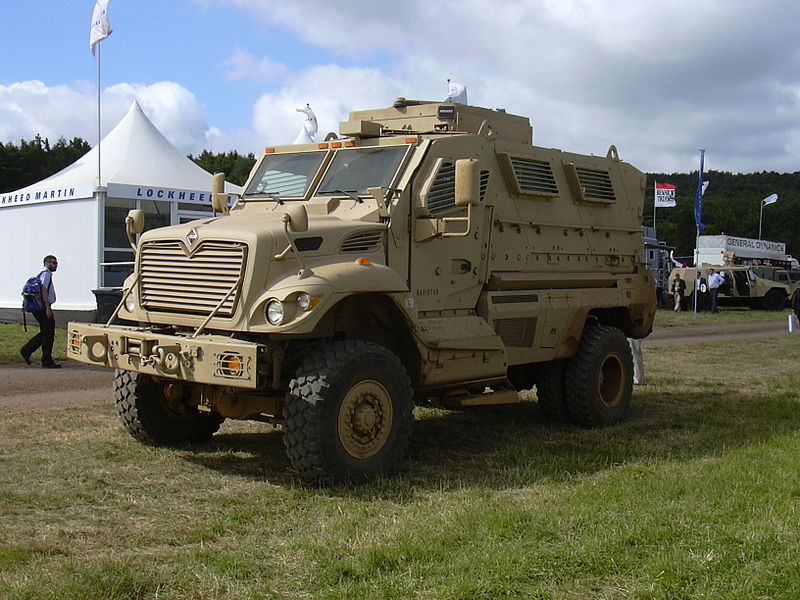
 Smaller, lighter MRAPs
The MRAPs — the acronym stands for mine-resistant, ambush-protected — are being sent as U.S. forces report an increase in the number of roadside bombs being used by insurgents against coalition forces in Afghanistan.
“There is a desire on the part of commanders there to get more MRAPs into theater,” said Defense Department spokesman Geoff Morrell at a Pentagon news conference.
Morrell did not know how many more will be delivered, and the U.S. Transportation Command declined to discuss the numbers involved. But Morrell noted that an additional 822 new, lighter MRAPs being built by Navistar Defense will be fielded beginning in November. Commanders say Afghanistan’s rugged terrain demands off-road mobility, which presents a challenge for the older, heavier MRAP models.
There are now 1,122 MRAPs deployed in Afghanistan, Morrell said. He said he knew of no plans to transfer to Afghanistan any of the 9,341 MRAPs now in Iraq, where U.S. forces are slowing drawing down in size. But officials are looking at whether any MRAPs that have been offloaded in Kuwait awaiting delivery to Iraq can be diverted to Afghanistan, he said.
Since Afghanistan is landlocked and no “appropriately secure” route exists for overland delivery of the large vehicles, MRAPs must be airlifted into the country, said Army Lt. Col. Frederick Rice of TransCom. Some will be flown directly from the U.S., but others will be transported forward by ship and then transferred to cargo aircraft for delivery to Afghanistan, he said.
The Pentagon still plans to acquire a total of 15,800 MRAPs, Morrell said. So far, about 10,500 have been transported to the U.S. Central Command area of operations, according to Rice.
Smaller, lighter MRAPs
The MRAPs — the acronym stands for mine-resistant, ambush-protected — are being sent as U.S. forces report an increase in the number of roadside bombs being used by insurgents against coalition forces in Afghanistan.
“There is a desire on the part of commanders there to get more MRAPs into theater,” said Defense Department spokesman Geoff Morrell at a Pentagon news conference.
Morrell did not know how many more will be delivered, and the U.S. Transportation Command declined to discuss the numbers involved. But Morrell noted that an additional 822 new, lighter MRAPs being built by Navistar Defense will be fielded beginning in November. Commanders say Afghanistan’s rugged terrain demands off-road mobility, which presents a challenge for the older, heavier MRAP models.
There are now 1,122 MRAPs deployed in Afghanistan, Morrell said. He said he knew of no plans to transfer to Afghanistan any of the 9,341 MRAPs now in Iraq, where U.S. forces are slowing drawing down in size. But officials are looking at whether any MRAPs that have been offloaded in Kuwait awaiting delivery to Iraq can be diverted to Afghanistan, he said.
Since Afghanistan is landlocked and no “appropriately secure” route exists for overland delivery of the large vehicles, MRAPs must be airlifted into the country, said Army Lt. Col. Frederick Rice of TransCom. Some will be flown directly from the U.S., but others will be transported forward by ship and then transferred to cargo aircraft for delivery to Afghanistan, he said.
The Pentagon still plans to acquire a total of 15,800 MRAPs, Morrell said. So far, about 10,500 have been transported to the U.S. Central Command area of operations, according to Rice.
 Smaller, lighter MRAPs
AF Officials Agree to Ship 18 Cargo Planes to Afghanistan
AF Officials Agree to Ship 18 Cargo Planes to Afghanistan
(NSI News Source Info) ROBINS AIR FORCE BASE, Ga. - October 23, 2008: The deal is done for the Air Force officials to ship 18 G-222 cargo planes to the Afghan National Air Corps.
 C-27/G-222
Officials signed the $287 million contract at Robins AFB Sept. 29. The Italian-built planes are being purchased from Alenia North America and will be refurbished, with 16 to serve as medium tactical support transport aircraft and two others will get VIP configurations to serve as aircraft for the president of Afghanistan. The contract calls for shipment to begin in September 2009 with deliveries to continue through 2011. Although Robins won't be doing any work on the planes, the contract was signed here because the program office is here, said Debbie Mashburn, the security assistance program manager. The planes are known in the Air Force as the C-27A Spartan, though the Air Force no longer uses the planes. The planes are capable of delivering 10 tons of cargo, transporting vehicles and providing medical evacuation for 36 patients, said Ms. Mashburn. She said the Air Force has determined that the planes are vital to helping the Afghanistan government provide humanitarian assistance, medical evacuation and logistic support throughout the country. The G-222, she said, has a reputation as a rugged aircraft that is well suited for take off and landing from unprepared and short landing strips.
C-27/G-222
Officials signed the $287 million contract at Robins AFB Sept. 29. The Italian-built planes are being purchased from Alenia North America and will be refurbished, with 16 to serve as medium tactical support transport aircraft and two others will get VIP configurations to serve as aircraft for the president of Afghanistan. The contract calls for shipment to begin in September 2009 with deliveries to continue through 2011. Although Robins won't be doing any work on the planes, the contract was signed here because the program office is here, said Debbie Mashburn, the security assistance program manager. The planes are known in the Air Force as the C-27A Spartan, though the Air Force no longer uses the planes. The planes are capable of delivering 10 tons of cargo, transporting vehicles and providing medical evacuation for 36 patients, said Ms. Mashburn. She said the Air Force has determined that the planes are vital to helping the Afghanistan government provide humanitarian assistance, medical evacuation and logistic support throughout the country. The G-222, she said, has a reputation as a rugged aircraft that is well suited for take off and landing from unprepared and short landing strips.
 C-27/G-222
First Flight of Typhoon In Royal Saudi Air Force Livery
First Flight of Typhoon In Royal Saudi Air Force Livery
(NSI News Source Info) October 23, 2008: BAE Systems has flown the first of 72 Eurofighter Typhoons for Saudi Arabia, seen above at the company’s Warton airfield in North West England. (BAE Systems photo)A Eurofighter Typhoon fighter aircraft in the full two-tone grey livery of the Royal Saudi Air Force (RSAF) has flown for the first time today at BAE Systems’ Warton Aerodrome in Lancashire, North West England. This milestone marks the start of an initial test flight programme for RSAF Eurofighter Typhoon aircraft being assembled at Warton.
 BAE Systems has flown the first of 72 Eurofighter Typhoons for Saudi Arabia, seen above at the company’s Warton airfield in North West England.
In December 2005, the Saudi Arabian and UK Governments announced the signing of an Understanding Document that aimed to establish a greater partnership in modernising the Saudi Armed Forces. This paved the way for the acquisition of 72 Eurofighter Typhoon aircraft, and the transfer of technology, investment and training, confirmed on 17 September 2007. BAE Systems, which has had a presence in Saudi Arabia since 1973, is one of the largest companies in the industrial sector and currently employs 4,700 people. Directly linked to Saudi Arabia’s acquisition of Eurofighter Typhoon, the Company is making good progress on agreeing a partnered support approach. This will offer significant levels of opportunity for Saudi industry, specifically through the development of an engineering and manufacturing footprint and a Centre for Arab Excellence. BE Systems is the premier global defence and aerospace company delivering a full range of products and services for air, land and naval forces, as well as advanced electronics, information technology solutions and customer support services. With approximately 100,000 employees worldwide, BAE Systems' sales exceeded £15.7 billion (US $31.4 billion) in 2007.
BAE Systems has flown the first of 72 Eurofighter Typhoons for Saudi Arabia, seen above at the company’s Warton airfield in North West England.
In December 2005, the Saudi Arabian and UK Governments announced the signing of an Understanding Document that aimed to establish a greater partnership in modernising the Saudi Armed Forces. This paved the way for the acquisition of 72 Eurofighter Typhoon aircraft, and the transfer of technology, investment and training, confirmed on 17 September 2007. BAE Systems, which has had a presence in Saudi Arabia since 1973, is one of the largest companies in the industrial sector and currently employs 4,700 people. Directly linked to Saudi Arabia’s acquisition of Eurofighter Typhoon, the Company is making good progress on agreeing a partnered support approach. This will offer significant levels of opportunity for Saudi industry, specifically through the development of an engineering and manufacturing footprint and a Centre for Arab Excellence. BE Systems is the premier global defence and aerospace company delivering a full range of products and services for air, land and naval forces, as well as advanced electronics, information technology solutions and customer support services. With approximately 100,000 employees worldwide, BAE Systems' sales exceeded £15.7 billion (US $31.4 billion) in 2007.
 BAE Systems has flown the first of 72 Eurofighter Typhoons for Saudi Arabia, seen above at the company’s Warton airfield in North West England.
 Wednesday, October 22, 2008
India Shoots For The Moon In Asian Space Race
India Shoots For The Moon In Asian Space Race
(NSI News Source Info) Sriharikota, India (AFP) October 22, 2008: India successfully launched its first lunar mission Wednesday, marking a major boost for the country's space programme and a new step in the fast-developing Asian space race.
There were cheers in mission control as the unmanned lunar orbiting spacecraft Chandrayaan-1 was launched with an Indian-built rocket from the Satish Dhawan Space Centre in Sriharikota on the southeastern coast.
 India's first lunar missionblasted off from the national space centre on the southeastern coast early Wednesday. The unmanned lunar orbiting spacecraft Chandrayaan-1 was launched with an Indian-built rocket at 6:22 am (0052 GMT) from the Satish Dhawan Space Centre in Sriharikota, 80 kilometres (50 miles) north of Chennai. The Chandrayaan-1 is being sent on a two-year orbital mission to provide a detailed map of the mineral, chemical and topographical characteristics of the moon's surface, at a cost of 80 million dollars.
Officials said the lift-off, which took place in cloudy skies at 6:22 am (0052 GMT), was a "great success", with the rocket placing the craft into a transfer orbit around the globe within 19 minutes.
"Our scientific community has once again done the country proud and the entire nation salutes them," India's Prime Minister Manmohan Singh said in a message.
The head of the Indian Space Research Organisation (ISRO), Madhavan Nair, said it was a "historic moment" for the country.
"It has been a remarkable performance by the launch vehicle," he said of the lift-off from the national space centre, in the state of Andhra Pradesh and 80 kilometres (50 miles) north of Chennai.
ISRO is sending the Chandrayaan-1 on a two-year orbital mission to provide a detailed map of the mineral, chemical and topographical characteristics of the moon's surface. It is expected to reach lunar orbit in 15 days.
The mission, which will also include the sending of a probe onto the lunar surface, will cost India 80 million dollars.
"Today what we have charted is a remarkable journey for an Indian spacecraft to go to the moon and try to unravel the mysteries of the Earth's closest celestial body and its only natural satellite," Nair said.
India is hoping the mission will boost its space programme into the same league as regional powerhouses Japan and China.
As well as looking to carve out a larger slice of the lucrative commercial satellite launch market, India, Japan and China also see their space programmes as an important symbol of their international stature and economic development.
The launch was carried live on most Indian television channels -- with one channel using the emotive theme music for "Star Wars" to accompany the count down.
Some critics, however, have questioned the sense in spending so much money on space when hundreds of millions of Indians still live in dire poverty.
India started its space programme in 1963, developing its own satellites and launch vehicles to reduce dependence on overseas agencies.
It first staked its case for a share of the commercial launch market by sending an Italian satellite into orbit in April last year. In January, it launched an Israeli spy satellite in the face of Iranian protests.
But it still has a long way to go to catch up with China which, together with the United States, Russia and the European Space Agency, is already well established in the commercial launch sector.
Chinese officials have spoken of a manned mission to the moon in the future, after following the United States and the former Soviet Union last month by carrying out a space walk, and wants to establish an orbiting space lab.
Japan has also been boosting its space programme and has set a goal of sending an astronaut to the moon by 2020.
Japan's first lunar probe, Kaguya, was successfully launched in September last year.
As well as the commercial ramifications, the development of a space race in Asia has security implications, with the potential for developing military applications such as intelligence gathering and space-based weapons.
Earlier this year, Japan scrapped a decades-old ban on the military use of space, hoping to remove any legal obstacles to building more advanced spy satellites.
South Korea, a late starter in the space race, has launched three commercial satellites since 1995 and launched its first military communications satellite in 2006.
India's first lunar missionblasted off from the national space centre on the southeastern coast early Wednesday. The unmanned lunar orbiting spacecraft Chandrayaan-1 was launched with an Indian-built rocket at 6:22 am (0052 GMT) from the Satish Dhawan Space Centre in Sriharikota, 80 kilometres (50 miles) north of Chennai. The Chandrayaan-1 is being sent on a two-year orbital mission to provide a detailed map of the mineral, chemical and topographical characteristics of the moon's surface, at a cost of 80 million dollars.
Officials said the lift-off, which took place in cloudy skies at 6:22 am (0052 GMT), was a "great success", with the rocket placing the craft into a transfer orbit around the globe within 19 minutes.
"Our scientific community has once again done the country proud and the entire nation salutes them," India's Prime Minister Manmohan Singh said in a message.
The head of the Indian Space Research Organisation (ISRO), Madhavan Nair, said it was a "historic moment" for the country.
"It has been a remarkable performance by the launch vehicle," he said of the lift-off from the national space centre, in the state of Andhra Pradesh and 80 kilometres (50 miles) north of Chennai.
ISRO is sending the Chandrayaan-1 on a two-year orbital mission to provide a detailed map of the mineral, chemical and topographical characteristics of the moon's surface. It is expected to reach lunar orbit in 15 days.
The mission, which will also include the sending of a probe onto the lunar surface, will cost India 80 million dollars.
"Today what we have charted is a remarkable journey for an Indian spacecraft to go to the moon and try to unravel the mysteries of the Earth's closest celestial body and its only natural satellite," Nair said.
India is hoping the mission will boost its space programme into the same league as regional powerhouses Japan and China.
As well as looking to carve out a larger slice of the lucrative commercial satellite launch market, India, Japan and China also see their space programmes as an important symbol of their international stature and economic development.
The launch was carried live on most Indian television channels -- with one channel using the emotive theme music for "Star Wars" to accompany the count down.
Some critics, however, have questioned the sense in spending so much money on space when hundreds of millions of Indians still live in dire poverty.
India started its space programme in 1963, developing its own satellites and launch vehicles to reduce dependence on overseas agencies.
It first staked its case for a share of the commercial launch market by sending an Italian satellite into orbit in April last year. In January, it launched an Israeli spy satellite in the face of Iranian protests.
But it still has a long way to go to catch up with China which, together with the United States, Russia and the European Space Agency, is already well established in the commercial launch sector.
Chinese officials have spoken of a manned mission to the moon in the future, after following the United States and the former Soviet Union last month by carrying out a space walk, and wants to establish an orbiting space lab.
Japan has also been boosting its space programme and has set a goal of sending an astronaut to the moon by 2020.
Japan's first lunar probe, Kaguya, was successfully launched in September last year.
As well as the commercial ramifications, the development of a space race in Asia has security implications, with the potential for developing military applications such as intelligence gathering and space-based weapons.
Earlier this year, Japan scrapped a decades-old ban on the military use of space, hoping to remove any legal obstacles to building more advanced spy satellites.
South Korea, a late starter in the space race, has launched three commercial satellites since 1995 and launched its first military communications satellite in 2006.
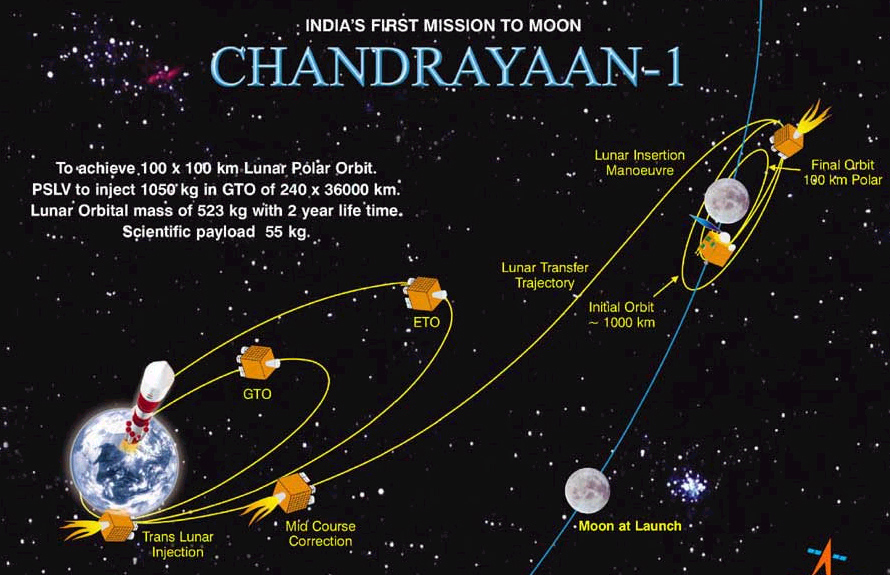 India's first lunar missionblasted off from the national space centre on the southeastern coast early Wednesday. The unmanned lunar orbiting spacecraft Chandrayaan-1 was launched with an Indian-built rocket at 6:22 am (0052 GMT) from the Satish Dhawan Space Centre in Sriharikota, 80 kilometres (50 miles) north of Chennai. The Chandrayaan-1 is being sent on a two-year orbital mission to provide a detailed map of the mineral, chemical and topographical characteristics of the moon's surface, at a cost of 80 million dollars.
A U.S. Outpost Under Fire In Afghanistan
A U.S. Outpost Under Fire In Afghanistan
(NSI News Source Info) October 22, 2008: Since the start of the war in Afghanistan in 2001, the northern part of the border with Pakistan has been a particular focus of concern for American forces. The borderline there is essentially a legal fiction, an imaginary line that separates people with the same ethnicity and history, drawn across hundreds of miles of terrain so rugged it is impossible to fence off or even fully patrol. Here, one of a number of United States soldiers from the Sixth Squadron, Fourth Cavalry, left Combat Outpost Lowell near Kamu to replace soldiers at a hillside "overwatch" position.
 Because the majority of the attack was being directed at the adjacent overwatch position, the soldiers stayed on alert and provided cover for the combat outpost below.
 Because the overwatch positions are close to one another, it was difficult to tell which high position was being fired upon.
 The soldiers rushed for cover and took up defensive positions. Insurgents are able to move largely undetected due to the mountainous terrain.
 Just as the soldiers reached the overwatch position, insurgents fired small arms and rocket-propelled grenades into the area.
  The purpose of these smaller, higher positions is to provide cover and eyes over the main combat outpost. Without these positions, the combat outpost would be more susceptible to attack.
 Soldiers returned from overwatch positions to the main combat outpost below, where they are provided with electricity, hot meals and running water.
 An American soldier kept watch from a bunker. Such attacks are a daily occurrence in the area.
 American soldiers assessed the situation. It is common for the insurgents to attack from several positions simultaneously.
 Because the majority of the attack was being directed at the adjacent overwatch position, the soldiers stayed on alert and provided cover for the combat outpost below.
 Because the overwatch positions are close to one another, it was difficult to tell which high position was being fired upon.
 The soldiers rushed for cover and took up defensive positions. Insurgents are able to move largely undetected due to the mountainous terrain.
 Just as the soldiers reached the overwatch position, insurgents fired small arms and rocket-propelled grenades into the area.
  The purpose of these smaller, higher positions is to provide cover and eyes over the main combat outpost. Without these positions, the combat outpost would be more susceptible to attack.
 Soldiers returned from overwatch positions to the main combat outpost below, where they are provided with electricity, hot meals and running water.
 An American soldier kept watch from a bunker. Such attacks are a daily occurrence in the area.
 American soldiers assessed the situation. It is common for the insurgents to attack from several positions simultaneously.
Russia Sees No Point To More US Missile Talks: Report
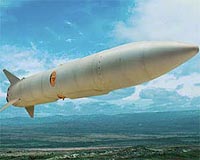 Russia Sees No Point To More US Missile Talks: Report
(NSI News Source Info) Moscow - October 22, 2008: Russia sees no point in pursuing missile defence talks with the United States until Washington comes up with new proposals, a senior Russian official told the Interfax news agency on Tuesday.
Moscow "simply doesn't see the point of continuing the same thing. It's necessary to move forward," said Deputy Foreign Minister Sergei Ryabkov, referring to a series of consultations already held between Moscow and Washington over the United States' controversial missile defence plans.
"Currently we are waiting for the United States to firm up the measures of trust and transparency it envisages at US missile defence installations in eastern Europe," Ryabkov said.
He added that he saw little chance of progress prior to next month's US presidential polls.
Previous consultations had brought "no kind of progress.... We gave the Americans several questions but haven't received answers," Ryabkov said.
Russia and the United States have held a series of talks intended to assuage Russian concerns about the facilities Washington plans to install in eastern Europe -- a group of interceptor rockets in Poland and a linked radar in the Czech Republic.
Last week the US ambassador to Moscow, John Beyrle, said expert talks between Russia and the United States on the missile shield plans would take place this month.
Russia has said the proposed facilities would directly threaten its security because of their location relatively close to Russia's borders.
The United States insists the facilities are not directed against Russia, being incapable of protecting against Russia's vast arsenal, but are intended as protection against "rogue states" such as Iran.
Measures mooted to address Russian concerns include some degree of access to the facilities by Russian inspectors.
Russia Sees No Point To More US Missile Talks: Report
(NSI News Source Info) Moscow - October 22, 2008: Russia sees no point in pursuing missile defence talks with the United States until Washington comes up with new proposals, a senior Russian official told the Interfax news agency on Tuesday.
Moscow "simply doesn't see the point of continuing the same thing. It's necessary to move forward," said Deputy Foreign Minister Sergei Ryabkov, referring to a series of consultations already held between Moscow and Washington over the United States' controversial missile defence plans.
"Currently we are waiting for the United States to firm up the measures of trust and transparency it envisages at US missile defence installations in eastern Europe," Ryabkov said.
He added that he saw little chance of progress prior to next month's US presidential polls.
Previous consultations had brought "no kind of progress.... We gave the Americans several questions but haven't received answers," Ryabkov said.
Russia and the United States have held a series of talks intended to assuage Russian concerns about the facilities Washington plans to install in eastern Europe -- a group of interceptor rockets in Poland and a linked radar in the Czech Republic.
Last week the US ambassador to Moscow, John Beyrle, said expert talks between Russia and the United States on the missile shield plans would take place this month.
Russia has said the proposed facilities would directly threaten its security because of their location relatively close to Russia's borders.
The United States insists the facilities are not directed against Russia, being incapable of protecting against Russia's vast arsenal, but are intended as protection against "rogue states" such as Iran.
Measures mooted to address Russian concerns include some degree of access to the facilities by Russian inspectors.
Russia and the United States have held a series of talks intended to assuage Russian concerns about the facilities Washington plans to install in eastern Europe -- a group of interceptor rockets in Poland and a linked radar in the Czech Republic.
Army And LM Support Second Successful International PAC-3 Missile Test
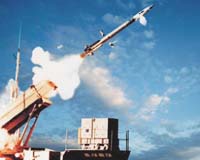 Army And LM Support Second Successful International PAC-3 Missile Test
(NSI News Source Info) Dallas TX - October 22, 2008: Airmen of the German Air Force (Luftwaffe), supported by Lockheed Martin and the U.S. Army Lower Tier Project Office, have successfully conducted the second international PAC-3 Missile flight test at White Sands Missile Range, NM.
The test successfully fired a PAC-3 Missile from a German PATRIOT fire unit with Configuration-3 upgrades.
The test demonstrated the Patriot Configuration-3 upgrades to the German PATRIOT ground system, which includes the PAC-3 Missile Segment launcher electronics and the Fire Solution Computer that are necessary to launch PAC-3 Missiles.
This was the first time a German PATRIOT launcher had executed a PAC-3 Missile launch.
"The successful flight test marks another significant milestone for both the Program Executive Office Missiles and Space and our allies," said Lt. Col. Anthony Brown, PAC-3 Product Manager.
"We continue to build on the legacy of this superb weapon system as a key element for the free world's defense."
"Our German partners have taken an important step in improving their air and missile defense capability with the Patriot PAC-3 System," said Mike Trotsky, vice president Air and Missile Defense Programs at Lockheed Martin Missiles and Fire Control.
"We are very proud to support our German allies in this the second international PAC-3 Missile test."
Army And LM Support Second Successful International PAC-3 Missile Test
(NSI News Source Info) Dallas TX - October 22, 2008: Airmen of the German Air Force (Luftwaffe), supported by Lockheed Martin and the U.S. Army Lower Tier Project Office, have successfully conducted the second international PAC-3 Missile flight test at White Sands Missile Range, NM.
The test successfully fired a PAC-3 Missile from a German PATRIOT fire unit with Configuration-3 upgrades.
The test demonstrated the Patriot Configuration-3 upgrades to the German PATRIOT ground system, which includes the PAC-3 Missile Segment launcher electronics and the Fire Solution Computer that are necessary to launch PAC-3 Missiles.
This was the first time a German PATRIOT launcher had executed a PAC-3 Missile launch.
"The successful flight test marks another significant milestone for both the Program Executive Office Missiles and Space and our allies," said Lt. Col. Anthony Brown, PAC-3 Product Manager.
"We continue to build on the legacy of this superb weapon system as a key element for the free world's defense."
"Our German partners have taken an important step in improving their air and missile defense capability with the Patriot PAC-3 System," said Mike Trotsky, vice president Air and Missile Defense Programs at Lockheed Martin Missiles and Fire Control.
"We are very proud to support our German allies in this the second international PAC-3 Missile test."
Subscribe to:
Posts (Atom)












